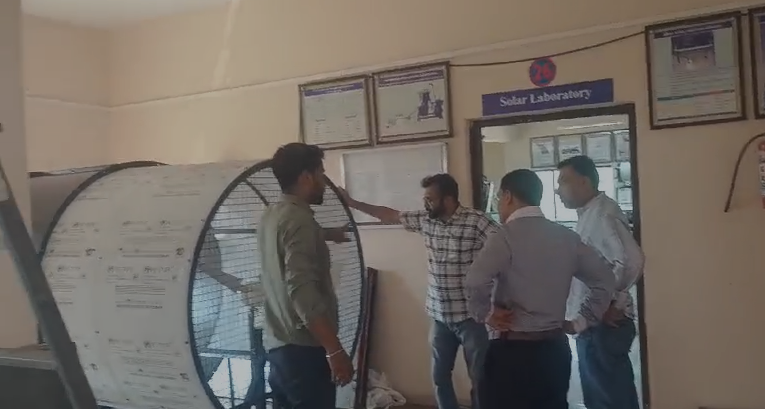
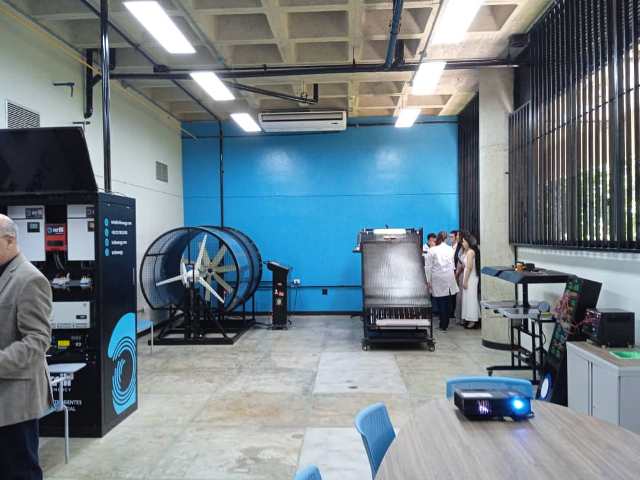
The Wind Energy Lab consists of two independent systems, each designed to address a distinct part of wind energy learning—fundamentals of wind turbine behaviour and advanced research in wind power electronics and control. Together, they create a comprehensive wind lab environment for both teaching and innovation.
1. Wind Energy Training System
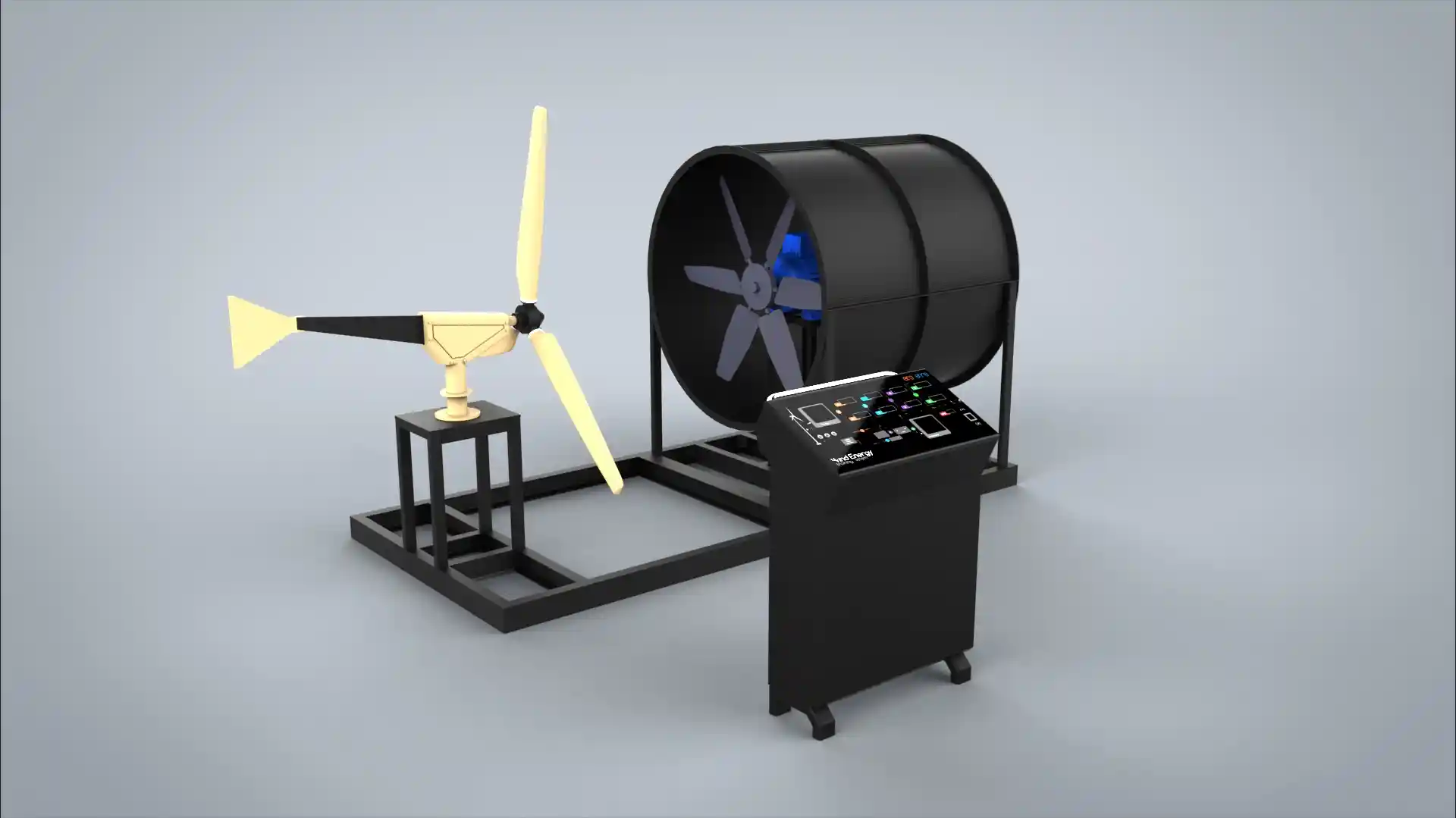
The Wind Energy Training System introduces students to the practical fundamentals of wind energy, using a real small-scale wind turbine and a controlled wind source to demonstrate how turbines behave under varying wind speeds and operating conditions.
Students begin by studying the basic physical properties of wind, learning how wind velocity, air density, and rotor blade characteristics influence power extraction. Using real hardware, they perform core experiments such as:
- Measuring cut-in speed, start-up speed, and cut-off speed
- Determining rotor tip-speed ratio (λ)
- Calculating turbine mechanical and electrical output
- Measuring wind power and comparing it with theoretical predictions
- Computing the coefficient of power (Cp) at different speeds
- Plotting the Cp vs λ curve to identify the turbine’s optimum operating point
These experiments help students understand real turbine properties and efficiency behaviour. They observe how blade angle, wind velocity, and loading conditions influence performance, and why turbines are designed to operate near the optimal tip-speed ratio.
After foundational experiments, the system transitions into a standalone wind energy setup. Here, the turbine is connected to charge controllers, batteries, inverters, and small loads to demonstrate how wind energy is stored and utilized in off-grid applications. Students learn about:
- Charge-storage-load interactions
- Power conditioning for wind systems
- Performance variation under fluctuating wind
- Practical limitations of standalone wind setups
This system is ideal for undergraduate learning, skill-development programs, and introductory renewable-energy research.
2. Wind Turbine Emulator
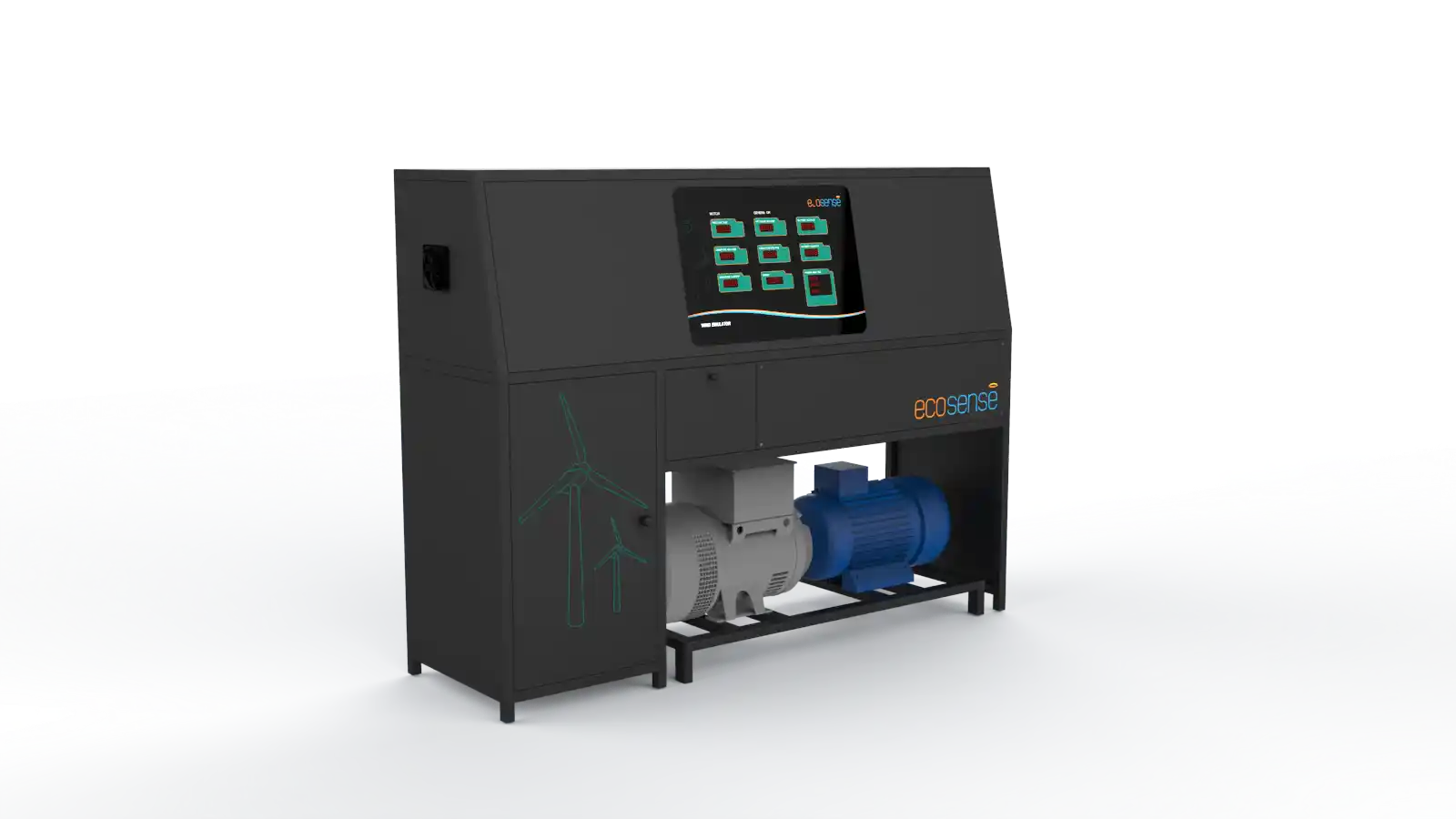
The Wind Turbine Emulator is a research-grade, programmable platform that replicates the mechanical behaviour of a wind turbine using a controlled motor–generator setup. It allows students and researchers to emulate any turbine type—small, medium, or large—without physical wind conditions.
The emulator operates in three modes:
- Manual Mode – Users set wind speed manually
- Simulated Mode – User inputs wind profile and iterations
- Table Mode – Users upload predefined turbine performance tables to replicate specific turbine characteristics
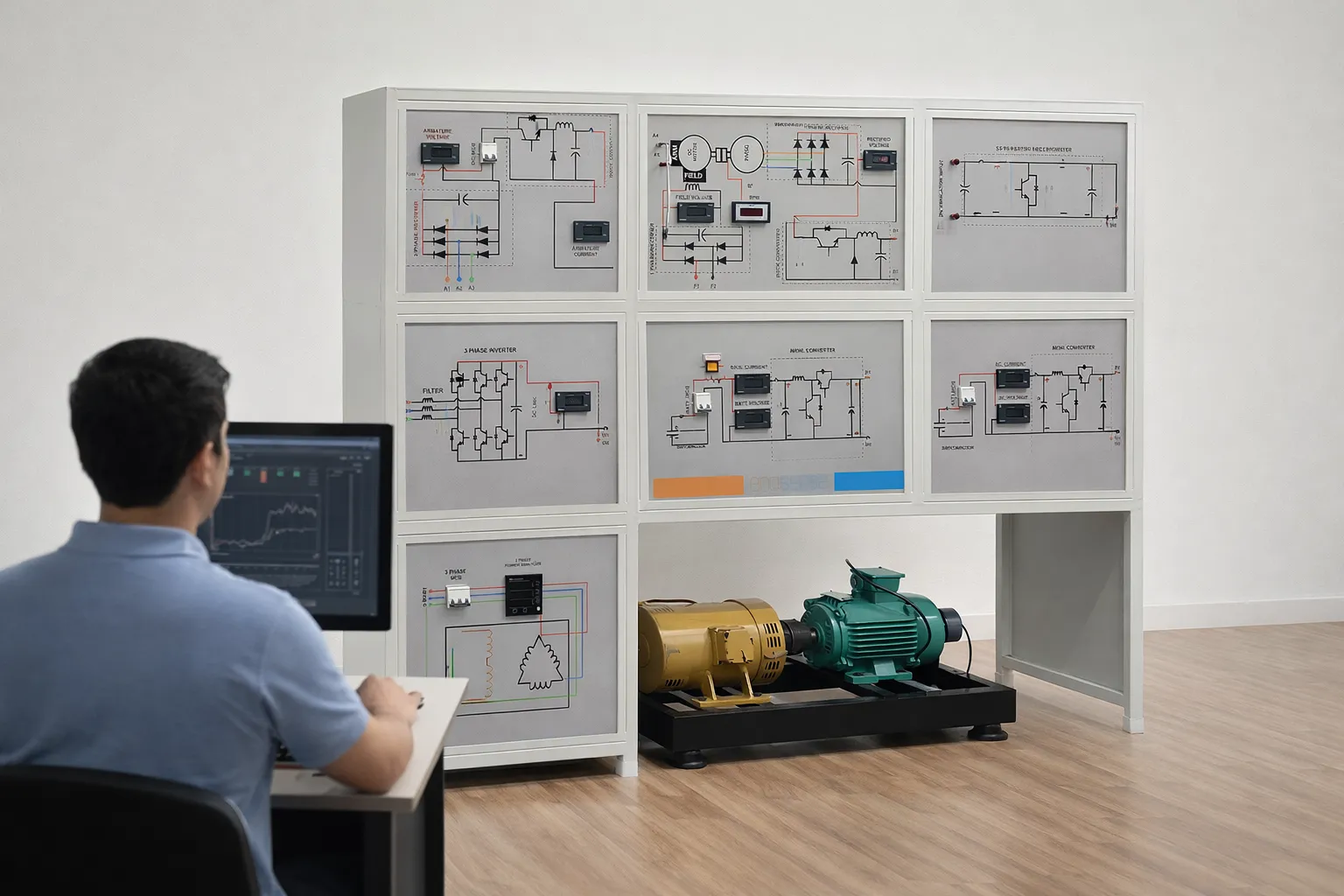
The platform provides open access to converters and inverters, supporting both:
- Standalone mode – Test converter topologies, MPPT algorithms, battery charging setups
- Grid-connected mode – Study synchronization, reactive power, fault behaviour, and grid compliance
What makes the system powerful is its editable open-source control code with a GUI, allowing users to:
- Implement and test their own control algorithms
- Modify turbine characteristics
- Develop custom MPPT strategies
- Validate converter and inverter designs
- Create hybrid renewable energy controllers
- Evaluate system performance under variable wind profiles
The emulator allows experiments anytime, without climatic dependency, making it ideal for postgraduate research, dissertation work, product development, and advanced power-system studies.
Start Anywhere — Learn Everything
Both systems are complete and independent. Institutions can begin with real turbine fundamentals using the Wind Energy Training System, advance to the Wind Turbine Emulator for deep research, or deploy both to create a comprehensive wind-energy learning ecosystem covering wind turbine properties, converter technology, control algorithms, and grid integration under one roof.