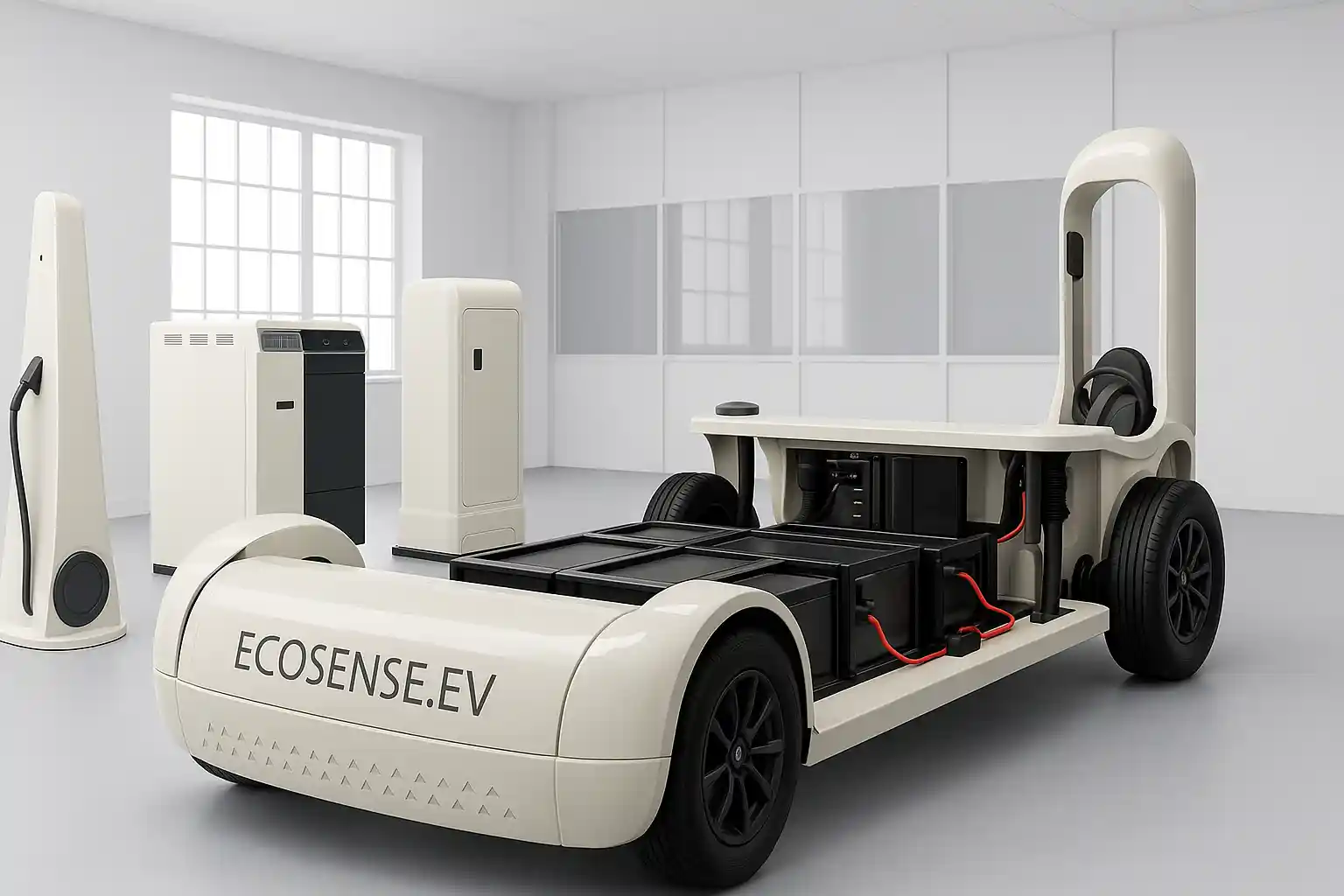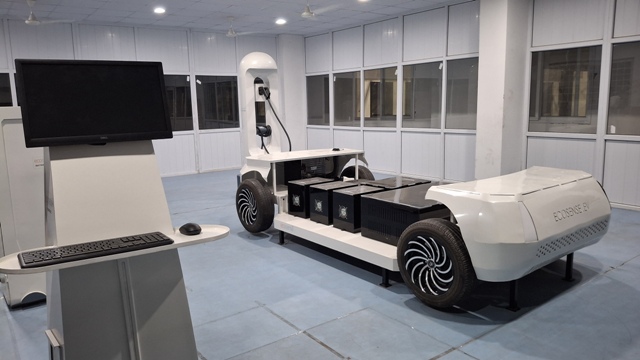
EV Drive Line Simulator with Controller Development & Validation Platform 

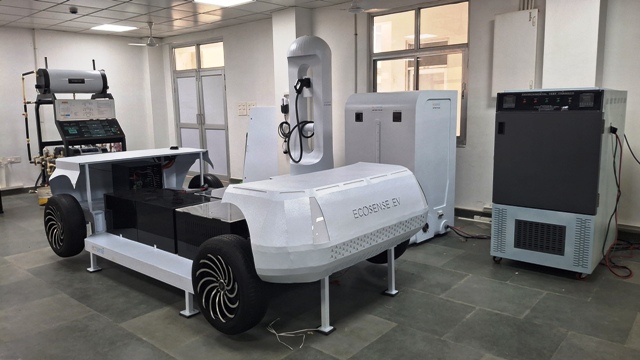
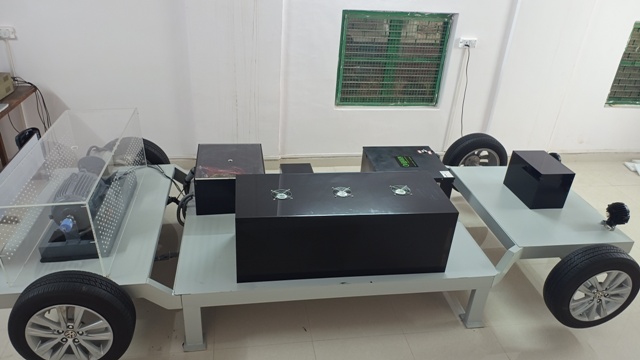
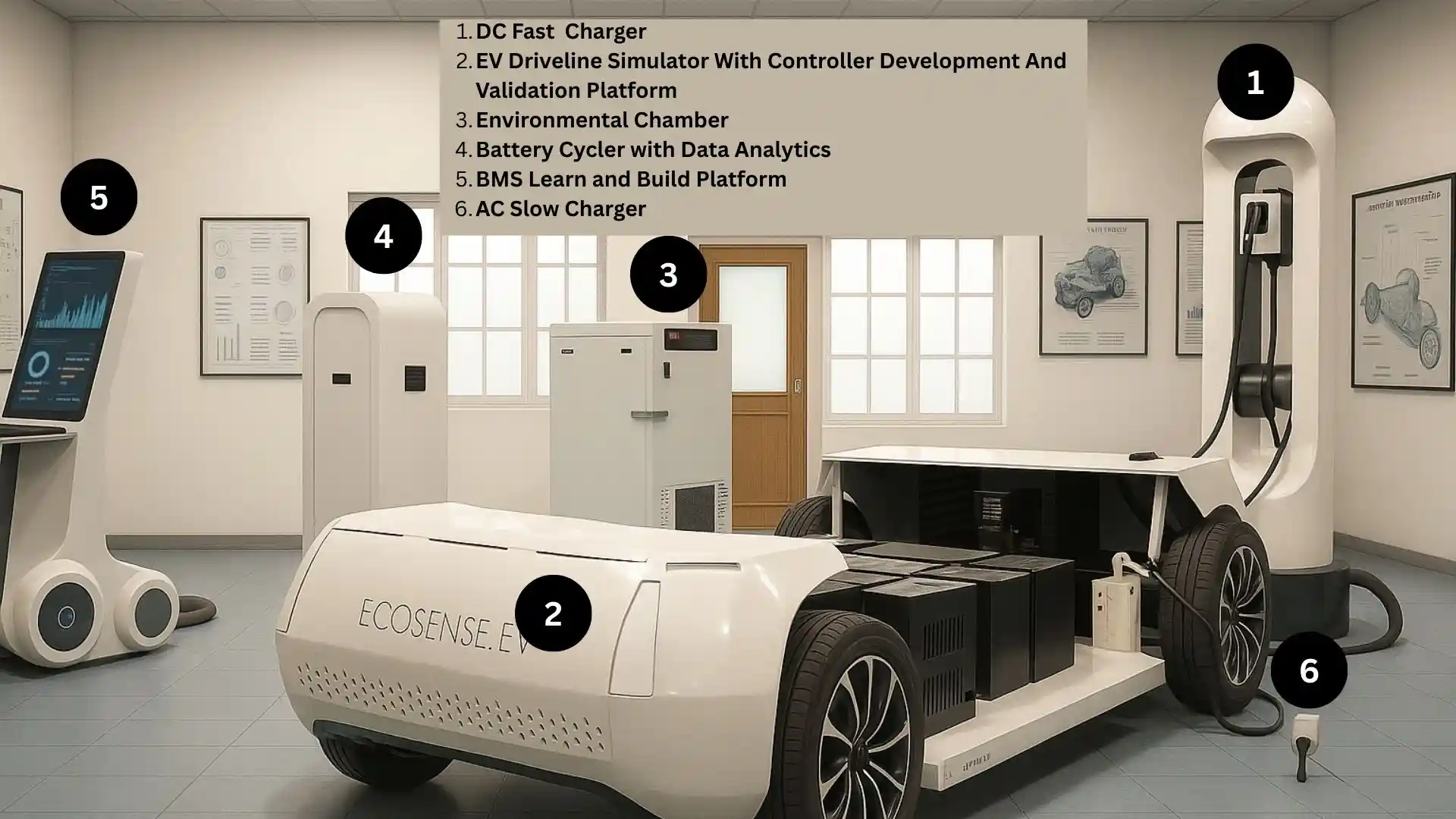
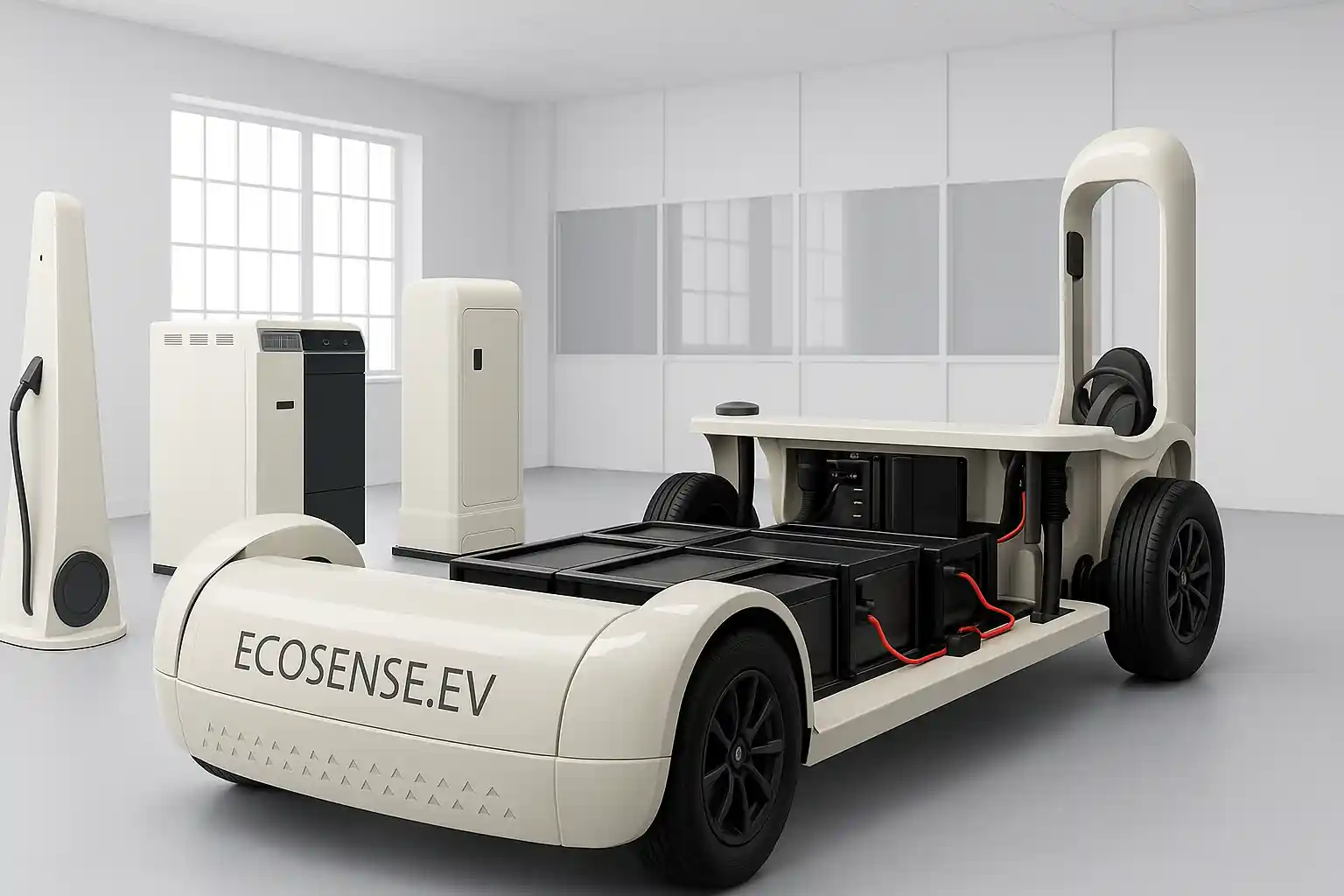
The EV Driveline Simulator with Controller Development & Validation Platform is a complete hardware-integrated environment designed for mastering electric vehicle propulsion systems. It enables students, researchers, and engineers to design, test, and validate motor control algorithms on real PMSM traction motors, interact with a programmable dynamometer, execute drive cycles, and evaluate full charging–discharging workflows. The platform replicates a true EV energy ecosystem—from grid to battery to motor and back—making it ideal for advanced learning, research, and prototype development in electric mobility. 
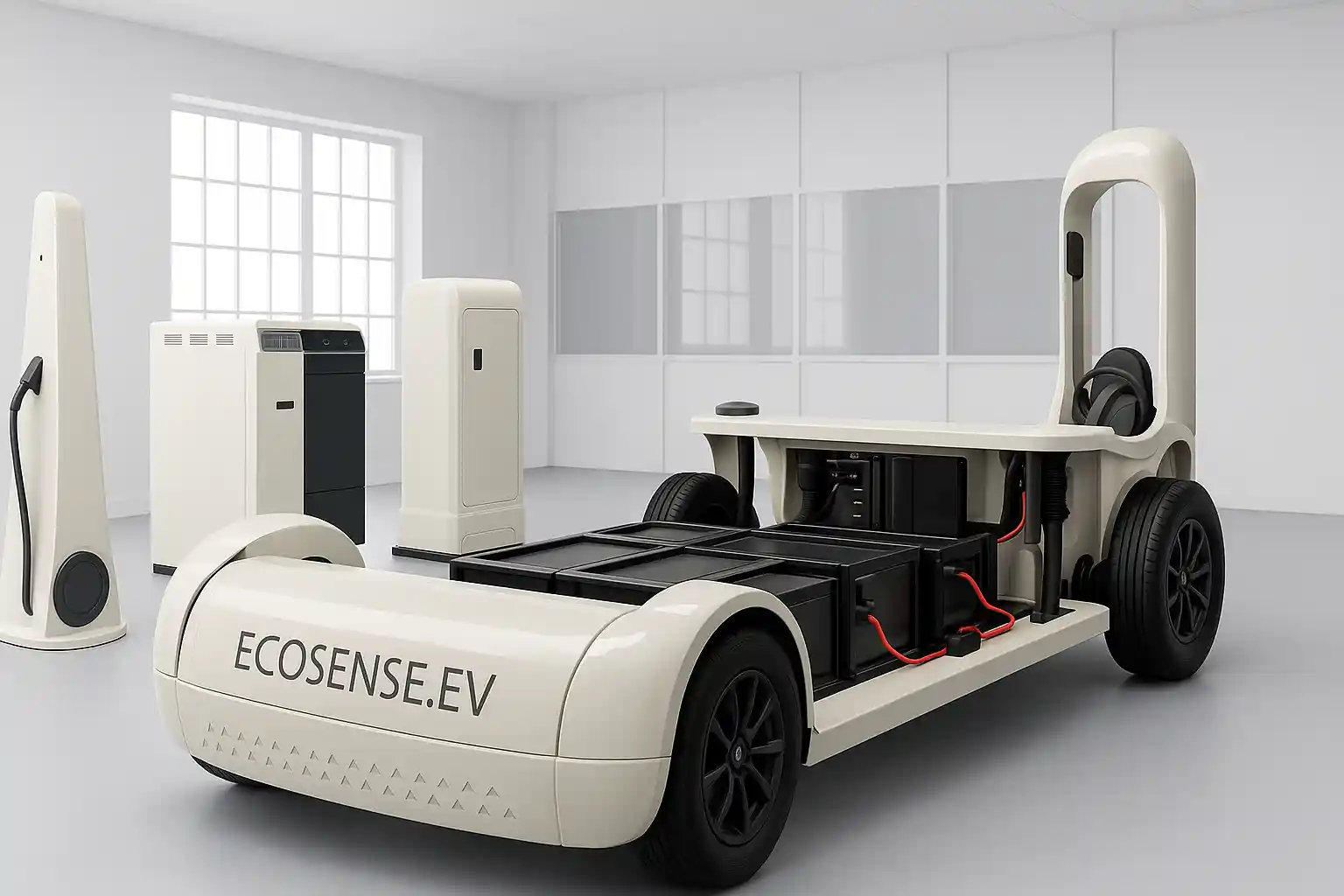
Key Features

  • Real EV-Grade PMSM Driveline: Includes PMSM traction motor enabling hands-on study of real EV motor behaviour under varied load and speed conditions.
  • Programmable Motor Controller: Supports FOC, V/f, BLDC commutation, and custom algorithm deployment, allowing complete control strategy experimentation.
  • PMSM-Based Dynamometer: Provides static and dynamic loading using rectifier-based resistive load banks to simulate real road load scenarios.
  • Complete Energy Flow Simulation: Covers grid → OBC → battery → motor → dynamometer → resistive load/grid, enabling true EV system replication.
  • Regenerative Braking Evaluation: Captures and processes regenerated energy through the rectifier-resistive load system or feeds it back to the battery depending on mode.
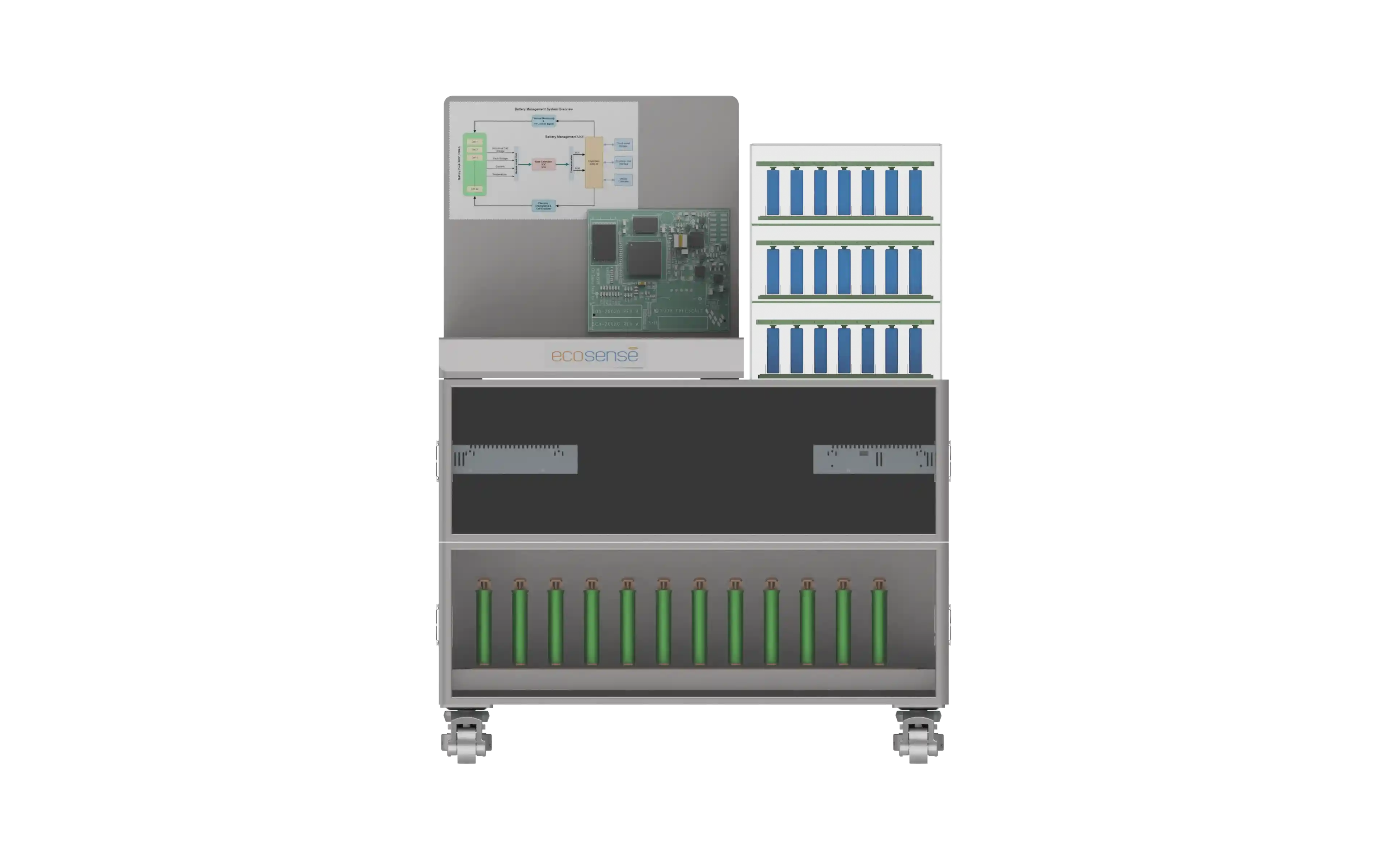
  • Integrated Lithium-Ion Traction Battery Pack: Features LiFePO₄ pack with smart BMS for SOC, SOH, cell balancing, and protection analytics.
  • Programmable Onboard Charger (OBC): Allows CC, CV, and CC-CV charging with adjustable parameters and EVSE pilot-signal communication.
  • Integrated Auxiliary battery: to power accssories like headlight, taillight horn etc just like a real EV.
  • Real AC EVSE Charging Interface: Supports Level-2 charging with safety checks
  • High-Speed Data Acquisition System: Provides >10 kHz sampling for voltage, current, torque, speed, and temperature with real-time visualization.
  • Central FPGA-Based Control: NI FPGA card enables deterministic control, fast data handling, and experiment automation.
  • Drive Cycle Implementation: Allows execution of IDC and custom drive cycles for efficiency, energy consumption, and regeneration studies.
  • Modular & Open Architecture: All subsystems are plug-and-play with open access to control parameters, ideal for education, research, and prototyping.


Ecosense

Learning Modules 

Ecosense

EV Driveline & Motor Control

  • PMSM traction motor operation and torque-speed characteristics
  • Field-Oriented Control implementation and tuning
  • Four-quadrant operation and dynamic response analysis
  • Custom motor control algorithm deployment
  • Efficiency mapping across load and speed ranges

Drive Cycle Implementation & Regeneration

  • Indian Drive Cycle (IDC) execution and analysis
  • User-defined torque/speed drive profile creation
  • Regenerative braking and energy recovery evaluation
  • SOC-dependent motor behaviour study
  • Performance comparison across multiple drive cycles
     

Battery & Charging System Analysis

  • Li-ion traction battery charging/discharging behaviour
  • OBC operation under CC, CV, and CC-CV modes
  • EVSE handshake, pilot-signal, and safety protocol study
  • Regenerative charging impact on battery thermal performance
  • Parameter logging and correlation with system efficiency

Working Principle

  • The traction motor is powered through a traction battery via a programmable inverter that executes FOC, V/f, or custom control algorithms.
  • The traction motor drives a PMSM-based dynamometer, which applies variable mechanical load using a rectifier-resistive load bank or via a programmable inverter connected to grid.
  • Regenerative braking is simulated by routing generated energy back to the traction battery.
  • The on board charger charges the traction battery from an AC EVSE using CC, CV, or CC-CV profiles with full pilot-signal communication.
  • The traction battery charges auxiliary battery which powers accessories like headlight, taillight, horn etc.
  • The BMS monitors cell voltages, temperature, SOC, and SOH to ensure safe charging and discharging.
  • An FPGA-based controller synchronizes inverter commands, drives the dynamometer load, and manages drive cycle execution.
  • A high-speed DAQ system logs voltage, current, torque, speed, and temperature in real time for analysis and validation.
Ecosense

Technical Specifications 

Ecosense

Driveline and Powertrain Components

Components Specifications
Traction Motor PMSM, 5 kW, 72 V AC, 3000 RPM, >90% efficiency
Dynamometer PMSM, 5 kW rated / 10 kW peak, 80–120 Nm torque range, 0–5000 RPM, rectifier + 5 kW resistive load
or
PMSM, 5 kW rated / 10 kW peak, 80–120 Nm torque range, 0–5000 RPM with Programmable 3 Phase inverter feeding to grid
Motor Controller Programmable Three Phase Inverter, 150 V DC link, 25 A output, 10 kHz switching, FOC/V/f/BLDC modes, forced-air cooling

*These specifications can be customized as per requirement

Battery, Charging & Energy System

Component Specifications
Traction Battery with BMS LiFePO₄, 72 V, 200 Ah, >3000 cycles, 0.5C/1C charge & discharge with smart BMS
Auxiliary Battery 12 V, Lead-acid sealed battery
On-board Charger 300–350 V input, 80 V output, 1.5 kW, IGBT-based buck converter, 10 kHz switching
Auxiliary Battery Charger 70–80 V input, 14 V output, 500W, IGBT-based buck converter, 10 kHz switching
AC Charger (EVSE) unit Level-2 charger, 60–90 V battery compatibility, 3.3 kW rating, pilot signal communication

*These specifications can be customized as per requirement

Control, DAQ & Communication

Component Specifications
Central Controller NI sbRIO-9607, NI-9684 mezzanine card, 667 MHz ARM, Xilinx Zynq-7020 FPGA
DAQ System 16-bit resolution, 180 kS/s/ch, ±0.64% accuracy
I/O Interfaces CANbus, RS-232, RS-485, Gigabit Ethernet, USB 2.0
Digital & Analog I/O 14 high-speed half-bridge outputs, 24 sinking outputs, 28 sourcing inputs, 32 FPGA LVTTL lines

*These specifications can be customized as per requirement

Related Products

Get in Touch

Ready to transform your labs?

Contact Now