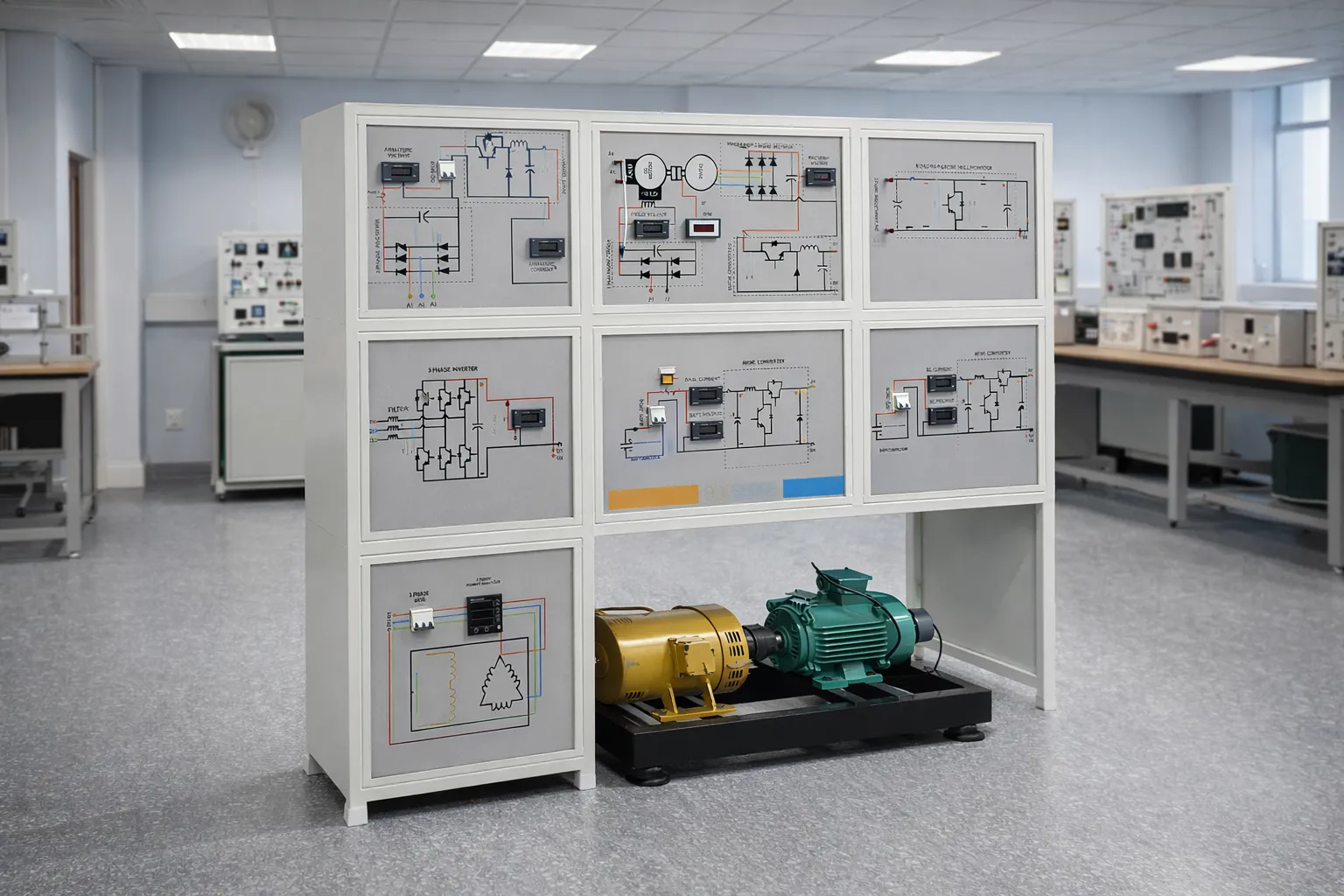
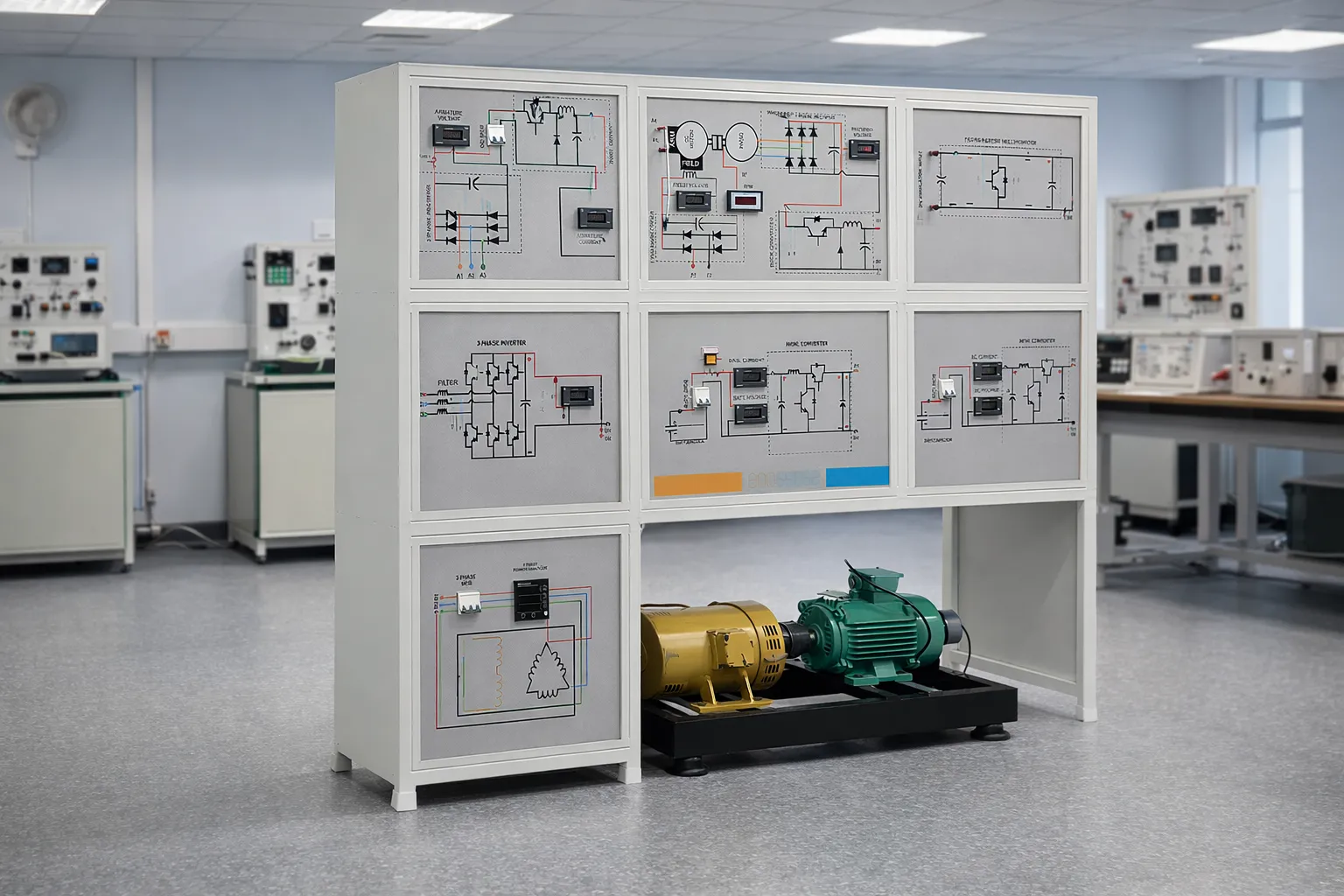
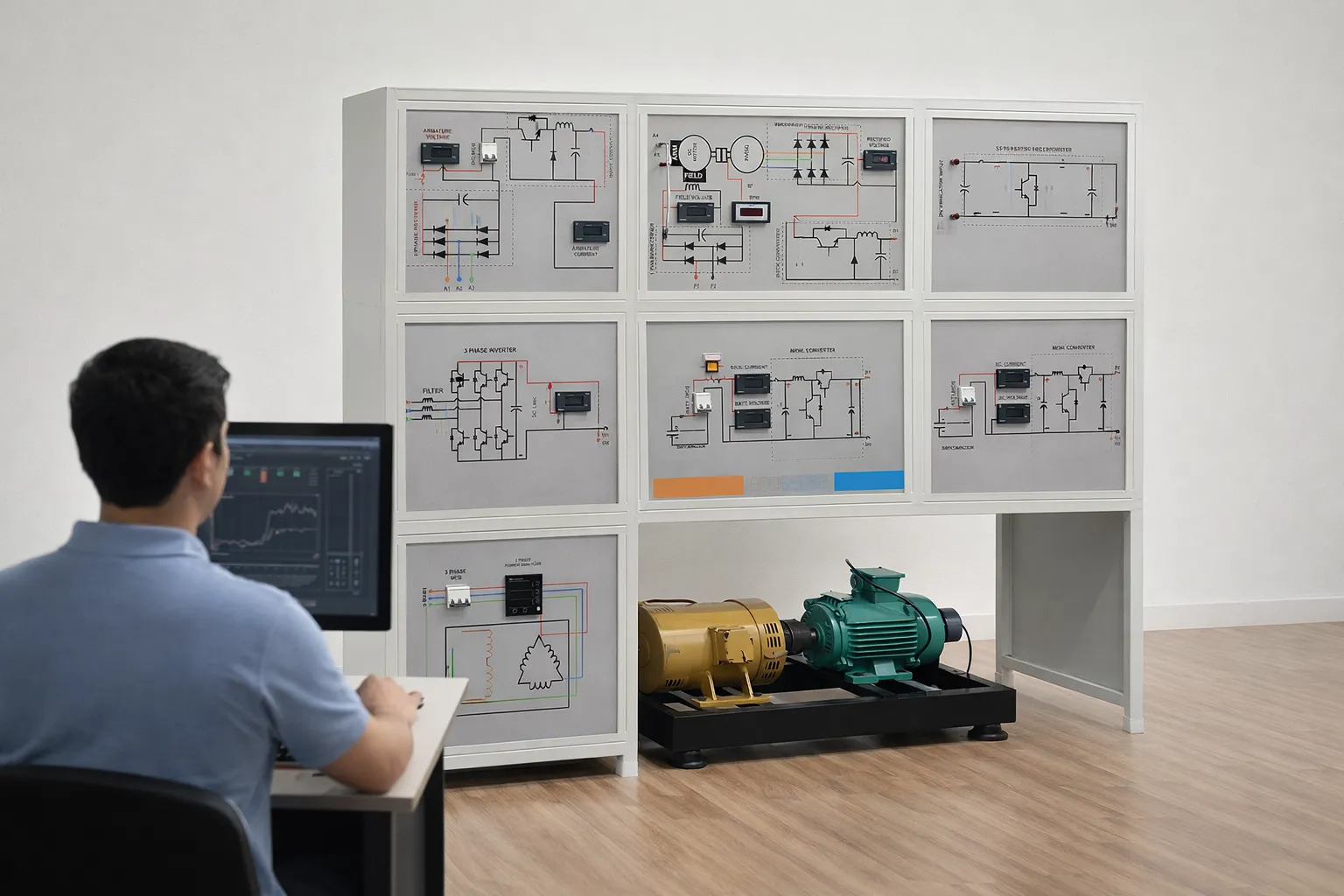
DFIG based Wind Turbine Emulator 

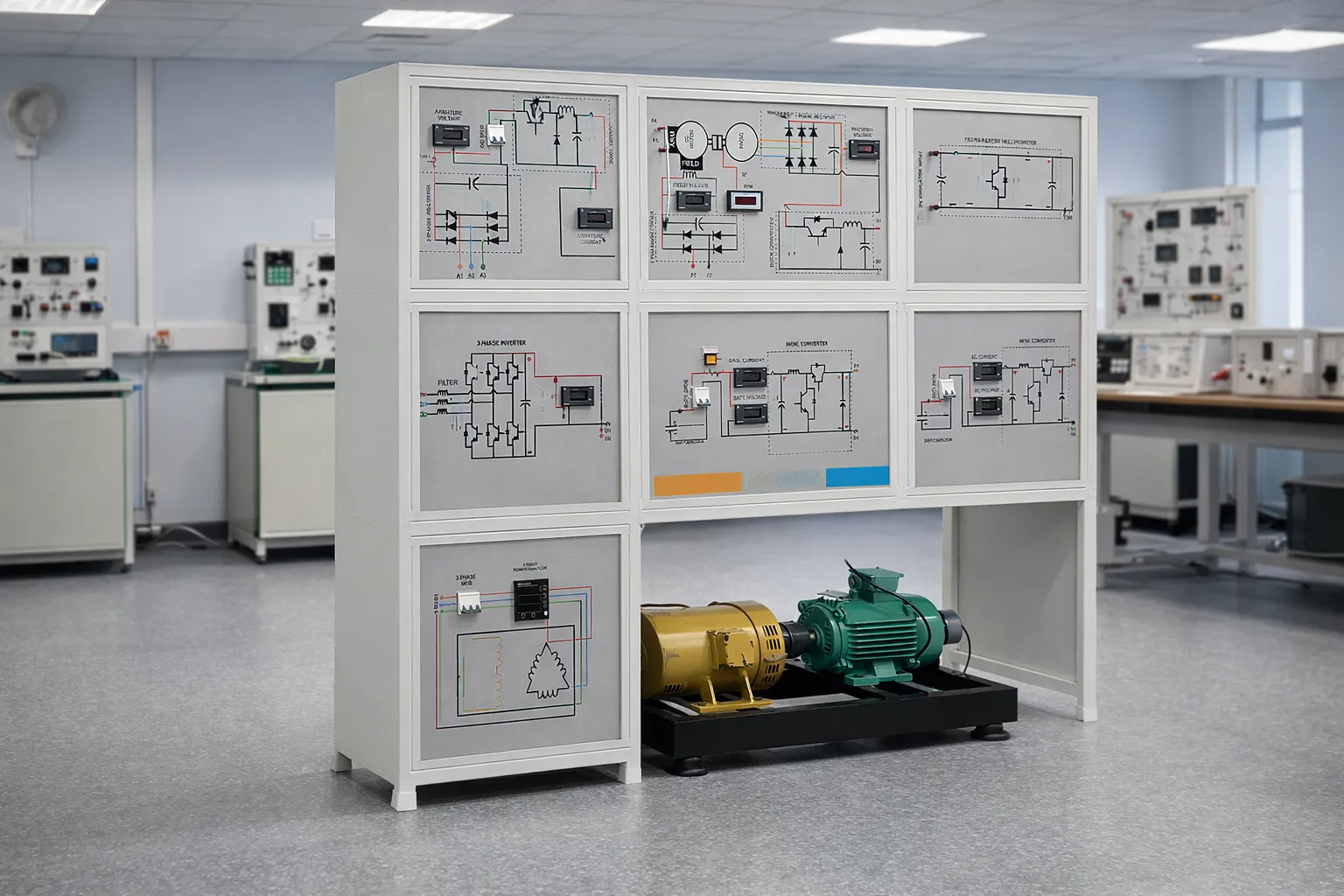
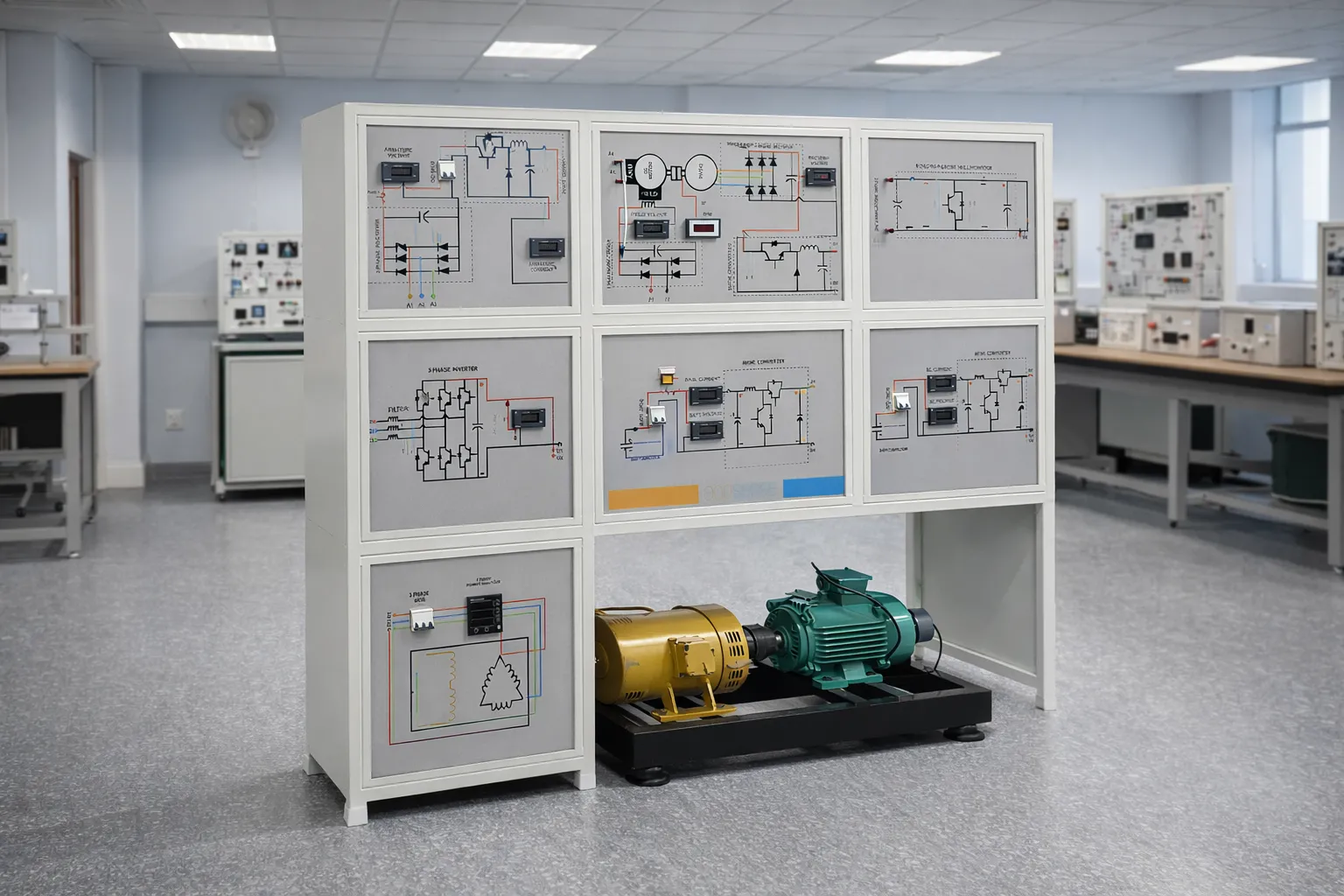
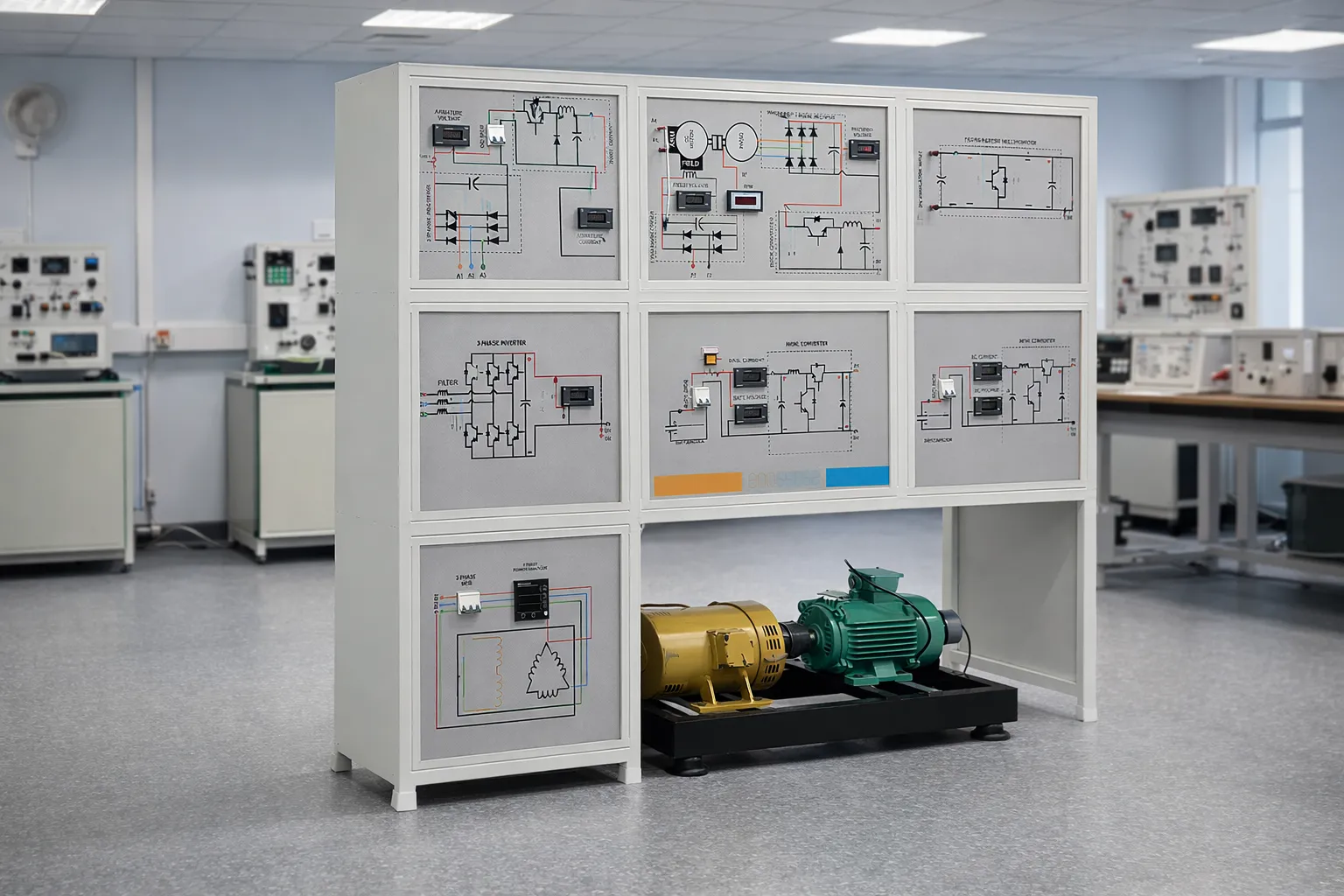
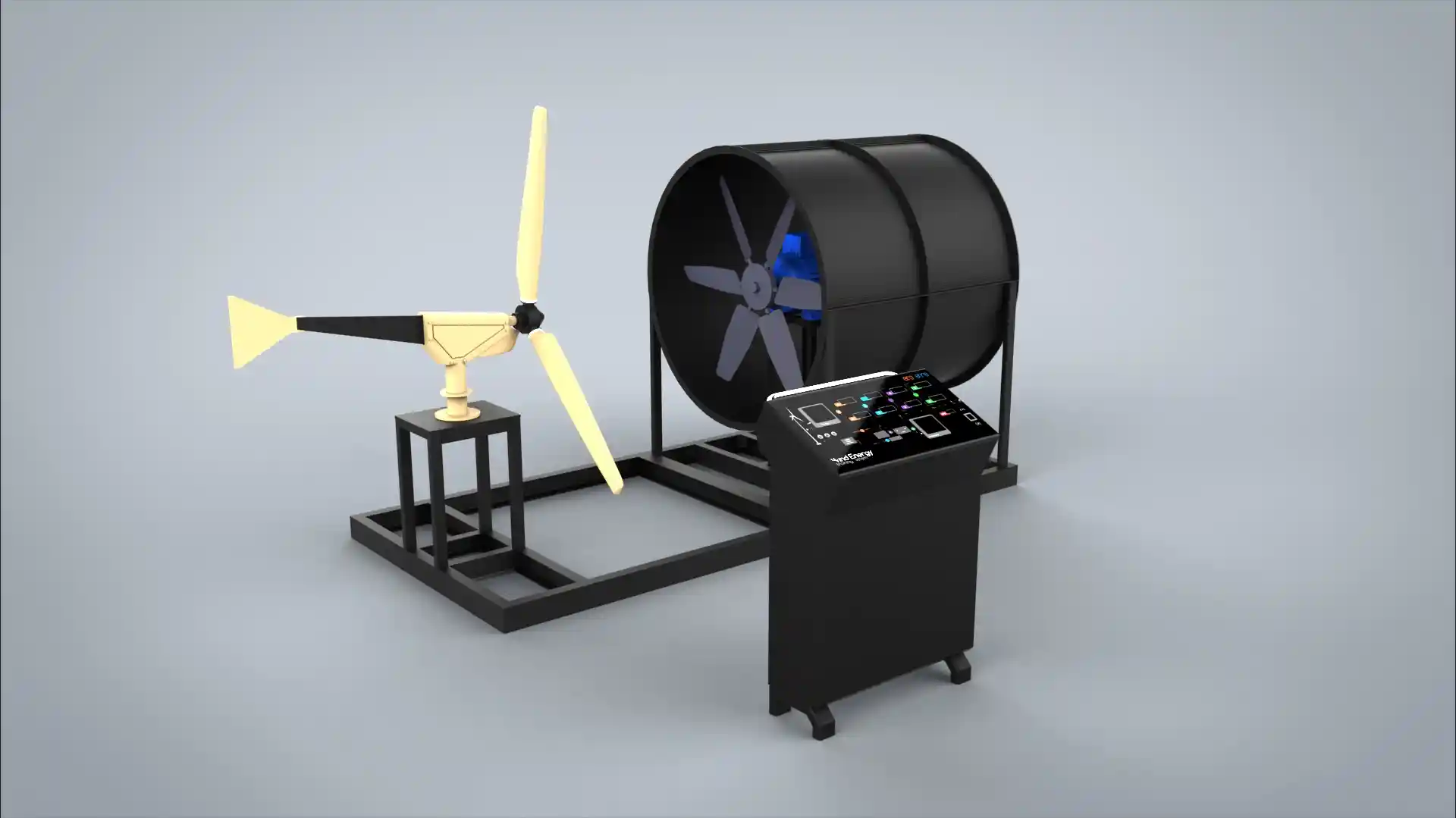
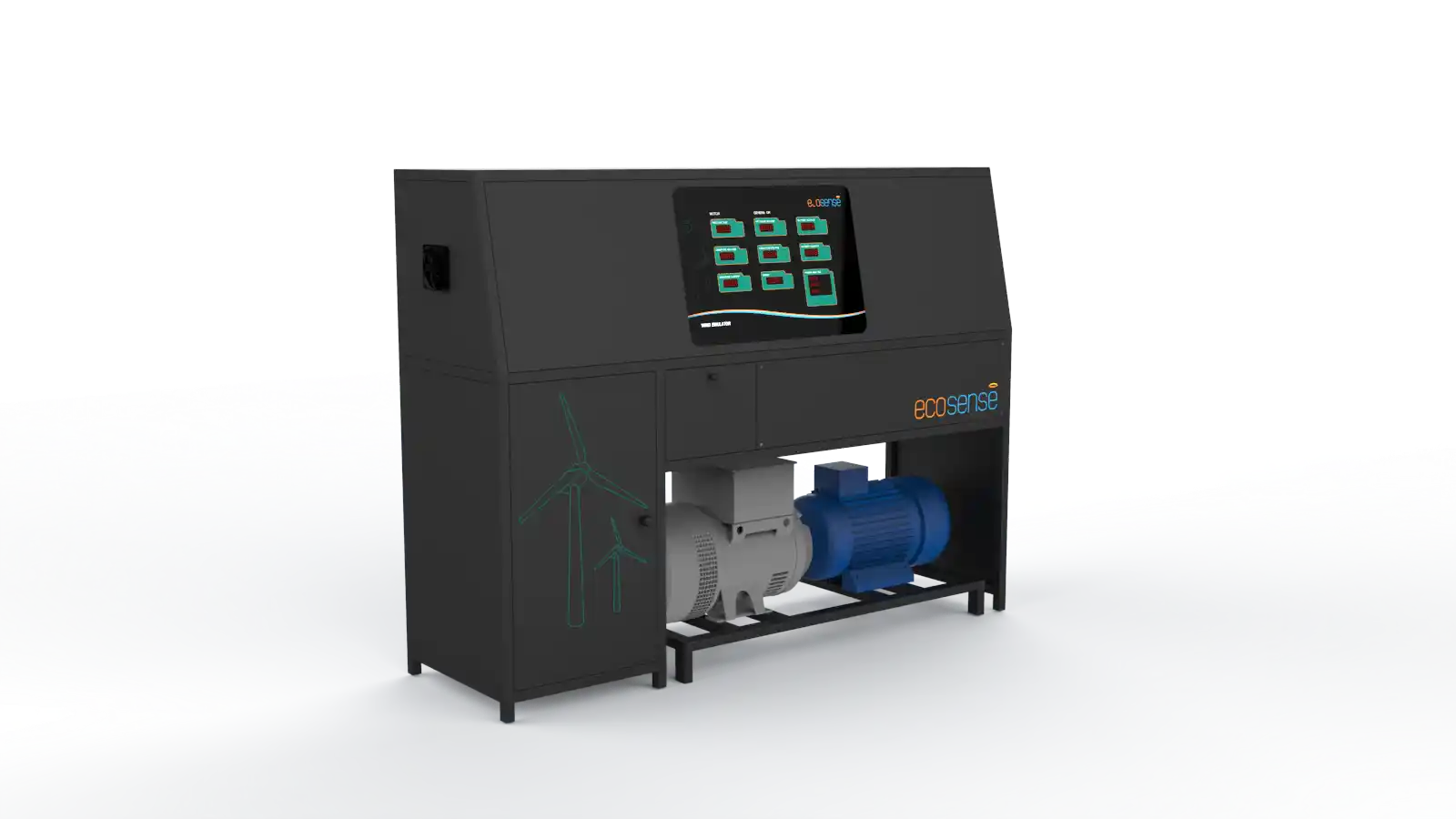
The DFIG Based Wind Turbine Emulator by Ecosense is an advanced research and training platform designed to replicate real wind turbine behavior in a controlled laboratory environment. Built around a 3 kW Doubly Fed Induction Generator (DFIG) architecture, the system enables real-time hardware-level Learning, testing, and validation of wind energy control strategies without the uncertainties and cost of field deployment.From torque-speed emulation to grid integration studies, this platform empowers universities and research institutions to explore wind power generation, MPPT techniques, smart grid interaction, and microgrid integration — all within a safe indoor laboratory setup. 

Key Features

  • Real-Time DFIG Wind Turbine Emulation: Accurately replicates wind turbine torque–speed and power–speed characteristics using mathematical turbine models, enabling hardware-level testing under variable wind speed and pitch angle conditions.
  • Doubly Fed Induction Generator (DFIG) System: Industrial-grade  DFIG with rotor-side and grid-side converters, allowing detailed study of stator–rotor power flow and partial-scale power conversion.
  • FPGA-Based Programmable Control Platform: High-speed control card with ADC inputs and PWM outputs, supporting custom control algorithm deployment, converter tuning, and advanced research experimentation.
  • Rotor Side & Grid Side Converter Architecture: Back-to-back three-phase inverters enable independent control of active and reactive power, DC-link voltage regulation, and unity power factor operation.
  • Multi-Mode Wind Profile Simulation: Operates in Manual Mode, Table Mode, and CSV-Based Simulated Mode, allowing researchers to test real-world wind datasets or custom wind profiles.
  • Advanced MPPT & Control Strategy Testing: Supports implementation of Maximum Power Point Tracking methods such as Hill Climb Search and enables development of new MPPT and grid-control algorithms.
  • Microgrid & Smart Grid Integration Ready: DC link provision allows integration of additional renewable sources like PV, enabling research in hybrid systems, power quality analysis, and smart grid control strategies.
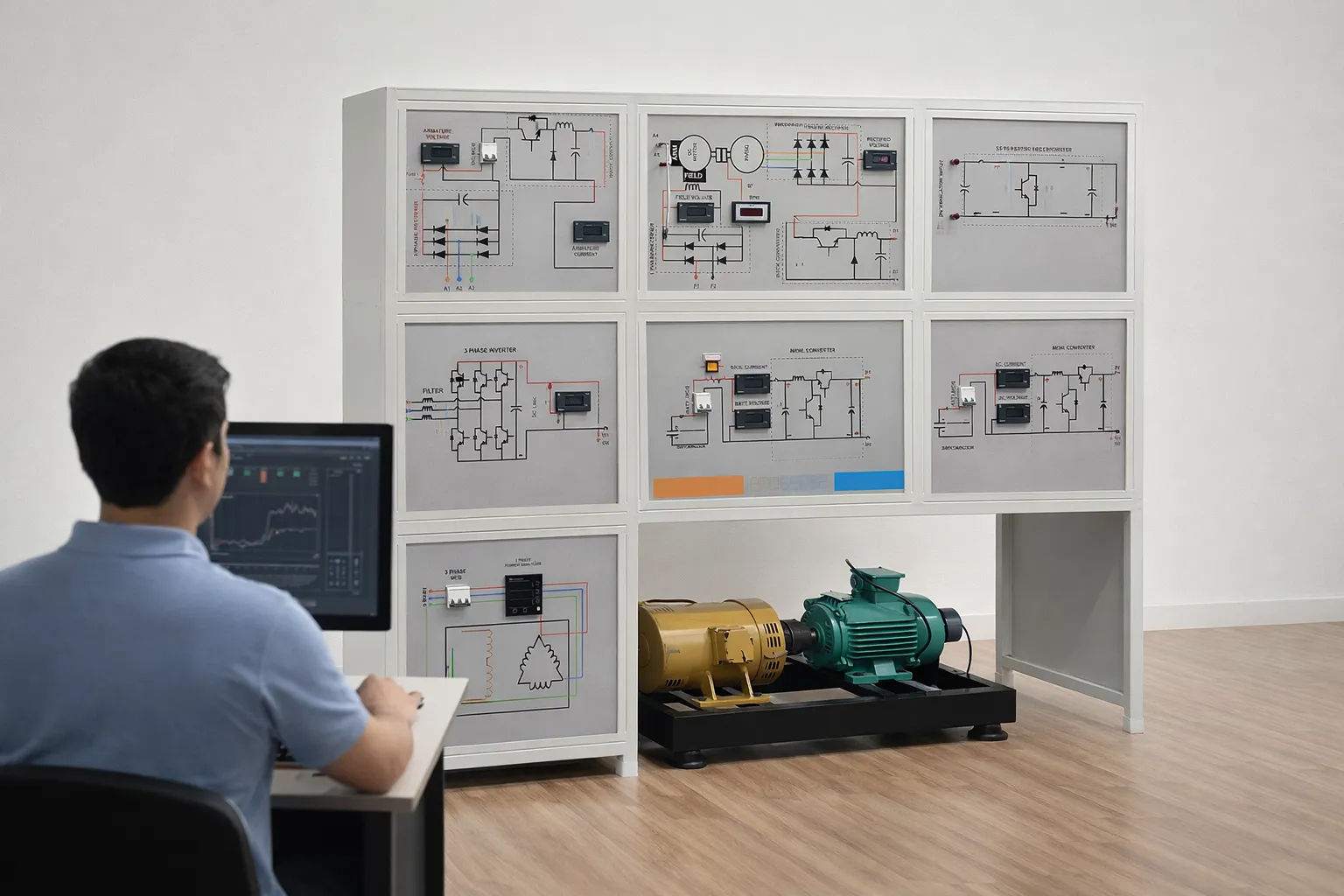
  • Comprehensive Measurement & Data Logging: Equipped with dual power analyzers, real-time voltage/current sensing, tachometer feedback, and LabVIEW-based GUI with adjustable sampling and CSV export capability.
  • Indoor, Safe & Scalable Research Platform: Provides controlled laboratory-based wind energy experimentation without dependence on real wind conditions, ensuring repeatability, safety, and cost efficiency.
Ecosense

Learning Modules 

Ecosense

Wind Turbine Modeling & Characteristics

  • Cp–λ curve plotting and analysis.
  • Torque-speed and power-speed characteristic evaluation.
  • Study of pitch angle variation effects.
  • Differential equation-based turbine modeling.

DFIG Control & Power Electronics

  • Rotor Side Converter control strategies.
  • Grid Side Converter DC link voltage regulation.
  • Reactive power control and unity power factor operation.
  • Implementation of MPPT (Hill Climb Search method).

Grid & Microgrid Integration

  • Grid synchronization techniques.
  • Power quality analysis.
  • Anti-islanding protection implementation.
  • Integration with microgrid and smart grid systems

Working Principle

  • The wind turbine mathematical model calculates reference torque based on selected wind speed and pitch angle inputs provided through the GUI.
  • A 6 HP DC motor acts as the prime mover and is controlled by a DC drive to replicate the calculated turbine speed in real time.
  • The DC motor is mechanically coupled to a 3 kW Doubly Fed Induction Generator (DFIG), enabling realistic emulation of turbine-generator interaction.
  • The Rotor Side Converter (RSC) controls rotor currents to regulate electromagnetic torque, active power, and reactive power independently.
  • The Grid Side Converter (GSC) maintains DC-link voltage stability and manages power exchange between the emulator and the grid.
  • Real-time sensing of voltage, current, speed, and power enables closed-loop control and precise tracking of torque–speed and power–speed characteristics.
  • Multiple wind profile modes (Manual, Table, and CSV-based Simulation) allow dynamic testing under constant, step, or real-field wind conditions.
  • The LabVIEW-based interface visualizes Cp–λ curves, electrical parameters, and performance characteristics while logging experimental data for further analysis.
Ecosense

Technical Specifications 

Ecosense

Machine and Drive System

*specifications can be customized as per user

ComponentSpecifications
DC Motor6 HP, 220V DC (Field & Armature), 1500 RPM
DC Drive230V input, 200V output, 30A, 10 kHz switching
GeneratorDFIG, 3 kVA, 400V Stator, 200V Rotor, 50 Hz, 1200 RPM
Encoder24V DC input, 360 PPR

Power Electronics & Conversion

*specifications can be customized as per user

ComponentSpecifications
Rotor Side Converter3-Leg Inverter, 150V DC input, 25A, 10 kHz
Grid Side Converter3-Leg Inverter, 150V DC input, 50 Hz
Isolation TransformerDelta-Star, 200V/400V, 3 kVA
DC Link CapacitorsUp to 3300µF, 450V
GSC Filter Inductor3mH, 15A
Rotor Side Filter3mH, 6A


Control, Protection & Software

*specifications can be customized as per user

ComponentSpecifications
Control CardFPGA-based with ADC & PWM ports
SoftwareLabVIEW GUI with data logging
CommunicationEthernet
ProtectionMCBs (AC/DC), Overcurrent protection, Relays


Related Products

Frequently Asked Questions

The emulator replicates real wind turbine behavior in a controlled laboratory environment. It allows students and researchers to study torque-speed characteristics, power flow, MPPT techniques, and grid integration without depending on actual wind conditions or outdoor installations.

A Doubly Fed Induction Generator enables independent control of active and reactive power using partial-scale converters. This makes it ideal for studying modern wind energy systems, variable-speed operation, improved efficiency, and advanced grid support functionalities. We also have Wind Turbine Emulators with PMSG and Induction Generator.

Yes. The FPGA-based control platform allows users to modify and deploy custom control algorithms. Researchers can experiment with MPPT strategies, converter control methods, reactive power regulation, and advanced smart grid control techniques.

Yes. The emulator supports implementation and testing of Maximum Power Point Tracking methods such as Hill Climb Search. Users can also develop and validate new MPPT algorithms under different wind speed and loading conditions.

Yes. The system operates in Manual, Table, and CSV-based Simulation modes. Researchers can upload real wind datasets or create custom wind profiles, enabling realistic and repeatable laboratory testing scenarios.

Yes. The DC link architecture allows integration of additional renewable sources like solar PV. This enables hybrid system experimentation, microgrid studies, DC-link control research, and smart grid interaction analysis.

The system includes a LabVIEW-based graphical user interface with real-time visualization and adjustable sampling rates. Experimental data can be stored in CSV or image format for further analysis, reporting, and academic research documentation.

Get in Touch

Ready to transform your labs?

Contact Now