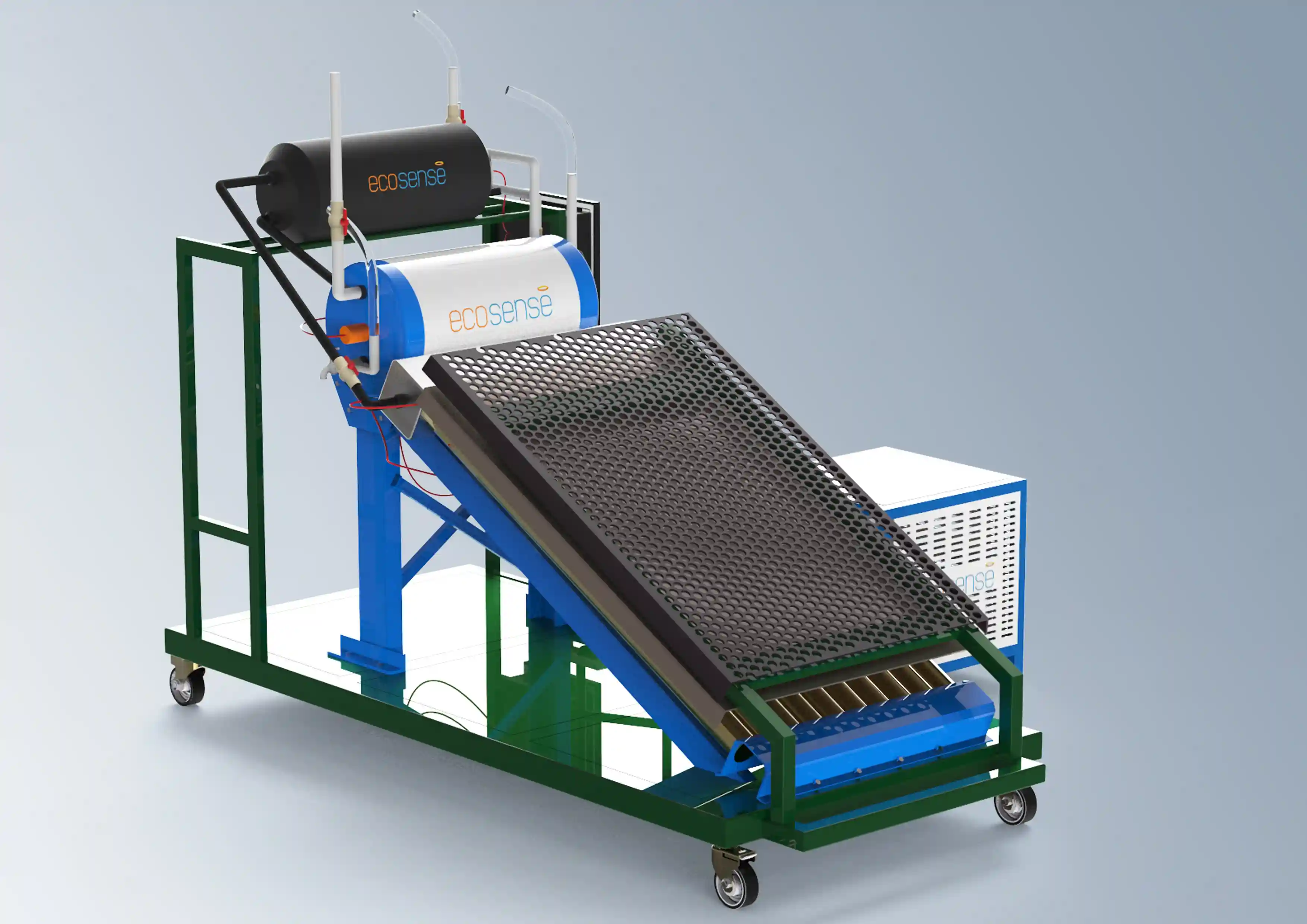
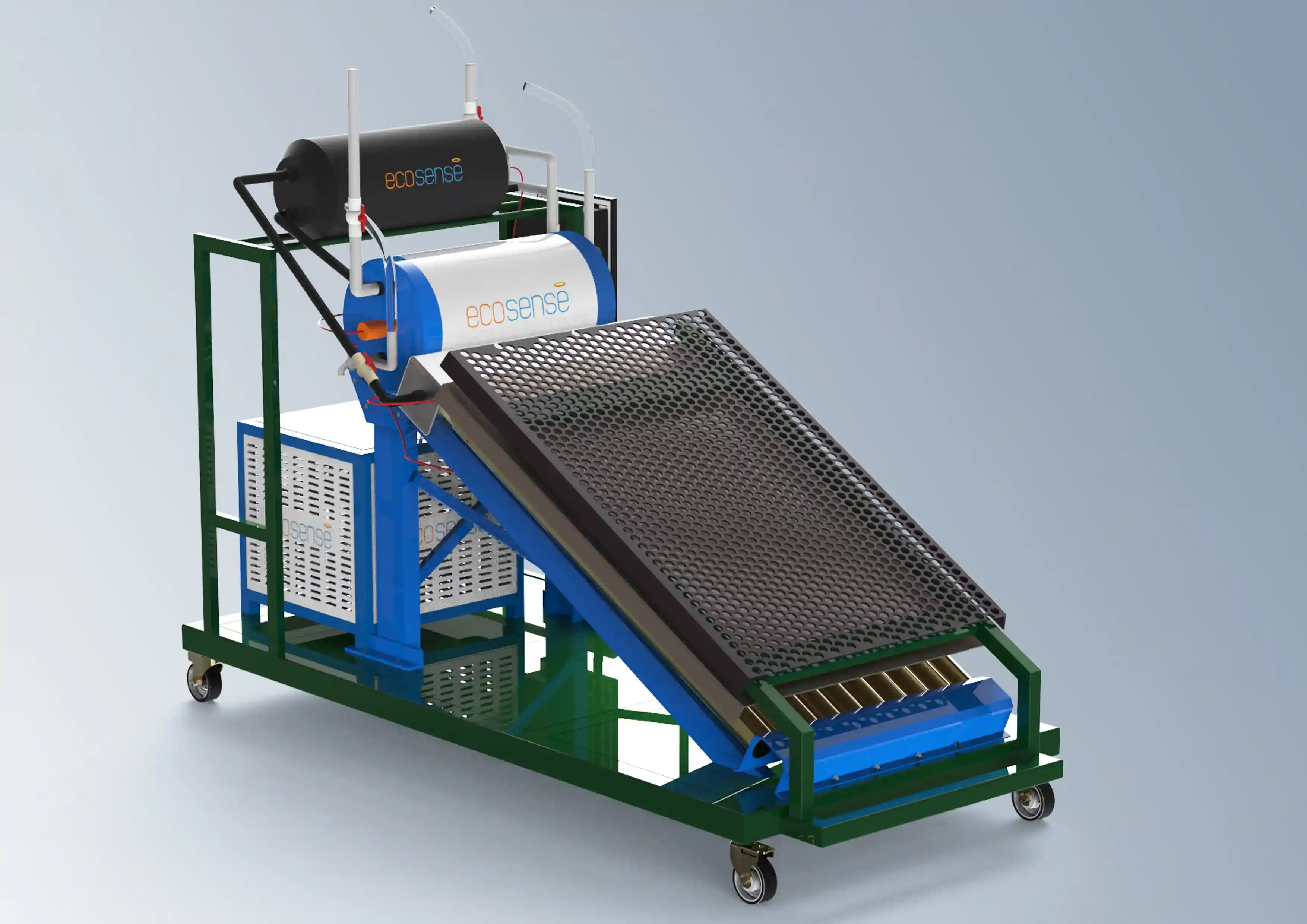
ETC Characterization System 

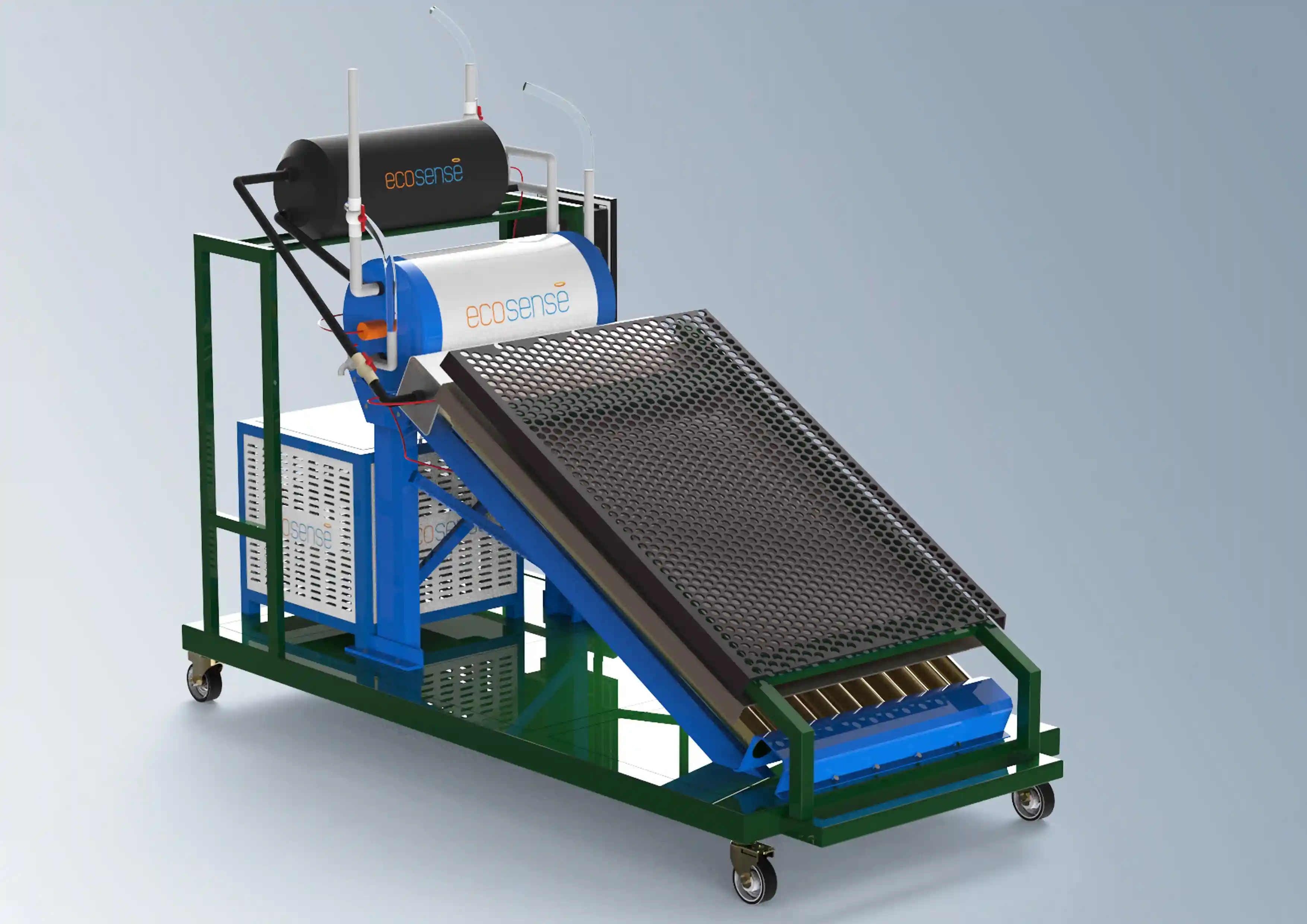
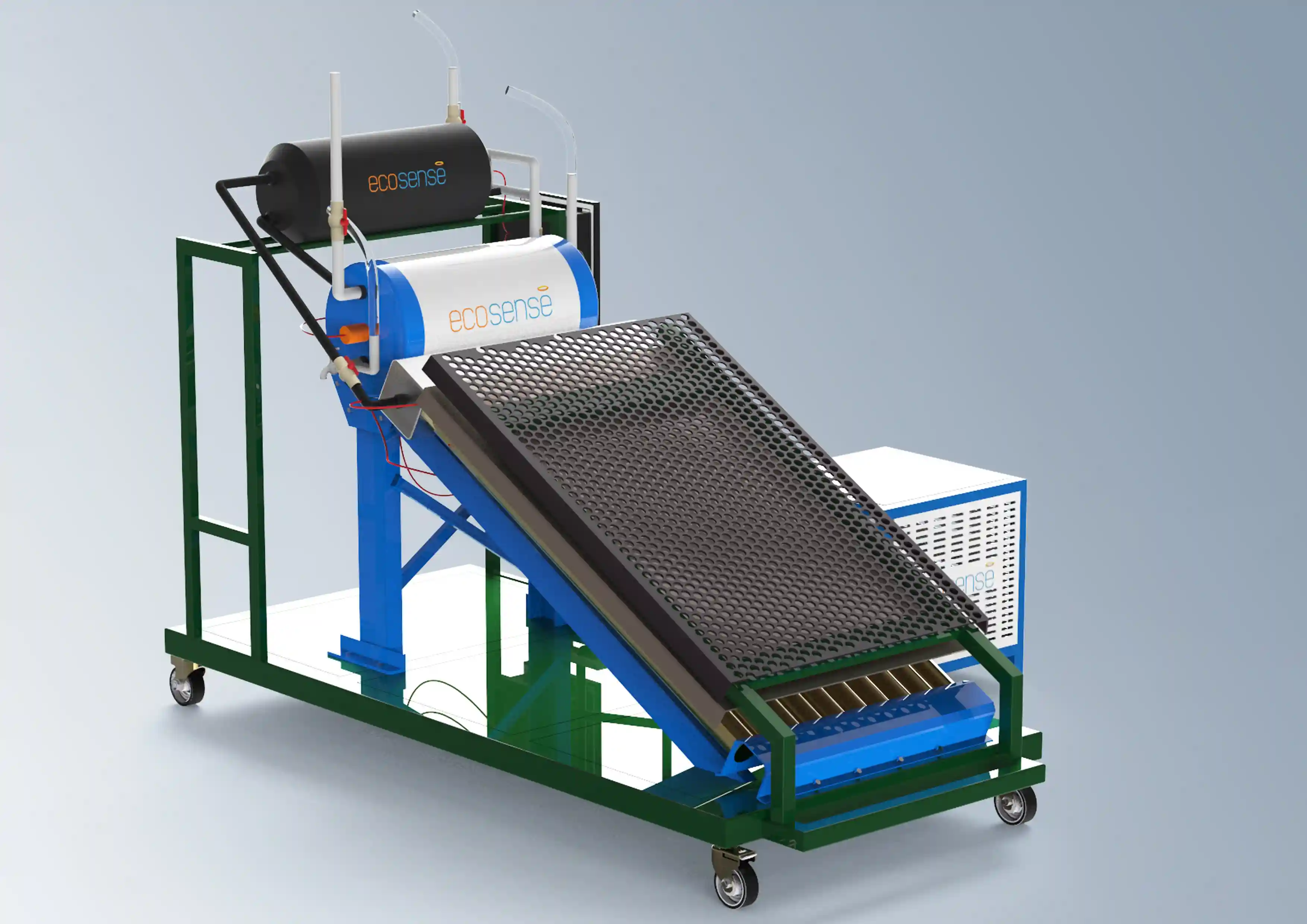
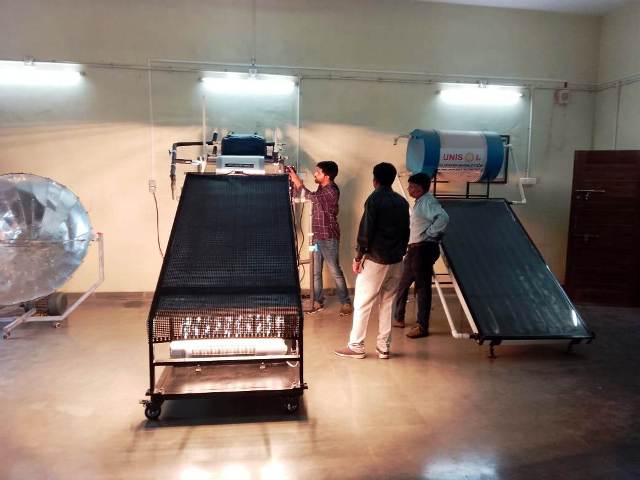
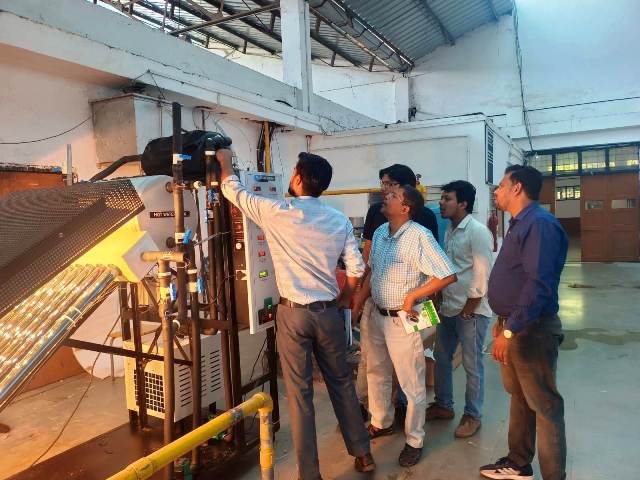
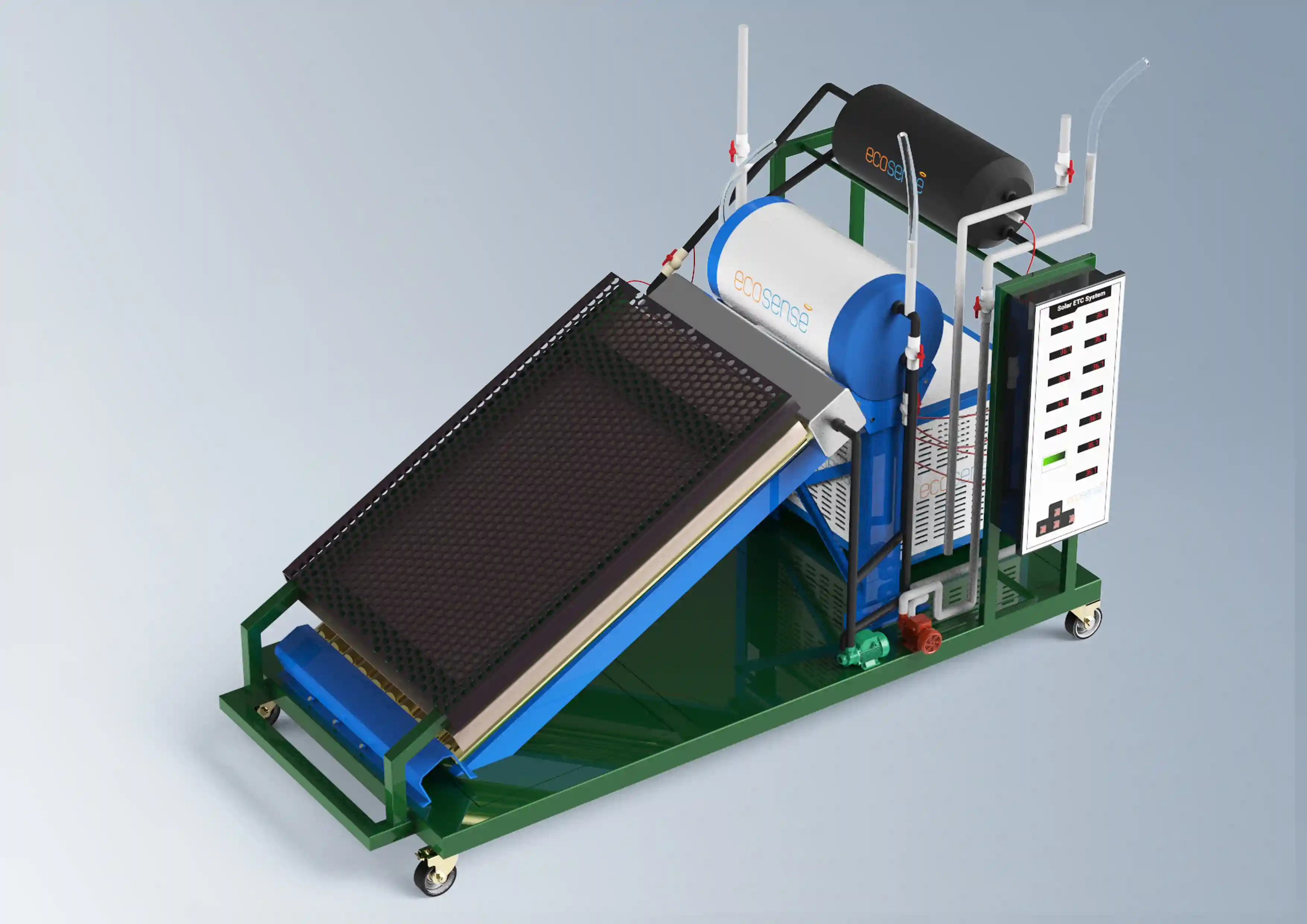
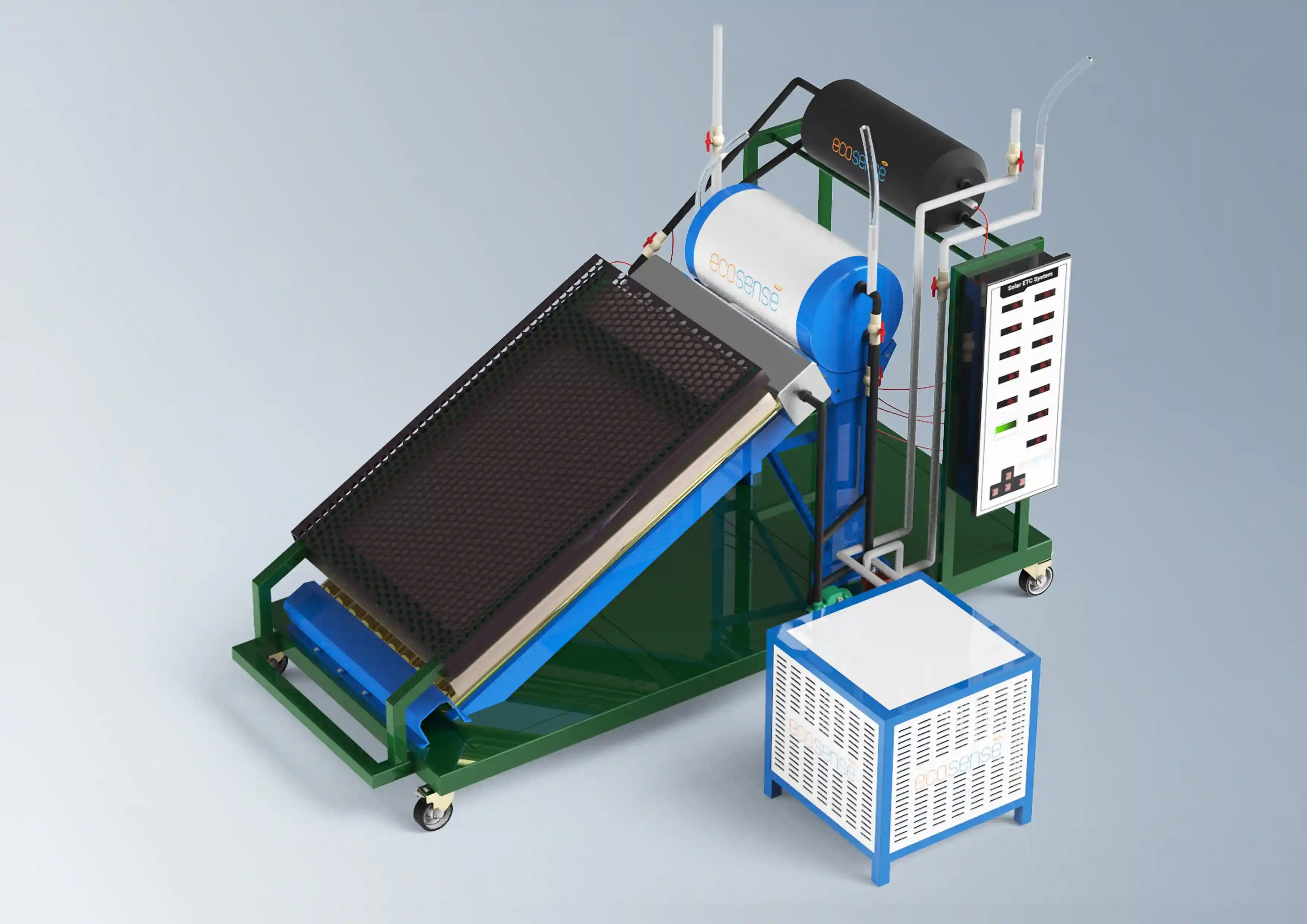
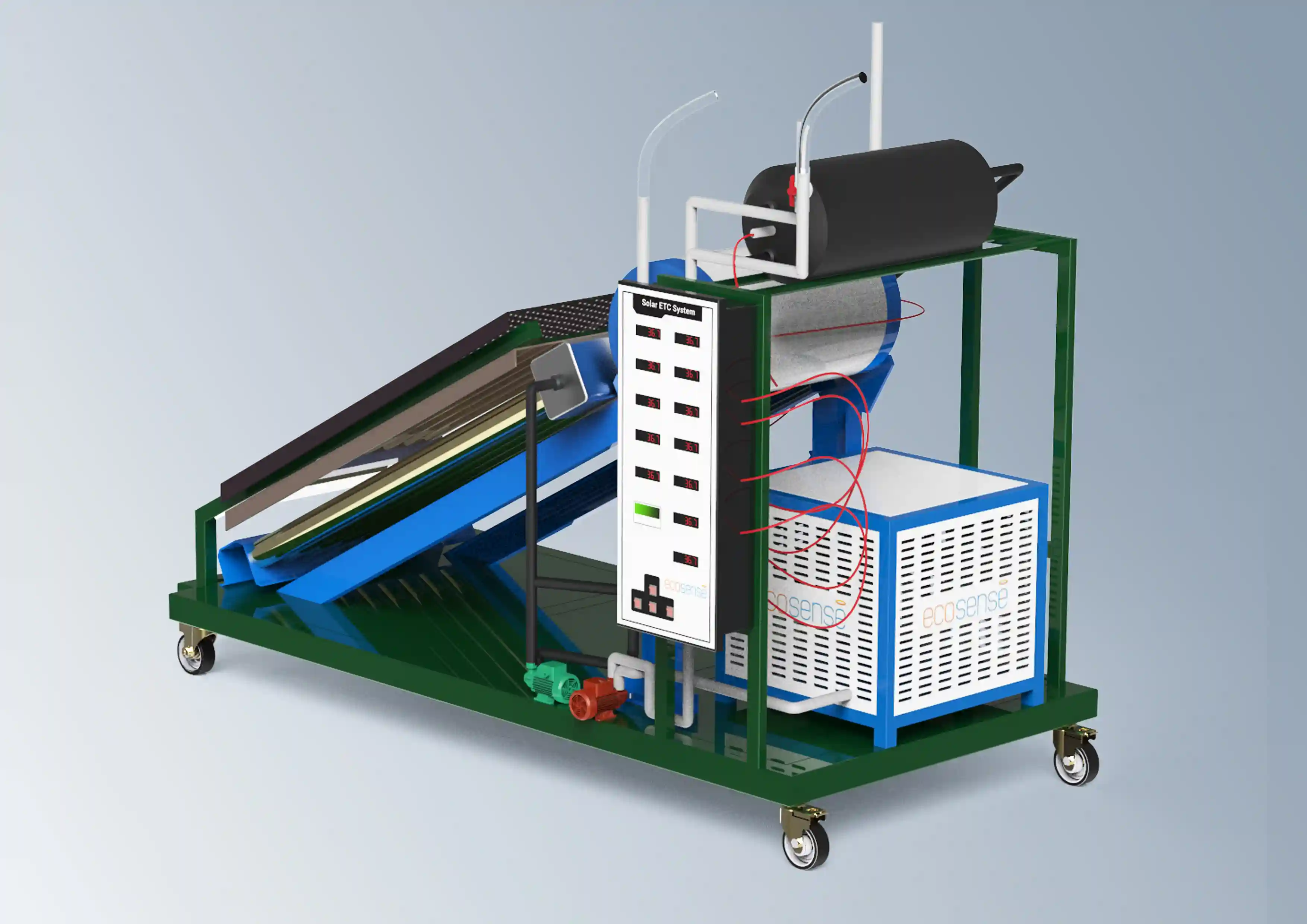
The ETC Characterization System is a compact, closed-loop Evacuated Tube Collector (ETC) setup designed for in-depth thermal analysis of various fluids. Utilizing an artificial sunlight source, this system enables controlled, indoor experimentation independent of natural climate conditions. Ideal for educational institutions, it also serves as a robust platform for advanced research on heat transfer, system efficiency, and the performance of different working fluids, including nanofluids. 
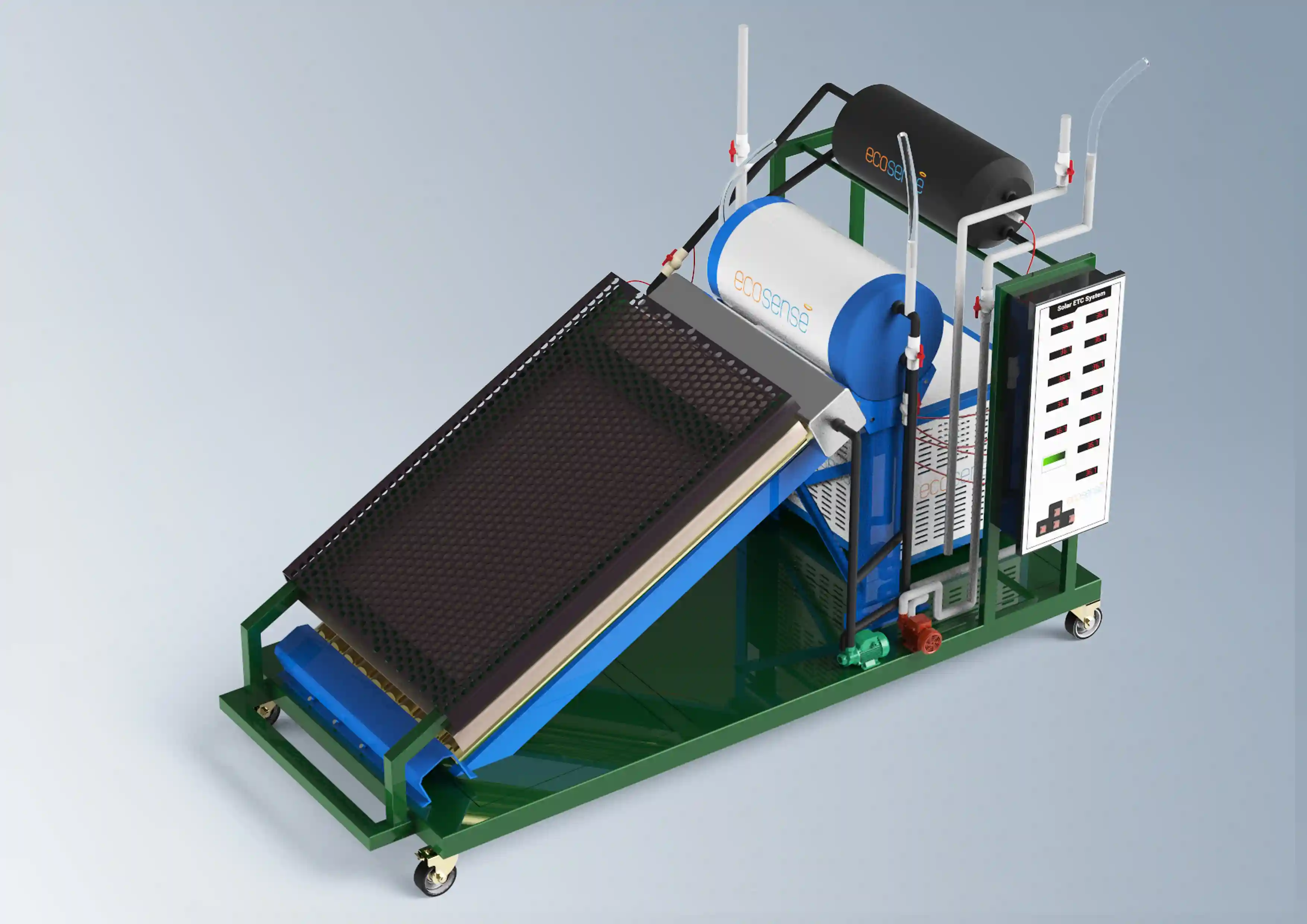
Key Features

  • Artificial Sunlight Source: Employs 30 halogen lamps (totaling 4500 W) to simulate solar irradiation, with adjustable intensity to replicate varying sunlight conditions.
  • Evacuated Tube Collector (ETC) System: Comprises 10 borosilicate glass tubes (1800 mm length, 58 mm diameter) with a total capacity of 100 LPD. Features a triple-layer aluminum nitride selective coating with >90% absorptance for efficient heat absorption.
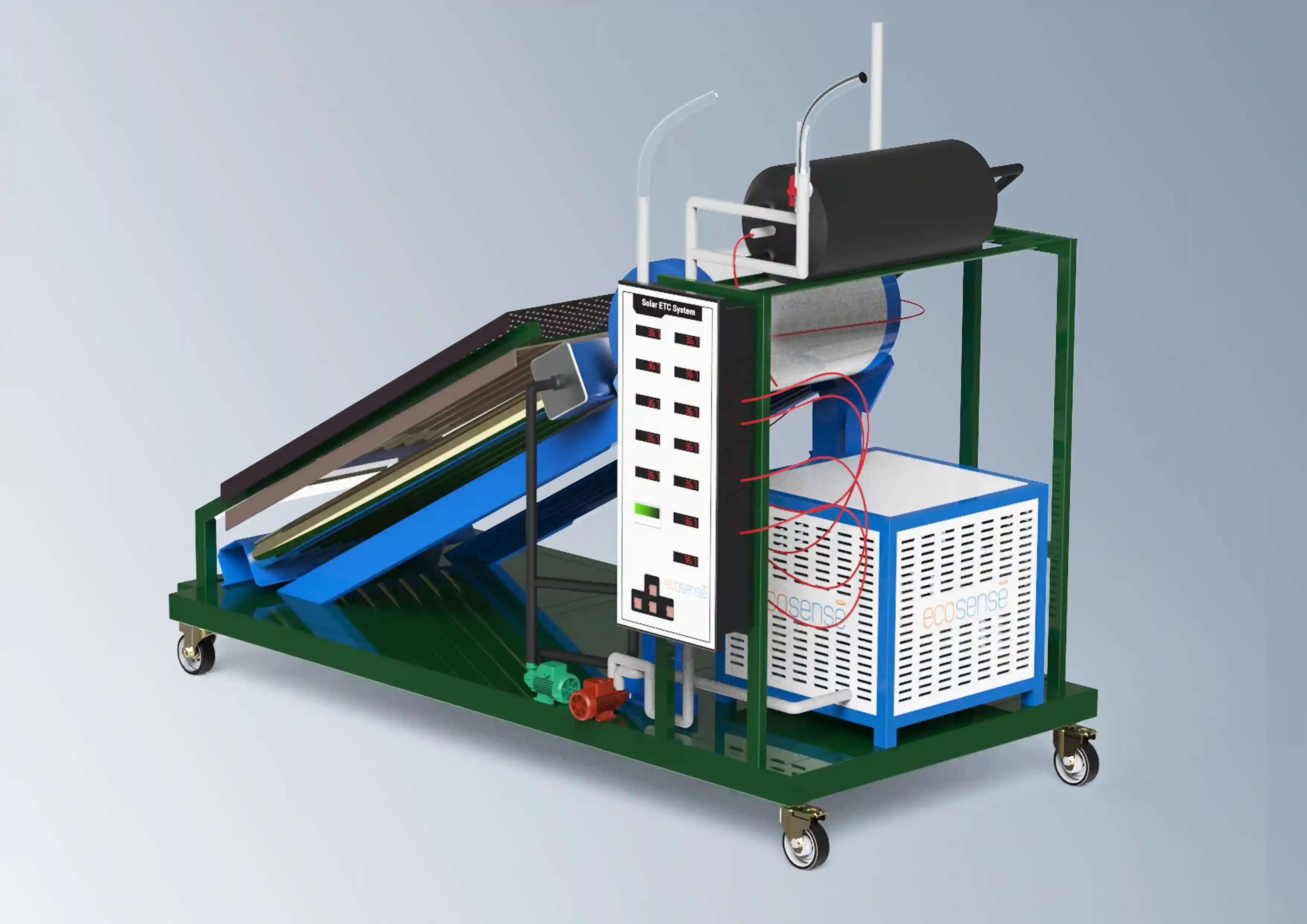
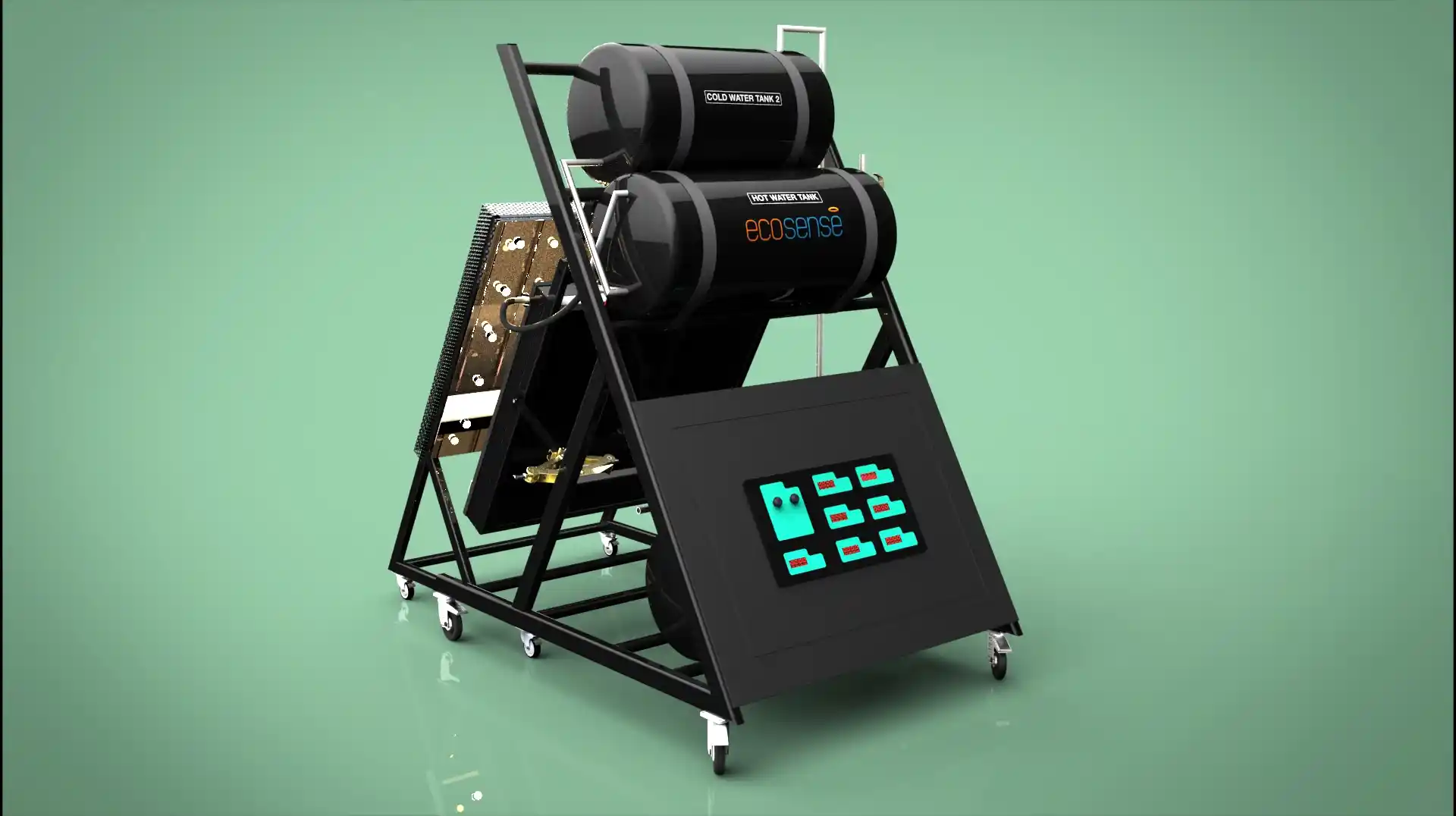
  • Integrated Storage and Heat Exchange: Includes a 50-liter stainless steel storage tank with a 3000W water heater for preheating, and a 50-liter copper heat exchanger tank with glass wool insulation for effective thermal management.
  • Chilled Cooling System: A 0.25 TR chiller unit rapidly cools the heated fluid, allowing for comprehensive analysis of both heating and cooling phases.
  • Dynamic Fluid Flow Control: Adjustable flow rates facilitate the simulation of various operational scenarios, enhancing the versatility of experiments.
  • Comprehensive Measurement Suite: Equipped with sensors for temperature, pressure, and flow rate monitoring, providing real-time data for performance analysis.
  • Simulated Environmental Conditions: Artificial wind speed control allows for the simulation of different ambient conditions, impacting heat loss and system efficiency.
  • User-Friendly Interface: An active measurement panel displays key parameters, ensuring ease of operation and data interpretation.
Ecosense

Learning Module 

Ecosense

Efficiency Testing and Heat Loss Analysis of Evacuated Tube Collectors

Gain deep insights into the thermal performance of Evacuated Tube Collector (ETC) systems through hands-on experimentation:

  • Evaluate thermal losses from the storage tank and ETC tubes under stagnant and dynamic conditions.
  • Analyze overall system efficiency under controlled artificial sunlight, with varying irradiation levels and inlet fluid temperatures.
  • Investigate the influence of ambient temperature and wind speed on system performance using simulated environmental settings.

Heat Transfer Dynamics and Coefficient Calculation

Understand key thermodynamic behavior and fluid-structure interactions in solar thermal systems:

  • Determine convective and conductive heat transfer coefficients across different components of the ETC system.
  • Conduct experiments using different working fluids, including nanofluids, to analyze heat transfer efficiency.
  • Utilize real-time data monitoring to assess fluid behavior at different flow rates and system pressures.

Transient Response and Environmental Simulation Studies

Explore the dynamic behavior of solar water heating systems under variable conditions:

  • Perform transient thermal response analysis to observe system behavior during rapid changes in solar irradiance and fluid flow rates.
  • Use artificial sunlight and cooling systems to replicate realistic heating and cooling cycles.
  • Study the impact of simulated wind conditions and environmental fluctuations on energy retention and heat loss.

Technical Description

  • The system is built around an Evacuated Tube Collector (ETC) that acts as the primary solar thermal absorber.
  • An artificial solar irradiation source uniformly heats the evacuated tubes, simulating controlled and repeatable solar input independent of outdoor conditions.
  • Incident radiation is absorbed by the selective coating inside the evacuated tube, converting radiant energy into thermal energy with minimal convective losses.
  • Heat is transferred from the absorber to the working fluid flowing through the internal heat transfer path.
  • A circulation pump maintains a controlled and adjustable mass flow rate, enabling steady-state and transient thermal studies.
  • Temperature sensors placed at fluid inlet, outlet, and absorber points continuously capture thermal gradients.
  • Collected data is used to compute useful heat gain, thermal efficiency, and heat loss characteristics for different fluids.
  • Integrated heating and cooling modules allow characterization during both heating and cooling cycles, enabling comparative thermal analysis of multiple heat transfer fluids.
Ecosense

Technical Specifications 

Ecosense

Solar Collector & Heat Generation


ParametersSpecifications
Collector TypeEvacuated Tube Collector (ETC)
Number of Tubes10 tubes
Tube MaterialBorosilicate glass
Tube Dimensions1800 mm length × 58 mm OD
Absorber CoatingTriple coating (Cu + AlN, magnetron sputtered), absorptance > 90%

* specifications can be customized as per user's requirement

Thermal Loop & Fluid Handling


ParametersSpecifications
System ConfigurationClosed-loop solar thermal system
Manifold TypeSingle-sided, 100 LPD manifold
External Storage Tank50 L, SS 316 with 3000 W heater
Heat Exchanger Tank50 L, copper heat exchanger
Insulation50–55 mm PUF / glass wool insulation

* specifications can be customized as per user's requirement

Instrumentation & Environmental Control


ParametersSpecifications
Artificial Sunlight SourceHalogen lamps, 30 units
Total Irradiation Power4500 W
Measurement SensorsTemperature, pressure, flow
Cooling SystemIntegrated chiller, 0.25 TR
AccessoriesRadiation meter, IR temperature gun

* specifications can be customized as per user's requirement

Related Products

Frequently Asked Questions

The system is designed to study and compare the thermal performance of different heat transfer fluids using an evacuated tube collector under controlled laboratory conditions. It enables analysis of heat gain, losses, and overall system efficiency.

Yes. The ETC Characterization System uses an artificial solar irradiation source, allowing experiments to be conducted indoors and independent of outdoor weather conditions.

The system supports a wide range of working fluids including water, glycol mixtures, thermal oils, and experimental or nano-fluids for advanced thermal research.

An integrated electric heater is used for controlled heating, while a dedicated chiller enables rapid cooling of the working fluid. This allows detailed analysis of both heating and cooling cycles.

Key parameters include inlet and outlet temperatures, pressure, flow rate, irradiation level, heat transfer rate, thermal losses, and overall collector efficiency under varying operating conditions.

Get in Touch

Ready to transform your labs?

Contact Now