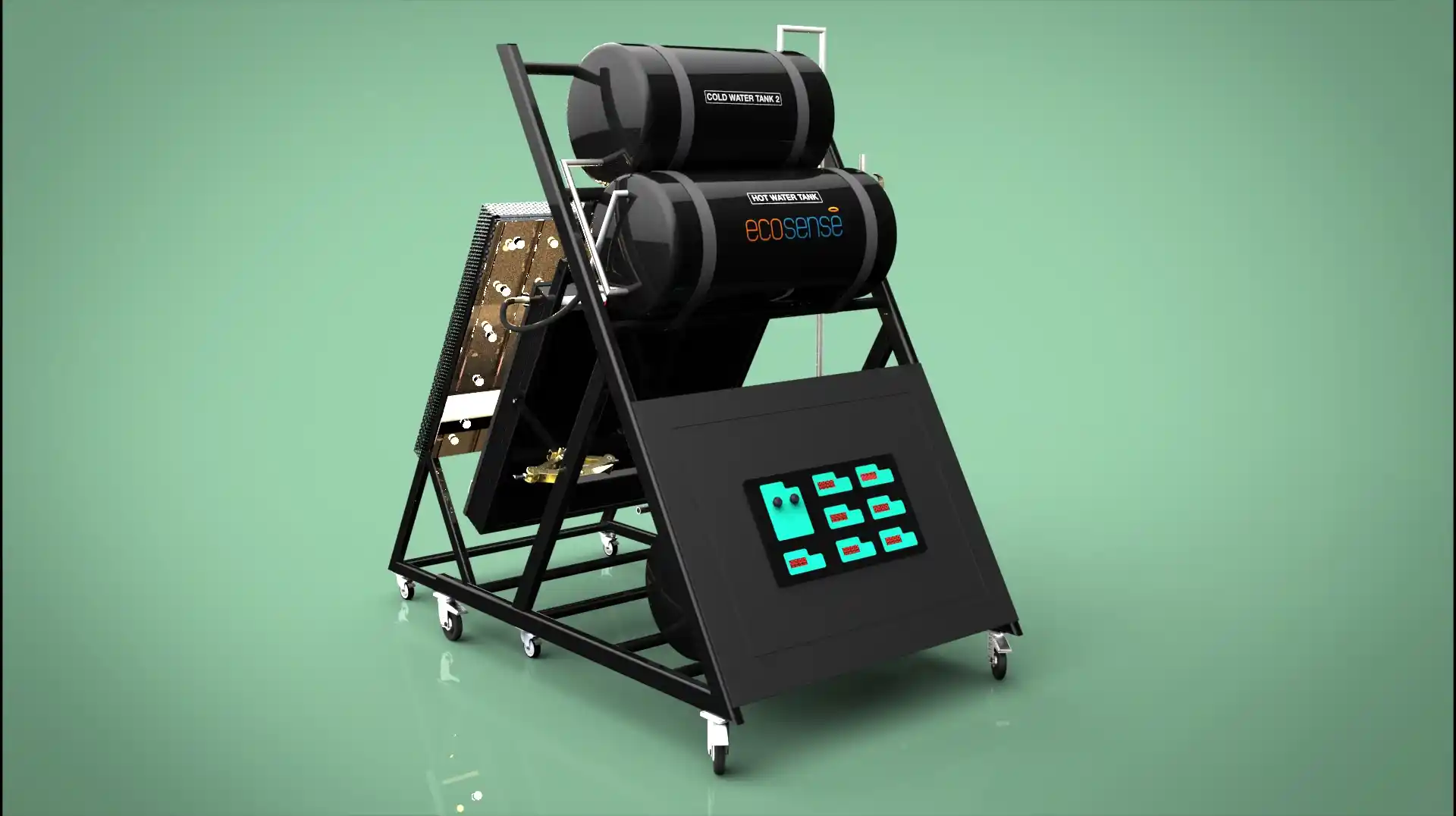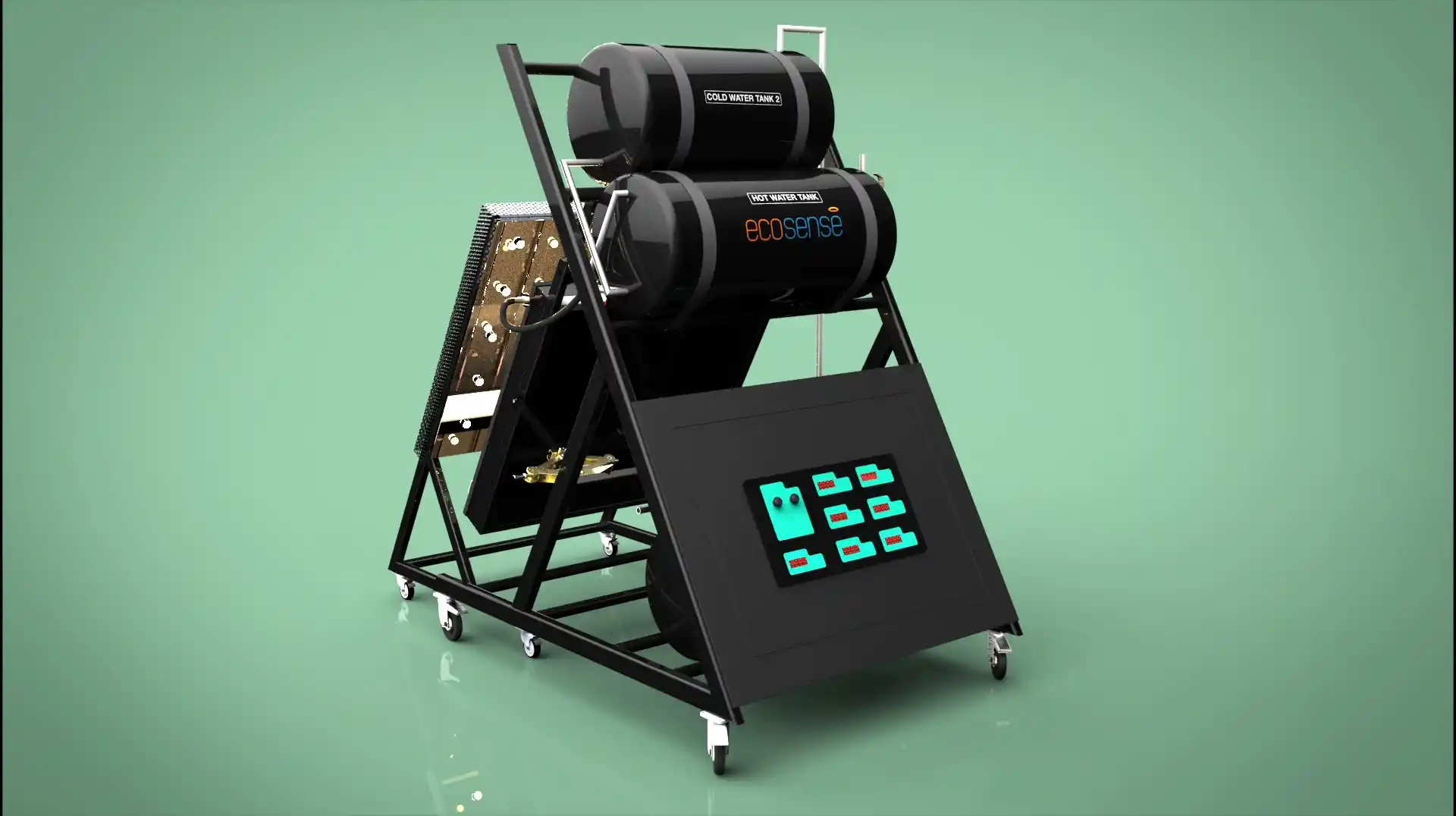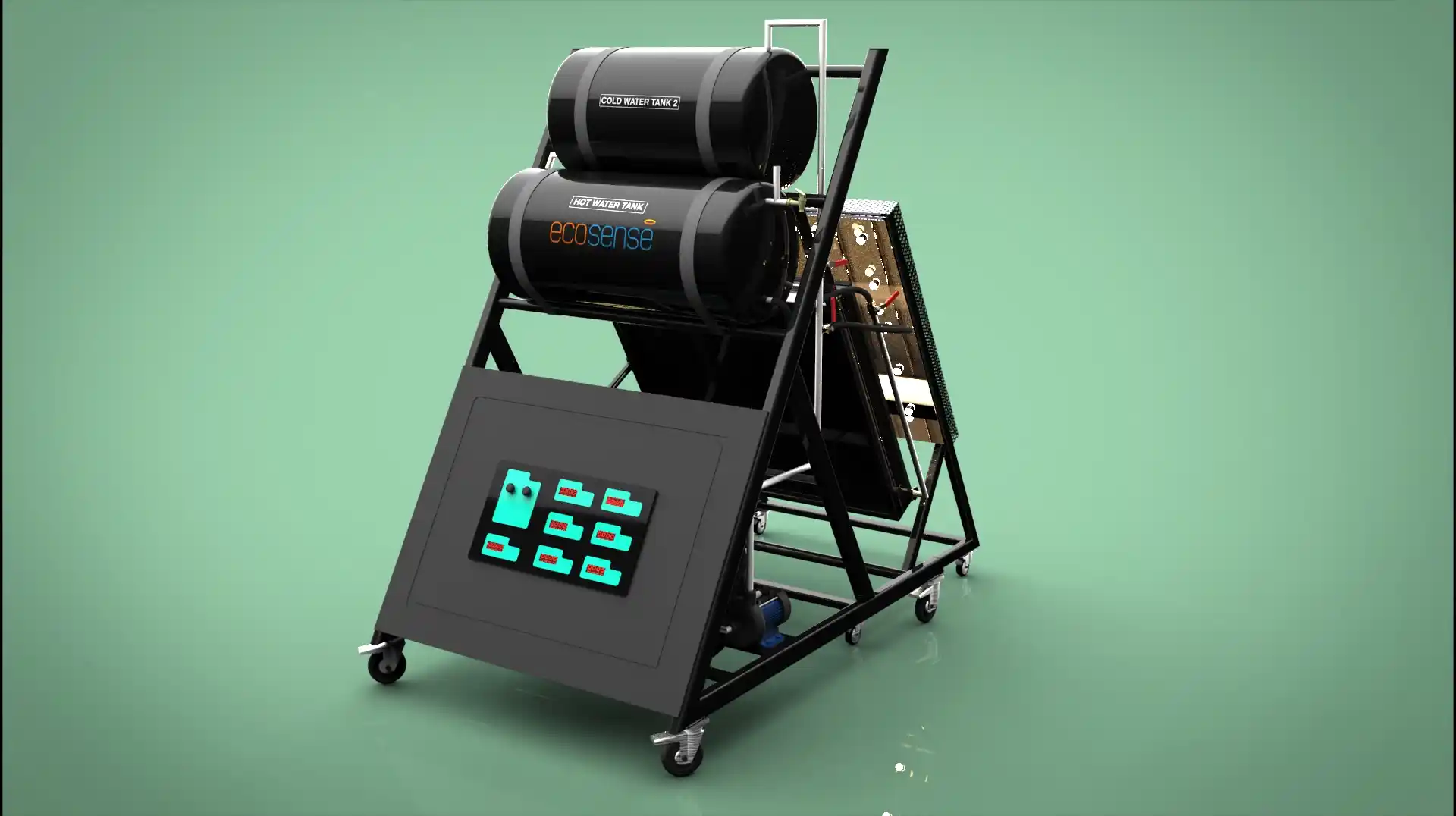
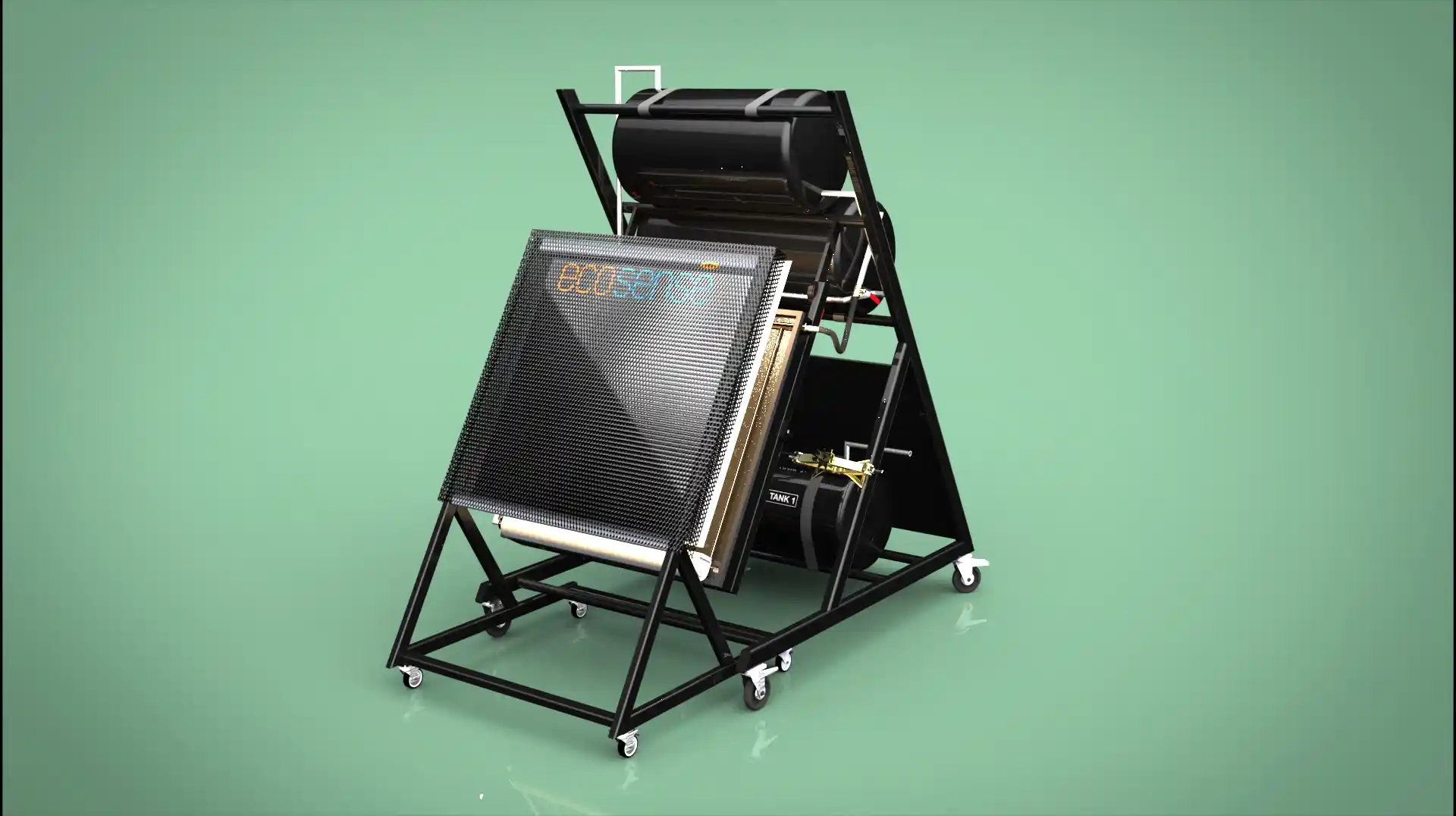
Solar Thermal Training System 

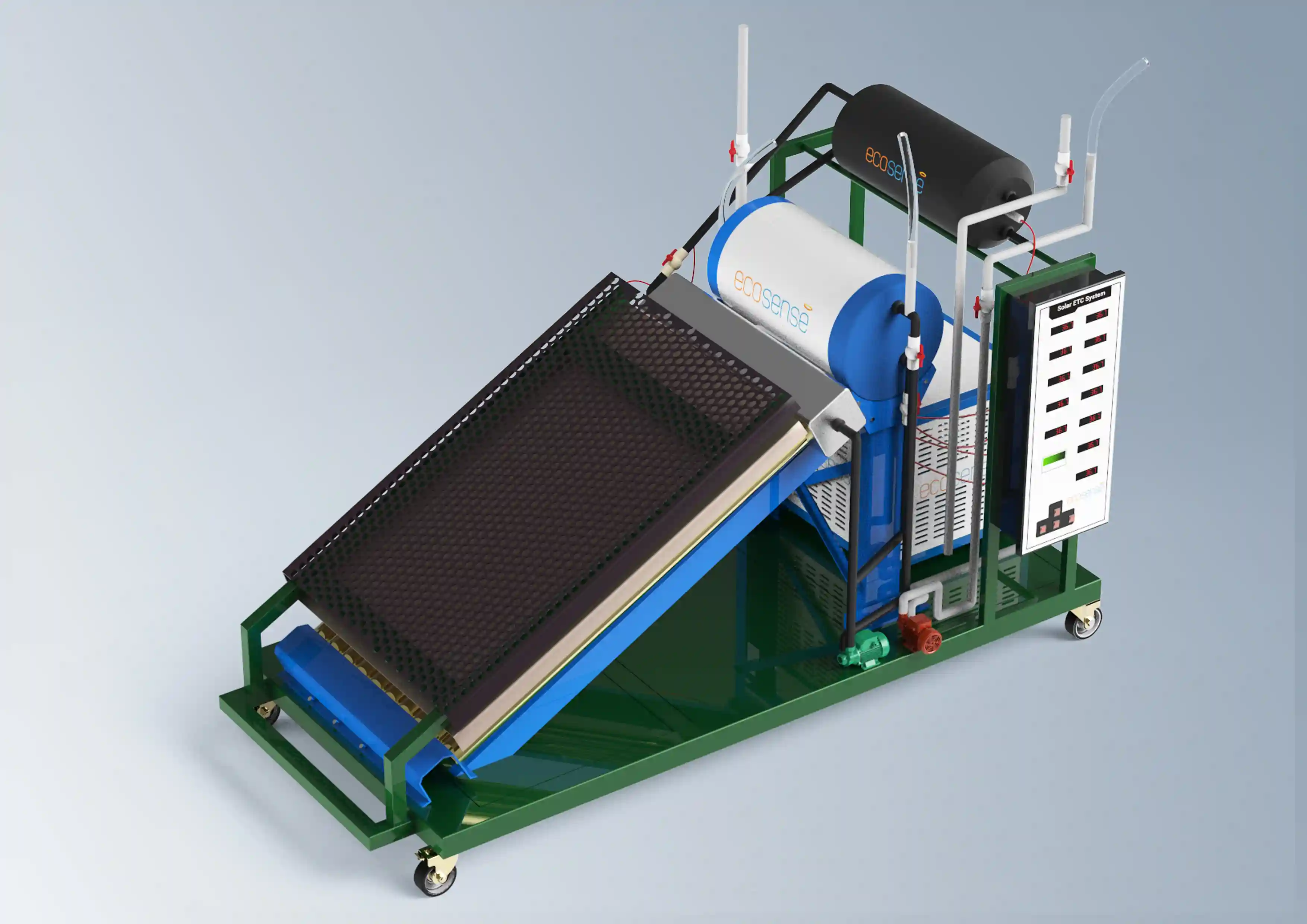
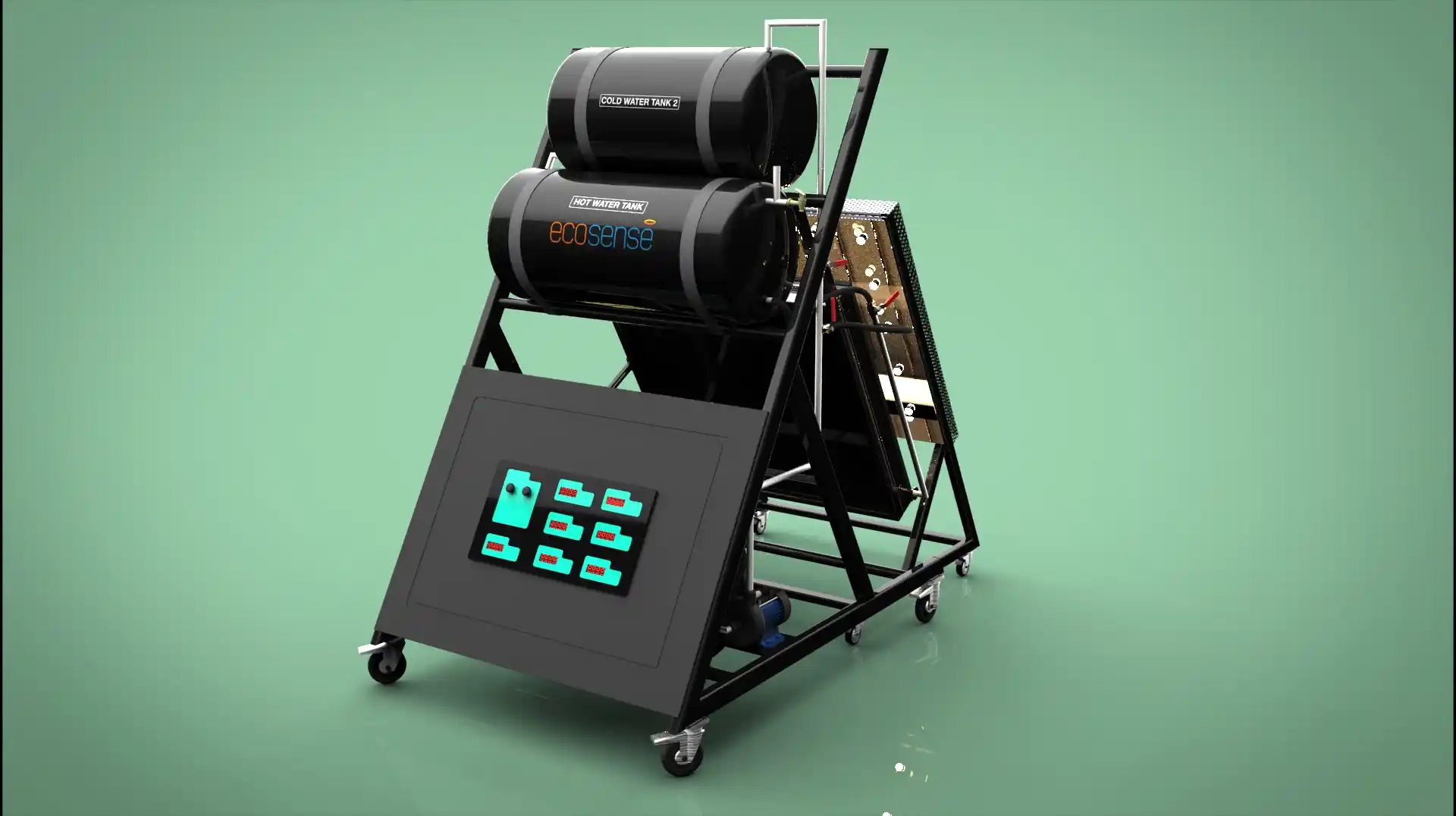
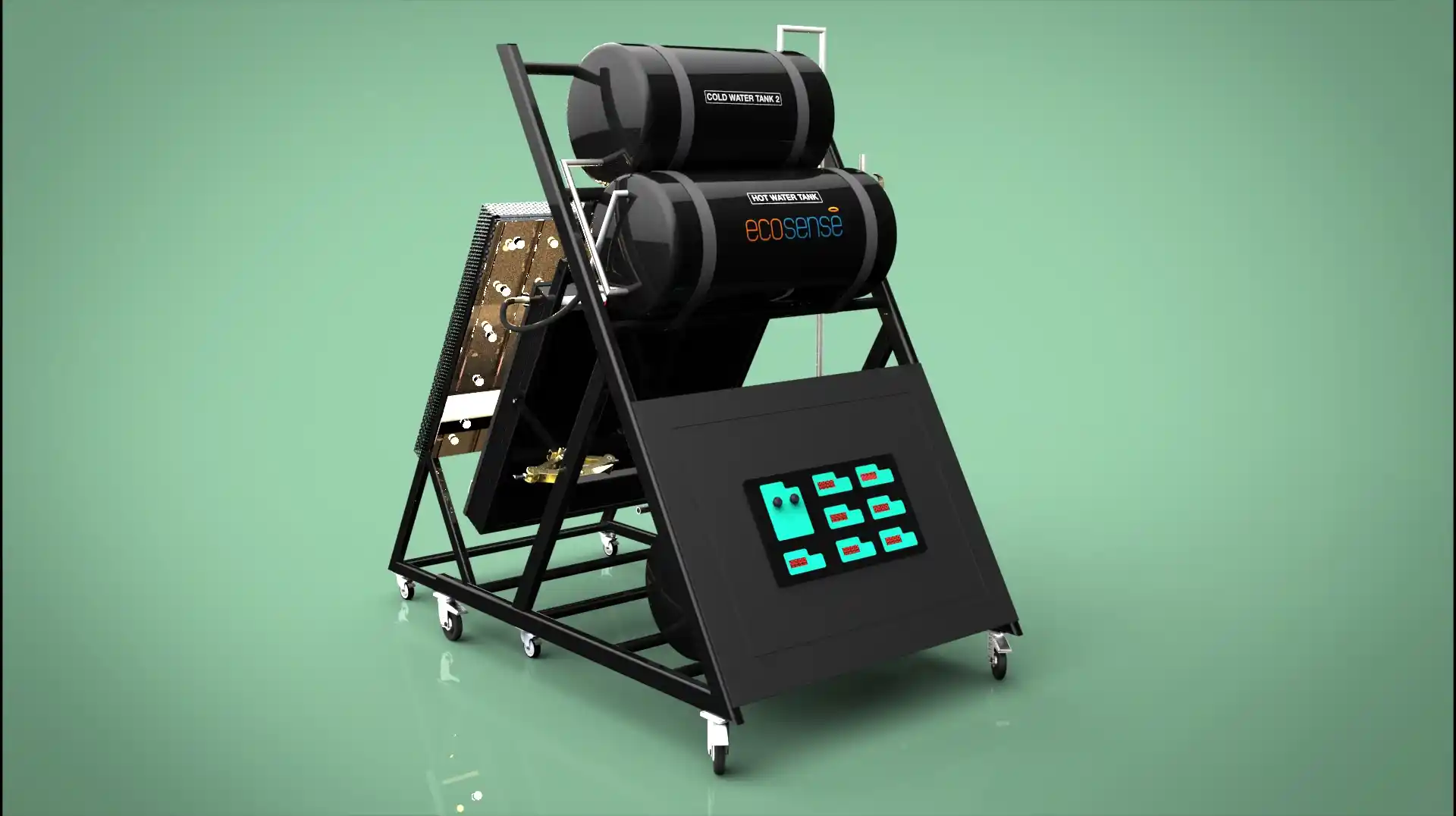
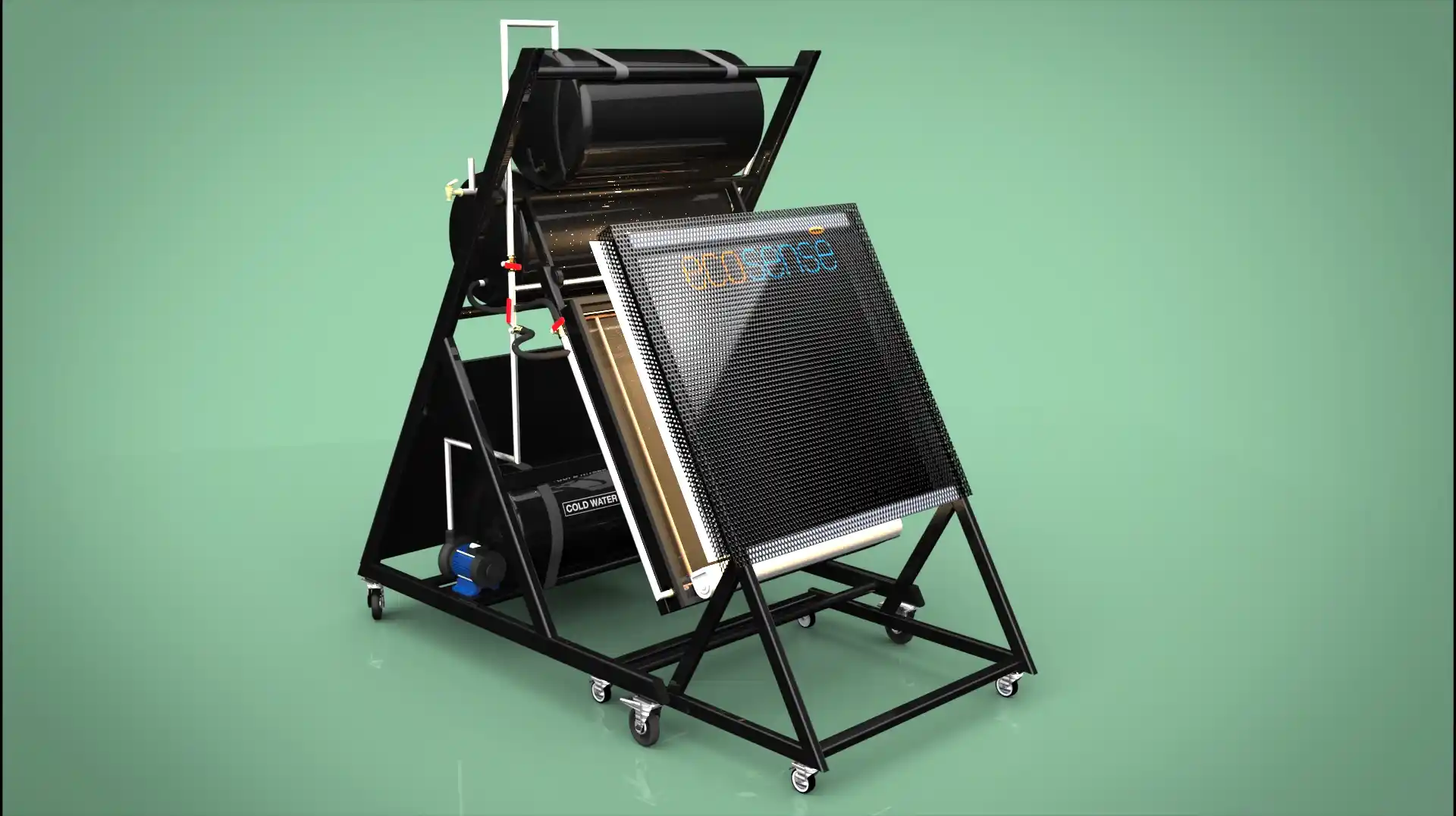
The Solar Thermal Training System is a compact, modular platform designed to replicate real-world flat plate solar water heating systems. Engineered for both educational and research applications, it facilitates hands-on experimentation with key thermal performance parameters such as efficiency, overall heat loss coefficient (UL), and heat removal factor (FR). The system's adaptability allows users to conduct experiments under varying conditions, including different wind speeds, fluid temperatures, flow rates, and irradiation levels, making it an invaluable tool for comprehensive thermal analysis. 
Key Features

  • Dual Mode Operation: Supports both thermosyphonic and forced circulation modes, enabling comparative studies of natural and pumped fluid flow.
  • Artificial Irradiation Source: Equipped with a 3200 W halogen lamp fixture with adjustable intensity, allowing for controlled indoor experiments independent of weather conditions.
  • Wind Simulation Capability: Features an artificial wind source with adjustable speeds ranging from 0 to 5 m/s to study convective heat losses.
  • Comprehensive Measurement Suite: Includes sensors and meters for real-time monitoring of temperature, pressure, flow rate, solar radiation, and wind speed, enhancing data accuracy and analysis.
  • Modular and Scalable Design: The system's modularity allows for easy transportation and setup, facilitating experiments both indoors and outdoors.
  • Adjustable Collector Orientation: Provides the ability to modify the tilt and incident angles of the collector, enabling studies on the impact of orientation on system performance.
  • Data Logging and Analysis: Integrated data logging capabilities allow for the recording and analysis of experimental data over time.
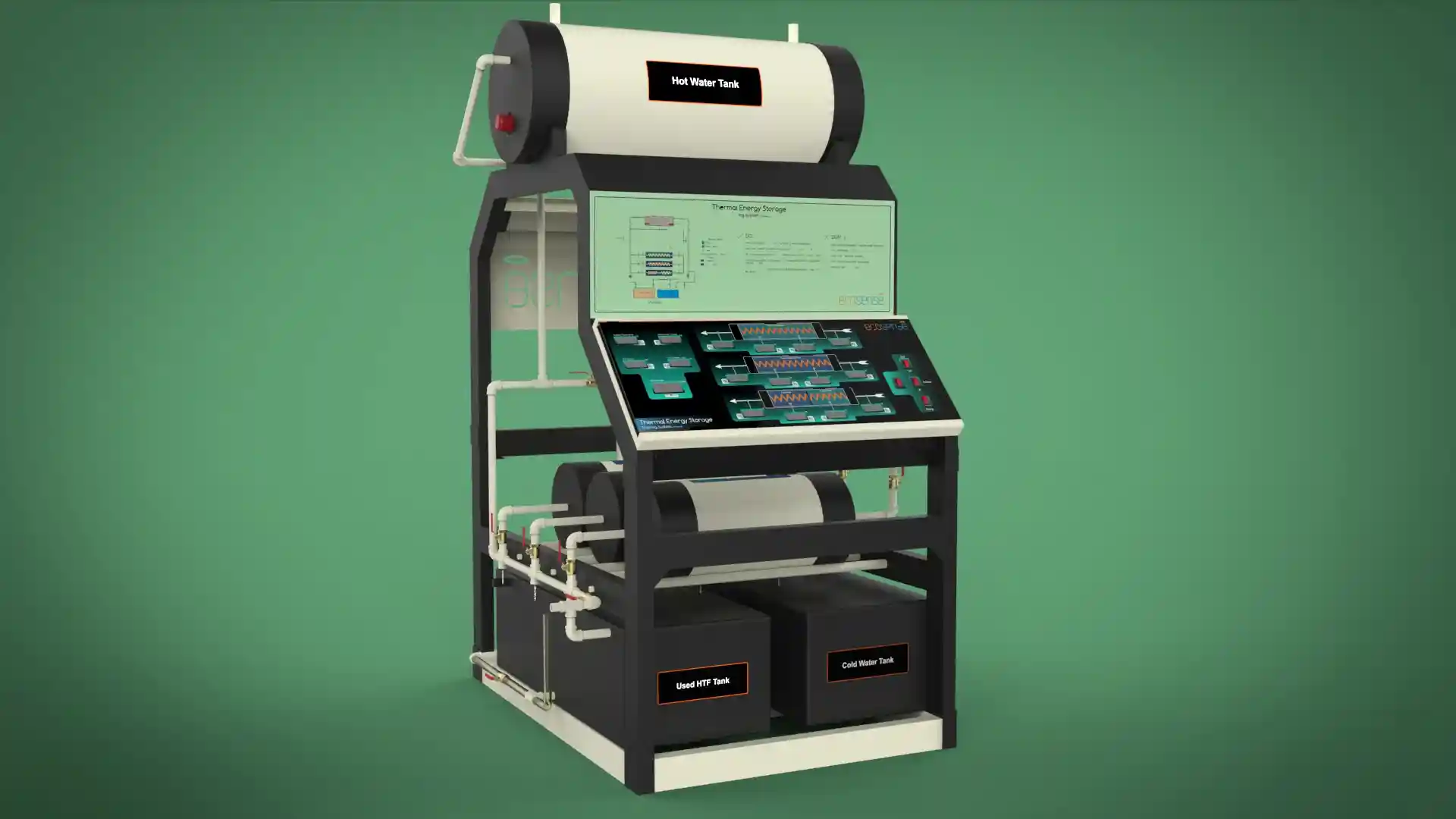
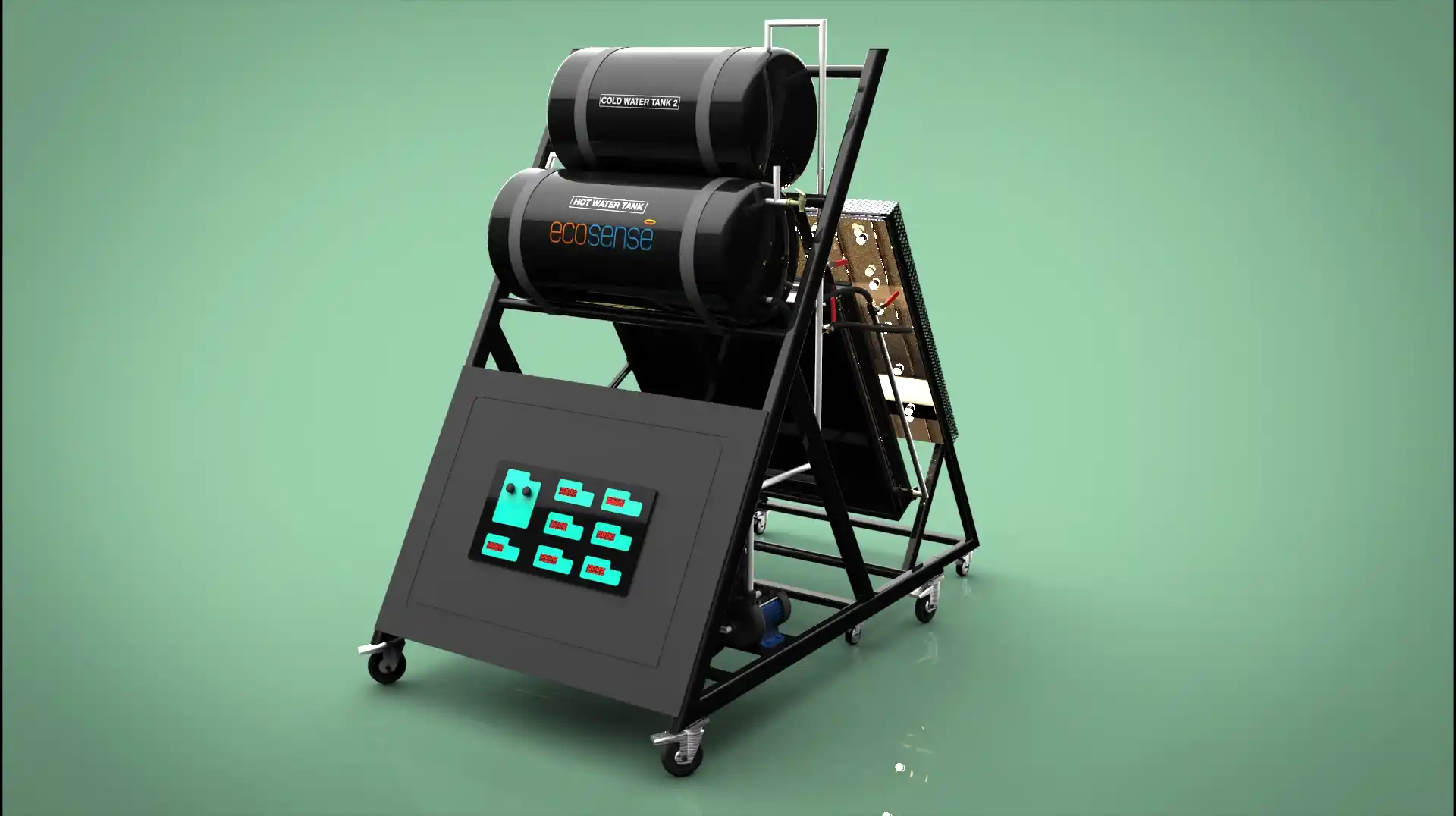
  • Auxiliary Tanks for Continuous Operation: Includes two auxiliary tanks to ensure uninterrupted experimentation and facilitate studies on thermal storage.
  • Manual Pump Control: A manually controlled hot water pump enables step-by-step observation of fluid dynamics and user-directed experimentation, reinforcing foundational understanding of solar thermal fluid circulation.
Ecosense

Learning Module 

Ecosense

Solar Thermal System Efficiency and Performance Testing

  • Assess how changing environmental factors like solar irradiance, ambient temperature, and wind speed impact thermal efficiency.
  • Optimize collector orientation and tilt angle to maximize solar energy absorption.
  • Conduct real-time performance analysis using integrated sensors and datalogging tools.

Heat Transfer, Loss Analysis, and Collector Performance

  • Determine the heat removal factor and overall heat loss coefficient to assess collector performance.
  • Study convective heat losses using a built-in adjustable wind simulation system.
  • Analyze the effect of fluid temperature, flow rate, and irradiation levels on thermal energy collection and retention.

Fluid Circulation Methods: Thermosyphon vs. Forced Circulation

  • Conduct controlled experiments to understand the physics of each fluid circulation method.
  • Use manual pump control for detailed observation of hot water flow dynamics and system response.
  • Explore real-world scenarios and operating conditions to strengthen foundational knowledge of solar water heating systems.

Technical Description

  • The system is based on a flat plate solar thermal collector that absorbs incident solar radiation from an artificial sun source enabling indoor experiments and converts it into thermal energy within the absorber plate.
  • Heat is transferred from the absorber to the circulating working fluid (water) through embedded flow channels.
  • The heated fluid flows either by natural thermosiphon effect or forced circulation using a pump, depending on the experiment configuration.
  • Temperature sensors are placed at strategic points—collector inlet, outlet, storage tank, and ambient—to capture real-time thermal data.
  • A flow meter monitors mass flow rate, enabling precise calculation of useful heat gain.
  • Collected thermal energy is stored in an insulated storage tank, allowing analysis of heat retention and thermal losses.
  • The system supports controlled experimentation on efficiency, losses, and dynamic response under real outdoor operating conditions.
Ecosense

Technical Specifications 

Ecosense

Collector & Thermal Hardware Specifications


ParametersSpecifications
Collector TypeFlat Plate Solar Collector
Collector Dimensions915 mm × 810 mm
Absorber MaterialCopper
Glazing TypeToughened Glass
Hot Water TankNon-pressurized storage tank

* specifications can be customized as per user needs

Instrumentation & Control Specifications


ParametersSpecifications
Temperature MeasurementMultiple temperature sensors with digital meter
Flow MeasurementFlow meter with sensor and flow regulator
Measurement PanelCentralized real-time display unit
Operating ModesThermosyphon and forced circulation
DataloggingAvailable on request

* specifications can be customized as per user needs

Artificial Environment & Auxiliary Systems


ParametersSpecifications
Artificial Radiation SourceHalogen lamp array with intensity regulator
Radiation Power Rating3200 W
Artificial Wind SourceVariable wind speed generator
Wind Speed Range0–5 m/s
Auxiliary TanksTwo external tanks for continuous operation

* specifications can be customized as per user needs

Related Products

Frequently Asked Questions

The Solar Thermal Training System is designed to provide hands-on learning in solar thermal energy conversion and heat transfer. It enables students to study the working of flat plate solar collectors, analyze thermal efficiency, and evaluate parameters such as heat loss coefficient and heat removal factor under controlled laboratory and outdoor conditions. The system supports both academic teaching and applied research in renewable energy and thermal engineering.

The system includes a flat plate solar collector with copper absorber and toughened glass glazing, a non-pressurized hot water storage tank, temperature, flow, and pressure sensors, a centralized measurement and control panel, and a circulation pump for forced flow studies. It also integrates an artificial radiation source using halogen lamps, a variable wind generation unit, auxiliary water tanks, and handheld instruments for solar radiation and wind speed measurement.

The system is supplied as a modular and pre-engineered setup for easy installation. Users can operate it indoors using the artificial radiation and wind sources or outdoors under actual sunlight. Experiments are conducted by setting the desired flow rate, radiation intensity, and wind speed, followed by monitoring real-time temperature and flow data on the measurement panel. The system supports both thermosyphon and forced circulation modes, allowing step-by-step experimental analysis as outlined in the provided experiment manual.

Key features include a modular and mobile design, indoor and outdoor operability, artificial control of radiation and wind speed, and support for both natural and forced circulation modes. The system enables detailed thermal performance evaluation, continuous experimentation using auxiliary tanks, adjustable tilt and incident angle studies, and safe, repeatable experiments without dependence on weather conditions.

Get in Touch

Ready to transform your labs?

Contact Now