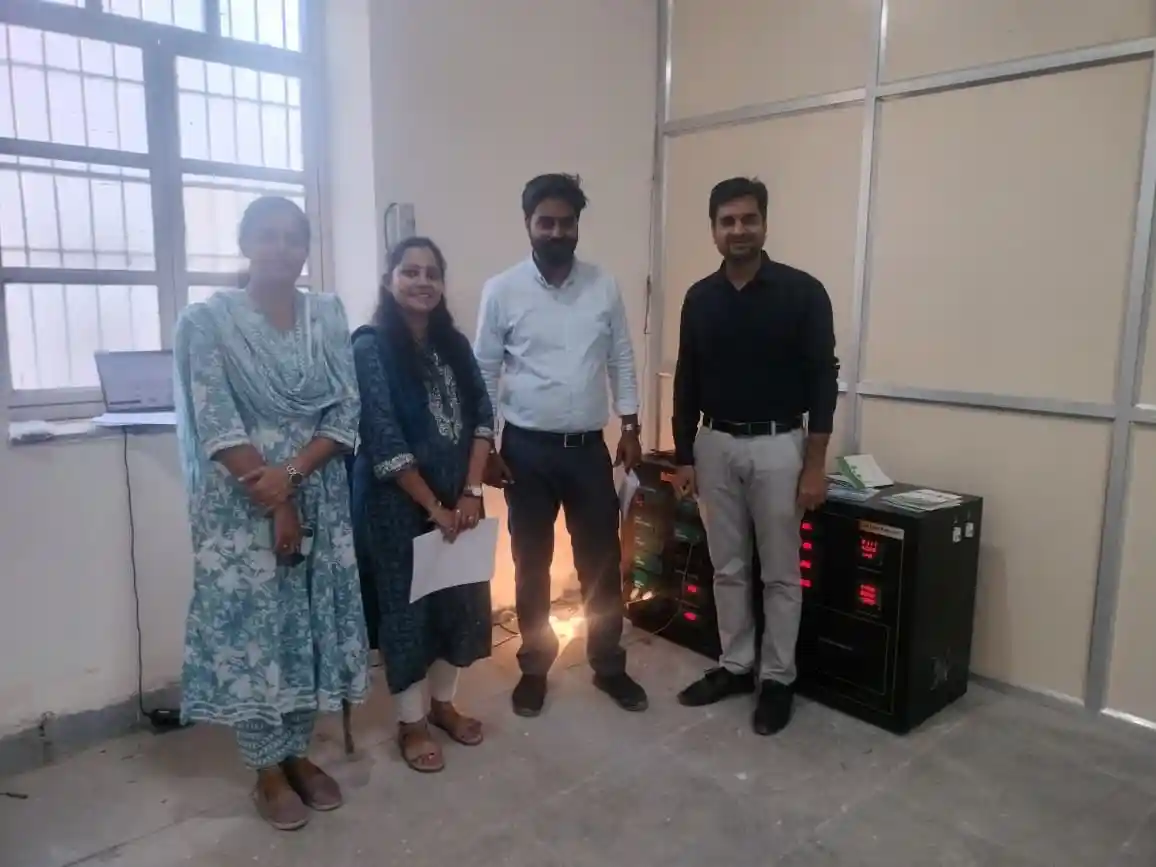
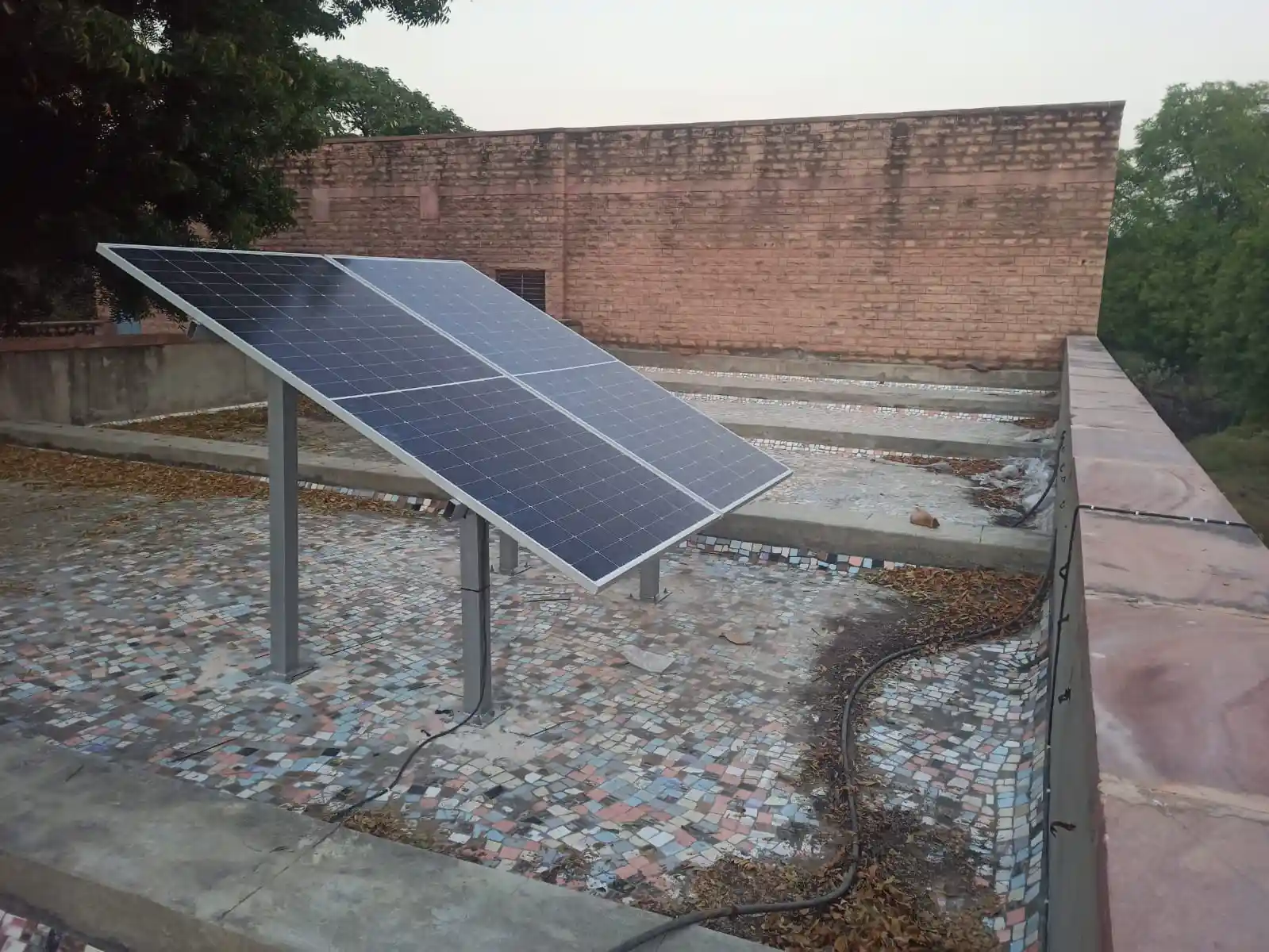
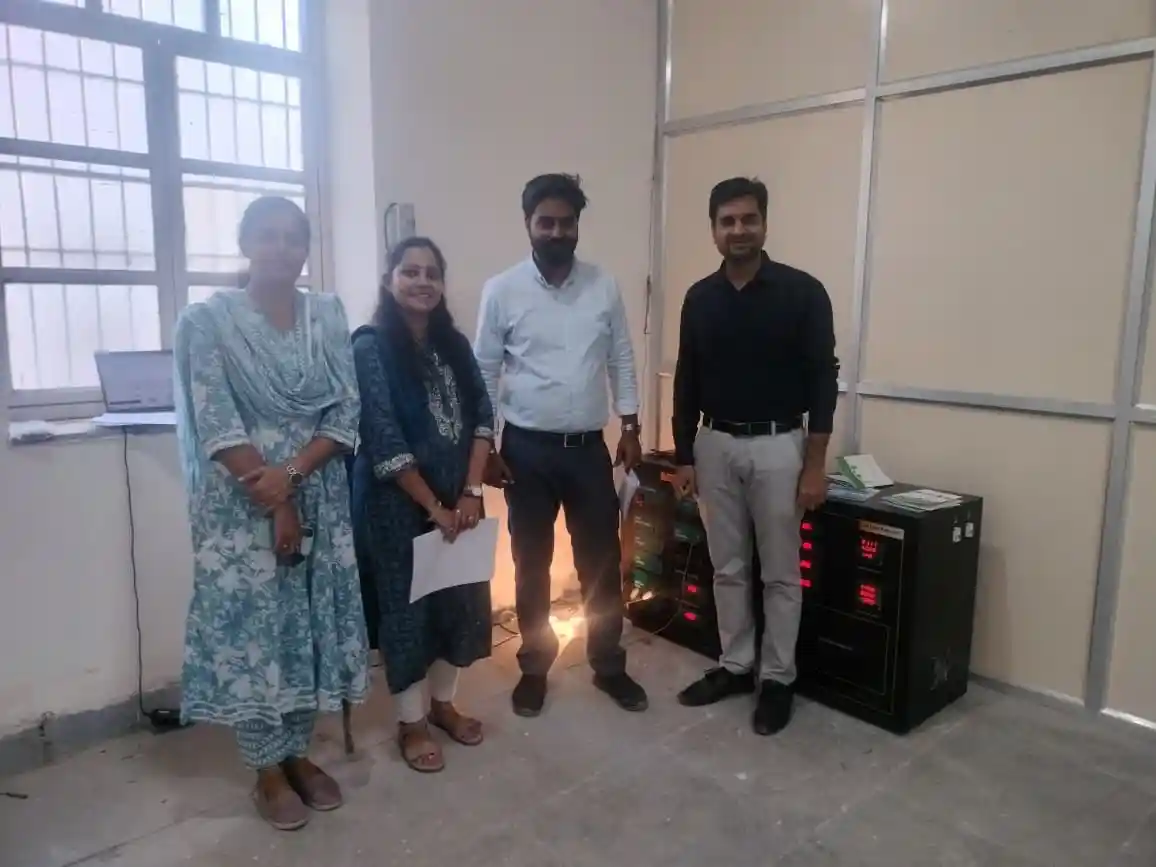
The installation at MBM University consists of three complementary training and research platforms. Each system has been selected to address a specific aspect of solar energy generation, conversion, and utilization.
A. Solar PV Training and Research System :The Solar PV Training and Research System is designed as a modular, experiment-oriented platform that allows students to understand the fundamentals and advanced concepts of photovoltaic power generation. The system enables detailed studies of solar cell behaviour, module characteristics, and system-level performance.
Students can analyse current–voltage characteristics, power curves, and efficiency variations under different irradiance and temperature conditions. The modular design allows reconfiguration of PV panels to study series-parallel connections, mismatch losses, and shading effects. Integrated measurement instruments provide real-time data, enabling students to correlate theoretical concepts with actual system behaviour.
B. Solar PV Grid-Tied System: The Solar PV Grid-Tied System introduces students to utility-connected solar power generation and grid integration principles. This system demonstrates how solar PV systems operate in synchronization with the electrical grid and how power is exported or imported based on generation and load conditions.
Students can study inverter operation, grid synchronization, anti-islanding protection, and power quality parameters such as voltage, frequency, and harmonic distortion. The system also enables learning related to net metering concepts, regulatory frameworks, and safety standards associated with grid-connected renewable energy systems.
C. Solar Thermal Training System: The Solar Thermal Training System complements the electrical solar platforms by introducing students to thermal energy conversion using solar radiation. The system enables hands-on learning of heat collection, transfer, and utilization using solar thermal collectors.
Students can measure inlet and outlet temperatures, flow rates, and thermal efficiency under varying operating conditions. The system allows analysis of heat losses, collector performance, and the impact of environmental parameters on thermal output. Through practical experiments, learners gain insights into how solar thermal systems differ from photovoltaic systems in terms of energy conversion mechanisms and applications.