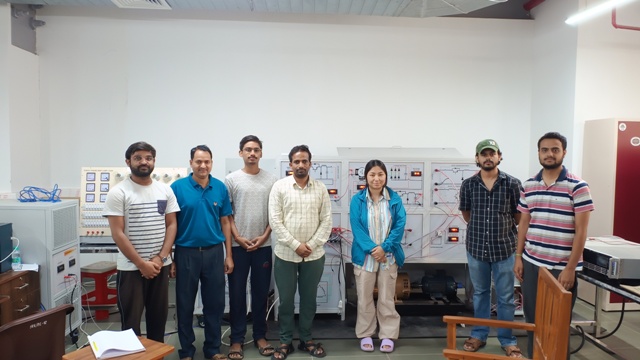
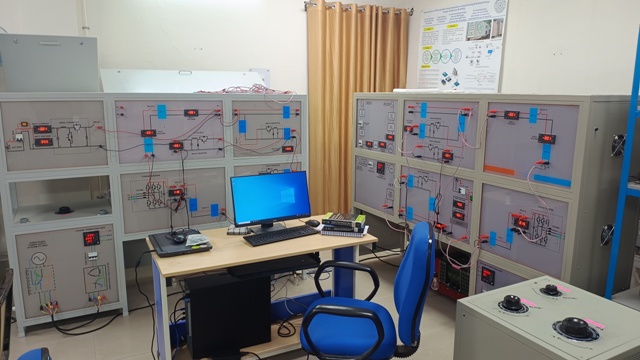
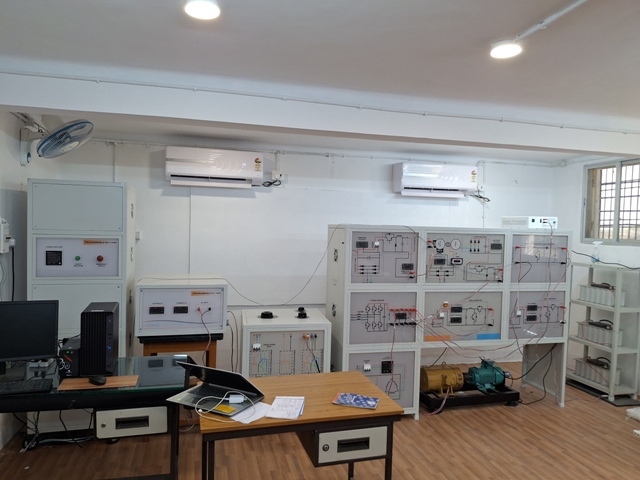
The Ecosense Microgrid Lab is a modular energy ecosystem that replicates the operation of real-world microgrids at laboratory scale. It allows users to generate energy, store energy, distribute power, manage loads, and control grid interaction through a centralized control and energy management framework.
The lab is built around four configurable layers:
- Multiple Energy Sources
- Multiple Energy Storage Systems
- Multiple Loads (AC & DC)
- Central Energy Management & Control System
Each layer can be independently configured and later expanded.
1. Multiple Energy Sources: The Microgrid Lab can integrate one or more of the following energy sources, depending on user requirements:
- Solar PV arrays or Solar PV Emulators
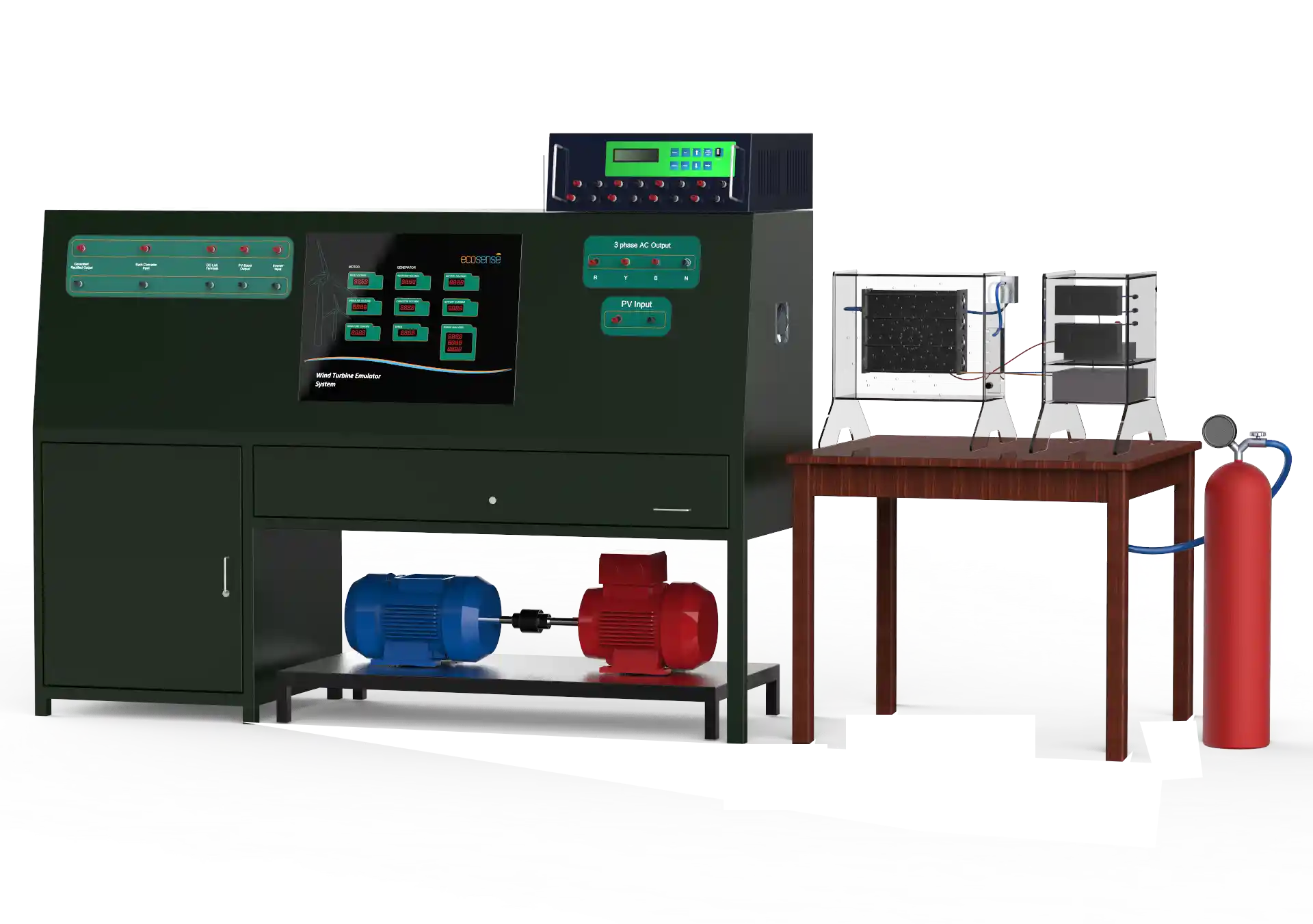
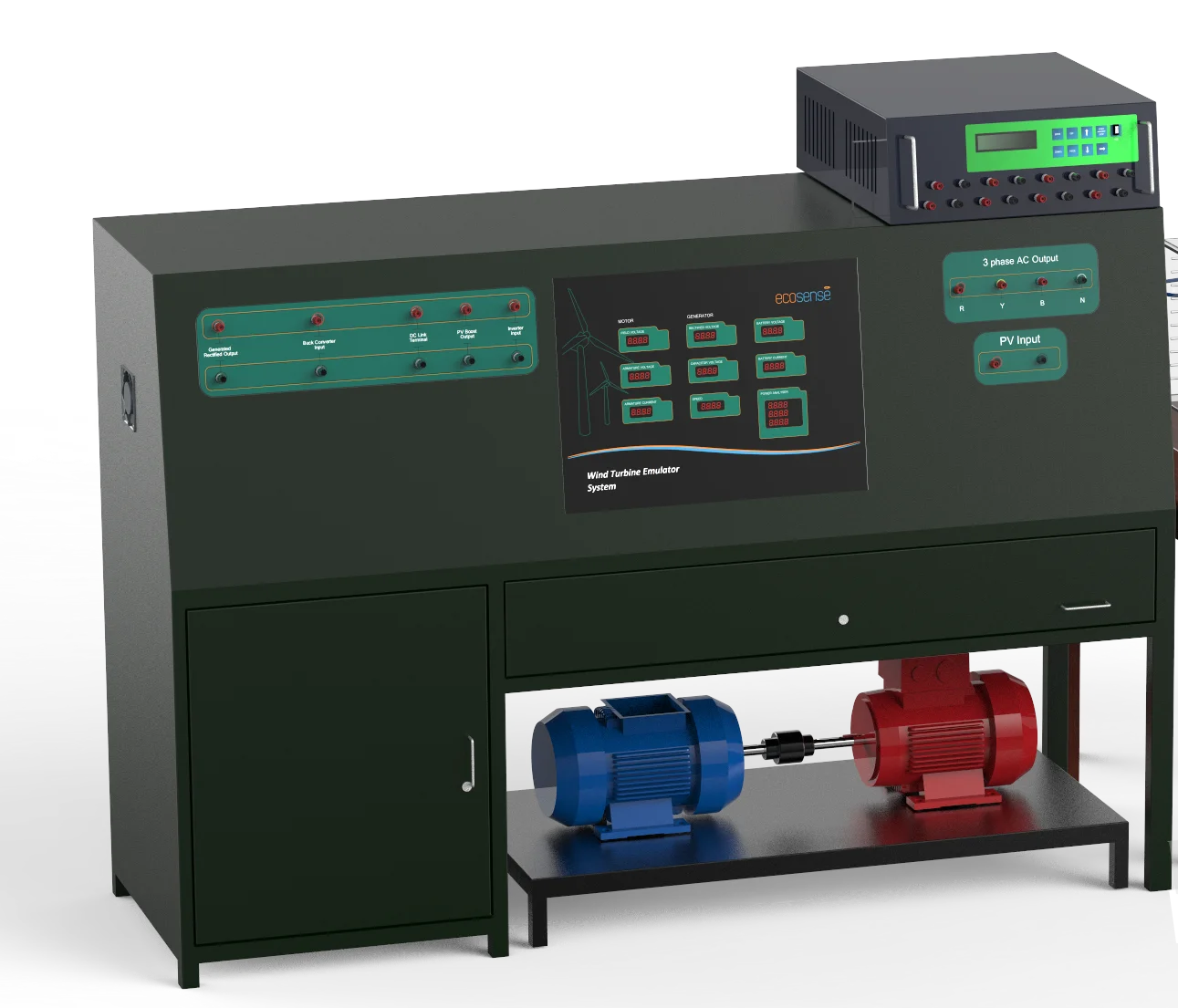
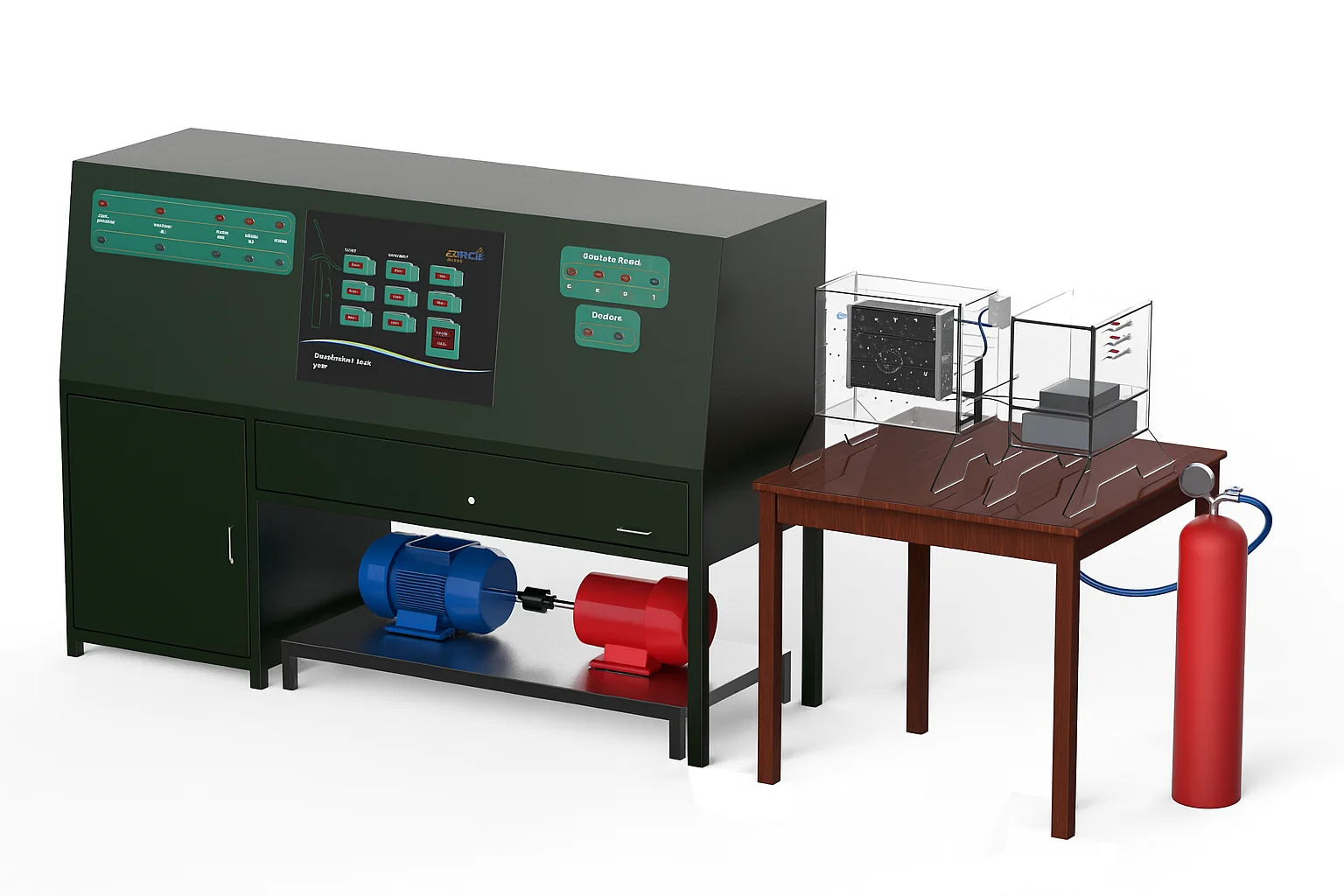
- Wind Energy Systems or Wind Turbine Emulators
- Fuel Cell systems (hydrogen-based generation)
- Diesel Generator or Grid Emulator
- Utility grid interface
Students can study:
- Renewable intermittency and variability
- Power sharing between sources
- Source prioritization strategies
- MPPT behavior and source dynamics
- Hybrid generation scenarios
Energy sources can feed common DC buses, AC buses, or hybrid AC–DC networks, depending on the microgrid architecture.
2. Multiple Energy Storage Systems: Energy storage is a critical element of microgrids. The lab supports multiple storage technologies, such as:
- Battery Energy Storage Systems (BESS)
- Ultracapacitors
- Hydrogen storage (via fuel cell systems)
- Hybrid storage combinations
Students can perform experiments on:
- Charging and discharging cycles
- State-of-charge (SoC) based dispatch
- Load leveling and peak shaving
- Backup power during outages
- Storage coordination in hybrid systems
The lab demonstrates how storage stabilizes microgrids and enables high renewable penetration.
3. Multiple Loads (AC & DC): The Microgrid Lab includes configurable AC and DC loads, which can be resistive, inductive, non-linear, or programmable.
Students can analyze:
- Load prioritization and shedding
- Demand response strategies
- Impact of load type on power quality
- Load behavior during islanded operation
- Critical vs non-critical load management
Smart switching and load control allow realistic simulation of residential, commercial, and industrial microgrid scenarios.
4. Central Energy Management System (EMS): The EMS is the brain of the microgrid. It monitors generation, storage, grid status, and loads in real time and makes decisions based on predefined or user-developed logic.
EMS capabilities include:
- Real-time monitoring of voltage, current, power, frequency, and SoC
- Power flow control between sources, storage, grid, and loads
- Automatic islanding and grid reconnection
- Black start operation
- Load priority and shedding logic
- Renewable maximization strategies
- Cost and efficiency optimization
- Manual, automatic, and remote operation
The EMS software is editable and programmable, allowing students and researchers to implement custom algorithms and validate them on real hardware.
Configurations That Can Be Built
Using the same Microgrid Lab platform, institutions can configure:
- Standalone renewable microgrid
- Grid-tied microgrid with export/import
- Hybrid PV–Wind–Battery microgrid
- PV + Fuel Cell + Battery microgrid
- AC–DC hybrid microgrid
- EV-integrated microgrid (V2G/V2H ready)
- Research microgrid for EMS and optimization studies
What Students and Researchers Learn
- Distributed generation behavior
- Energy storage coordination
- Microgrid stability and protection
- Islanding and synchronization
- EMS algorithm development
- Renewable integration challenges
- Smart grid and future power systems