Fuel Cell Drive Train 

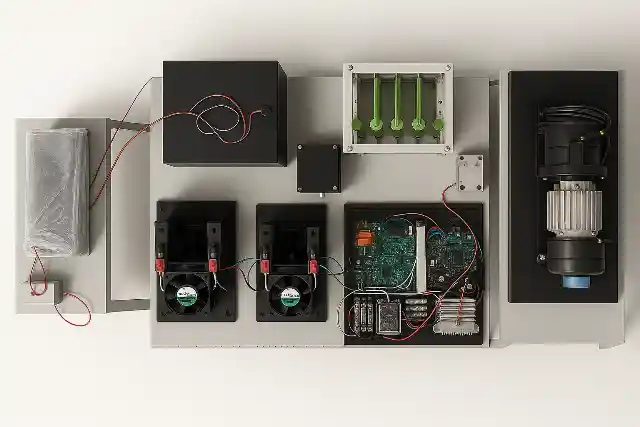
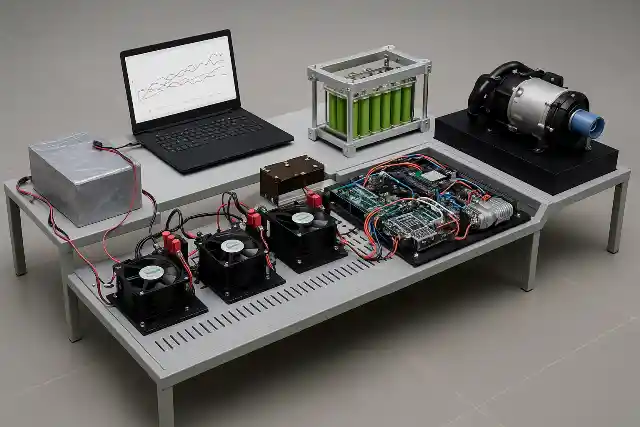
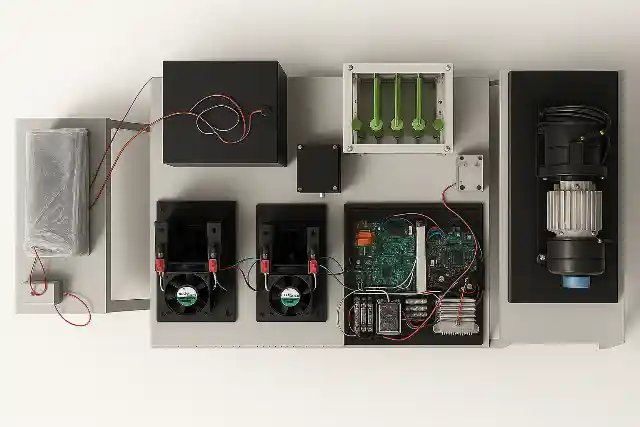
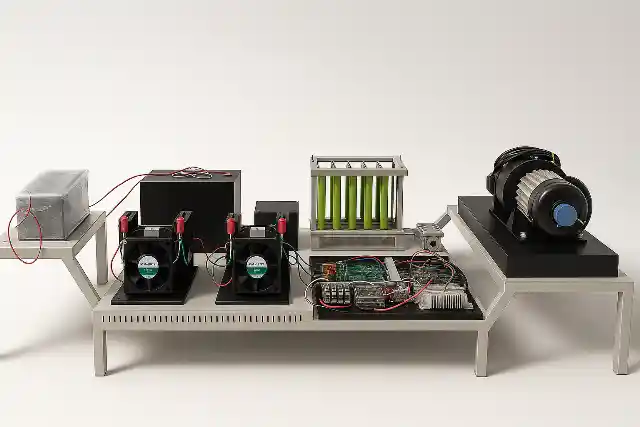
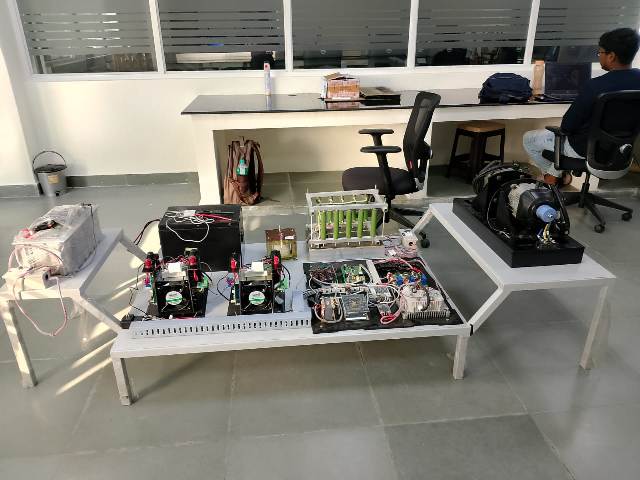
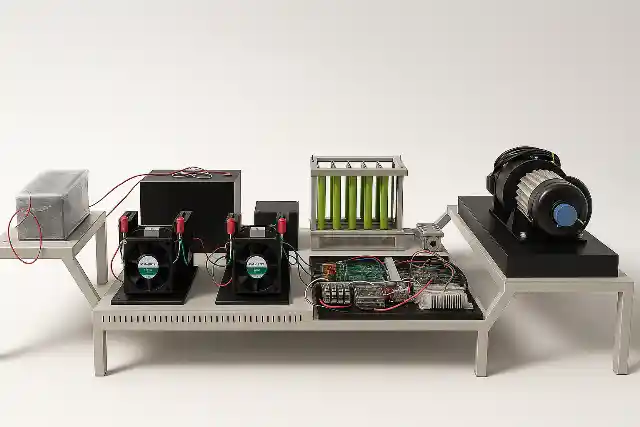
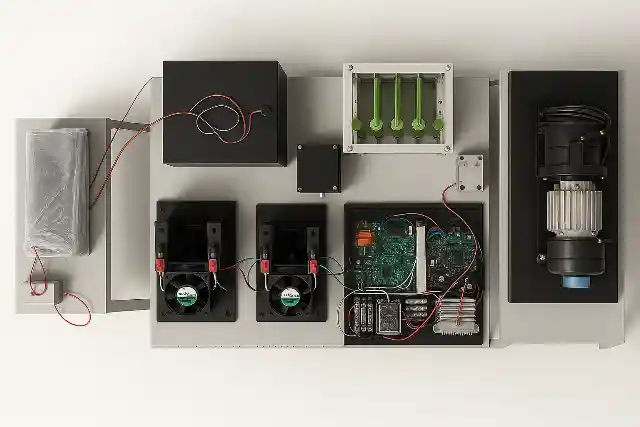
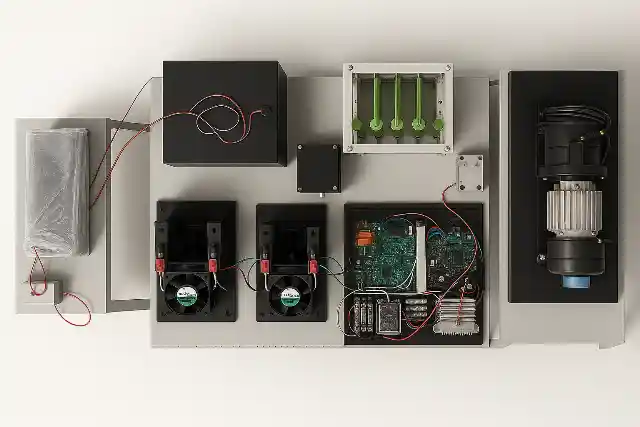
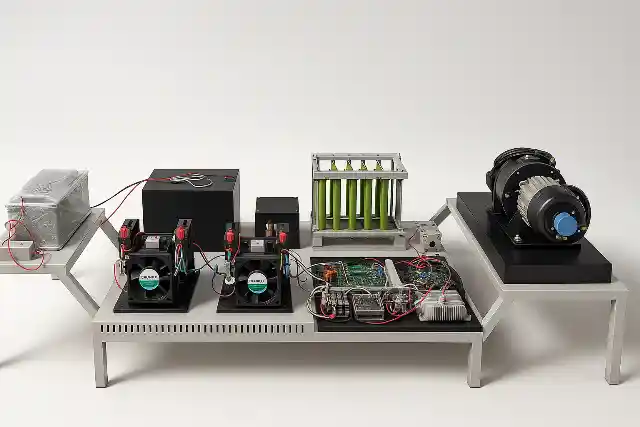
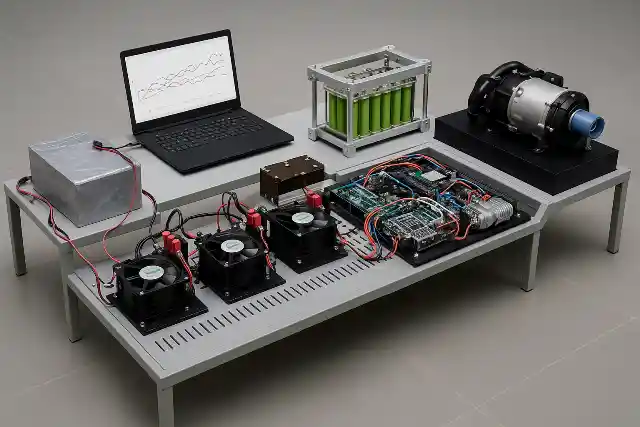
The Fuel Cell Drive Train is a modular platform designed to simulate and study the complete powertrain of a hydrogen fuel cell hybrid electric vehicle (FCEV). It provides a real-world learning experience on how hydrogen fuel is converted into electric propulsion, integrating advanced control electronics, power conversion units, and electromechanical systems. This lab-scale setup includes a PEM Fuel Cell, bidirectional power converters, battery bank, ultracapacitor module, and a complete motor drive system comprising a Permanent Magnet Synchronous Motor (PMSM) acting as the traction motor, coupled to a loading PMDC motor and a resistive load bank for rad condition simulation. 

Key Features

  • Modifiable Control Algorithms: Comes with open-source application software and an FPGA-based controller, allowing users to modify inverter control algorithms and simulate drive cycles with full customization.
  • Hybrid Fuel Cell–Battery–Supercapacitor Architecture:Integrates a PEM fuel cell, 72 V battery bank, and 48 V supercapacitor to demonstrate real-world hybrid energy management used in fuel-cell electric vehicles.
  • Fuel Cell Charging via Controlled Boost Converter: Fuel cell output is interfaced through a boost DC–DC converter with MATLAB-controlled current reference, enabling precise regulation of battery charging and fuel cell operating point.
  • Smart Battery Bank with Advanced BMS: The 72 V, 24 Ah battery bank includes a smart BMS with voltage, current, temperature protection, coulomb counting, and RS-485 communication for detailed battery analysis.
  • Bidirectional Supercapacitor Energy Interface: A bidirectional DC–DC converter enables controlled charging and discharging of the supercapacitor, supporting peak power demands and reducing battery stress during transients.
  • High-Performance PMSM Traction Drive: A 1 kW PMSM traction motor with inverter-based control allows accurate speed and torque regulation, closely replicating electric vehicle propulsion behavior.
  • Realistic Load Emulation Using PMSM Generator: A mechanically coupled PMSM loading motor operates as a generator, converting mechanical power back to electrical energy and dissipating it through a resistive load to simulate road conditions.
  • MATLAB-Based Closed-Loop Control Platform: The entire drivetrain operates under a MATLAB/Simulink closed-loop environment using a TI C2000 controller, enabling real-time monitoring, tuning, and control experimentation.
  • Comprehensive Electrical & Mechanical Instrumentation: Integrated voltage, current, speed, and torque sensing allows detailed analysis of power flow, efficiency, and losses across all drivetrain subsystems.
  • Safe and Modular Laboratory Design: DC MCBs, high-current relays, electrical isolation, and sensor-based protection ensure safe operation while allowing flexible reconfiguration for experiments.
Ecosense

Learning Module 

Ecosense

Fuel Cell Power Generation & Conditioning

  • Study PEM fuel cell voltage–current characteristics under controlled charging conditions.
  • Analyze boost converter operation for fuel cell voltage regulation.
  • Implement current-controlled battery charging using MATLAB.
  • Observe fuel cell behavior under different load demands.
  • Evaluate fuel cell efficiency and power stability.

Hybrid Energy Storage & Power Management

  • Understand energy sharing between battery and supercapacitor.
  • Perform bidirectional power flow experiments using the DC–DC converter.
  • Analyze supercapacitor role during transient and peak load conditions.
  • Study battery stress reduction using supercapacitor buffering.
  • Develop basic energy management strategies for hybrid drivetrains.

Electric Drive & Load Simulation

  • Operate PMSM traction motor under no-load and loaded conditions.
  • Analyze motor speed and torque control via inverter drive.
  • Study regenerative behavior using PMSM loading motor and rectifier.
  • Measure electrical and mechanical efficiency of the drivetrain.
  • Simulate real EV driving loads in a controlled laboratory setup.

How the Fuel Cell Drive Train System Works

  • Hydrogen fed to the PEM fuel cell generates DC electrical power through an electrochemical reaction.
  • The variable fuel cell output is regulated by a boost DC–DC converter, controlled through a MATLAB-defined current reference.
  • The regulated power charges a 72 V battery bank, which acts as the main energy storage and supplies power to the drivetrain.
  • A 48 V supercapacitor is connected to the battery via a bidirectional DC–DC converter, enabling fast charge–discharge during transient conditions.
  • During peak load, the supercapacitor supports the battery to reduce current stress and improve system response.
  • The battery feeds a PMSM motor controller, driving the traction motor with controlled speed and torque.
  • To simulate real vehicle loads, the traction motor is mechanically coupled to a PMSM loading motor.
  • The loading motor generates three-phase AC power, which is rectified and dissipated through a resistive load.
  • Real-time measurements allow analysis of energy flow, efficiency, and dynamic drivetrain behavior.
Ecosense

Technical Specifications 

Ecosense

Energy Sources & Storage


ParametersSpecifications
Fuel Cell InterfaceBoost-converter-based charging
Battery Bank72 V, 24 Ah with smart BMS
Battery Charge / Discharge Rate1C / 1C
Supercapacitor48 V, 165 F
Supercapacitor Charge / Discharge10 A / 10 A

* specifications can be customized as per user's requirement

Power Electronics & Control


ParametersSpecifications
Boost Converter28–44 V input, 72 V output
Boost Rated Power1 kW
Bidirectional ConverterFor Battery & Supercapacitor
Converter Switching Frequency10 kHz
Controller PlatformMATLAB with TI C2000

* specifications can be customized as per user's requirement

Drive & Load System


ParametersSpecifications
Traction MotorPMSM, 1 kW
Rated Voltage72 V
Rated Speed1500 RPM
Load EmulationPMSM generator + resistive load
Load Rating1 kW resistive bank

* specifications can be customized as per user's requirement

Related Products

Frequently Asked Questions

Electric vehicle drivetrains are broadly classified into Battery Electric Vehicle (BEV) drivetrains, Hybrid Electric Vehicle (HEV) drivetrains, Plug-in Hybrid Electric Vehicle (PHEV) drivetrains, and Fuel Cell Electric Vehicle (FCEV) drivetrains. Fuel cell drivetrains use hydrogen as the primary energy source, combined with electrical energy storage for dynamic operation.

The fuel cell generates DC power, which is conditioned through a DC–DC converter to charge the battery bank. The battery supplies regulated DC power to the motor controller, which converts it into controlled three-phase AC to drive the PMSM motor with precise speed and torque control.

Fuel cell drivetrains offer zero tailpipe emissions, high energy efficiency, fast refueling compared to batteries, and extended operating range. Hybrid integration with battery and supercapacitor improves transient response, reduces battery stress, and enhances overall system efficiency.

Key limitations include high system cost, hydrogen storage and infrastructure challenges, complex energy management requirements, and lower overall efficiency when hydrogen production and storage losses are considered.

Get in Touch

Ready to transform your labs?

Contact Now