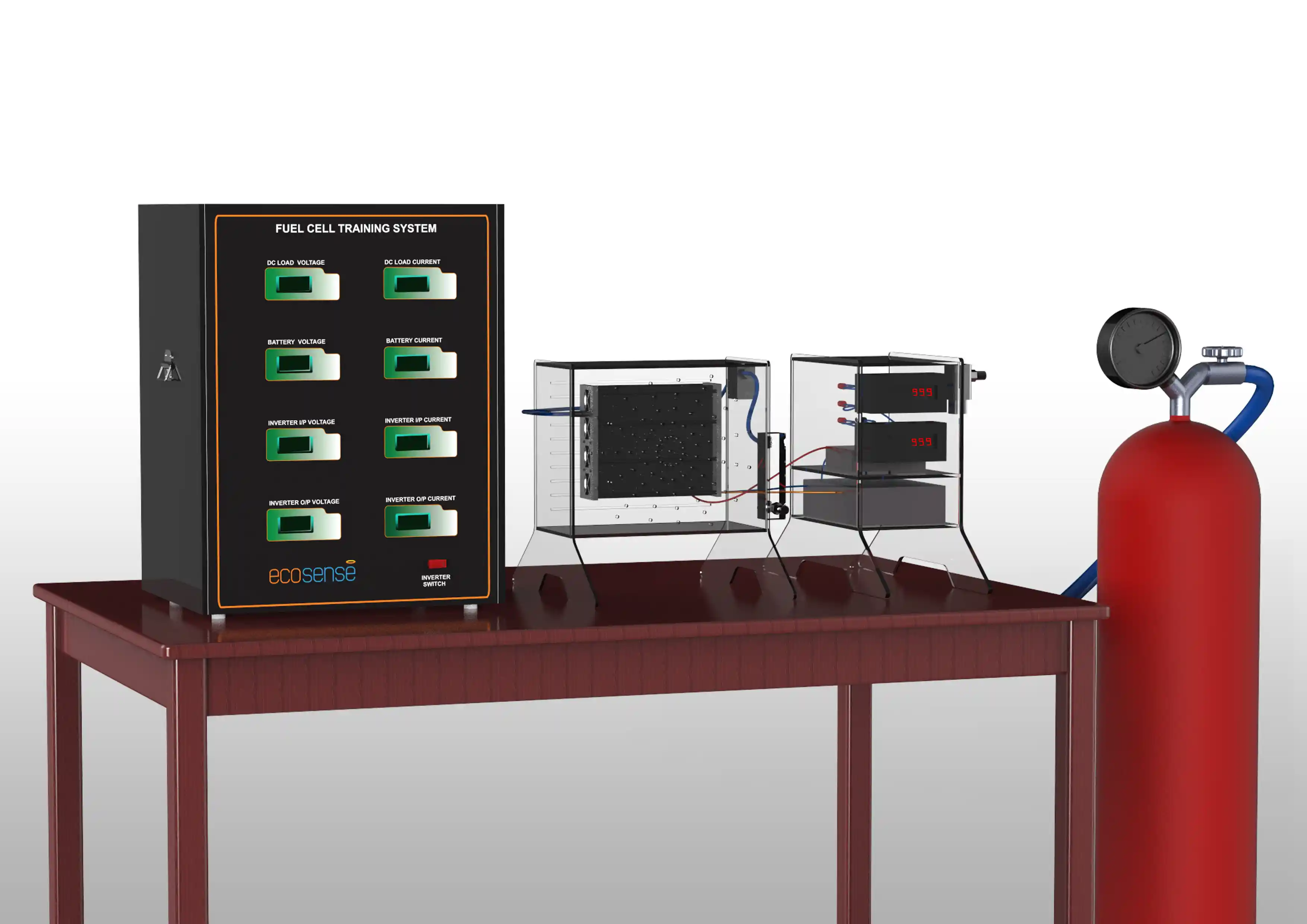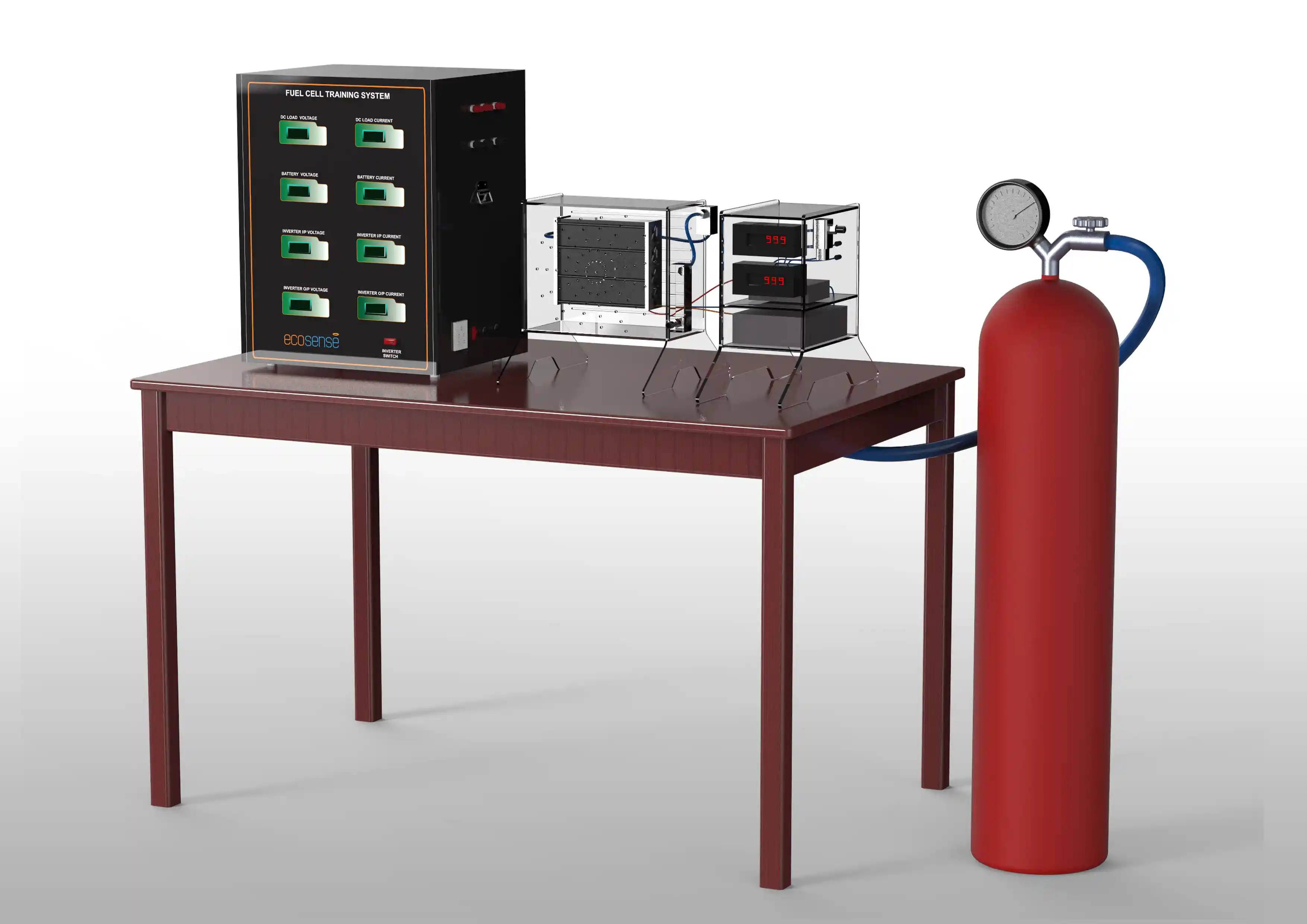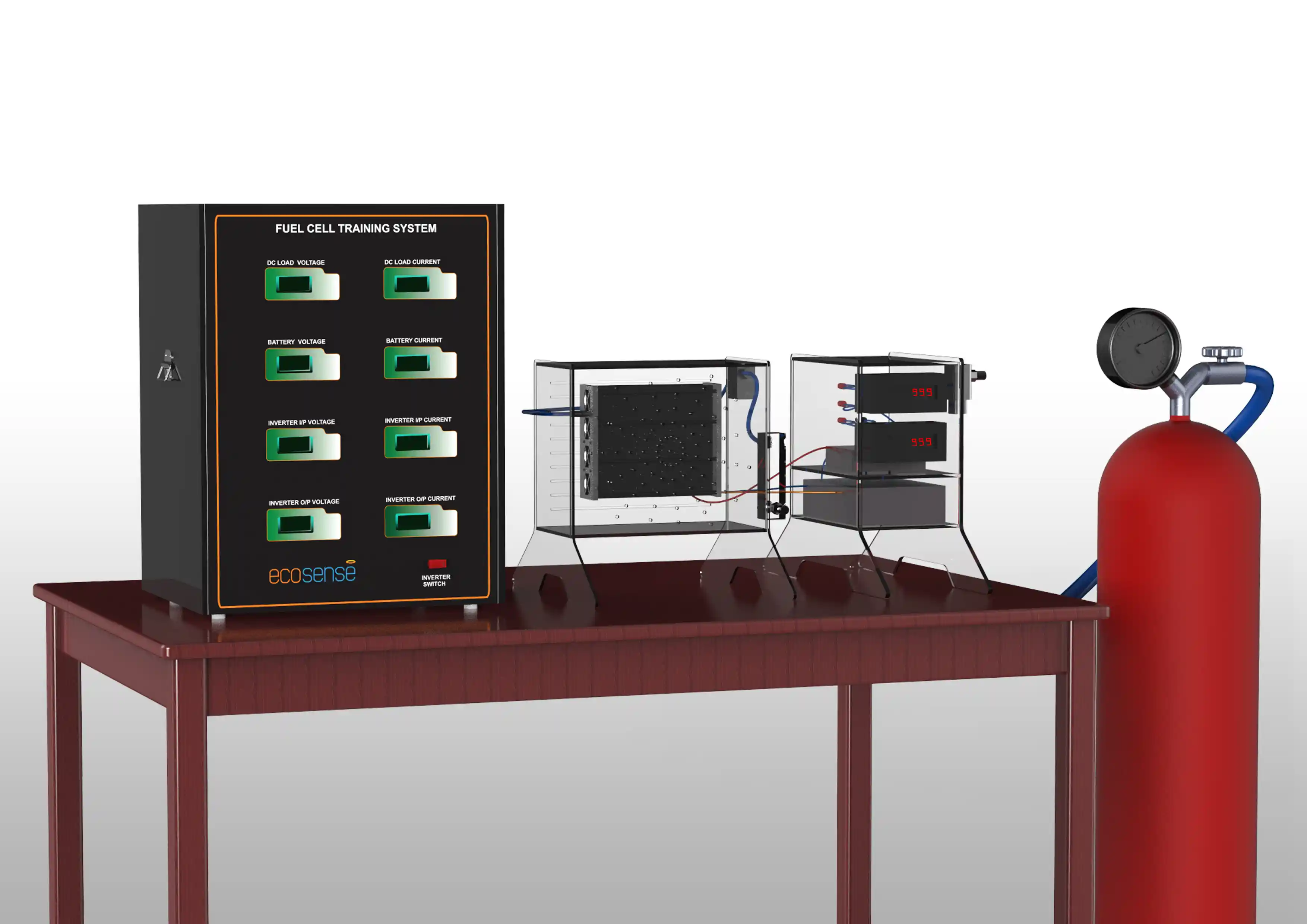
Fuel Cell Training System 

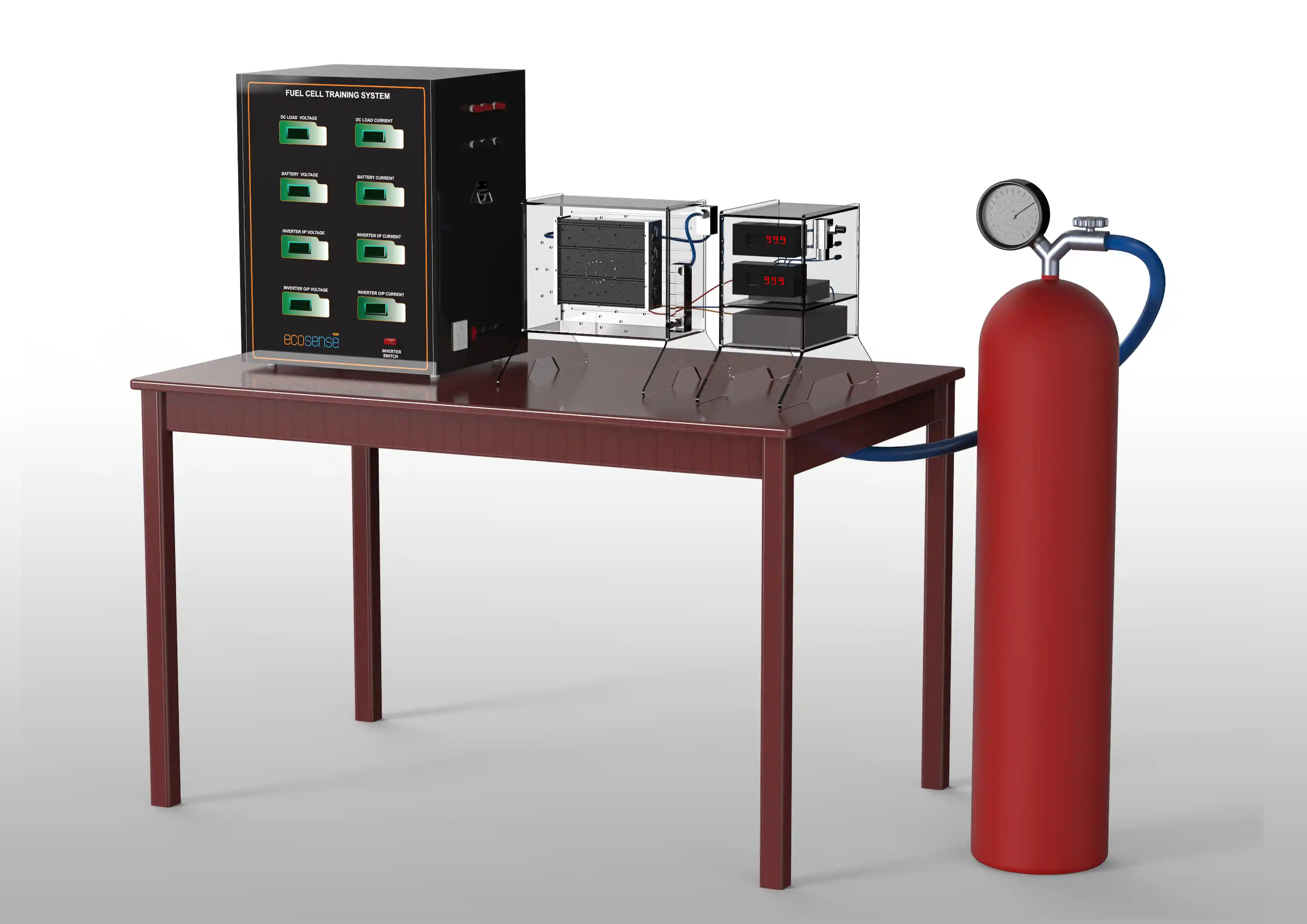
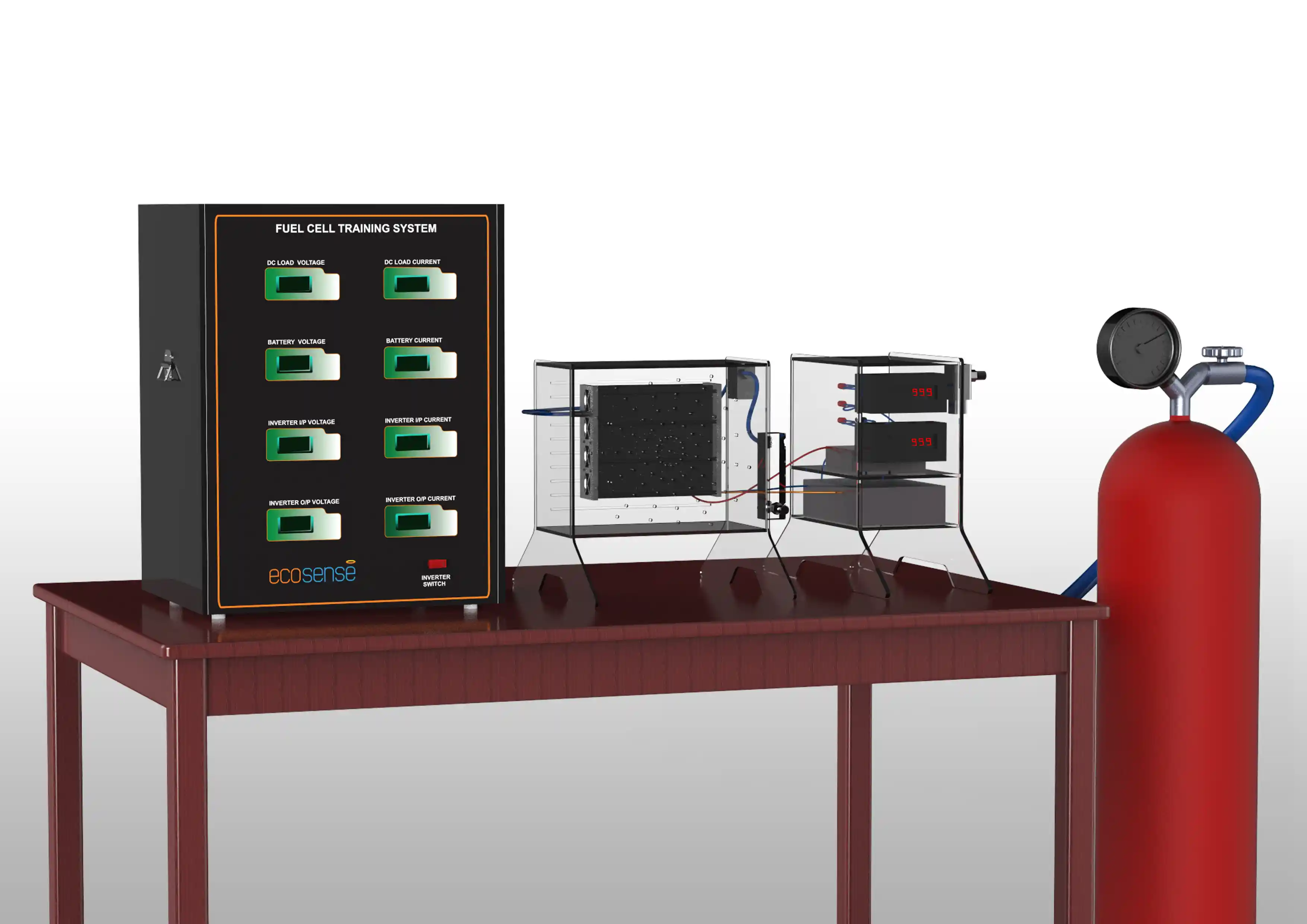
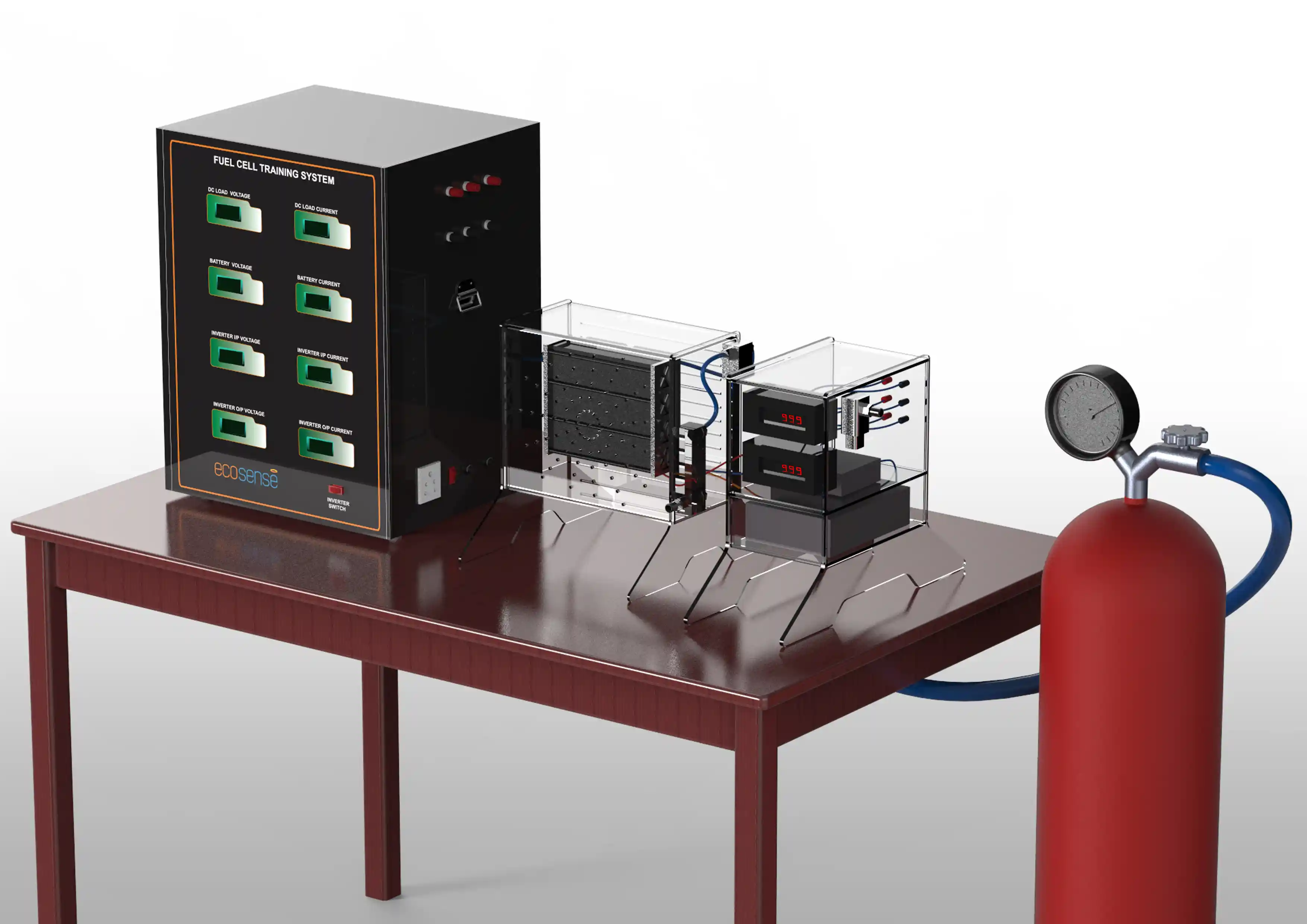
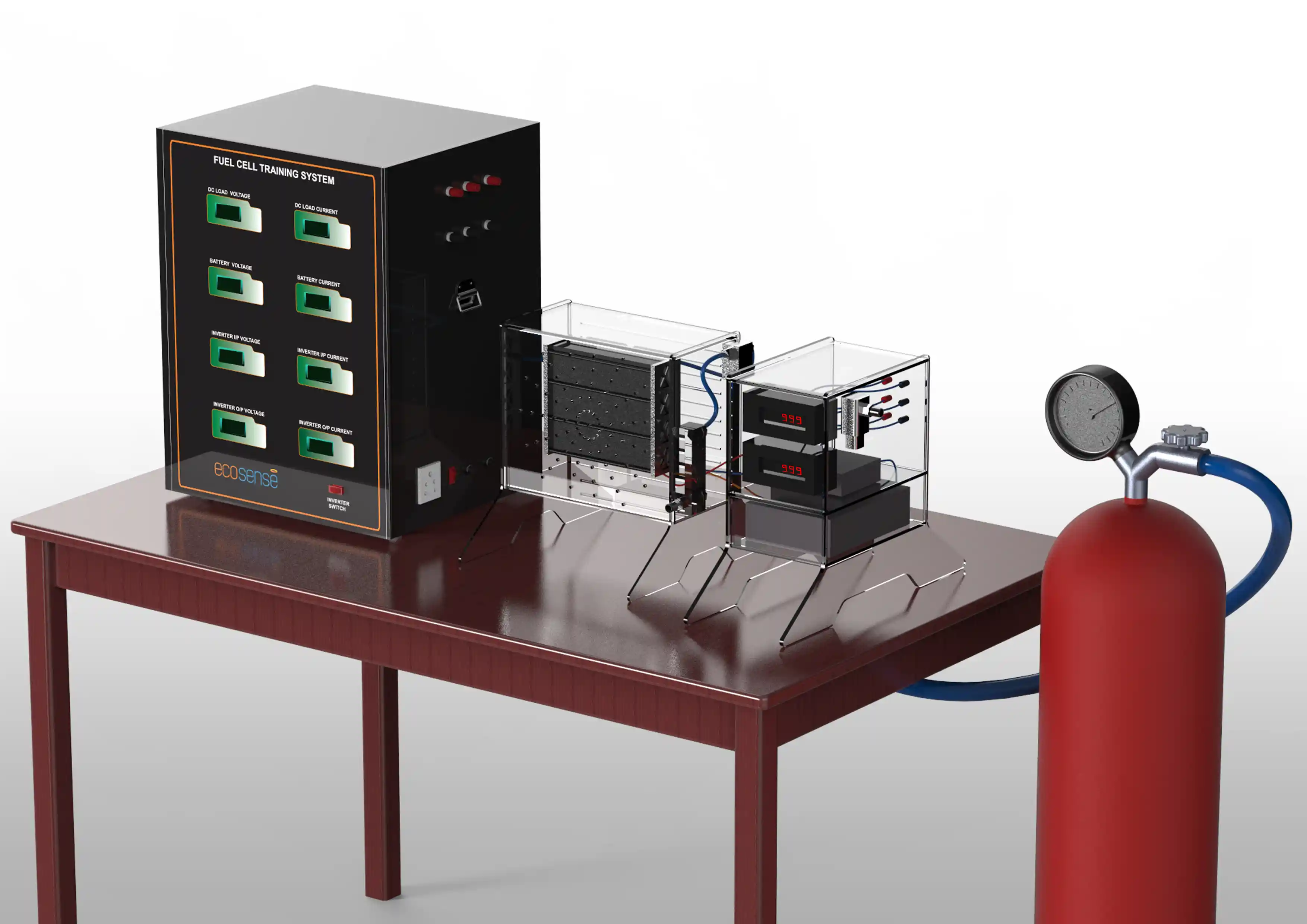
The Fuel Cell Training System is a fully integrated, modular, and scalable experimental setup designed to bridge the gap between fuel cell theory and practical application. Built for engineering institutes, research labs, and skill development centers, this lab platform allows users to explore everything from fundamental electrochemistry to advanced energy system integration. With a real PEM fuel cell stack at its core, and support components such as a charge controller, battery bank, inverter, and active load modules, the lab facilitates a wide range of experiments, from V-I curve plotting to hybrid system design. Whether you are a student learning fuel cell basics or a researcher developing advanced MPPT algorithms, the Fuel Cell Training System delivers both flexibility and depth. 
Key Features

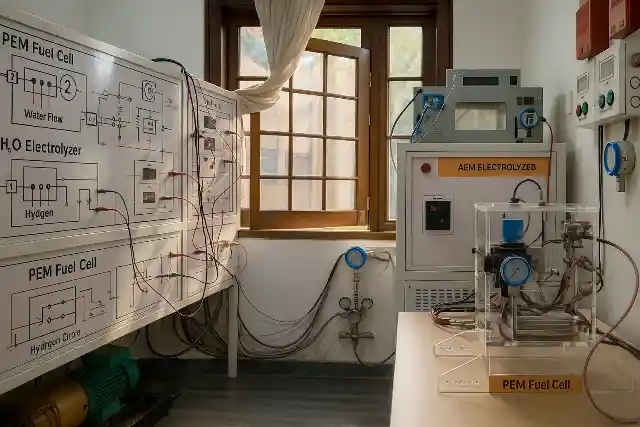
  • PEM Fuel Cell Stack: A Proton Exchange Membrane fuel cell stack that runs on high-purity hydrogen (≥99.995%) and includes self-humidification for simplified operation.
  • Prefilled Hydrogen Cylinder: A prefilled 47L hydrogen cylinder is provided with the system to run PEM Fuel Cell
  • Real-Time Monitoring Panel: Active dashboard to display and monitor stack voltage, current, power output, temperature, hydrogen flow rate, and system status during all experiments.
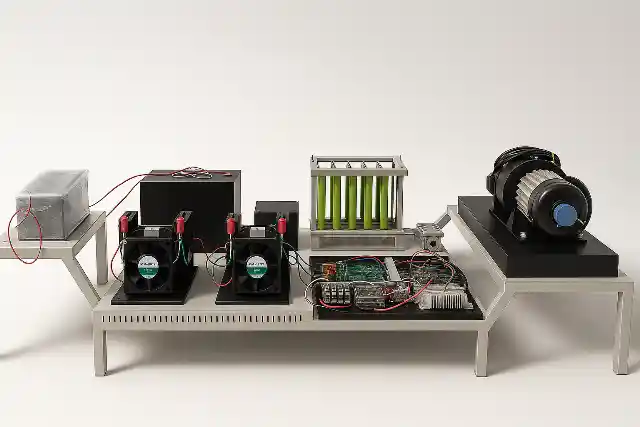
  • Modular Power Control Architecture: Includes a charge controller, DC battery bank, and inverter to support multiple configurations—DC-only loads, AC loads, or hybrid use with other energy systems.
  • Comprehensive Safety Systems: Automatic shutdown features for low voltage, overcurrent, and overtemperature conditions ensure safe, long-term usage even during student-led experiments.
  • Standalone or Hybrid System Ready: The system can be used independently or integrated with solar PV, electrolyzers, or wind modules for complete microgrid or hybrid system studies.
  • Illustrated Experiment Manual: Comes with a step-by-step guide covering theory, wiring, objectives, procedures, data tables, and analysis—ideal for classroom or lab use.
  • Plug-and-Play Architecture: Pre-assembled, color-coded terminals and labeled modules allow for fast setup and reconfiguration by students or researchers without specialized tools.
  • Hydrogen Leak Detection System: Integrated hydrogen leak detectors provide critical safety assurance by continuously monitoring for leaks near the stack and gas supply line. If a leak is detected, the system triggers visual/audible alarms or safety shutdown, ensuring a safe lab environment.
Ecosense

Learning Module 

Ecosense

Fuel Cell Fundamentals & Characterization

  • Plot V-I and Power curves using resistive and electronic loads
  • Study how hydrogen flow rate, pressure, and temperature affect output
  • Observe self-humidification and air-cooling behavior at different load conditions
  • Calculate fuel cell efficiency, heat losses, and power density

Standalone System Integration

  • Connect fuel cell to DC loads via charge controller and battery bank
  • Operate AC appliances through inverter to analyze system response

Advanced Applications & Control

  • Analyze transient response and stability under dynamic loads
  • Interface with data acquisition systems for real-time monitoring and control

Technical Description

  • Hydrogen gas is supplied from the regulated hydrogen source to the anode side of the PEM fuel cell stack at a controlled pressure and flow rate.
  • At the anode, hydrogen molecules split into protons and electrons through an electrochemical reaction facilitated by the catalyst layer.
  • Protons migrate through the proton exchange membrane (PEM), while electrons flow through the external circuit, generating usable DC electrical power.
  • Ambient air or oxygen is supplied to the cathode, where it reacts with protons and returning electrons to form water and heat.
  • The fuel cell stack output is connected to a variable electrical load, allowing controlled variation of current draw.
  • Load changes introduce transient conditions, allowing study of dynamic response and performance stability.
  • Built-in safety interlocks monitor operating limits and automatically isolate the system during abnormal conditions.
  • The system operates as a self-contained laboratory platform, enabling safe, repeatable experimentation without external dependencies.
Ecosense

Technical Specifications 

Ecosense

Fuel Cell Stack Specifications


ParametersSpecifications
Fuel Cell typeProton Exchange Membrane (PEM)
Rated Power Output1 kW
Nominal Stack Voltage / Current28.8 V @ 35 A
Hydrogen Requirement≥99.995% dry H₂, 0.45–0.55 bar

* specifications can be customized as per user's needs

Power Conditioning & Storage


ParametersSpecifications
Charge Controller1 kW PWM Charge Controller
Battery Bank24 V (2 × 12 V, 26 Ah in series)
Inverter1kW
System ConfigurationStandalone DC & AC operation

* specifications can be customized as per user's needs

Load & Measurement System


ParametersSpecifications
AC Load300 W lamp load
DC LoadVariable rheostat, 0–45 V, 0–40 A
Electrical MeasurementAC & DC voltmeters and ammeters
Gas & Pressure MeasurementRotameter (0–15 LPM), dual-stage pressure gauge

* specifications can be customized as per user's needs

Related Products

Frequently Asked Questions

The kit includes a PEM fuel cell stack, regulated hydrogen supply interface, air supply system, power conditioning unit with charge controller, battery bank, inverter, AC and DC loads, measurement instruments, safety components, and a detailed experiment manual for guided learning.

Users can study fuel cell V–I and V–P characteristics, efficiency and fuel utilization, impact of hydrogen flow rate, performance under DC and AC loads, temperature effects, and transient response during load variations. The system also supports standalone system operation analysis.

The system integrates hydrogen leak detector, hydrogen pressure regulation, purge and shut-off valves, over-voltage, over-current, and over-temperature protection, electrical isolation, and clearly marked test points to ensure safe and controlled laboratory experimentation.

Yes. The modular architecture allows integration with renewable sources such as solar PV or wind systems through appropriate power electronics, enabling hybrid energy system studies and advanced research on renewable–hydrogen integration.

Get in Touch

Ready to transform your labs?

Contact Now