Battery Cycler with Data Analytics 

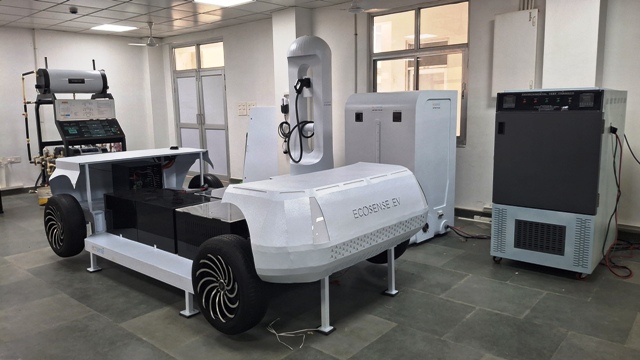
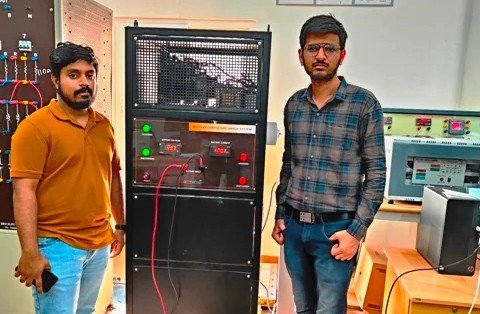
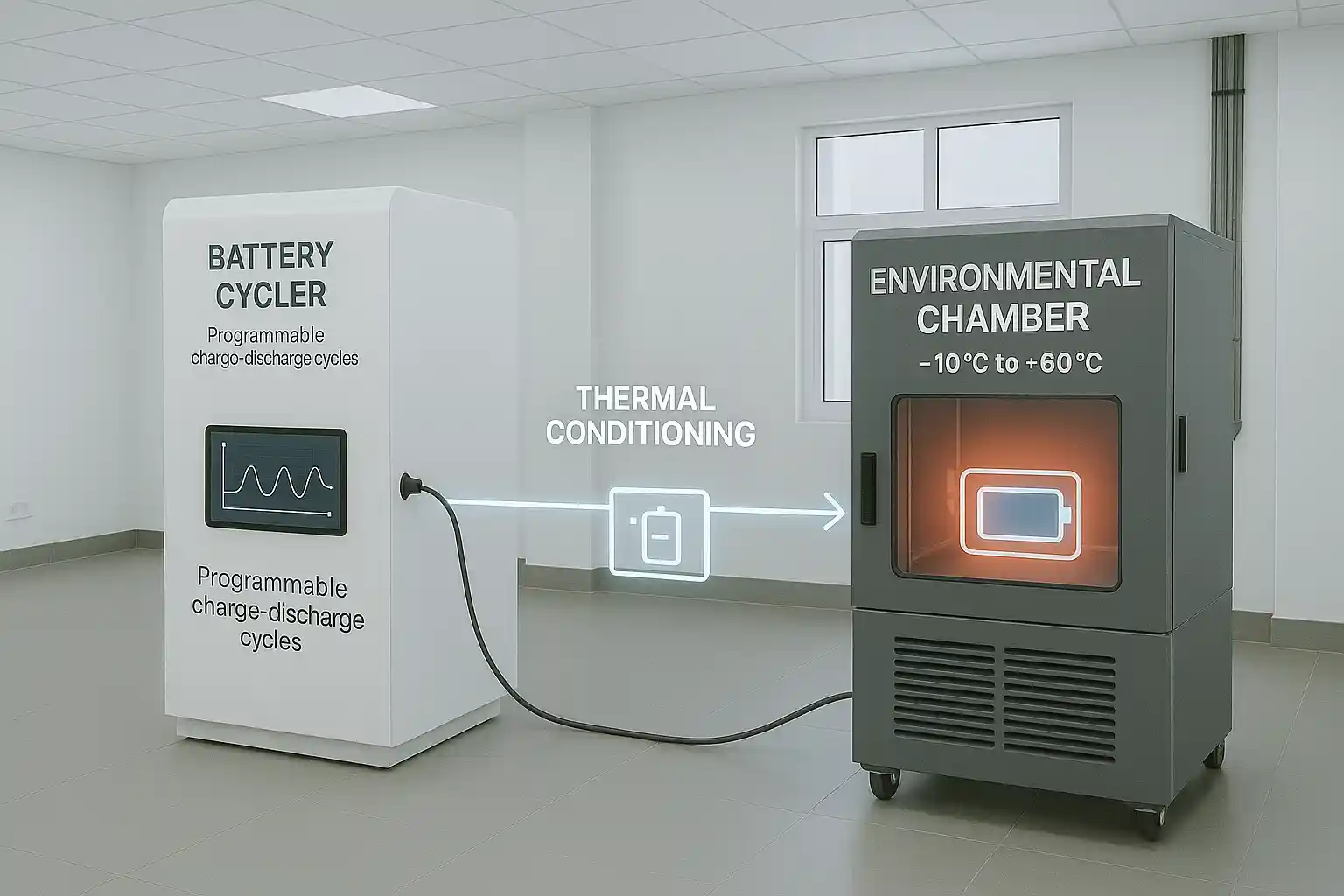
The Battery Cycler with Data Analytics (BCDA) is a comprehensive educational and experimental platform designed to study and analyze electric vehicle (EV) battery systems. Combining real EV components with open-source software and a built-in environmental chamber, this system provides users with the tools to conduct hands-on experiments, simulate real-world conditions, and perform in-depth data analytics. BCDA is ideal for institutions and research labs aiming to deliver practical skills and foster innovation in battery technology and electric mobility. 
Key Features

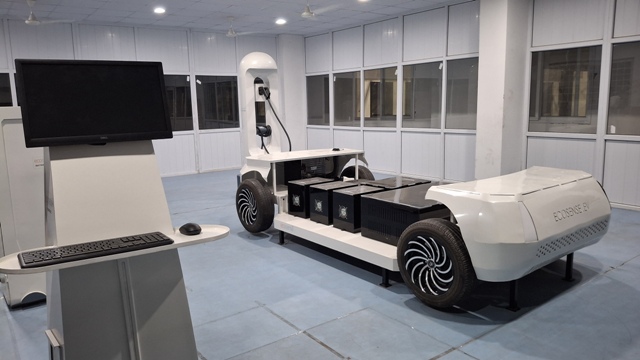
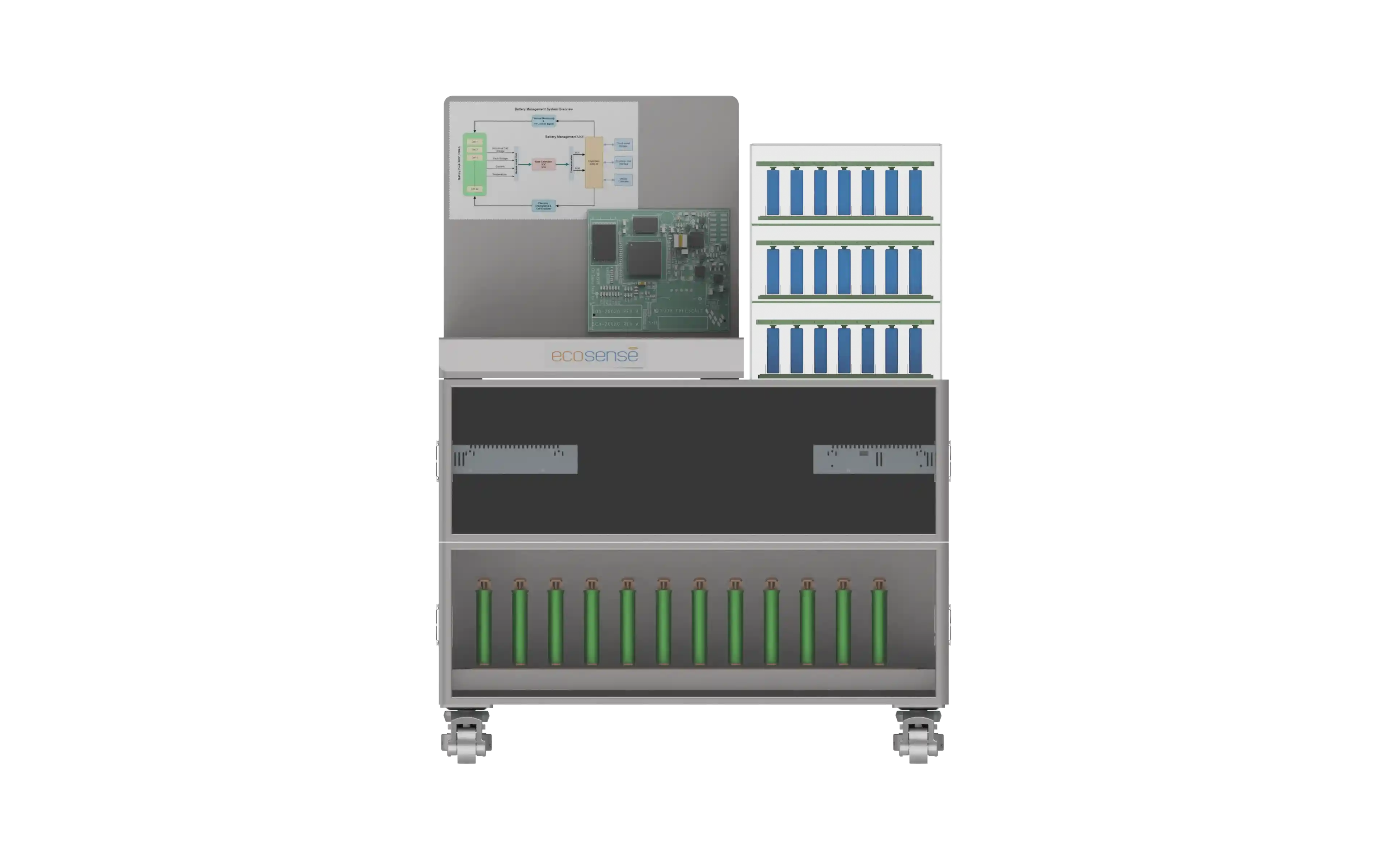
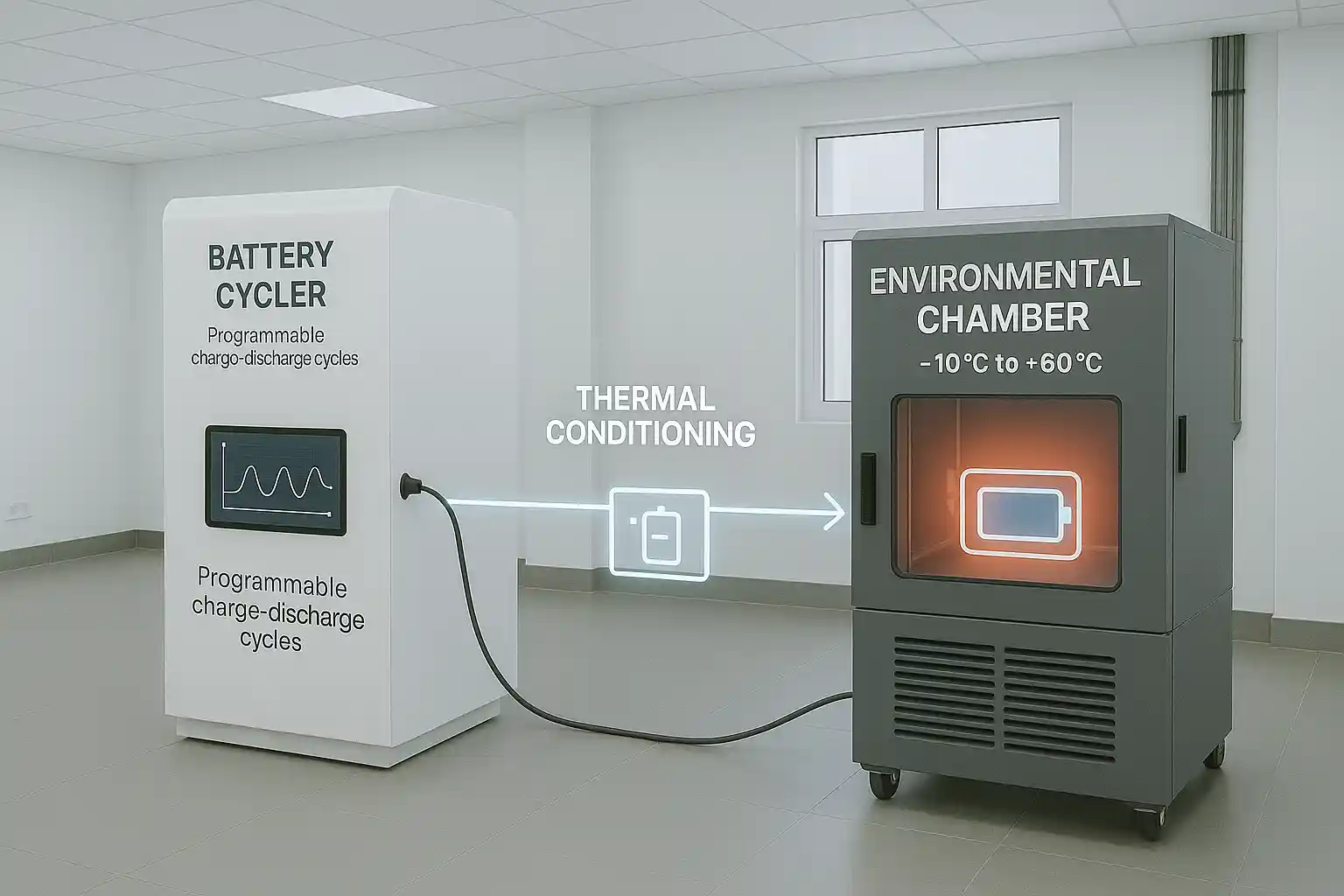
  • Integrated Experimental Platform with Real EV Components: Includes an actual lithium-based EV battery pack, smart BMS, and power electronics—all enclosed in a modular, scalable design that supports realistic battery cycling experiments.
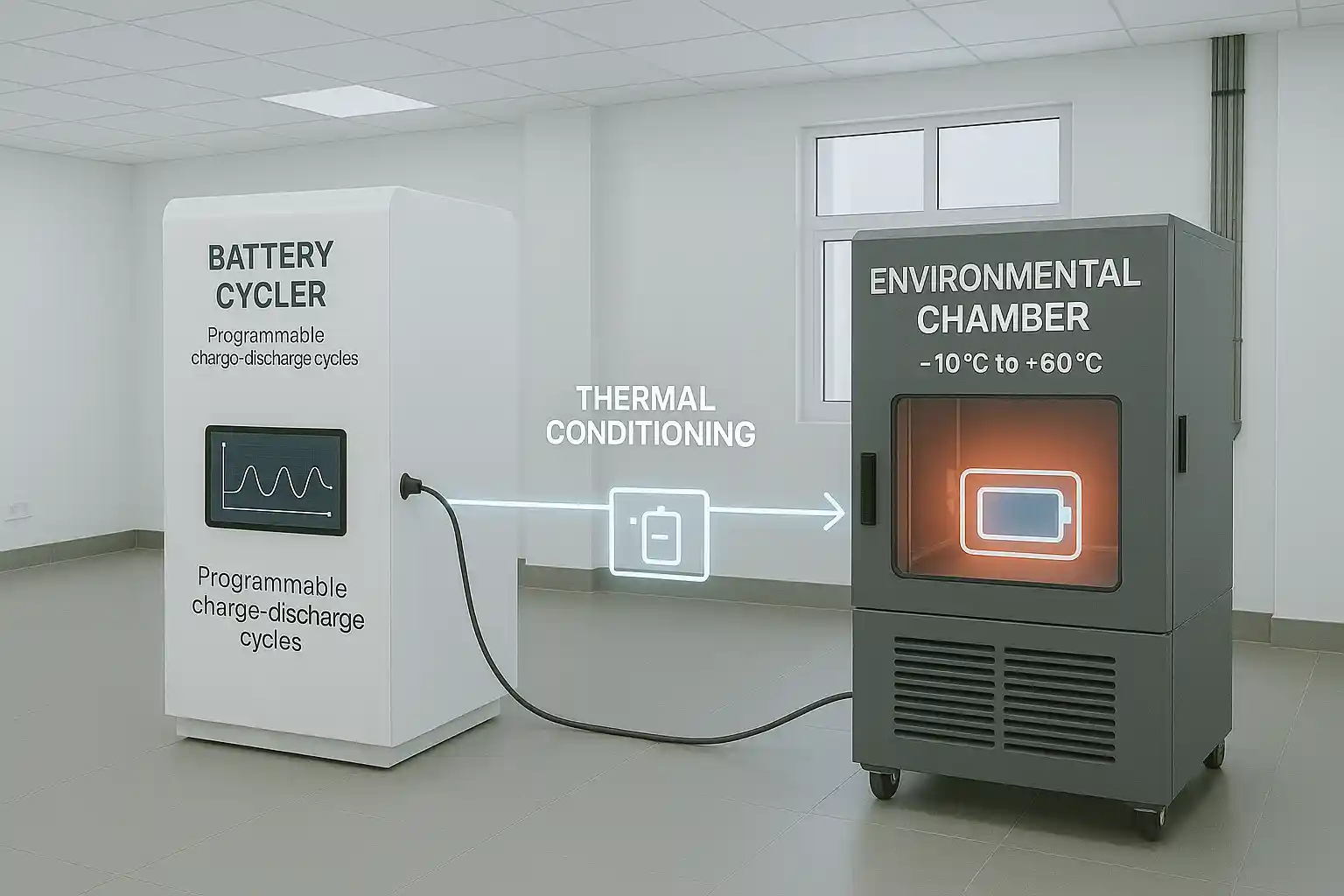
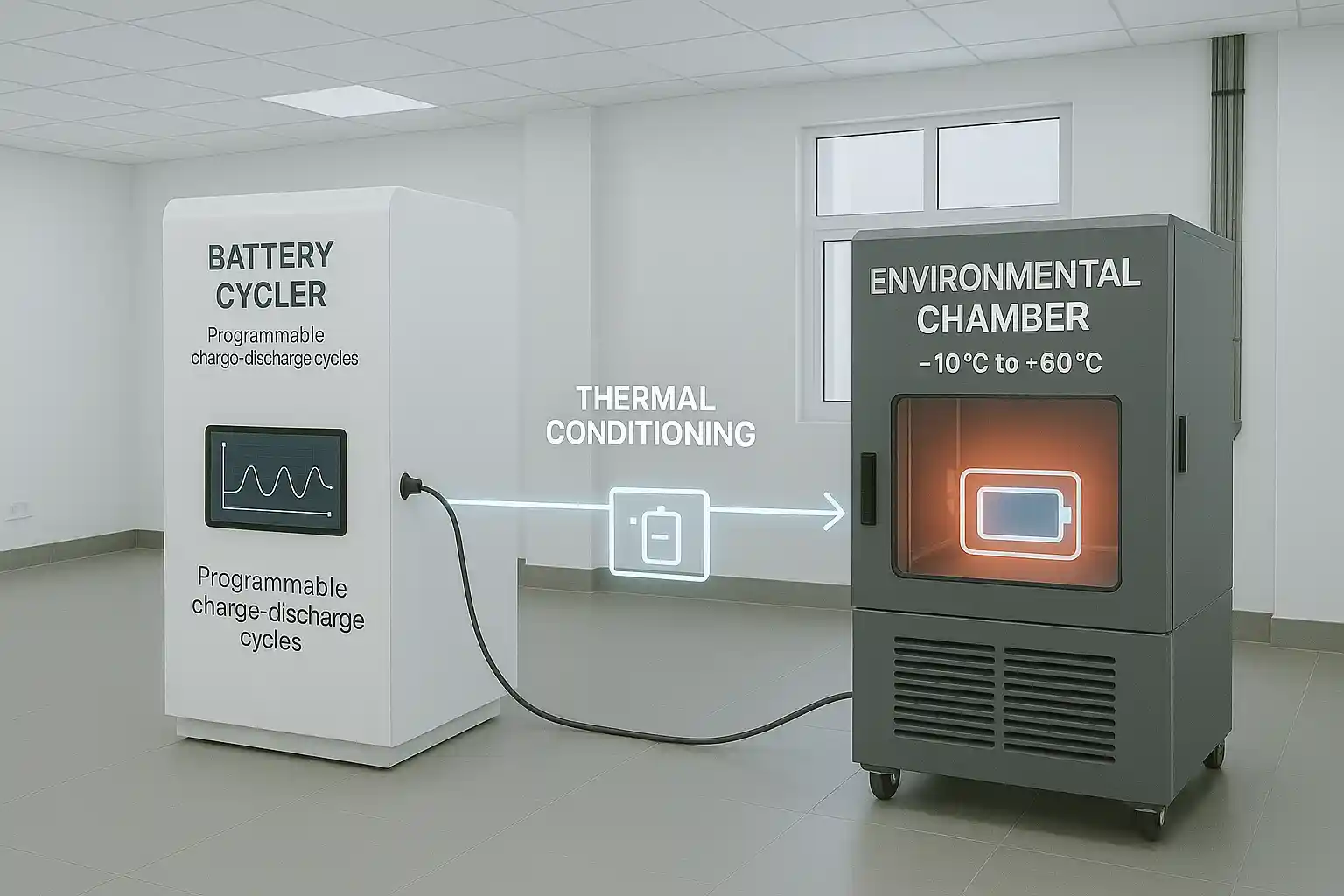
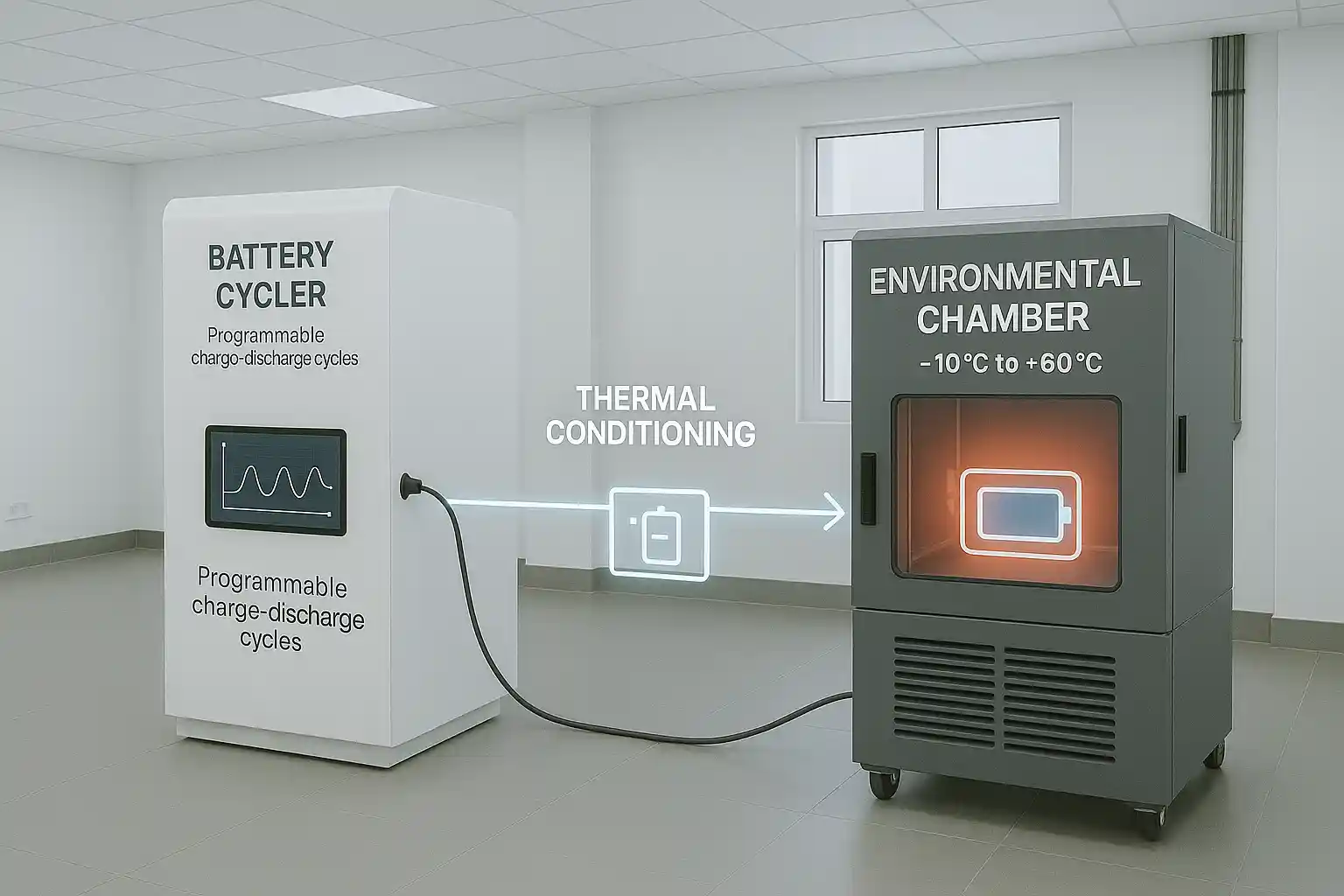
  • Battery Cycler with Real-Time Data Logging: Supports programmable charge/discharge cycles using Constant Current (CC), Constant Voltage (CV), and Constant Power (CP) mode, C-Rate Mode and Battery Cycler mode. Monitors voltage, current, temperature, SoH, and SoC continuously with high-resolution data acquisition.
  • Environmental Chamber for Thermal Testing: Features an integrated environmental chamber capable of simulating ambient temperatures from –10°C to +60°C and humidity levels from 60%–90%, enabling the study of battery behavior under diverse environmental conditions.
  • Open-Source Control and Analytics Software: Users can configure tests, define control parameters, and modify algorithms using a PC-based software suite. The open-source nature of the system allows custom algorithm development for advanced research.
  • FPGA-Based Control Unit: A robust FPGA control board governs the cycler system, allowing precise, real-time regulation of testing parameters, ensuring high accuracy in all experiments.
  • Flexible Experimental Framework: Allows performance comparison of new and aged batteries, state-of-health (SoH) tracking, thermal response evaluation, and fuel economy benchmarking—all within a safe and controlled lab setting.
  • Designed for Indoor Use and Research: The enclosed, electrically safe design is ideal for indoor use in academic and industrial research labs. Includes full documentation and experiment protocols.
Ecosense

Learning Module 

Ecosense

Battery Charging & Discharging Characteristics

  • CC-CV and Constant Power charging behaviour analysis.
  • Discharge performance under varying load conditions.
  • Effect of different C-rates on efficiency and stress
  • Comparative analysis of partial vs full charging

Battery Health, Aging and Performance Analysis

  • State of Health estimation over repeated cycles
  • Capacity Fade and efficiency degradation studies
  • Fuel economy comparison of new and aged battery packs
  • evaluation of specific energy, specific power, and lifecycle cost

Thermal and Environmental Impact Studies

  • Battery performance at different ambient temperatures
  • Identification of thermal limits and safe operating windows
  • Validation of BMS temperature cut-off strategies
  • Impact of environment on charging speed and lifespan

Technical Description

  • Battery bank is housed inside a temperature- and humidity-controlled environmental chamber.
  • User configures test parameters such as charging mode, C-rate, cut-off limits, and temperature via PC software.
  • Control commands are transmitted to a microcontroller-based charge–discharge unit.
  • The cycler regulates voltage, current, and power in real time based on the selected profile.
  • Sensors continuously acquire electrical and thermal parameters.
  • Data is logged, visualized live, and exported for post-test analysis.
  • Open-source software enables users to modify algorithms and validate custom battery control strategies.
Ecosense

Technical Specifications 

Ecosense

Electrical Performance


ParametersSpecifications
Input SupplyAC 220 V ±10%, 50 Hz
Max Output Power1608 W
Voltage Output Range40 – 60 V
Current Output Range0 – 33.5 A
Accuracy±0.1% of Full Scale

* specifications can be customized as per user's requirement

Battery & Environmental System


ParametersSpecifications
Battery Rating48 V, 30 Ah
Max Charge / Discharge Rate1C
Battery Cycle Life>3000 cycles
Temperature Range of Environmental Chamber–10 °C to 60 °C
Humidity Range of Environmental Chamber60% – 90% RH

* specifications can be customized as per user's requirement

Control, Data & Protection


ParametersSpecifications
Controller32-bit ARM Cortex-M4
Data Logging RateAdjustable, up to 3.6 Msps
Data ExportCSV & image formats
CommunicationRS-485, Bluetooth
ProtectionSoftware cut-offs, DC relays, MCBs

* specifications can be customized as per user's requirement

Related Products

Frequently Asked Questions

We don't provide EIS as a standard. However it can be added on user's request.

The system is designed to cover most academic and applied EV battery studies, including charging–discharging behavior, C-rate analysis, aging, thermal impact, and SoH evaluation. With open-source software and configurable test cases, users can customize experiments to suit coursework, projects, and a wide range of battery research objectives.

Yes. The system includes layered safety through both software and hardware protection. User-defined cut-offs for voltage, current, temperature, SoC, and time prevent unsafe operation. Hardware-level protection using DC relays and MCBs ensures immediate isolation during fault conditions, making the system suitable for continuous laboratory use.

The primary advantage is realistic, data-driven understanding of EV battery behavior. It combines controlled cycling, environmental testing, and real-time analytics on actual battery packs. Open-source control, high measurement accuracy, and modular design make it ideal for hands-on learning, research, and long-term experimentation without relying solely on simulations.

Compared to basic chargers or electronic loads, the system is more complex and requires structured lab operation and supervision. It focuses on low-to-medium power EV battery packs, so it may not replace industrial-scale testing equipment. Dedicated EIS or cell-level chemical analysis also requires external instruments.

Get in Touch

Ready to transform your labs?

Contact Now