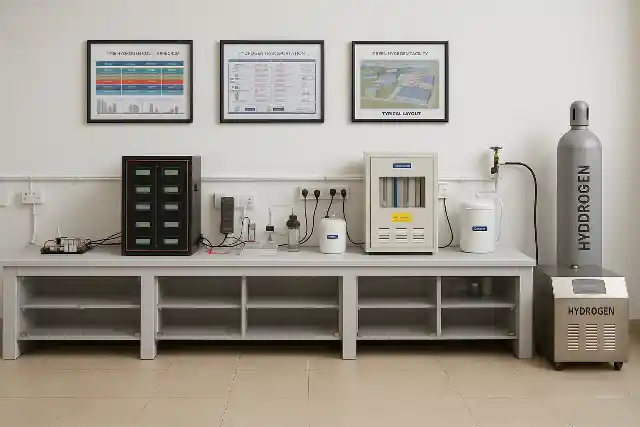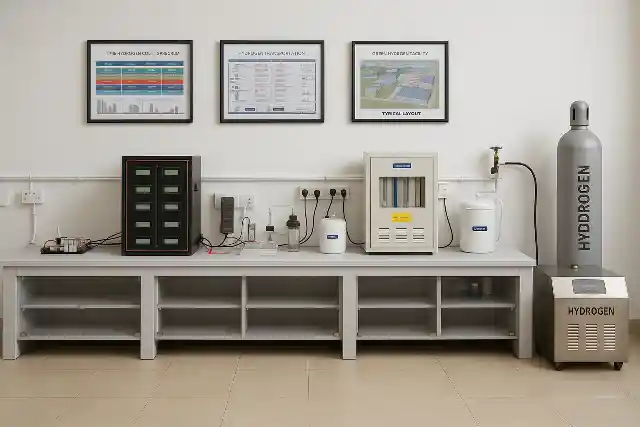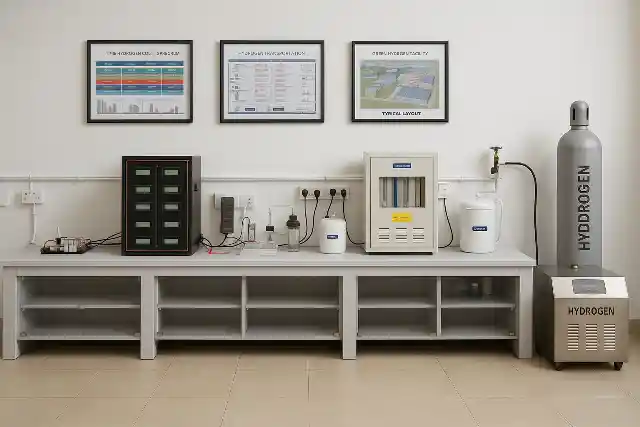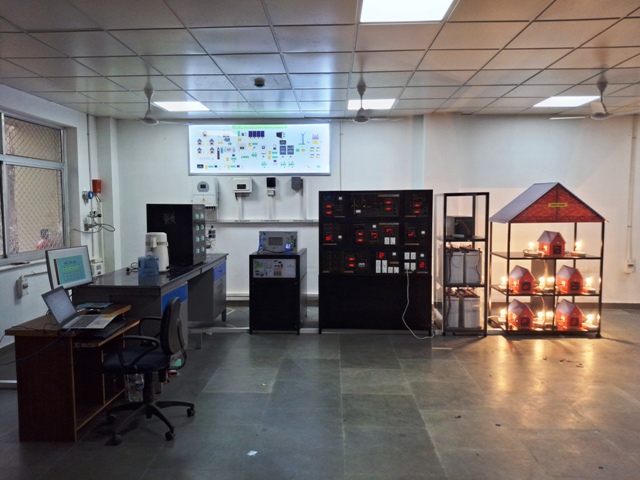
Green Hydrogen Generation and Storage System 

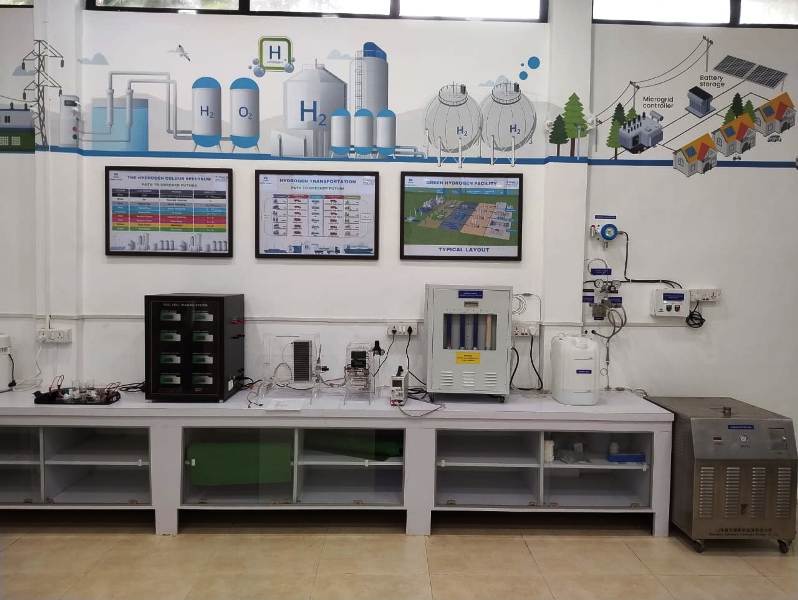
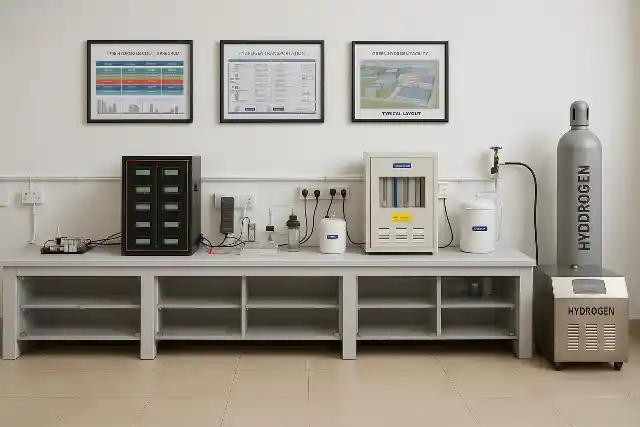
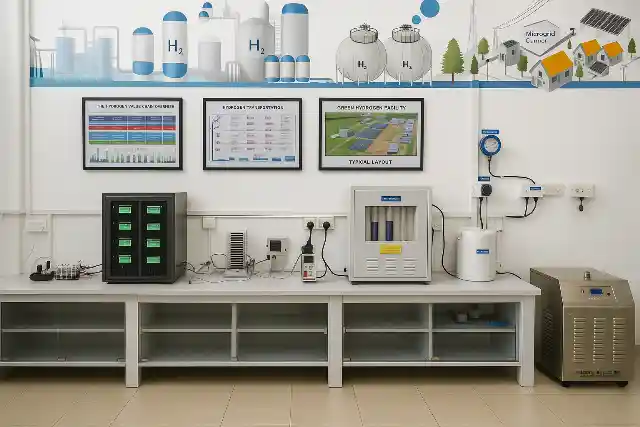
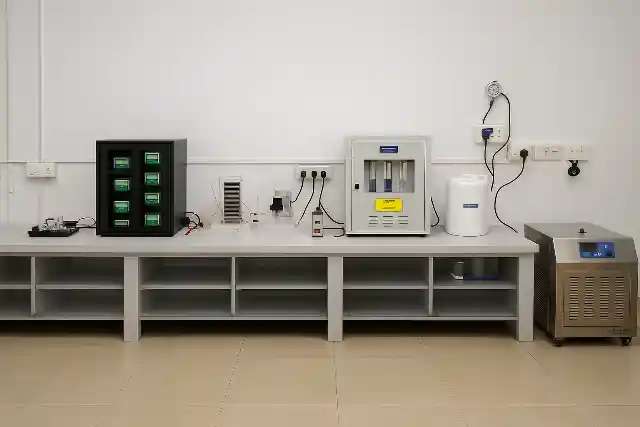
The Green Hydrogen Generation and Storage System by Ecosense is a modular, reconfigurable educational and research-grade platform that replicates the complete hydrogen value chain—from renewable power harvesting to hydrogen generation and safe storage. Designed for engineering institutions, R&D labs, and clean energy centers, this system serves as a real-world replica of decentralized hydrogen production hubs. It enables comparative experimentation with leading electrolyzer technologies (PEM, AEM, Alkaline) and supports multiple input sources including photovoltaic arrays, PV emulators, and AC grid supply. With the flexibility to switch technologies and test variables under controlled lab conditions, this platform prepares students and researchers to design, operate, and optimize hydrogen infrastructure in alignment with future energy systems. 
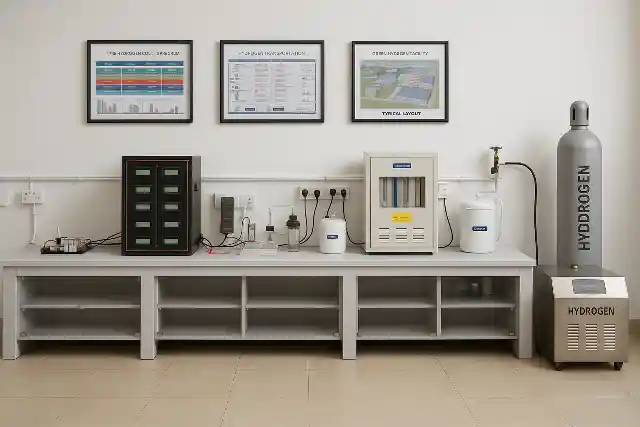
Key Features

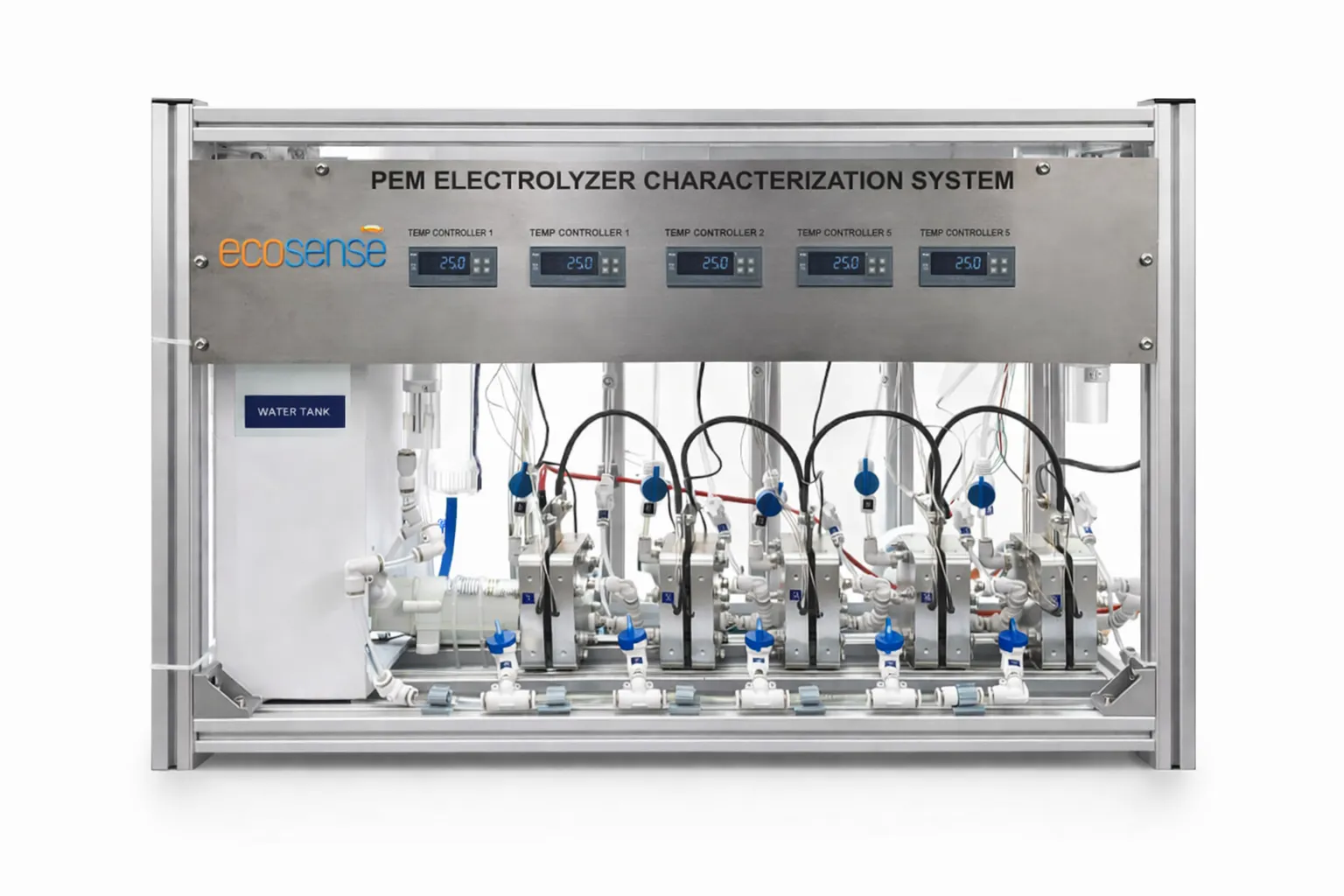
  • Choice of Electrolyzer Type: Configure the system with any one of the following electrolyzers:PEM (Proton Exchange Membrane); AEM (Anion Exchange Membrane); Alkaline Electrolyzer.  Each variant includes suitable purification, control, and safety features.
  • Multiple Power Source Options: Users can power the electrolyzer using: A real Solar PV Array or A Solar PV Simulator or standard AC grid electricity.This flexibility allows year-round experimentation in both lab and field environments.
  • Hydrogen Leak Detection & Safety System: Integrated leak detectors, solenoid valves, and NRVs provide real-time safety with auto-shutdown capability.
  • Real-Time Monitoring and Control: View live parameters such as voltage, current, hydrogen pressure, flow rate, and power output—ideal for student-led experiments and lab reporting.
  • Efficient Electrolysis and Hydrogen Production: Water electrolysis is driven by the selected power input and electrolyzer. The system includes flow-regulated water pumps, safety interlocks, and real-time monitoring of production parameters such as voltage, current, temperature, and gas output.
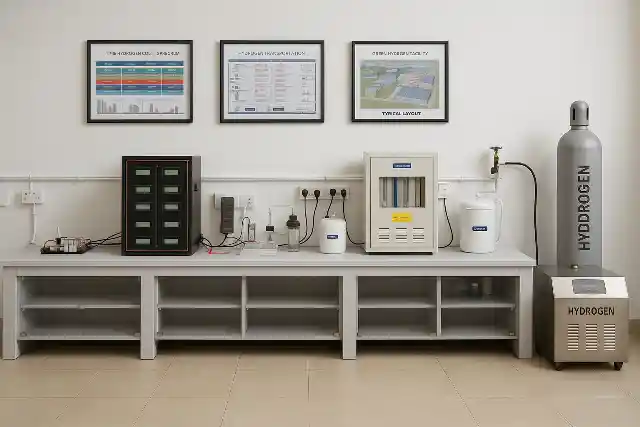
  • Safe Drying and High-Pressure Storage: Produced hydrogen passes through a drying column and is stored in high-pressure steel cylinders. The storage system includes check valves, pressure relief, regulators, and a desiccant system to ensure safety and long-term usability.
  • Integrated Control and Visualization Software: A LabVIEW-based control panel displays real-time sensor data and system performance. Users can define test profiles, adjust operating conditions, and export performance data for further analysis or publication.
Ecosense

Learning Module 

Ecosense

Green Hydrogen Generation Fundamentals

  • Principles of water electrolysis and green hydrogen production.
  • Comparison of electrolyzer technologies: PEM, Alkaline, and AEM.
  • Effect of voltage, current, temperature, and water quality on hydrogen output.
  • Faraday efficiency, energy consumption, and system efficiency calculations.
  • Start-up, steady-state, and shutdown behavior of electrolyzers

Hydrogen Storage, Handling, and Safety

  • Hydrogen gas properties and storage challenges.
  • Operation of gas–liquid separators, dryers, and pressure regulators.
  • Hydrogen storage methods using laboratory-scale cylinders.
  • Leak detection, pressure relief mechanisms, and safety interlocks.
  • Safe operating procedures and emergency shutdown practices

System Integration, Monitoring, and Performance Analysis

  • Integration of renewable power sources with electrolyzers.
  • Real-time monitoring of electrical, flow, and pressure parameters.
  • Data logging and performance evaluation under varying operating conditions.
  • Efficiency optimization and loss analysis across the hydrogen value chain.
  • Understanding lab-scale systems in the context of industrial green hydrogen plants

How the Green Hydrogen Generation and Storage System Works

  • Electrical power from a renewable source or regulated DC supply is fed to the electrolyzer stack through an integrated power conditioning unit.
  • Purified and de-ionized water is supplied to the electrolyzer using a controlled pumping system to ensure consistent flow and pressure.
  • Inside the electrolyzer (PEM, Alkaline, or AEM), water molecules are split into hydrogen and oxygen through an electrochemical reaction.
  • Oxygen is safely vented or collected separately, while hydrogen is routed through gas–liquid separators and drying units to remove moisture.
  • The dry hydrogen passes through pressure regulation and flow-measurement stages for real-time monitoring and performance analysis.
  • Hydrogen is then stored in certified storage cylinders or tanks at controlled pressure levels.
  • Integrated safety systems—including pressure relief valves, hydrogen sensors, and emergency shutdowns—ensure safe operation at all stages.
  • Data acquisition software logs voltage, current, flow rate, pressure, and efficiency parameters for analysis and experimentation.
Ecosense

Technical Specifications 

Ecosense

Hydrogen Generation (Electrolyzers)


ParametersSpecifications
Electrolyzer TypesPEM/AEM/Alkaline

Hydrogen OutputUp to 0.5 Nm³/hr (AEM), 0–3000 ml/min (PEM & Alkaline)
Hydrogen Purity>99.99%
Operating Pressureupto 35 bar

* specifications can be customized as per user's requirement

Hydrogen Storage & Conditioning


ParametersSpecifications
Gas DryingDesiccant-based hydrogen dryer (up to 99% moisture removal)
Storage MediumIndustrial-grade hydrogen cylinders
Cylinder Capacity47 L
Storage PressureUp to 35 kg/cm²

* specifications can be customized as per user's requirement

Safety Systems


ParametersSpecifications
Safety InstrumentsHydrogen leak detectors
Solenoid Valves
Non returning valves etc.
Safety ActionSystem shut-down on detecting hydrogen leakage

* specifications can be customized as per user's requirement

Related Products

Frequently Asked Questions

The system supports multiple electrolyzer technologies, including PEM, Alkaline, and AEM electrolyzers. This allows users to compare hydrogen production efficiency, power consumption, operating pressure, and purity across different electrolysis methods within a single laboratory setup.

Safety is ensured through integrated hydrogen leak detectors, pressure relief valves, regulated storage cylinders, gas dryers, and real-time pressure monitoring. Emergency shutdown mechanisms and controlled venting are provided to ensure safe indoor laboratory operation.

Yes, the system can be integrated with renewable sources such as solar PV or hybrid grid–renewable configurations. This enables realistic experimentation on green hydrogen production using clean electricity and supports advanced research and system expansion.

The system supports undergraduate and postgraduate laboratory experiments, doctoral research, and applied R&D in green hydrogen technologies. It enables studies on electrolysis performance, hydrogen storage behavior, fuel cell power generation, and complete hydrogen energy value-chain analysis.

Get in Touch

Ready to transform your labs?

Contact Now