Fuel Cell Characterization System 

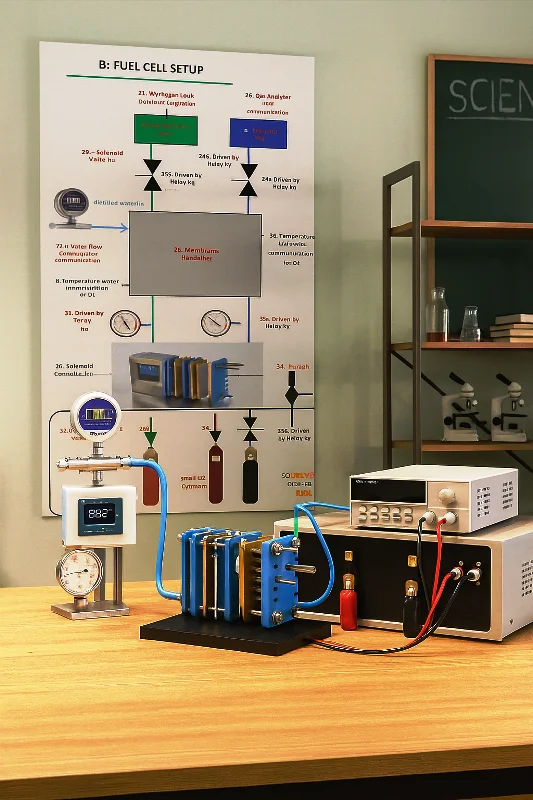
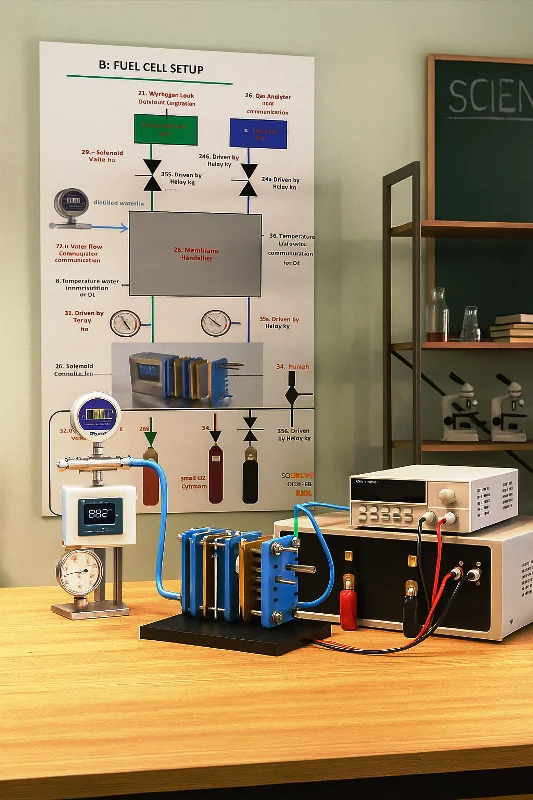
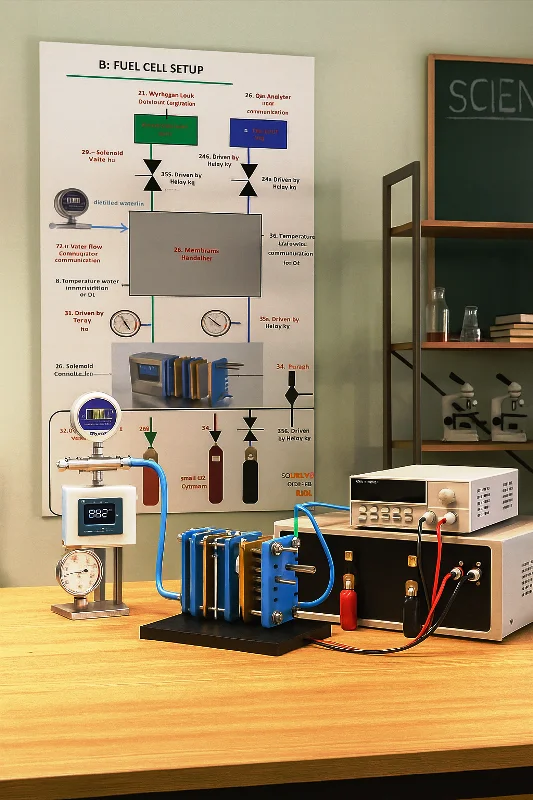
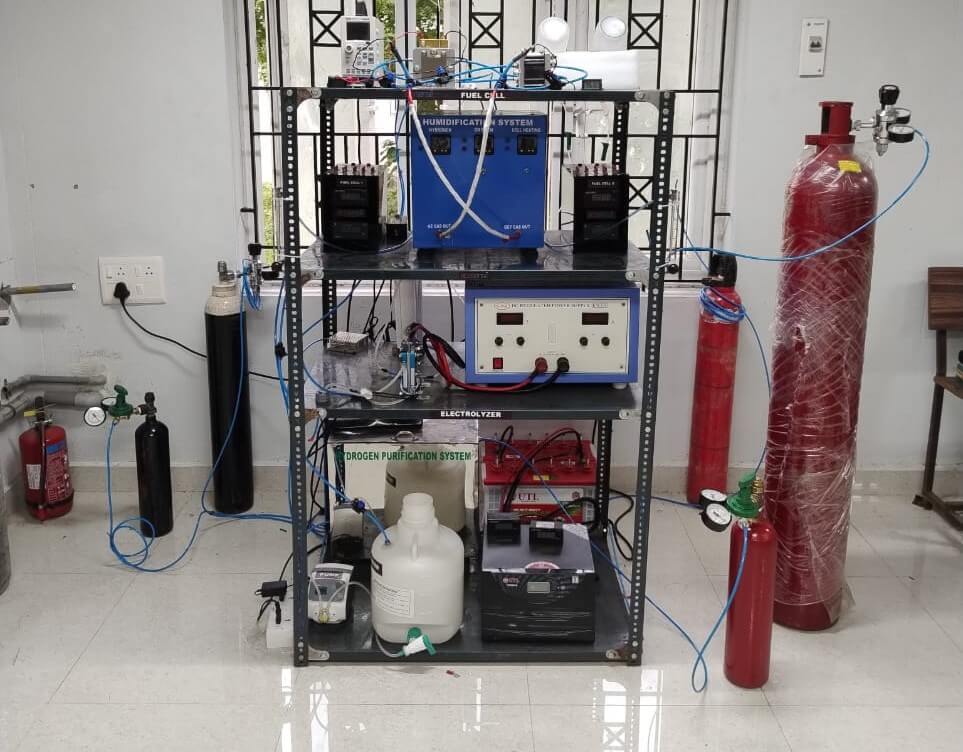
The Fuel Cell Characterization System is an advanced experimentation and research platform for studying PEM fuel cells. It enables detailed exploration of efficiency, durability, and performance under varied operating conditions. The setup includes five single cells and three additional MEA sizes, allowing comparative analysis and scale-up research. Its stackable architecture links single-cell studies to stack-level applications, bridging the gap between laboratory learning and practical deployment. With PC-enabled control, researchers can regulate temperature, humidity, and gas pressure while receiving real-time feedback. A programmable electronic load supports experiments on dynamic operating conditions and optimization. Integrated humidifiers and gas management systems ensure consistent performance. Built-in safety features such as hydrogen leak detection, automatic purging, and overpressure protection guarantee secure operations. Tailored for universities, training centers, and R&D labs, the system provides a complete, safe, and flexible environment for advancing green hydrogen research and innovation. 
Key Features

  • Multi-Cell Configuration: Five single cells and three additional cells of varying MEA sizes (20 cm², 30 cm², 50 cm²) allow flexible experimentation and comparison across scales.
  • Stackable Design: Enables research on scaling effects by extending studies from single cells to stack configurations, simulating real-world deployment scenarios.
  • Precise Temperature Control: Mica film-based heaters and dedicated PID controllers ensure accurate thermal management, essential for optimizing efficiency and durability.
  • Advanced Humidification System: Dual-channel Nafion membrane humidifiers for hydrogen and oxygen provide controlled humidity (40–70°C) for improved electrochemical performance.
  • Programmable Electronic Load: 500 W DC load with CC, CV, CR, and CP modes simulates different operating conditions, enabling detailed characterization of power output and transient responses.
  • Integrated Instrumentation: Mass flow controllers (0–1 LPM), RTD temperature sensors, and capacitive humidity sensors deliver accurate, real-time data for deeper research insights.
  • Gas Management & Safety: Automatic purge unit, overpressure relief valve, hydrogen leak detectors, and solenoid valves ensure reliable and safe experimentation.
  • PC-Based Automation & Data Logging: RS-485, MODBUS, and USB connectivity support real-time monitoring, remote control, and automated data acquisition for streamlined research workflows.
  • Flexible Hydrogen Supply: Compatible with electrolyzer-fed hydrogen and standard regulators, allowing integration with renewable hydrogen generation systems.
  • Research-Focused Architecture: Designed for investigating efficiency optimization, humidification strategies, durability testing, thermal management, and hybrid integration with batteries or supercapacitors.
Ecosense

Learning Module 

Ecosense

Fuel Cell Performance & Characterization

  • Study polarization curves to analyze activation, ohmic, and mass transport losses.
  • Measure power density and efficiency across different temperatures, pressures, and loads.
  • Compare performance of single cells vs. stackable configurations for real-world scaling studies.

Gas Flow, Humidity & Pressure Studies

  • Conduct experiments with dry vs. humidified hydrogen and oxygen for efficiency optimization.
  • Explore the effects of varying gas pressures on stability, efficiency, and power output.
  • Investigate purge cycle intervals and their impact on long-term fuel cell durability.
  • Compare performance across different MEA sizes for scale-based learning.

Safety, Durability & Advanced Applications

  • Validate system safety through hydrogen leak detection, automatic shutdown, and purge protocols.
  • Perform long-term durability studies under cyclic load and environmental variations.
  • Integrate with electrolyzer-fed hydrogen for renewable-to-electricity pathways.
  • Explore hybrid system applications by combining fuel cells with batteries or supercapacitors for load leveling.
  • Develop and test advanced PC-based control algorithms for optimization and real-time monitoring.

How Fuel Cell Characterization System Works

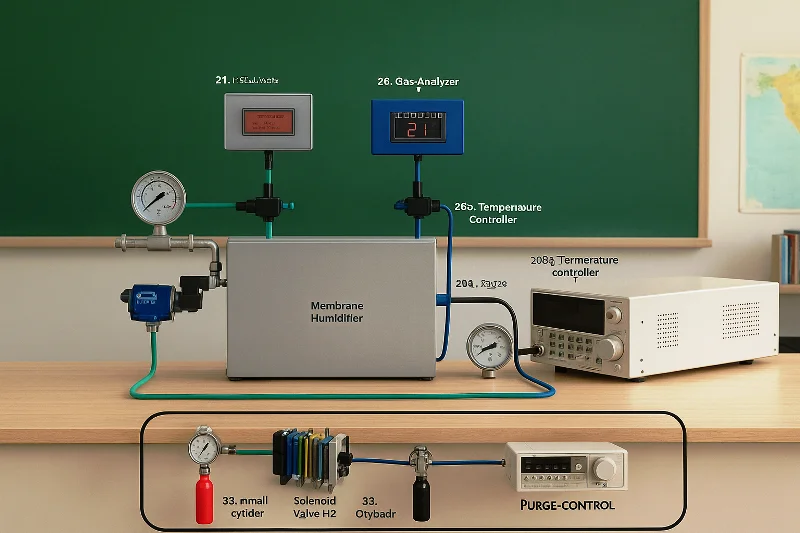
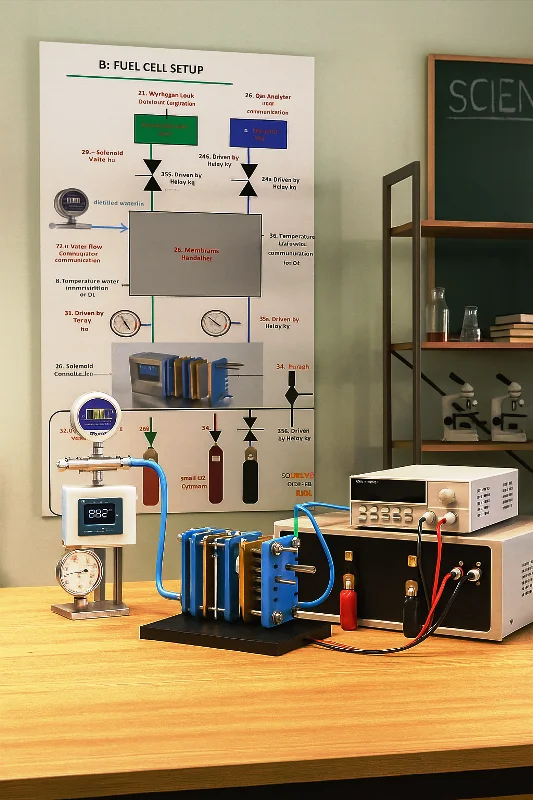
  • Stored hydrogen is supplied to single-cell PEM fuel cells through regulated gas lines with mass flow and pressure control.
  • Hydrogen and oxygen streams pass through Nafion membrane humidifiers, where gas humidity is precisely conditioned for optimal membrane performance.
  • Integrated heaters and temperature controllers maintain the desired fuel cell operating temperature.
  • Electrochemical reactions inside the PEM fuel cell generate DC electrical power from hydrogen and oxygen.
  • A programmable electronic load applies controlled CC, CV, CP, or CR loading to obtain polarization and power curves.
  • All operating parameters—temperature, humidity, pressure, flow rate, voltage, and current—are monitored and controlled via a PC interface.
  • Safety systems continuously monitor gas pressure and hydrogen leakage, triggering automatic purge and system shutdown if limits are exceeded.
Ecosense

Technical Specifications 

Ecosense

Fuel Cell & Stack Configuration


ParametersSpecifications
Fuel cell typePEM single-cell
Number of standard cells5 units
MEA active area25 cm²
Additional cell sizes20 cm², 30 cm², 50 cm²

* specifications can be customized as per user's requirements

Gas Conditioning & Control


ParametersSpecifications
Humidification methodNafion membrane-based
Gas channelsIndependent H₂ and O₂
Pressure controlElectronic regulators with purge valves
Flow controlMass flow controllers (0–1 LPM)

* specifications can be customized as per user's requirements

Load, Control & Safety


ParametersSpecifications
Electronic load500 W DC, CC/CV/CR/CP modes
Control interfacePC-based (USB / RS-485 / MODBUS)
Leak detectionCatalytic hydrogen sensor
Safety actionsAuto purge and system shutdown

* specifications can be customized as per user's requirements

Related Products

Frequently Asked Questions

The system is designed for PEM single-cell fuel cells and supports multiple MEA active areas, including 20 cm², 25 cm², 30 cm², and 50 cm². This enables comparative studies across different cell sizes under identical operating conditions.

Users can independently control and study cell temperature, gas humidity, gas pressure, hydrogen/oxygen flow rates, and electrical load conditions, allowing detailed analysis of performance, efficiency, and loss mechanisms.

The system includes hydrogen leak detection, automatic pressure purging, solenoid-based gas isolation, and PC-controlled emergency shutdown, ensuring safe operation during both steady-state and transient testing.

The platform supports polarization curve analysis, power density measurement, humidity and temperature impact studies, load transient response, fuel utilization analysis, and comparative characterization of different MEA sizes.

Get in Touch

Ready to transform your labs?

Contact Now