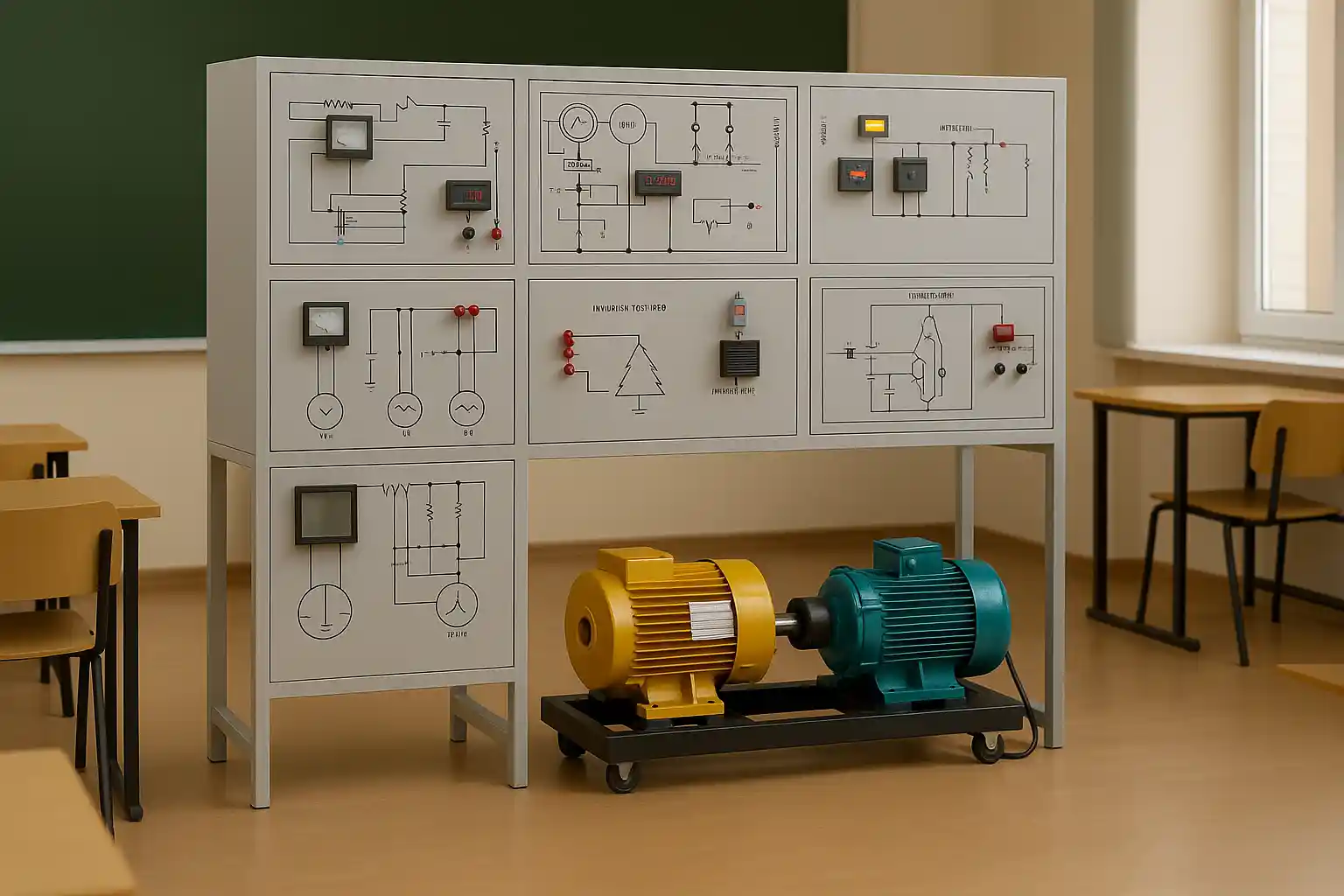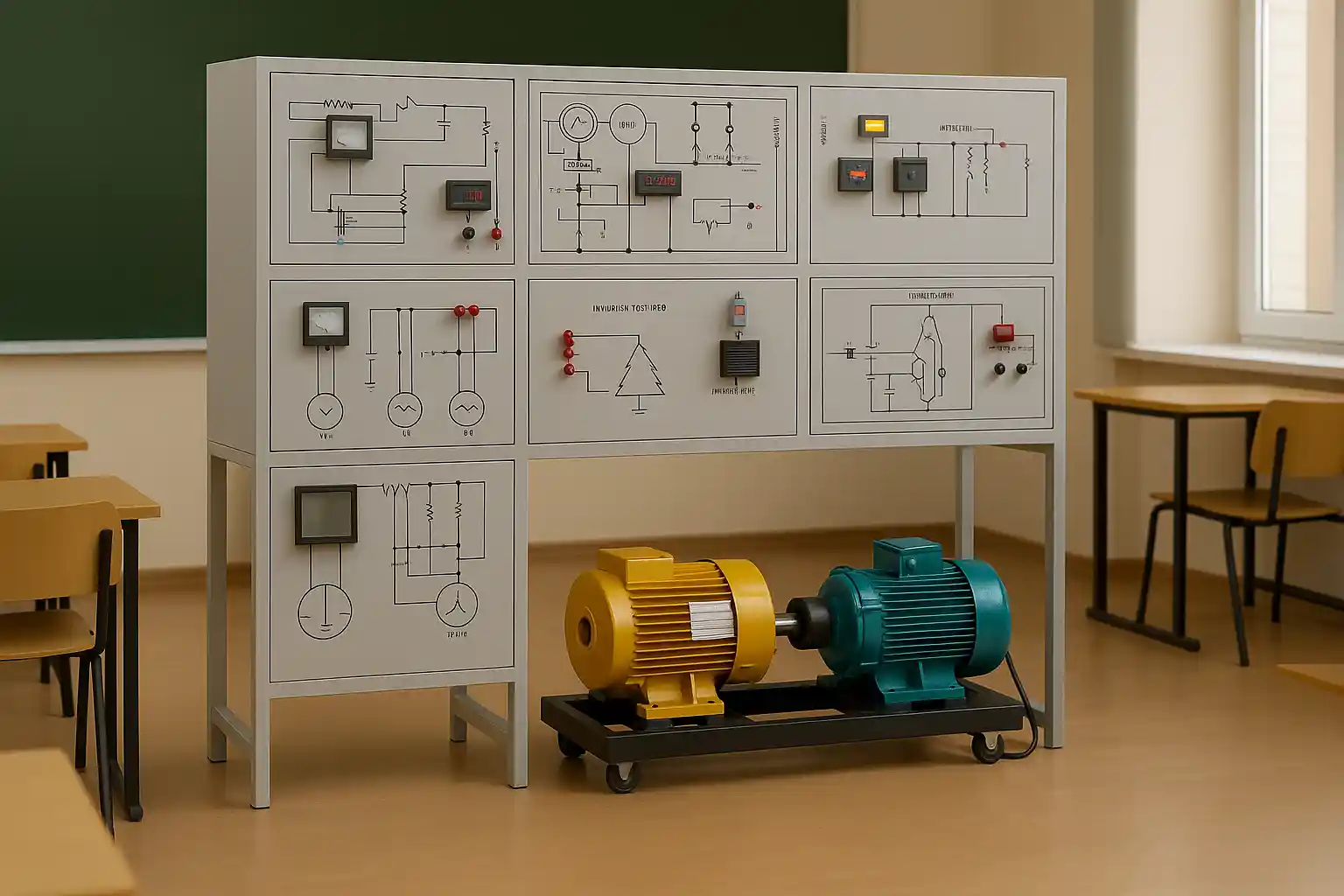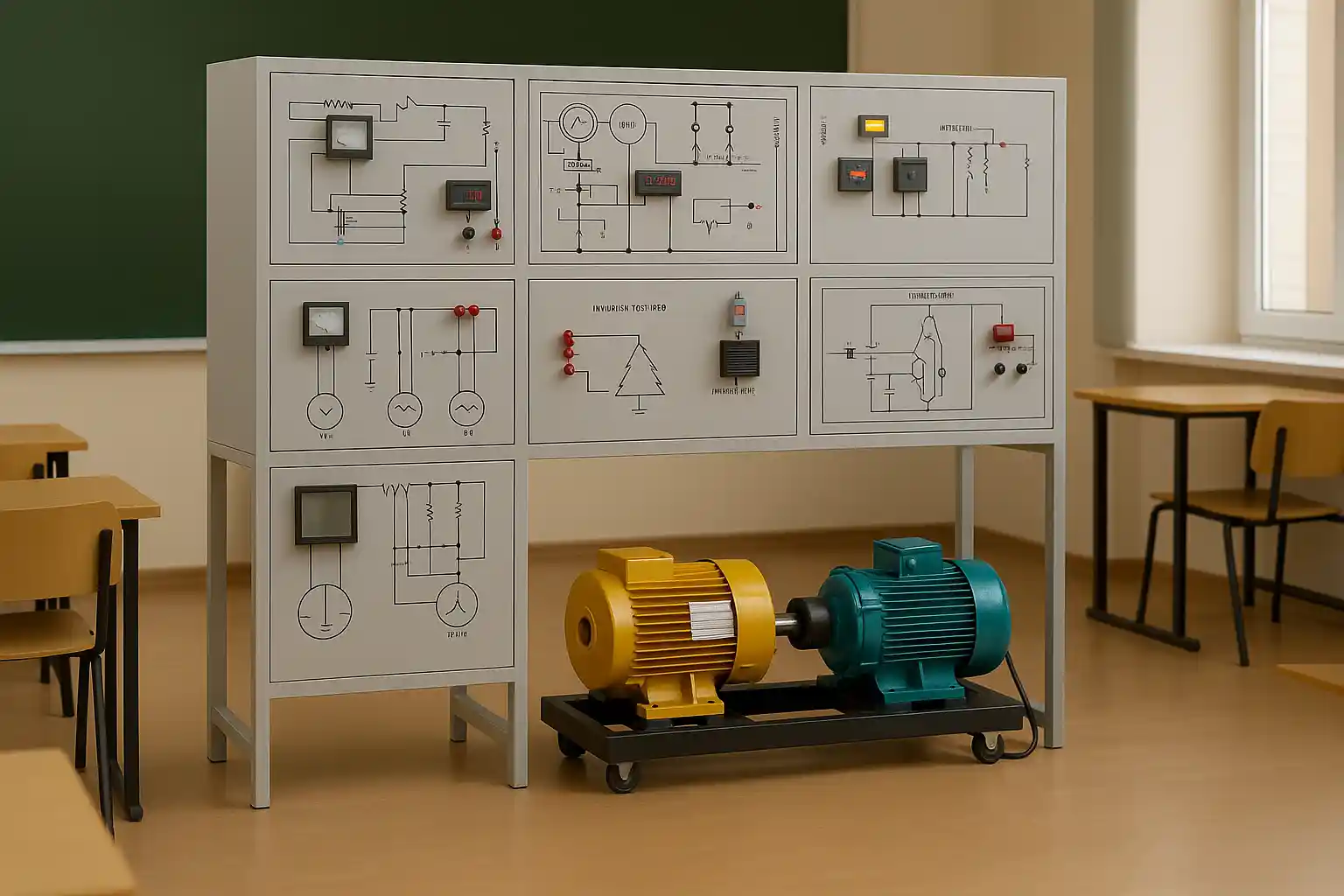
Ocean Wave Energy Simulator 

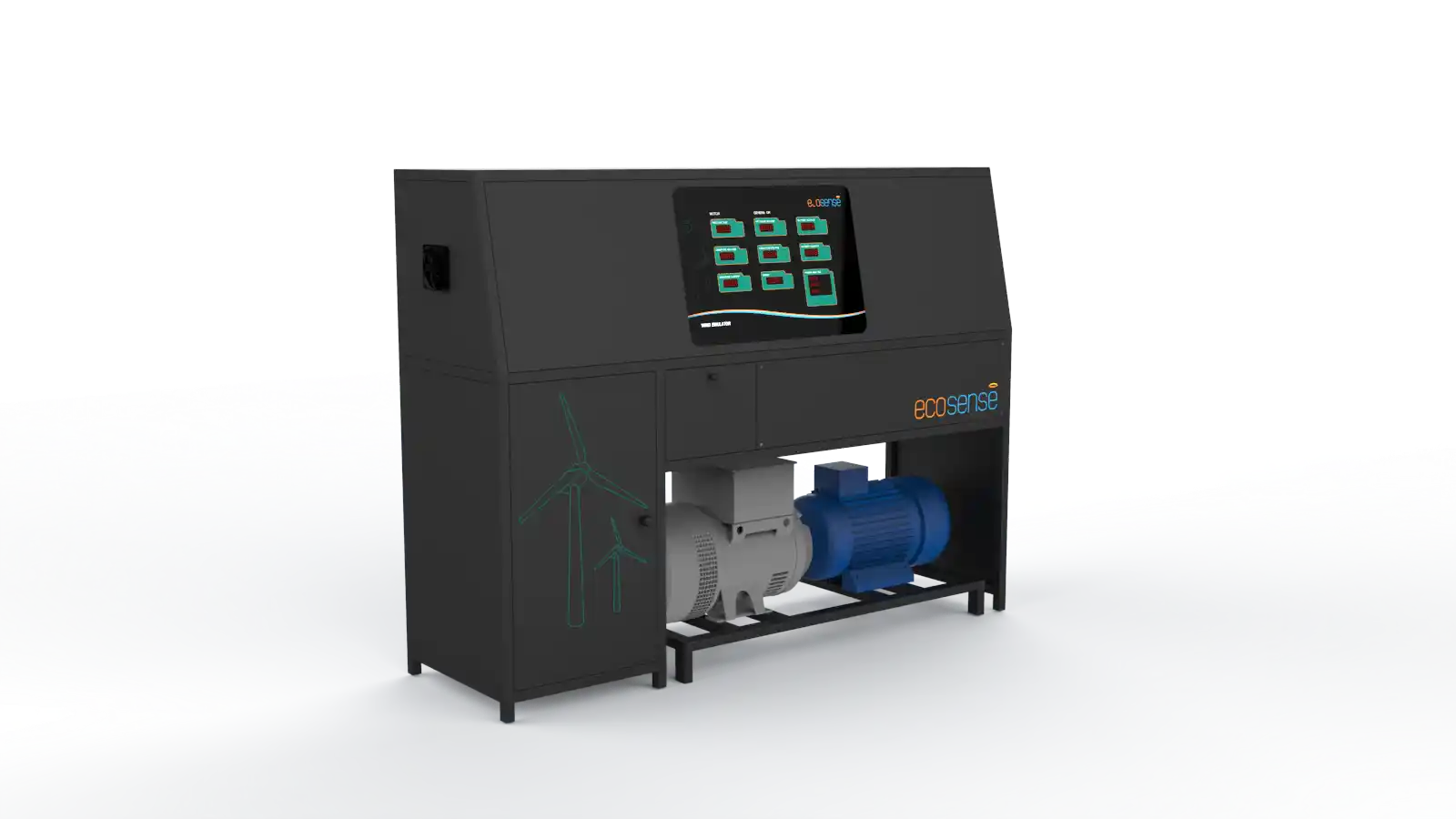
The Ocean Wave Energy Simulator by Ecosense is a complete lab-scale system that replicates the behavior of Oscillating Water Column (OWC) wave energy plants. It uses real ocean wave data to simulate irregular sea states and emulates the full energy conversion process using a DC motor to replicate turbine torque and a Permanent Magnet Synchronous Generator (PMSG) for electrical generation. With LabVIEW-based control, real-time monitoring, and grid-connected operation, it serves as a robust platform for education, research, and control strategy development in marine renewable energy. 
Key Features

  • Real-time Hardware-in-the-Loop (HIL) Simulation: Simulates wave dynamics, air chamber, and turbine torque in real time using FPGA-based control.
  • Irregular Wave Emulation: Supports multiple spectral models like Pierson–Moskowitz, JONSWAP, TMA, and Bretschneider.
  • OWC Plant Modeling: Complete simulation of Oscillating Water Column system including pressure dynamics and flow reversal.
  • Turbine Torque Reproduction: Simulates Wells turbine behavior with precise control over torque using a separately excited DC motor.
  • PMSG-Based Power Generation: Real-world PMSG setup with rectifier, DC-DC converter, and grid-connected inverter.
  • LabVIEW GUI Interface: Intuitive interface for selecting wave types, adjusting parameters, and visualizing performance.
  • Grid-Connected Inverter with Active/Reactive Control: Space vector control with independent P and Q regulation as per grid code compliance.
  • Experimental Validation Tools: Measure torque, wave spectra, power output, and DC link parameters in real time.
  • Supports Research on Grid Compliance & Fault-Ride-Through: Useful for grid fault analysis and exploring mitigation via storage or control techniques.
Ecosense

Learning Module 

Ecosense

Ocean Wave Energy Conversion Fundamentals

  • Introduction to ocean energy and wave dynamics.
  • Types of wave energy converters with focus on OWC systems.
  • Understanding Wells turbine operation and characteristics.
  • Statistical wave spectrum models: Pierson–Moskowitz, JONSWAP, TMA, Bretschneider.
  • Emulation of irregular waves using real ocean data.
  • Chamber and turbine modeling principles.

Electrical Generation & Grid Integration

  • Working with PMSG-based energy conversion systems.
  • Torque generation and control using DC motor and FPGA-based current source.
  • Rectification, DC-DC conversion, and inverter control.
  • Active and reactive power management using space vector modulation (SVM).
  • DC link voltage stabilization and real-time power flow monitoring.
  • Grid code compliance and control strategy implementation

Simulation, Control, and Research Applications

  • Using LabVIEW interface for wave configuration and real-time monitoring.
  • Experimental validation under different wave profiles.
  • Fault ride-through analysis and system behavior during grid disturbances.
  • Research-oriented studies on low-frequency power oscillations.
  • Custom wave generation and test-bed for novel control algorithms.
  • Integration of energy storage systems for smoothing intermittent output.

Technical Description

  • The Ocean Wave Energy Simulator is a lab-scale mechatronic platform designed to replicate real ocean wave energy conversion under controlled indoor conditions.
  • The system is based on the Oscillating Water Column (OWC) principle, where simulated wave motion generates bidirectional airflow equivalent to ocean wave-induced pressure variations.
  • Real and synthesized irregular wave profiles are mathematically modelled and executed using a programmable drive system, enabling realistic sea-state emulation.
  • A servo/DC motor-driven mechanism reproduces turbine torque characteristics corresponding to varying wave heights and frequencies.
  • Mechanical energy is converted into electrical energy using a Permanent Magnet Synchronous Generator (PMSG), reflecting practical marine generator behavior.
  • Power conditioning stages include rectification, DC-link regulation, and inverter-based grid or load interfacing.
  • Integrated sensors measure torque, speed, voltage, current, and power in real time.
  • A PC-based control and data acquisition interface (LabVIEW/SCADA-ready) allows waveform selection, parameter tuning, and performance analysis.
  • The simulator supports experimentation on energy extraction efficiency, control strategies, and grid integration of wave energy systems.
Ecosense

Technical Specifications 

Ecosense

Mechanical & Wave Simulation


ParametersSpecifications
Wave simulation methodSoftware-defined regular & irregular wave profiles
Wave parametersAdjustable height, frequency, and wave period
Drive mechanismServo / DC motor-based mechanical emulator
Turbine emulationOWC-equivalent bidirectional torque modelling

* specifications can be customized as per user's requirements.

Electrical & Power Conversion


ParametersSpecifications
Generator typePermanent Magnet Synchronous Generator (PMSG)
Power conditioningRectifier, DC link, inverter stage
Output modesStandalone load / grid-connected operation
Rated power (typ.)Lab-scale (customizable for academic use)

* specifications can be customized as per user's requirements.

Control, Measurement & Software


ParametersSpecifications
Control interfacePC-based controller (LabVIEW/SCADA compatible)
Measured parametersSpeed, torque, voltage, current, power
Data acquisitionReal-time monitoring and logging
Experiment flexibilityOpen access for control & algorithm testing

* specifications can be customized as per user's requirements.

Related Products

Frequently Asked Questions

The Ocean Wave Energy Simulator operates by mathematically modelling ocean wave profiles and converting them into equivalent mechanical torque using a motor-driven emulator. This torque replicates the effect of oscillating waves in an Oscillating Water Column (OWC) system. The mechanical energy drives a Permanent Magnet Synchronous Generator (PMSG), which produces electrical power. Power electronics condition the output for load or grid connection, while a PC-based control and data acquisition system enables real-time monitoring, control, and performance analysis.

The cost of an Ocean Wave Energy Simulator varies depending on configuration, power rating, control features, and software customization. Pricing typically depends on academic or research requirements such as grid integration, advanced control access, and data analytics. For accurate pricing, it is recommended to contact Ecosense Sustainable Solutions directly with your laboratory objectives and specification needs.

The simulator provides realistic, repeatable wave energy experimentation in a safe indoor environment. It eliminates dependence on ocean conditions while allowing students and researchers to study wave energy conversion, generator behavior, and grid integration. The system supports hands-on learning, control algorithm development, and performance evaluation, making it ideal for teaching, training, and marine renewable energy research.

As a lab-scale system, the simulator cannot fully replicate complex offshore conditions such as extreme storms, corrosion, or long-term mechanical fatigue. Power output is limited compared to utility-scale wave plants, and results require scaling considerations when applied to real ocean deployments. However, these limitations are typical for controlled educational and research platforms.

Get in Touch

Ready to transform your labs?

Contact Now