Wind Energy Training System 

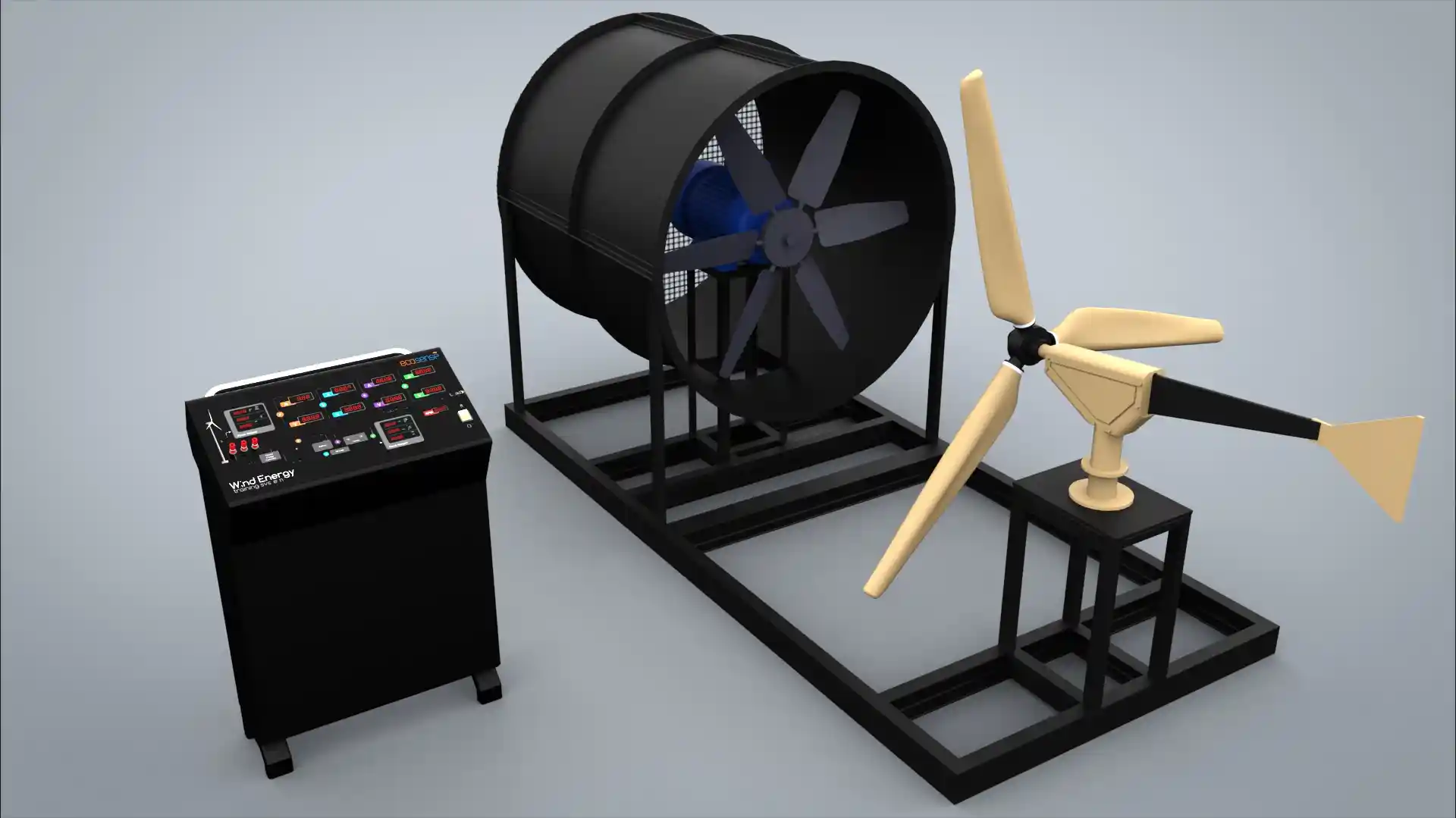
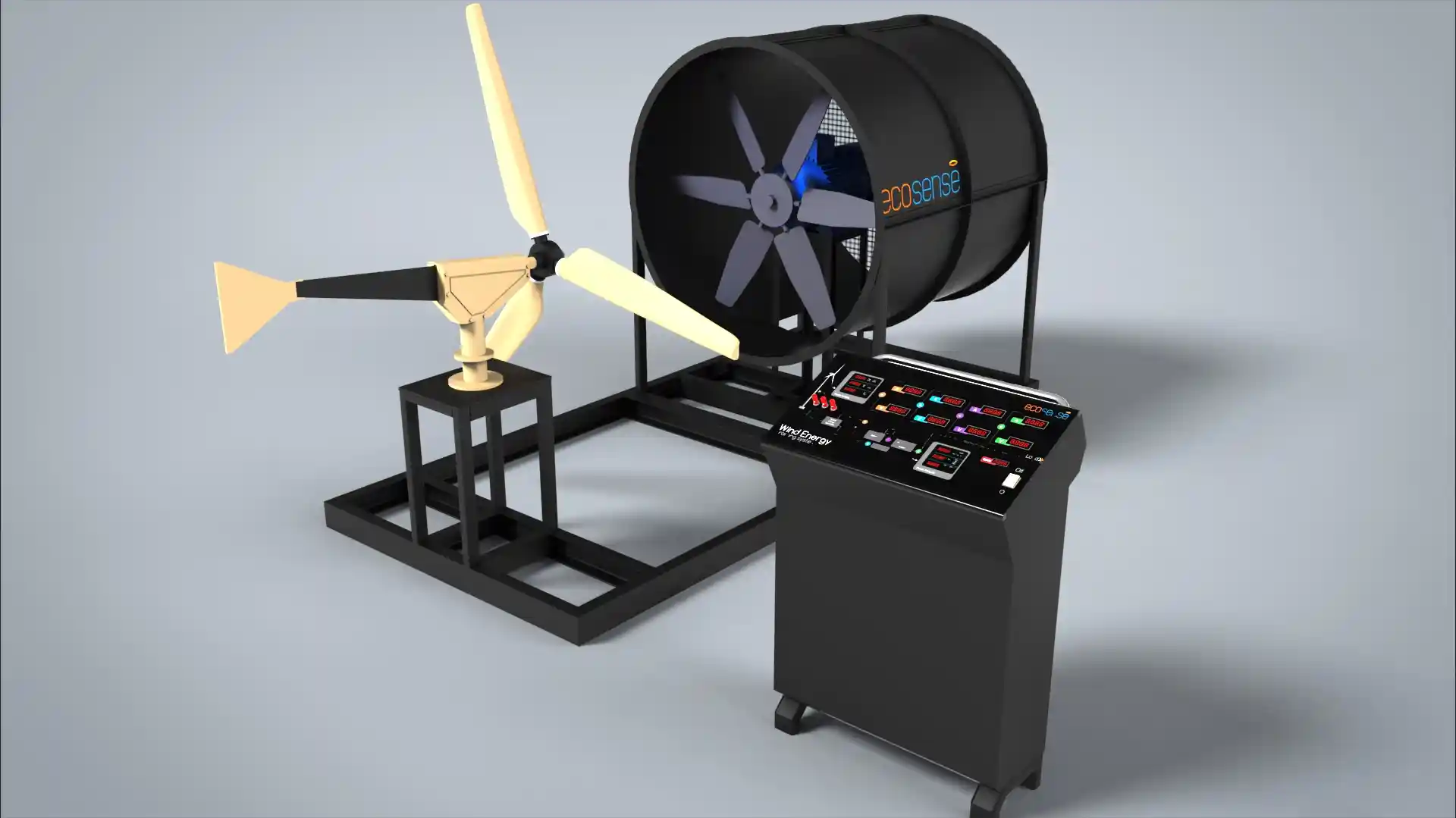
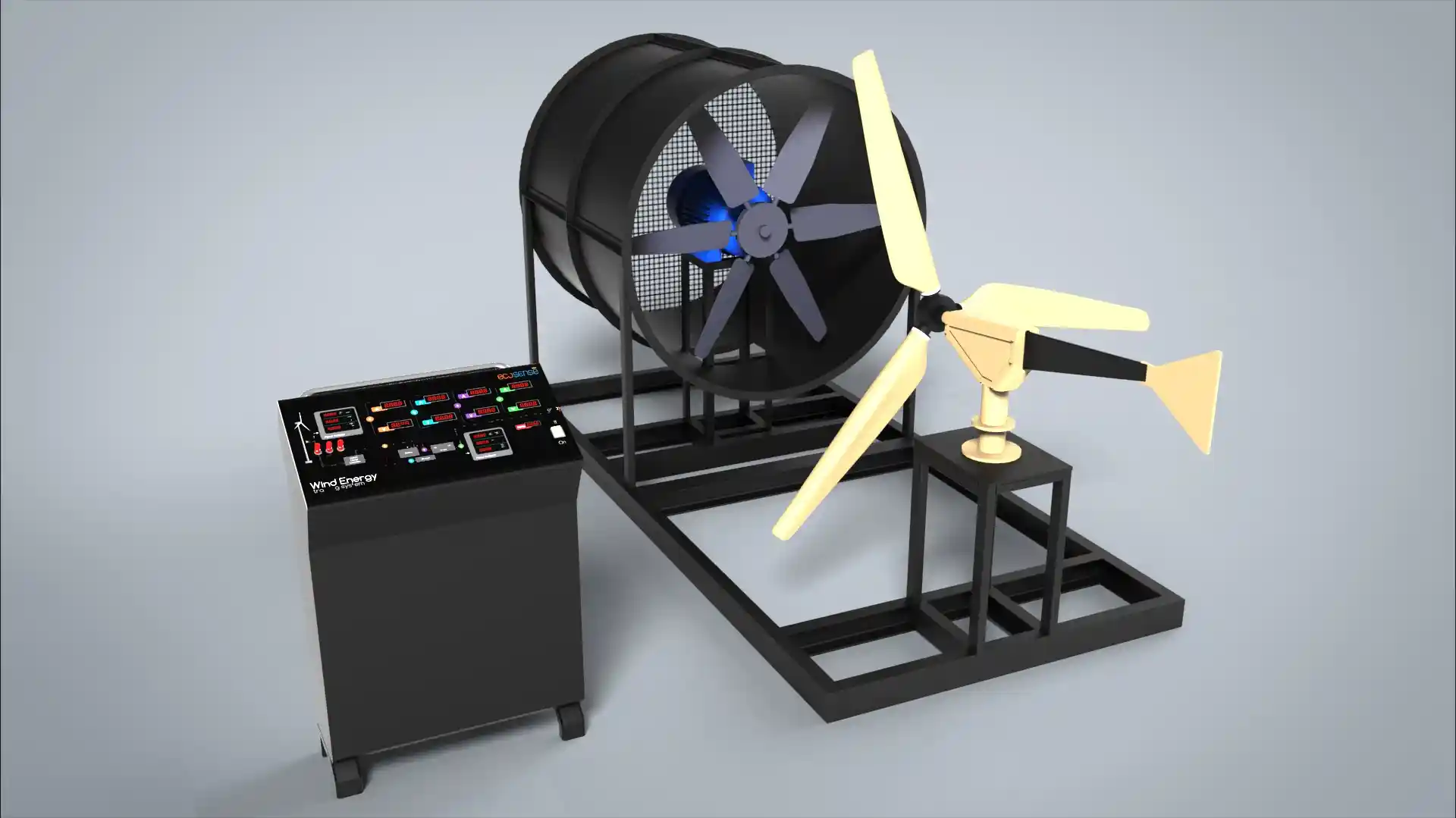
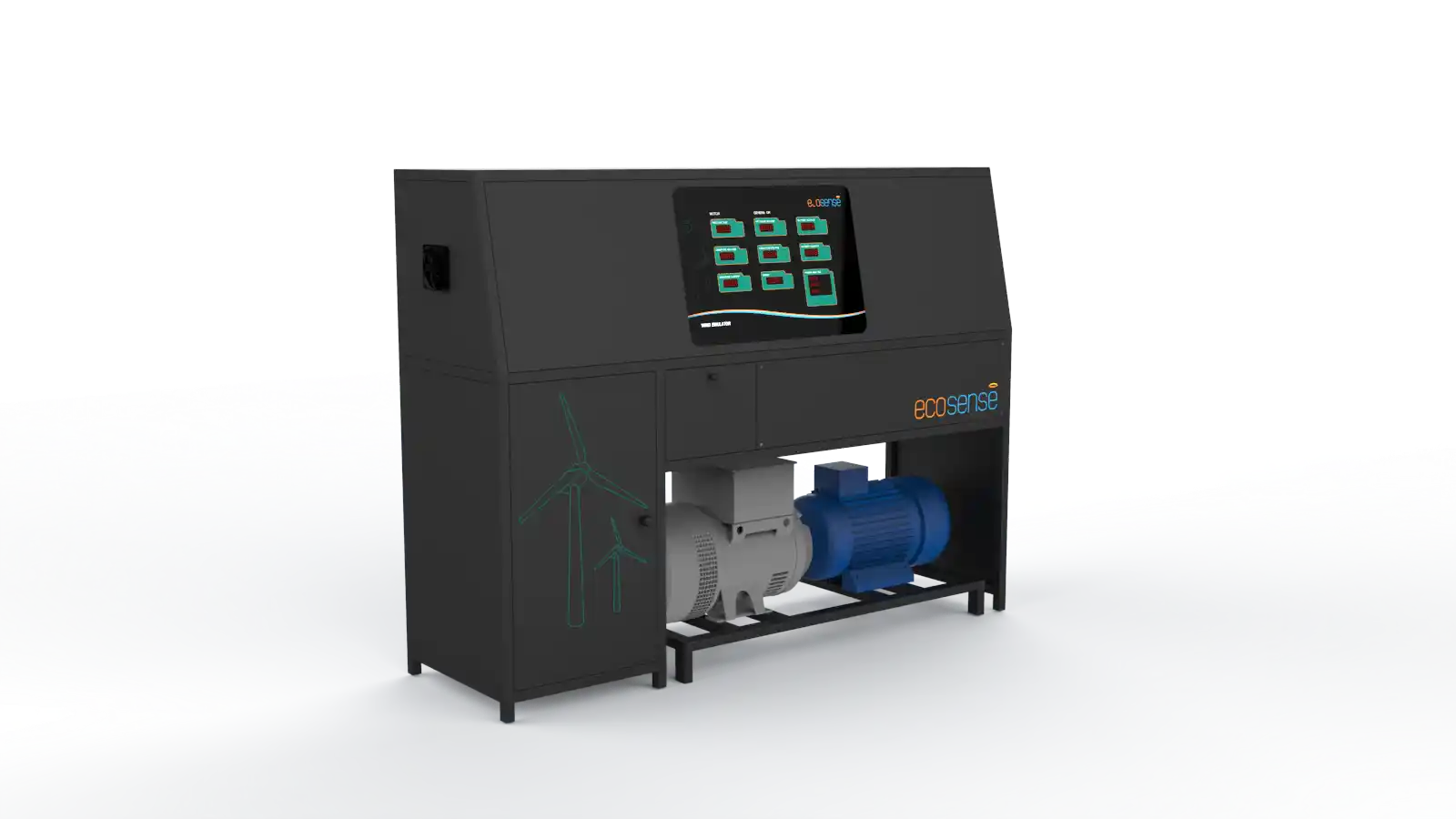
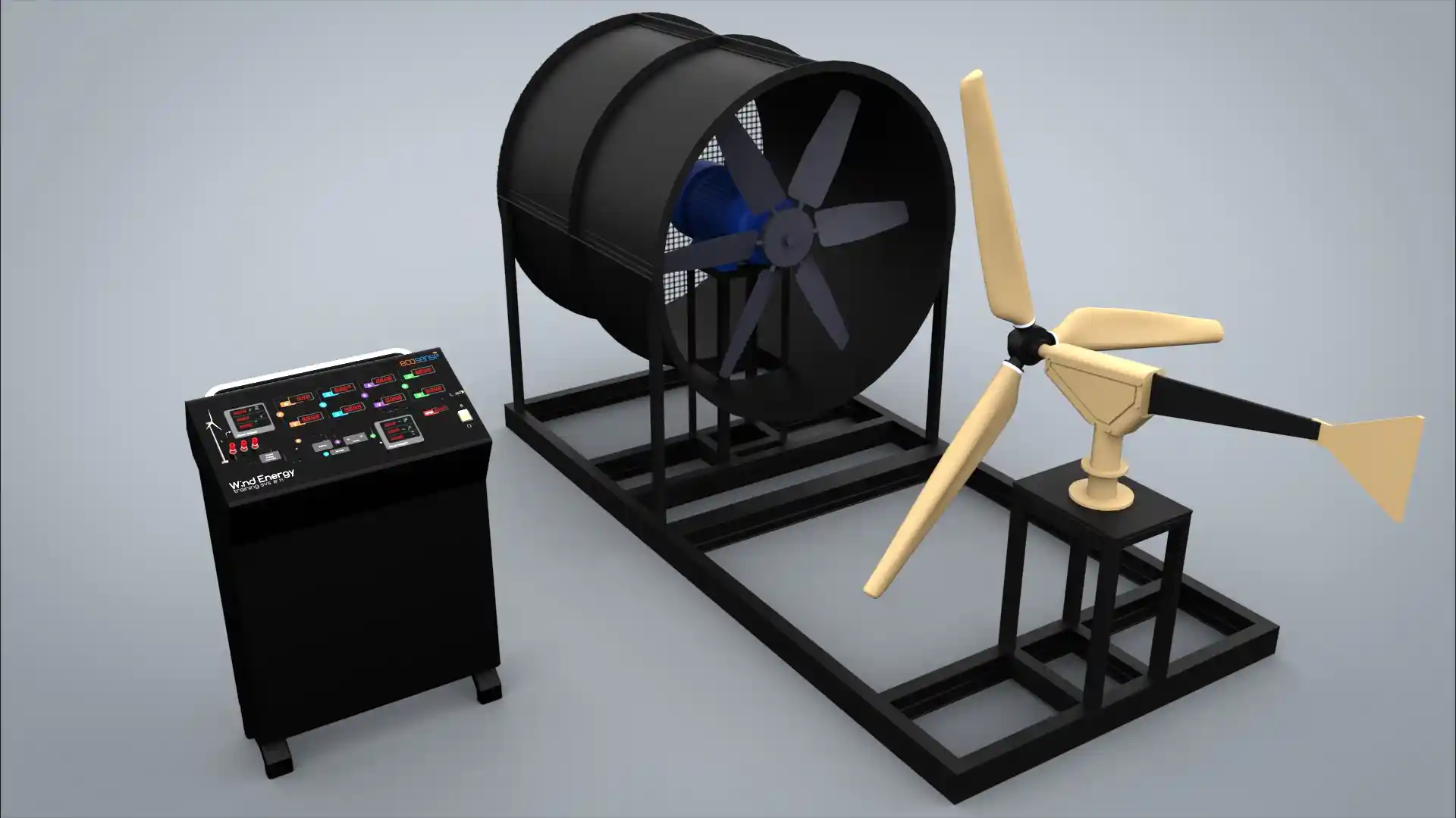
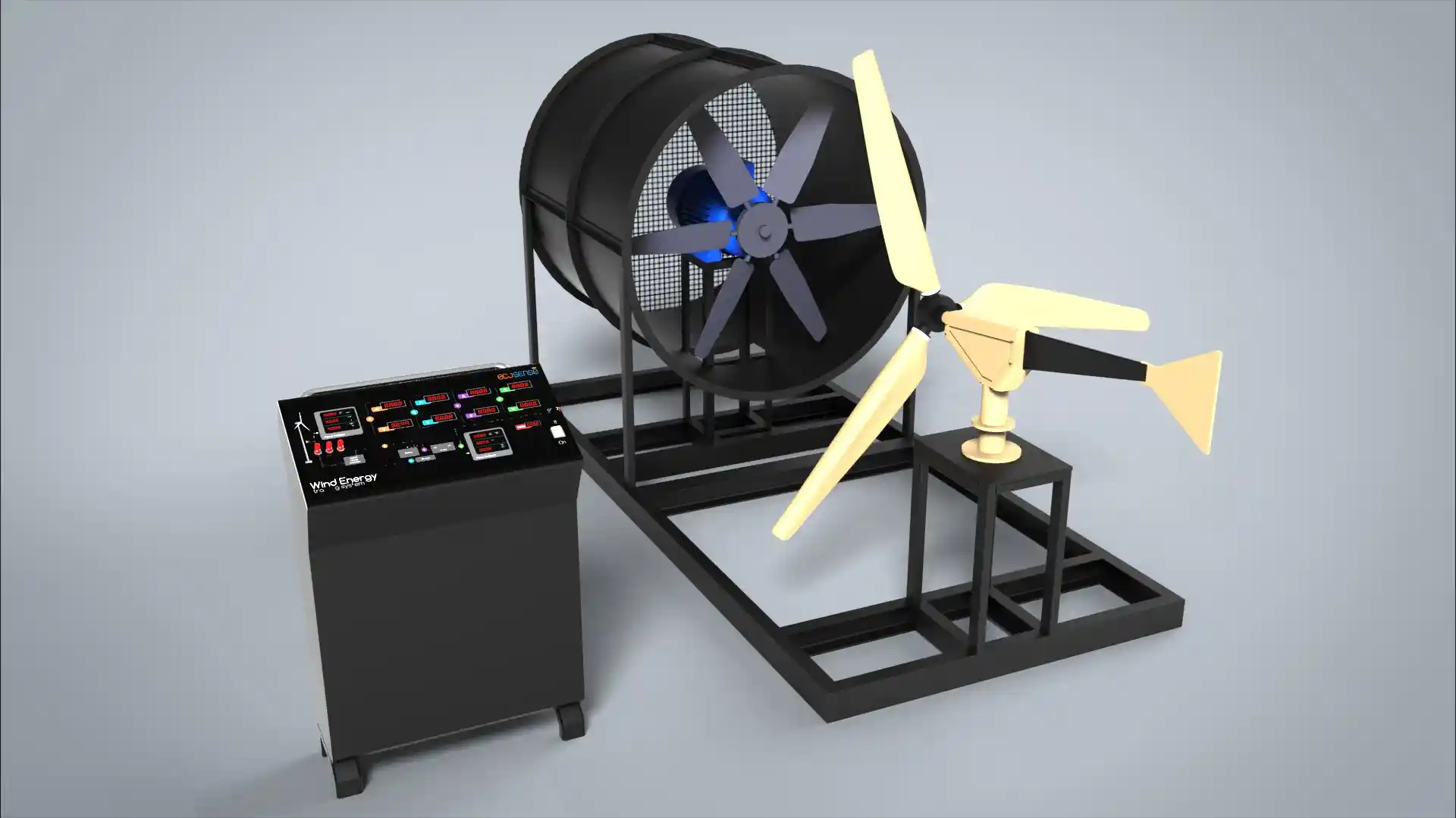
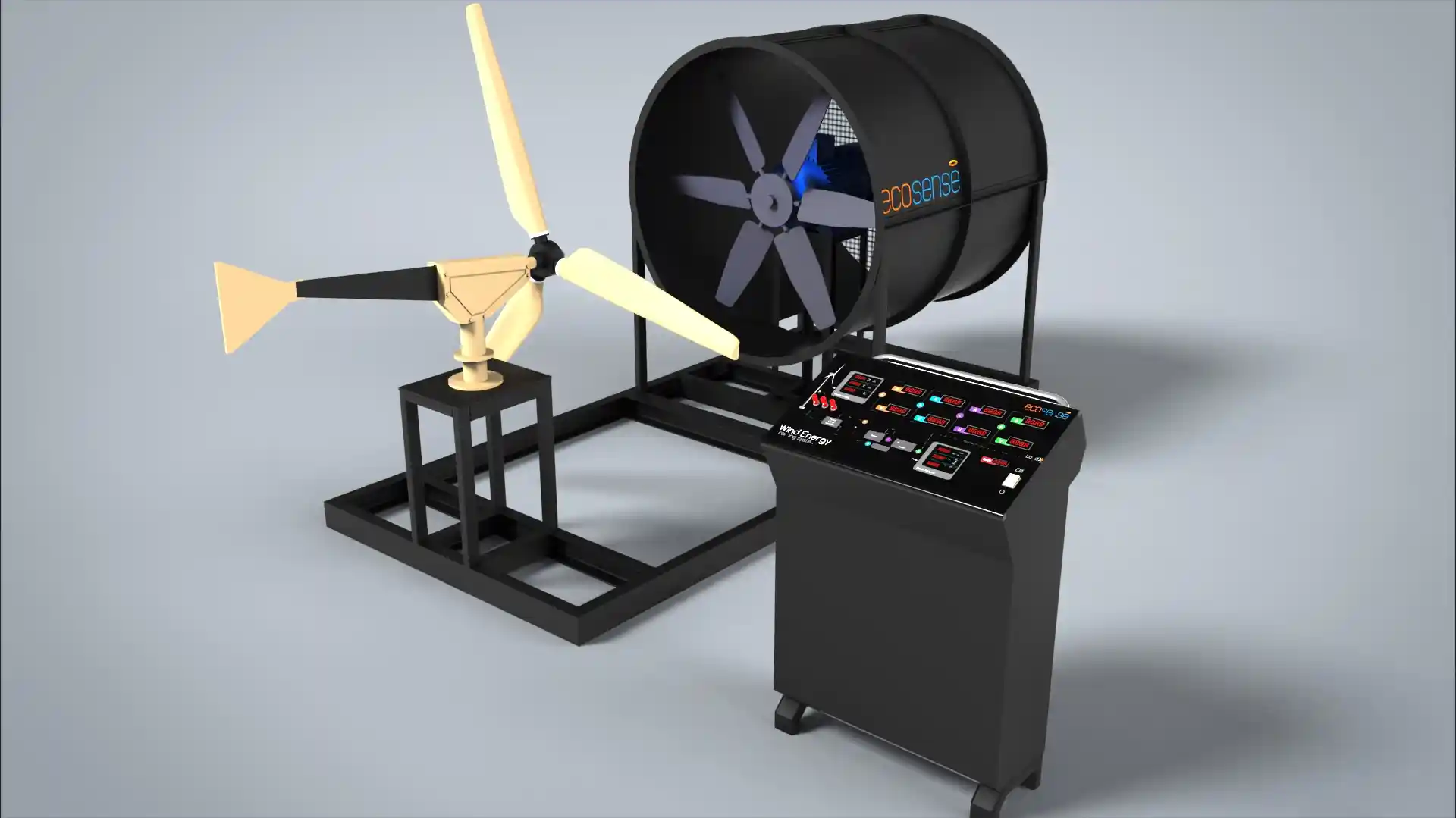
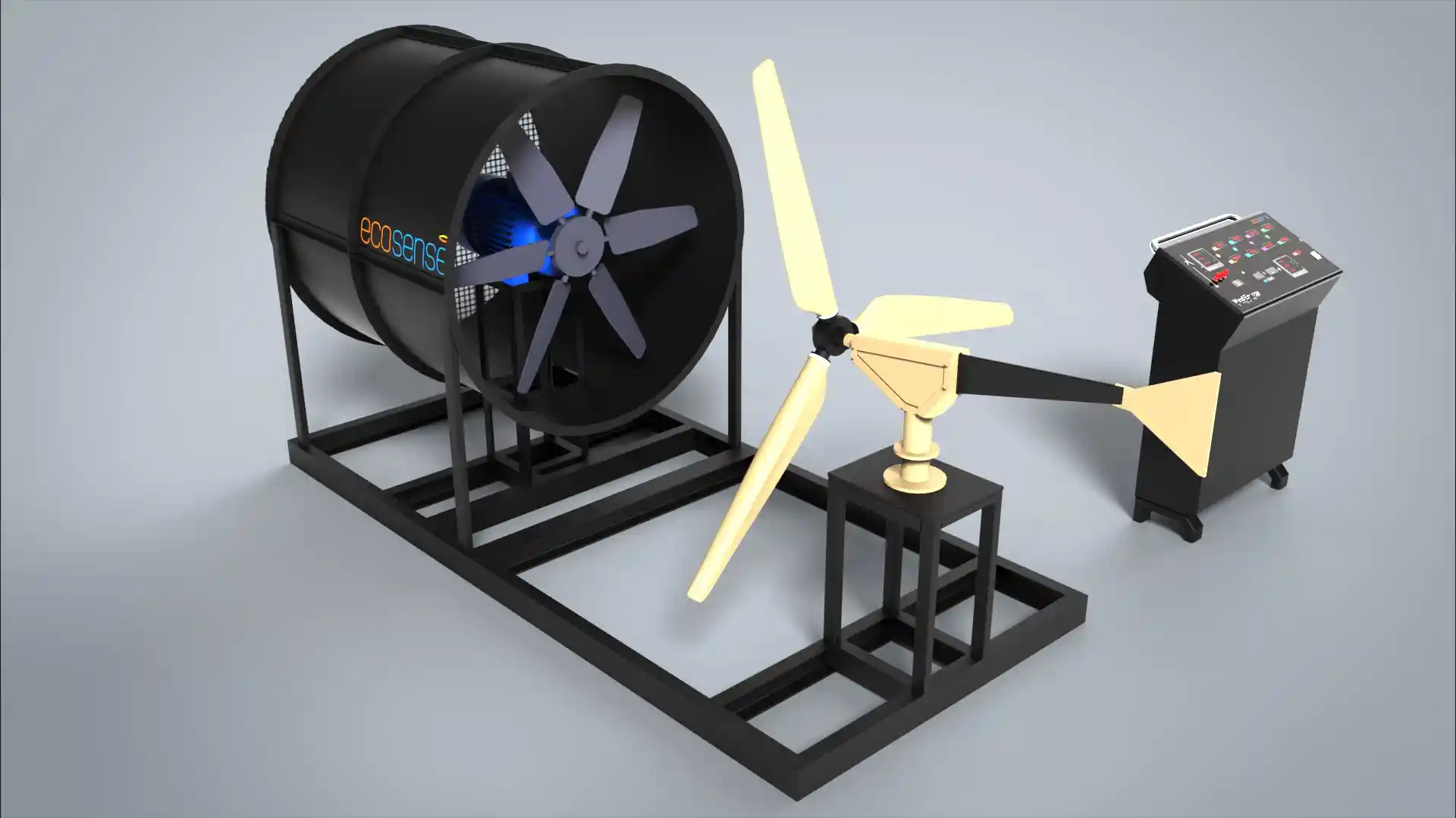
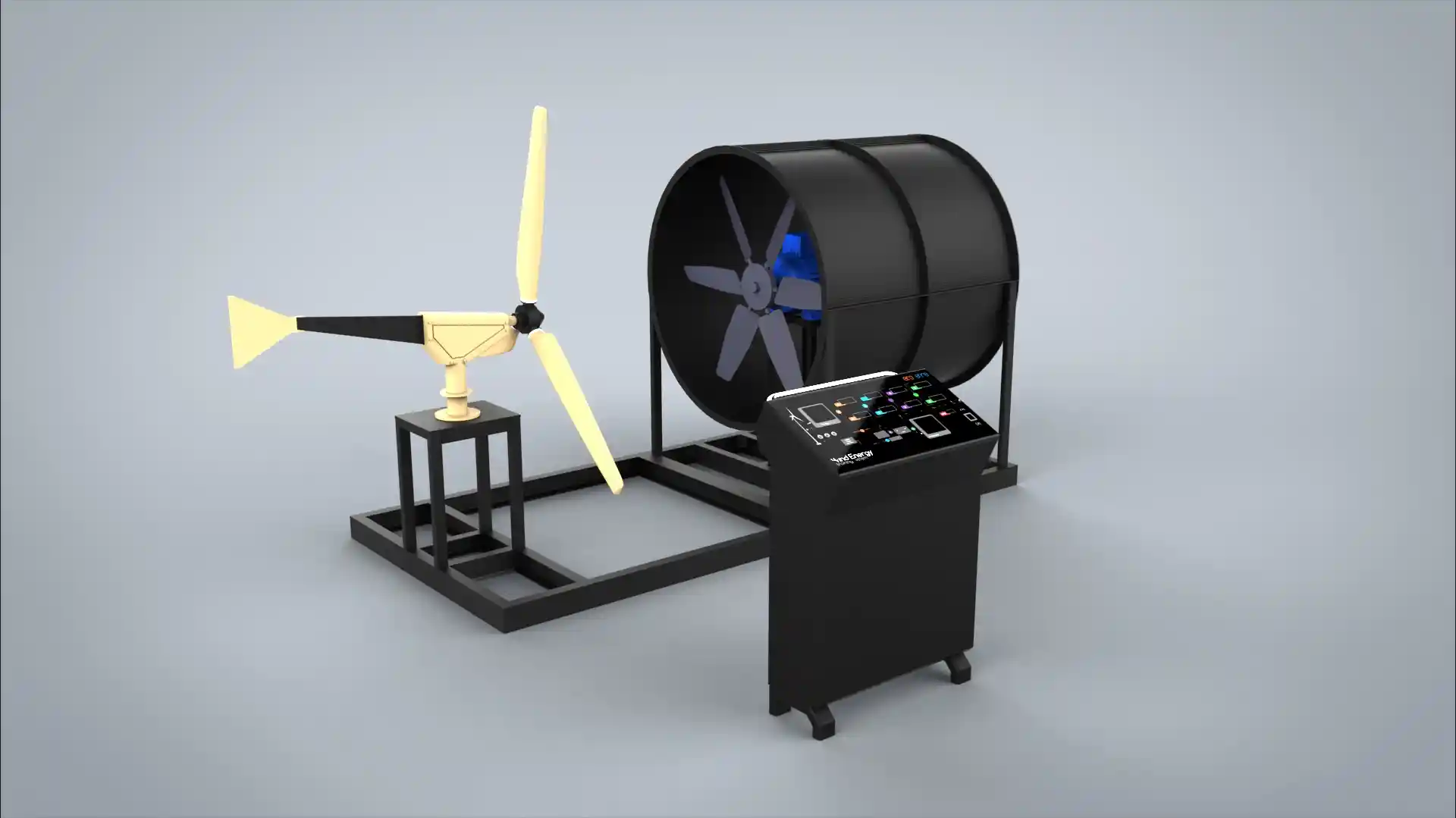
The Wind Energy Training System is a compact, hands-on laboratory platform designed to introduce students and professionals to the fundamentals of wind power generation and standalone wind energy systems. It replicates the core workings of an actual wind turbine plant in a controlled laboratory environment — perfect for classroom learning, skill development programs, technical training, and renewable energy research. This system facilitates hands-on learning and research by allowing users to study the operational characteristics of wind turbines, understand energy conversion processes, and explore system integration aspects. 
Key Features

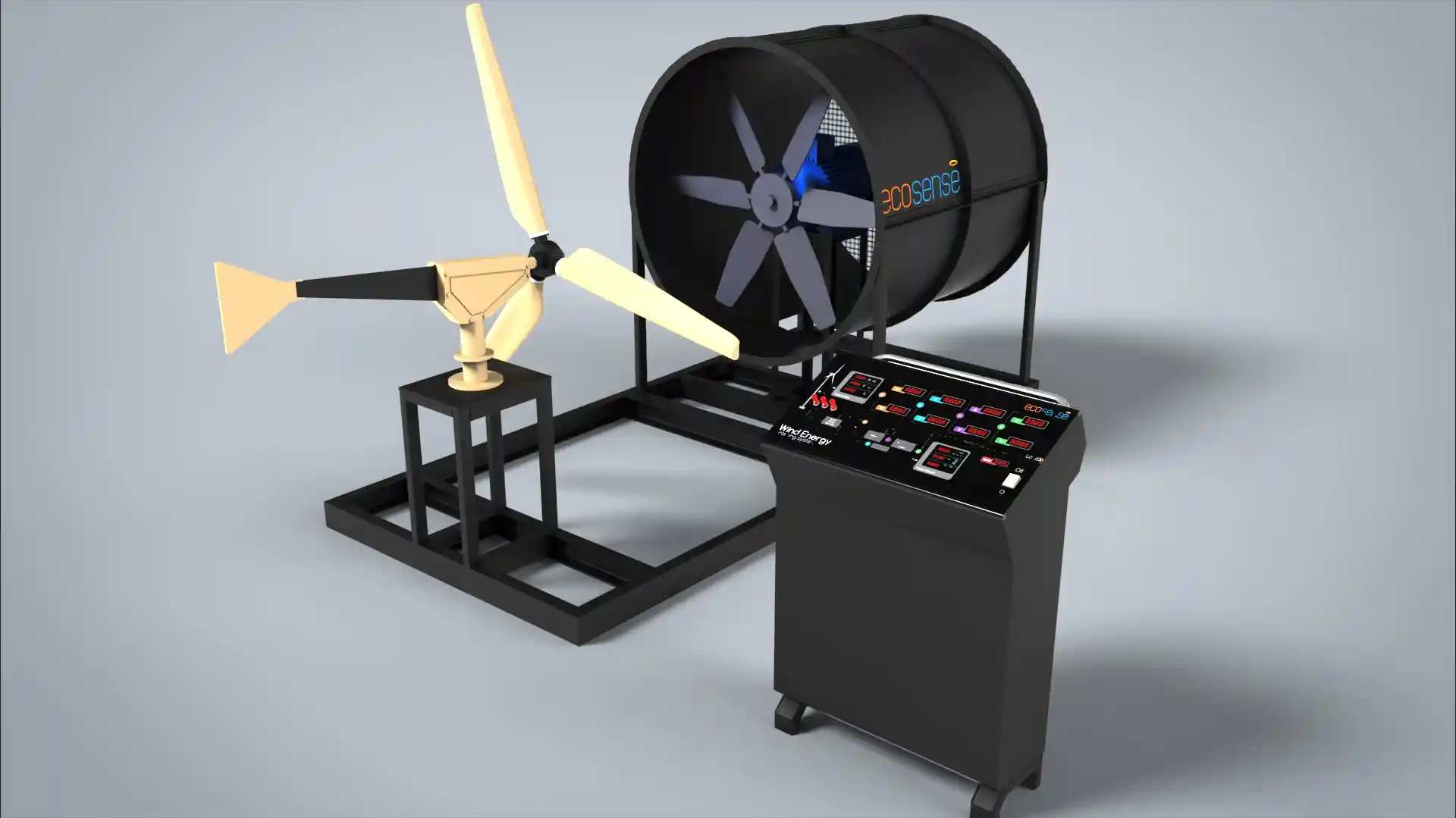
  • Artificial Wind Generation for Controlled Testing: An induction motor-driven fan with variable frequency control generates wind speeds up to 15 m/s, enabling consistent and repeatable lab experiments without relying on natural wind.
  • Actual 400 W Wind Turbine: The system includes a real, 3-blade, fixed-pitch wind turbine with a 1.26 m rotor diameter and 400 W rated output—ideal for hands-on study of small-scale wind power generation.
  • Power Flow: Wind Turbine → Rectifier → Charge Controller → Battery → Inverter → AC Load: The 3-phase AC output from the wind turbine is rectified to DC, regulated by a 12 V, 400 W charge controller, stored in a 12 V, 42 Ah battery, and then converted to AC via a 650 VA inverter—allowing users to safely run and test AC loads in a standalone configuration.
  • Battery-Based Standalone Operation: Includes a deep-cycle battery bank that stores energy, making the system ideal for off-grid and backup power simulations.
  • AC and DC Load Testing: Supports connection of both AC and DC loads, helping students explore system behavior under different loading conditions and types.
  • Real-Time Monitoring and Measurement: Features voltmeters, ammeters, anemometer (for wind speed), tachometer (for rotor speed), and power analyzer for monitoring electrical and mechanical parameters.
  • PC-Based Data Logging and Visualization: Bundled software enables real-time graphing, CSV export, and performance analysis. Useful for plotting Cp vs TSR, power curves, and efficiency comparisons.
  • Safe and Indoor Lab Ready: Designed for academic institutions, the system is enclosed, electrically safe, and fully operational indoors using artificial wind—making it weather-independent.
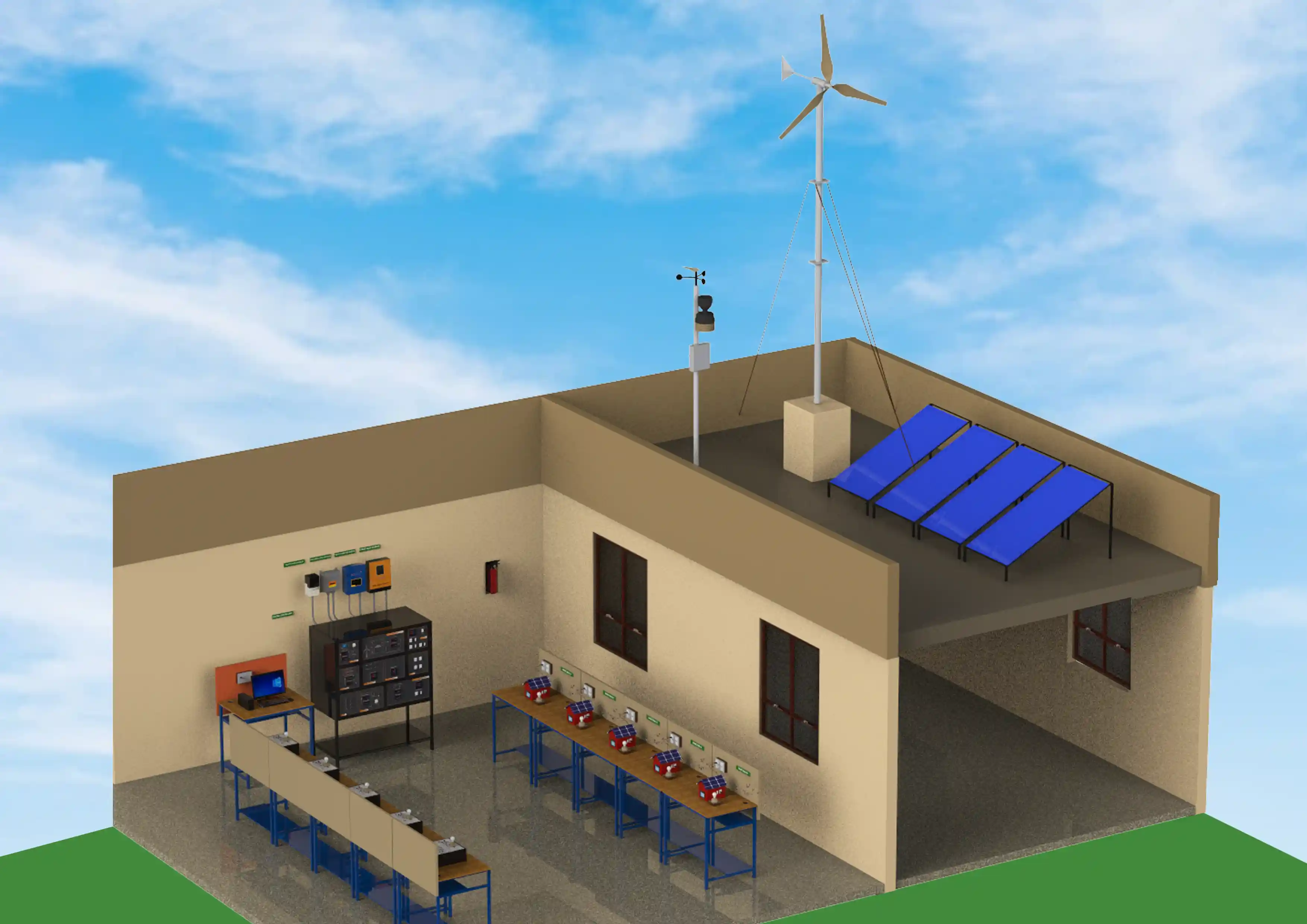
  • Modular System with Hybrid Integration Capability: Can be linked with other renewable energy modules (e.g., solar PV) at the DC level to simulate hybrid systems or DC microgrids.
Ecosense

Learning Module 

Ecosense

Wind Turbine Performance

  • Measure cut-in wind speed
  • Calculate Tip Speed Ratio (TSR) and Coefficient of Performance (Cp)
  • Plot TSR vs. Cp and Power vs. Wind Speed curves
  • Analyze rotor speed vs. power output

Energy Conversion & Storage

  • Study AC to DC rectification
  • Evaluate charge controller performance
  • Understand battery charging and DC to AC inversion
  • Test system under AC and DC load conditions

Monitoring & Data Analysis

  • Monitor wind speed, RPM, voltage, current, and power
  • Log data and export CSV files
  • Plot and analyze performance graphs

Technical Description

  • An artificial wind generator (motor-driven fan with VFD) produces controlled and repeatable wind speeds inside the laboratory.
  • Airflow drives a horizontal-axis wind turbine with fixed-pitch blades, converting wind kinetic energy into mechanical rotation.
  • The turbine shaft is coupled to a three-phase permanent magnet generator, producing variable-voltage, variable-frequency AC power.
  • Generated AC power is rectified to DC and regulated through a charge controller to ensure safe and stable operation.
  • Electrical energy is stored in a battery bank, enabling studies on intermittency and energy buffering.
  • Stored DC power feeds DC loads directly or is converted to AC using an inverter for AC load experimentation.
  • Integrated sensors measure wind speed, rotor RPM, voltage, current, and power for performance analysis.

This compact workflow replicates the complete energy conversion chain of a standalone wind energy system in a controlled laboratory environment.

Ecosense

Technical Specifications 

Ecosense

Wind Turbine & Generating Unit


ParametersSpecifications
Wind Turbine3 blade, 300 W Wind Turbine 
Generator Type3 Pahse PMSG
Blade MaterialComposite Fibre
Rotor Diameter1.26 m
Cut-in/Rated Wind speed3.5 m/s / 12.5 m/s

* specifications can be customized as per user needs

Artificial Wind Generation & Control Unit


ParametersSpecifications
Wind SourceInduction motor driven axial fan
Motor Power Rating10 hp
Wind Speed Range0-15 m/s
Wind speed variationContinuous and programmable via VFD
Operating EnvironmentIndoors

* specifications can be customized as per user needs

Power Conditioning, Storage and Datalogging


ParametersSpecifications
Standalone SystemBattery: 12V, 42 Ah, Charge Controller: 400 W, Inverter: 650 VA
Measurement PanelDC Voltmeter, DC Ammeter, AC Power Analyzer
SensorsAnemometer, Tachometer with RPM sensor
DataloggingOptional PC interface with csv and image exports
LoadsDC Load bank (resistive), AC Lamp Loads

* specifications can be customized as per user needs

Related Products

Frequently Asked Questions

Users can study cut-in, rated, and cut-off wind speeds, turbine power characteristics, tip speed ratio, and coefficient of performance. The system also supports experiments on power conditioning, battery charging behavior, inverter operation, and comparative power analysis under AC and DC loading conditions. It is suitable for both undergraduate learning and applied research.

Indoor operation is enabled through an artificial wind source driven by a controlled induction motor and VFD, eliminating dependence on natural wind. All rotating and electrical components are mounted on a rigid frame with proper guarding and instrumentation. Low-power ratings, regulated control electronics, and clearly accessible wiring ensure safe experimentation in laboratory environments.

The wind turbine is rated at approximately 300 W with a three-blade rotor of 1.26 m diameter. The artificial wind unit provides a controllable wind speed range of 0–15 m/s. The generator is a three-phase permanent magnet type, supported by a charge controller, 12 V battery storage, and an inverter for AC output.

Yes. Students can experimentally derive power vs. wind speed curves, coefficient of performance (Cp) vs. tip speed ratio (TSR) curves, and analyze electrical power flow at different system stages using onboard instruments. Optional data logging enables CSV-based analysis.

Get in Touch

Ready to transform your labs?

Contact Now