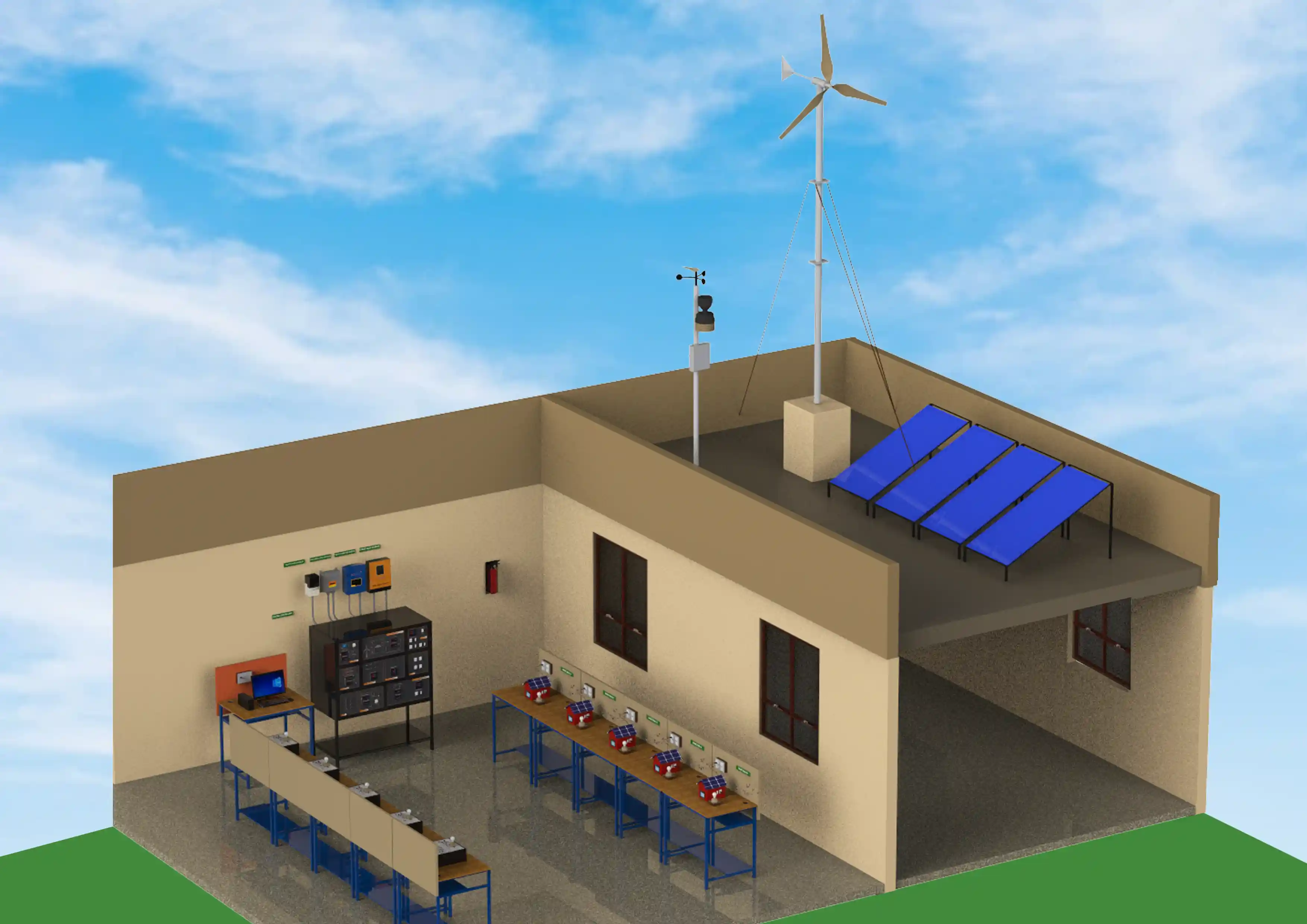
Solar PV Training and Research System 

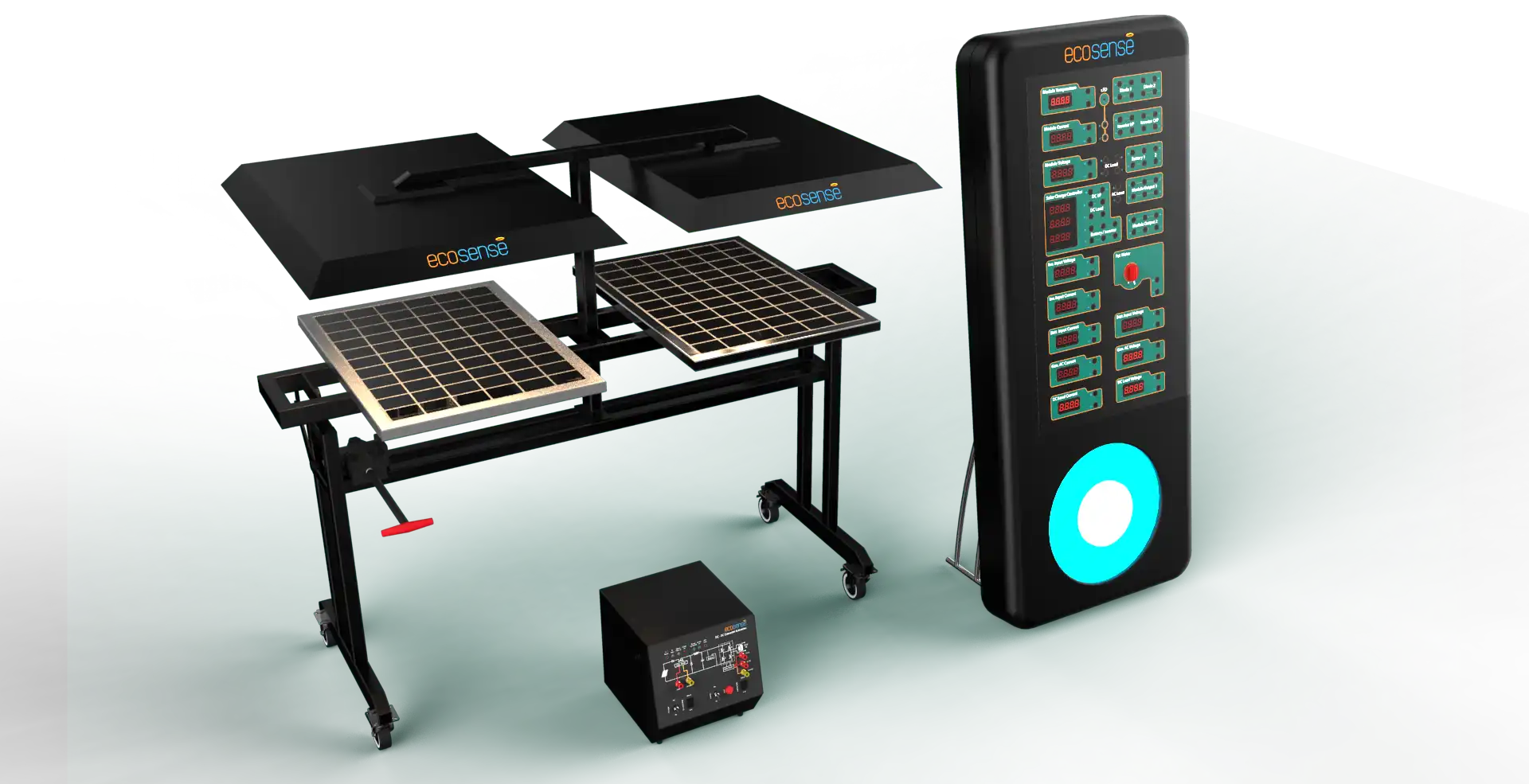
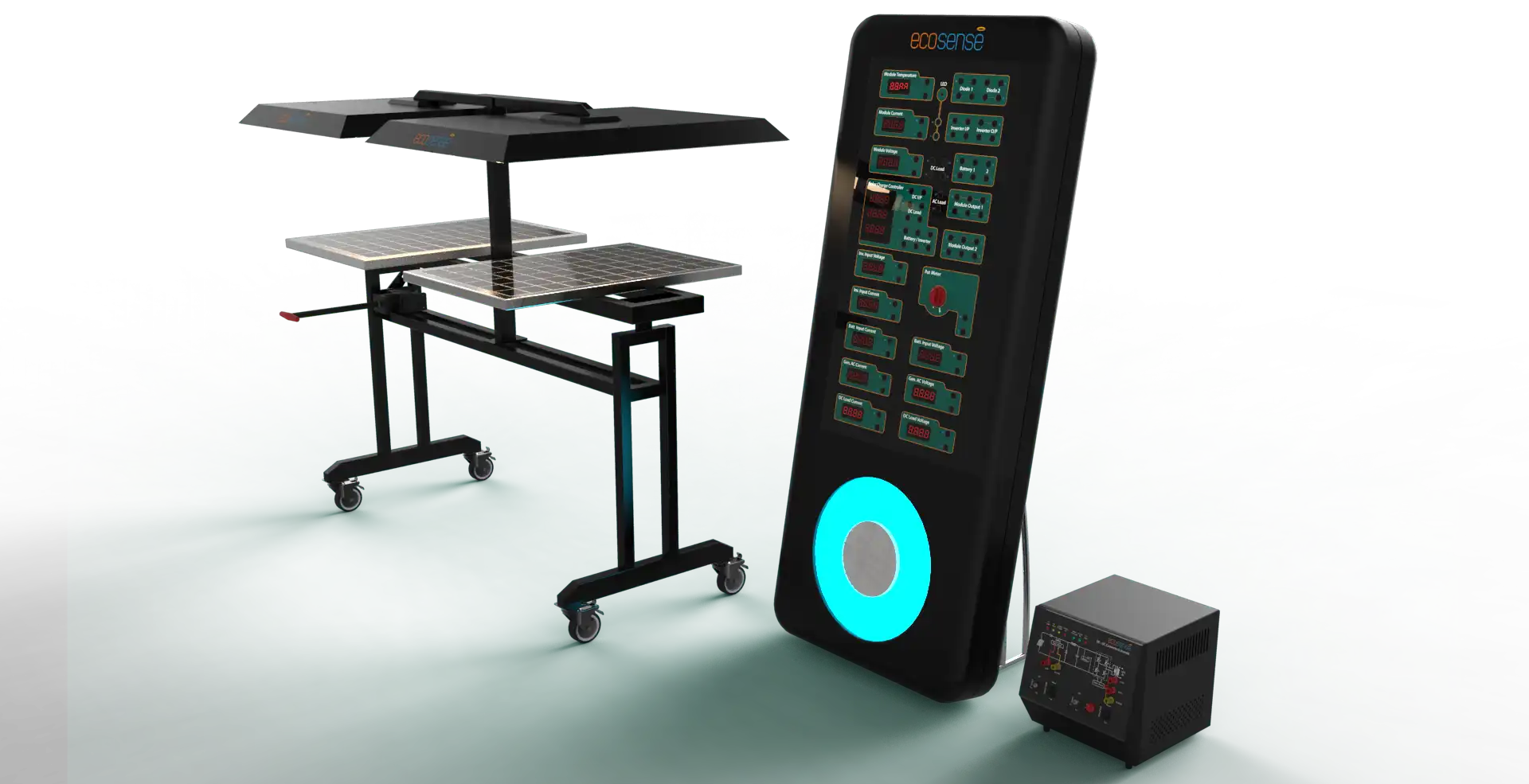
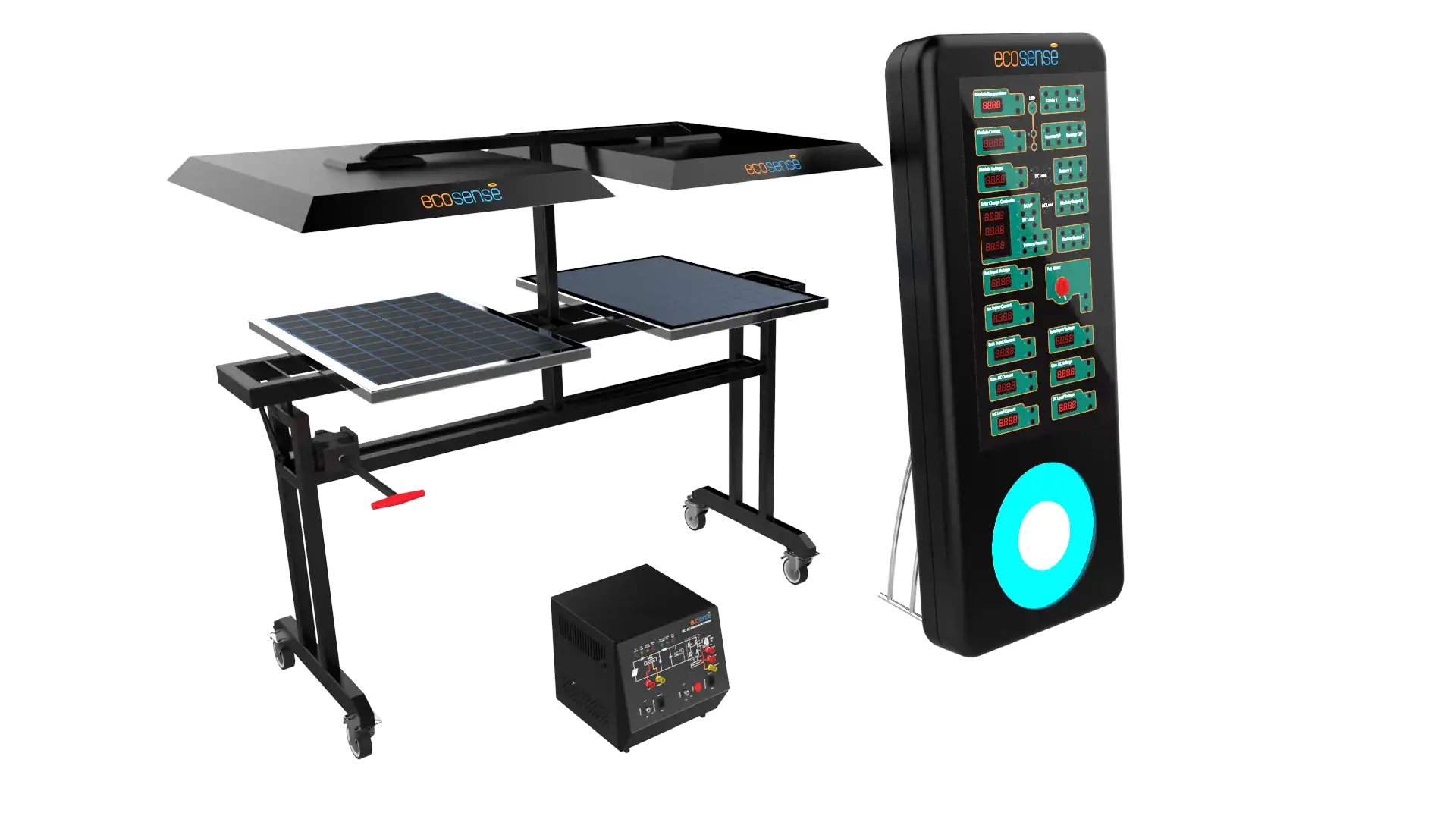
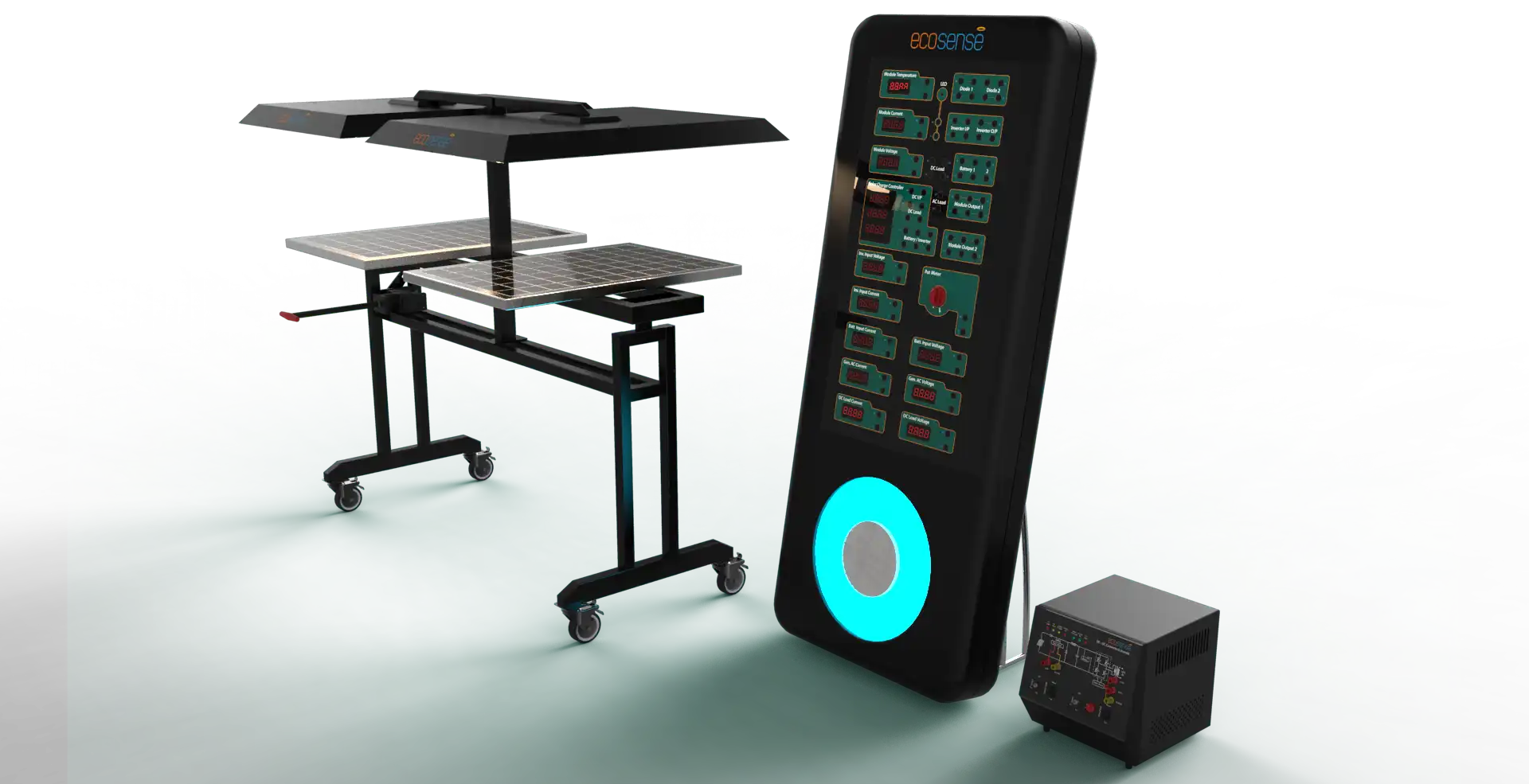
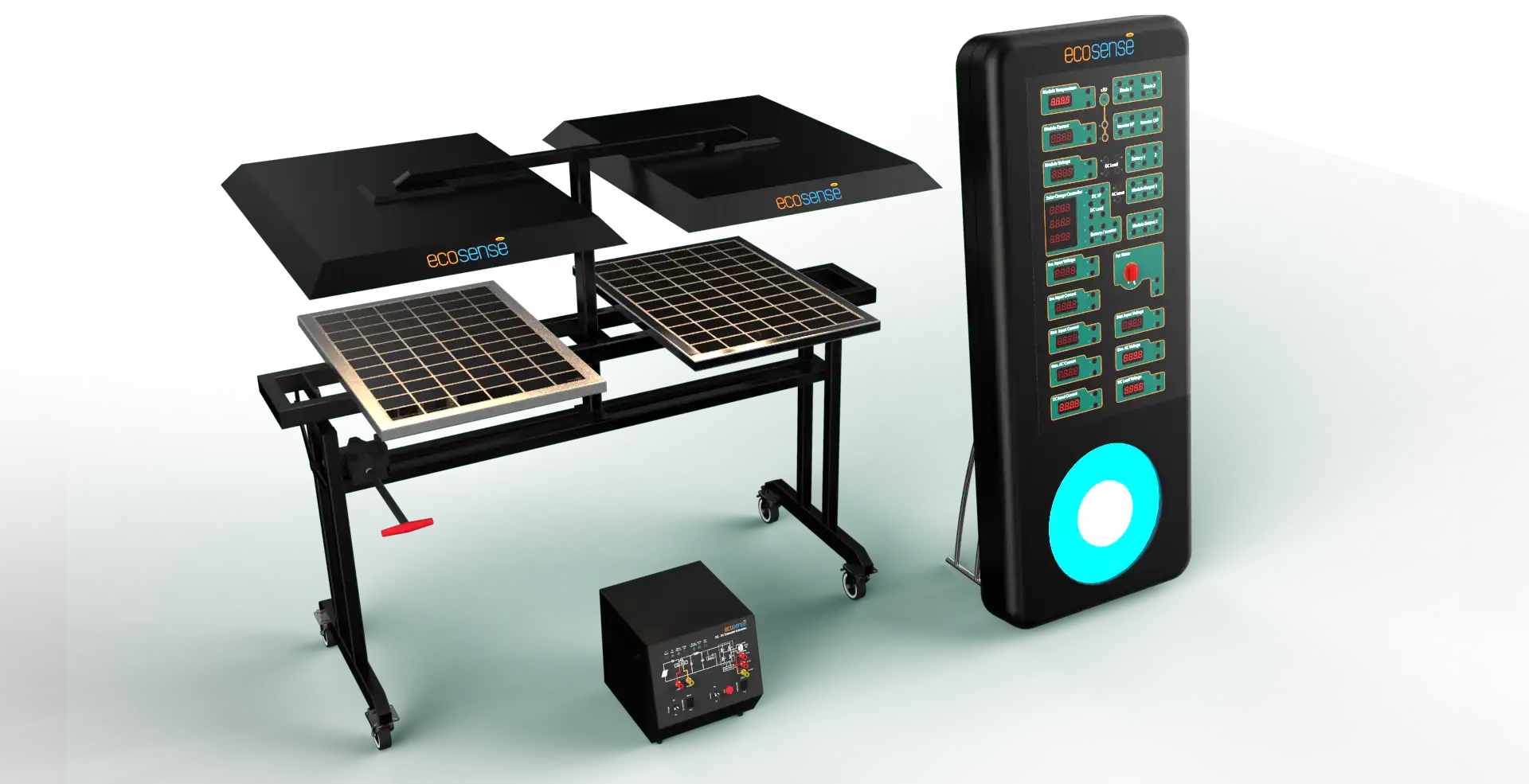
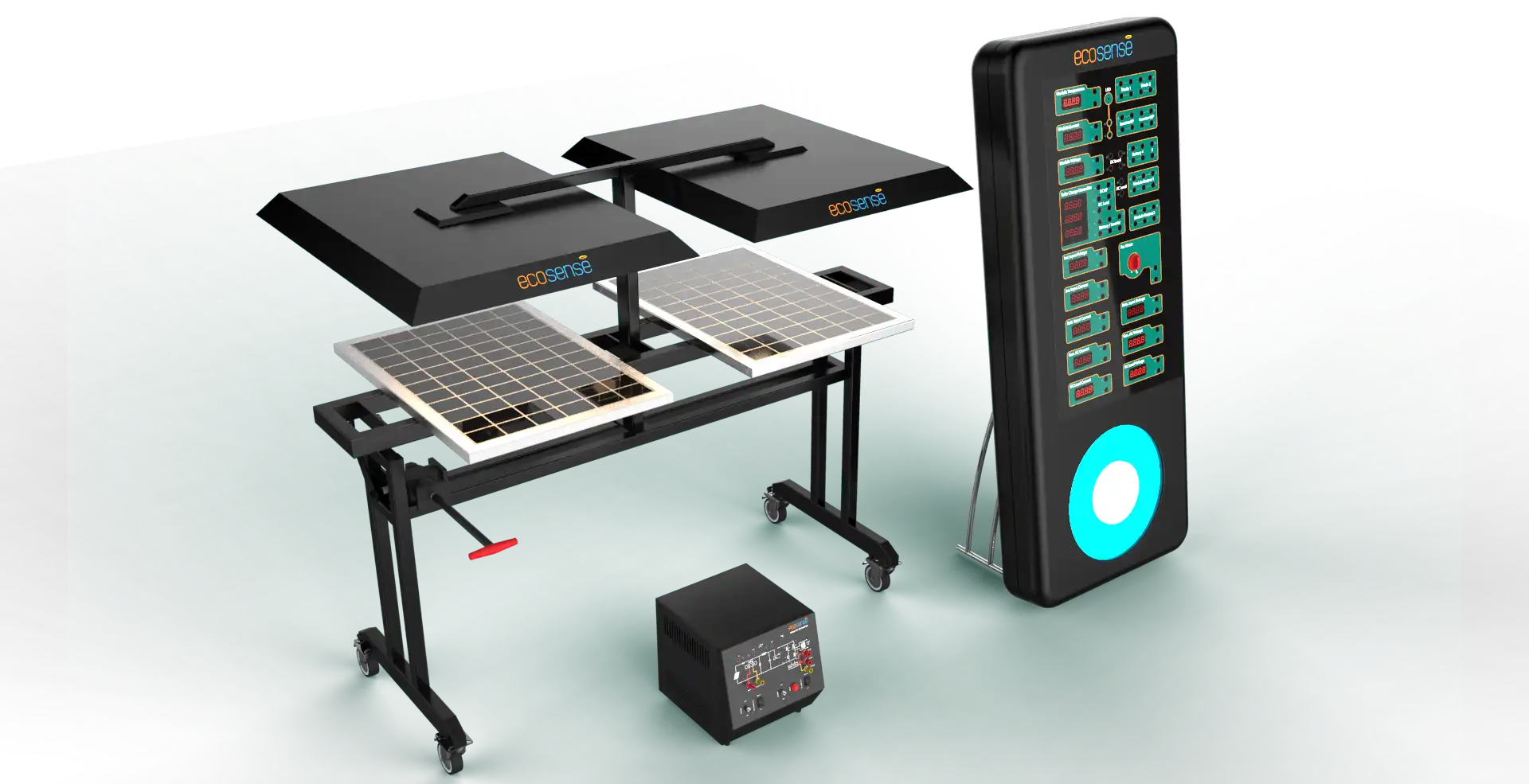
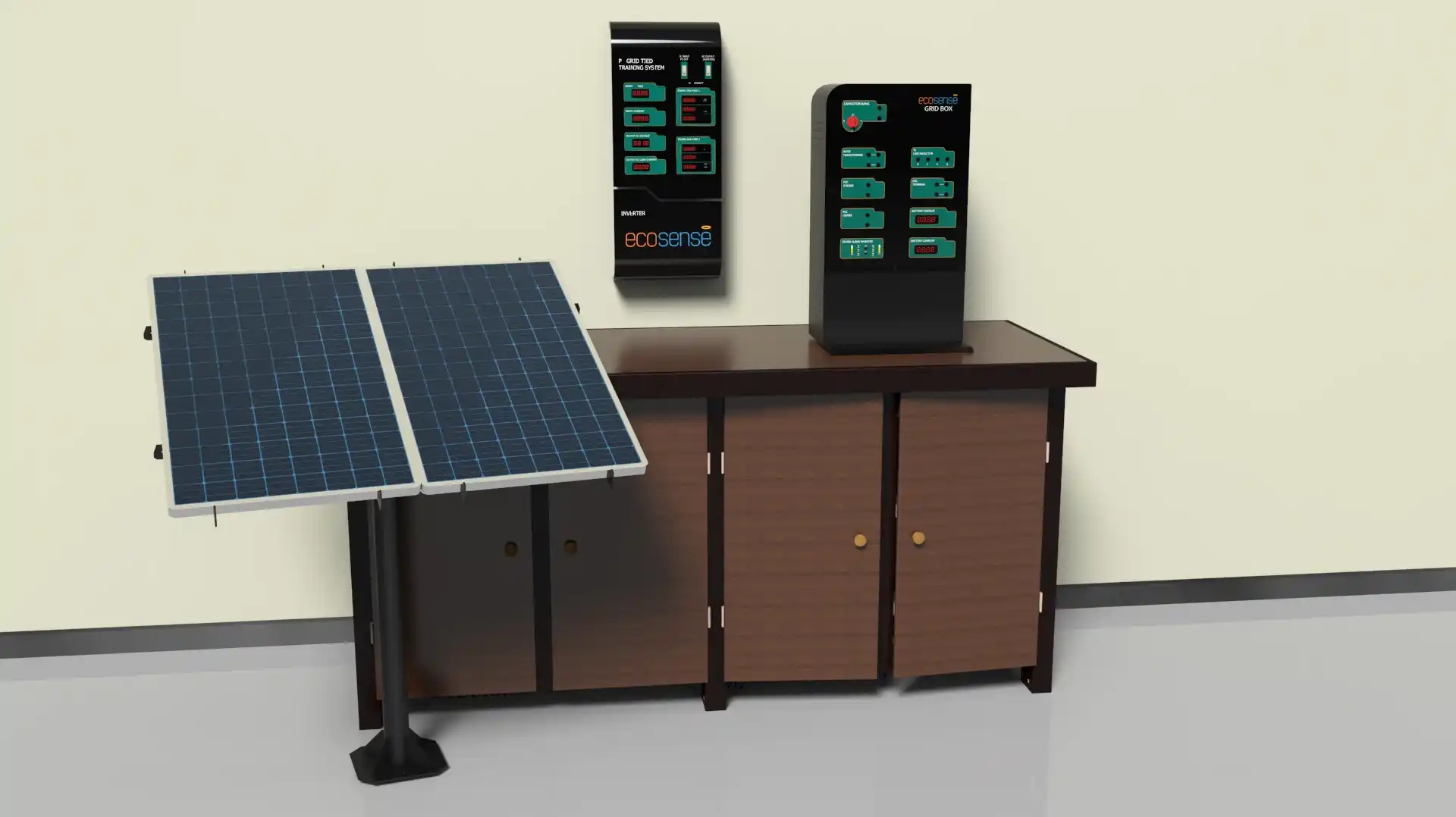
The Solar PV Training and Research System is a compact, hands-on educational platform that replicates a real-world standalone solar power plant. Ideal for universities, polytechnics, and research labs, it empowers learners to explore solar photovoltaic technology—from basic principles to advanced MPPT algorithms. The system features structured experiments across three modules: PV characteristics, standalone system integration, and MPPT research. Using modular plug-in units and artificial sunlight, it enables detailed study of panel behavior, wiring, and environmental effects. A complete solution for technical training, academic projects, and solar innovation. 

Key Features

  • Indoor, Weather-Independent Operation:Enables repeatable experiments without reliance on outdoor solar conditions.
  • Real Time Monitoring Panel: Observe Voltage, Current and Temperature live during experiments
  • Variable Irradiance and Temperature Control: Study I-V and P-V characteristics under realistic changing conditions
  • Study diodes in Solar PV : Study actions of bypass diodes and blocking diodes
  • Configurable PV Array: Experiment with Series and Parallel Combinations
  • Configurable Standalone PV System: Understand Solar Standalone PV Systems by connecting various components together
  • Adjustable Tilt Angle: Analyze how panel orientation affects energy generation
  • Shading Analysis: Simulate partial shading and measure its impact on output
  • Manual Wiring: Build circuits hands-on to enhance system-level understanding
  • Configurable Charge Controller: Auto and Manual Mode
  • Datalogging and Visualization: Record and plot curves via included PC software (CSV+ graph export)
  • MPPT Algorithm Implementation: Supports study and comparison of MPPT techniques such as Perturb & Observe and Incremental Conductance.


Ecosense

Learning Module 

Ecosense

Solar PV Characteristics

  • Understanding solar cell, module, and array behaviour
  • Effect of irradiance and temperature on PV output
  • Series and parallel PV configurations
  • Basic efficiency and loss mechanisms

Standalone Solar PV System

  • Understand the integration of batteries, inverters, and charge controllers
  • Power both DC and AC loads and analyze energy flow.
  • Build and operate a complete mini–Solar PV Standalone system

Research and Innovation

  • Feed in custom gate signals or external controllers for MPPT
  • Develop real-time MPPT logic using MATLAB, Arduino, or DSP platforms
  • Validate performance through dynamic simulations

Technical Description

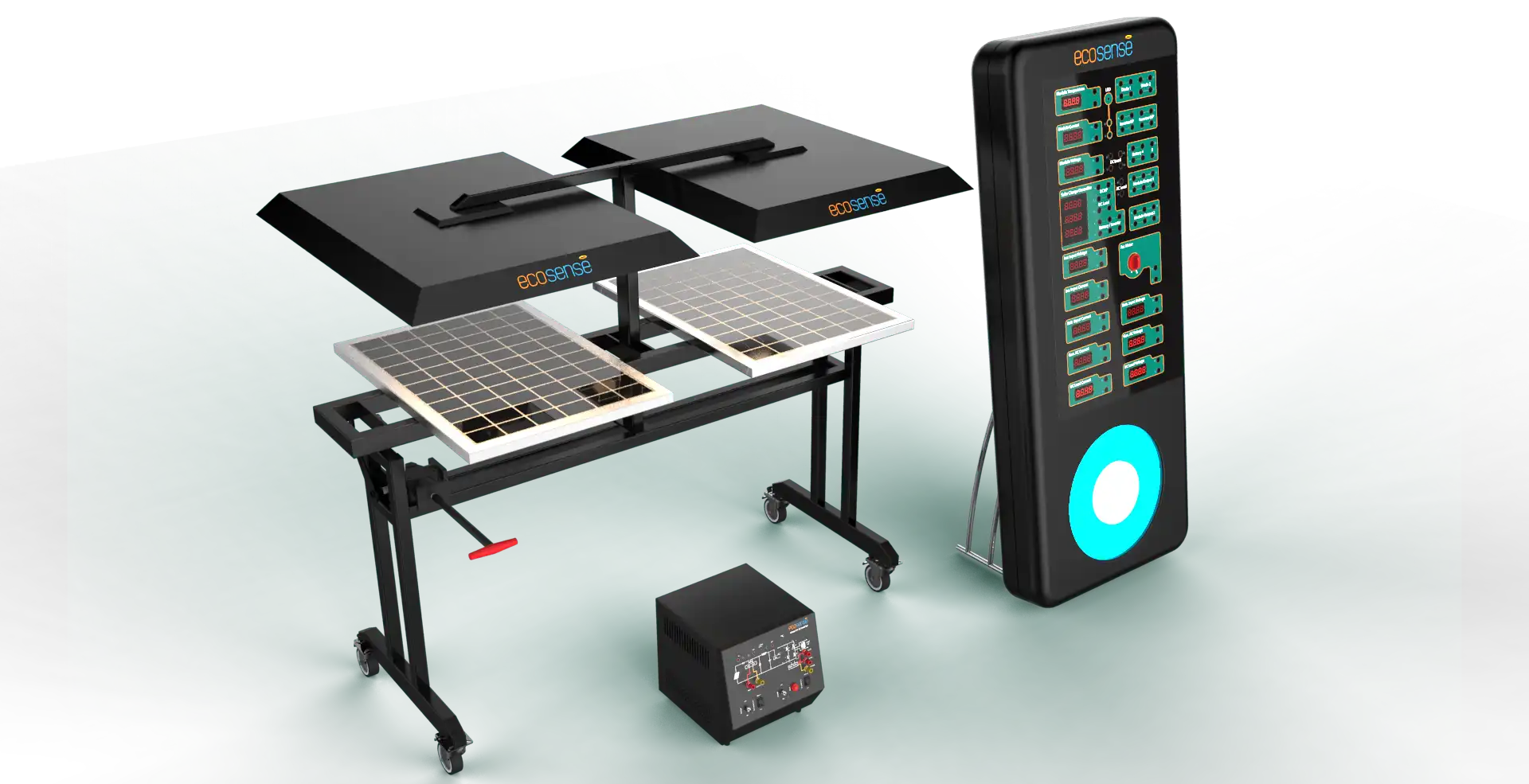
The Solar PV Training & Research Kit is a modular and scalable laboratory platform divided into three interconnected units. The architecture enables a structured learning path, progressing from fundamental PV concepts to advanced research experimentation.

1. Power Generating Unit: This unit enables indoor, weather-independent testing using halogen lamps as artificial sunlight. Solar PV panels are mounted on a rigid frame with a geared tilt mechanism to study angle-of-incidence effects. A dimmer control allows precise irradiance variation to analyse PV performance under changing solar conditions.

2. Power Conditioning Unit: Serving as the hands-on experimental core, this unit includes diodes, DC and AC loads, a standalone inverter, and a charge controller. Integrated voltmeters, ammeters, and temperature sensors provide real-time measurements. All components are internally unconnected, requiring manual wiring for each experiment and reinforcing practical system understanding.

3. Research Unit: Designed for advanced experimentation, the research unit integrates data logging and plotting with a DC–DC converter. It supports manual mode for external gate signal injection and MPPT development, and automatic mode for complete standalone PV system operation.

Experiment Progression: Experiments progress from PV characterisation (I–V and P–V curves, irradiance and temperature effects), to standalone system studies (charge control, inverter operation, load behaviour), and finally to research-level experiments involving MPPT development, converter control, and performance optimisation.

Ecosense

Technical Specifications 

Ecosense

Power Generating Unit

Parameters Specifications
PV Modules Two 40Wp solar panels
Artificial Sun with Irradiance Control Two lamps illuminating solar pannels with dimmer for intensity variation
Panel Mounting  Gear-tiltable frame
Mobility Wheel-mounted structure

* specifications can be customized as per user requirements

Power Conditioning Unit

Parameters Specifications
Wiring No fixed connections (manual patching) through banana connectors
Measurement Panel Panel Temperature Indicator, DC Voltmeters, DC Ammeters, AC Voltmeters, AC Ammeters
Potentiometer For tracing V-I Characteristics
Loads DC Load, AC Load

* specifications can be customized as per user requirements

Research & Data Acquisition Unit

Parameters Specifications
DC-DC Converter Buck Converter with Auto/Manual Operating Modes
Data Logging PV Voltage, PV Current, PV Power
Data Export CSV and image format
Software Proprietary PC Interface
External Gate Signal feed Allowed

* specifications can be customized as per user requirements

Related Products

Frequently Asked Questions

The kit supports research through its manual and automatic operating modes. Researchers can inject external gate signals into the DC–DC converter to test custom MPPT algorithms, study converter behaviour, and analyse PV performance under controlled irradiance, temperature, and load conditions. Real-time data logging and plotting enable result validation and comparison.

The kit includes solar PV panels, artificial sunlight lamps with dimmer control, a tiltable panel structure, DC–DC converter, standalone inverter, charge controller, battery bank, AC and DC loads, measurement instruments for voltage, current, and temperature, and a data logging and plotting unit for analysis.

The system supports experiments on I–V and P–V characteristics, irradiance and temperature effects, panel interconnection, tilt and shading impact, diode behaviour, standalone PV system operation, battery charging–discharging, inverter performance, and MPPT development and validation.

By replicating a miniaturised standalone solar power plant, the kit exposes users to real operational challenges such as load variation, energy storage behaviour, efficiency losses, and control decisions. This hands-on exposure bridges the gap between theoretical learning and practical solar PV system deployment.

Get in Touch

Ready to transform your labs?

Contact Now