
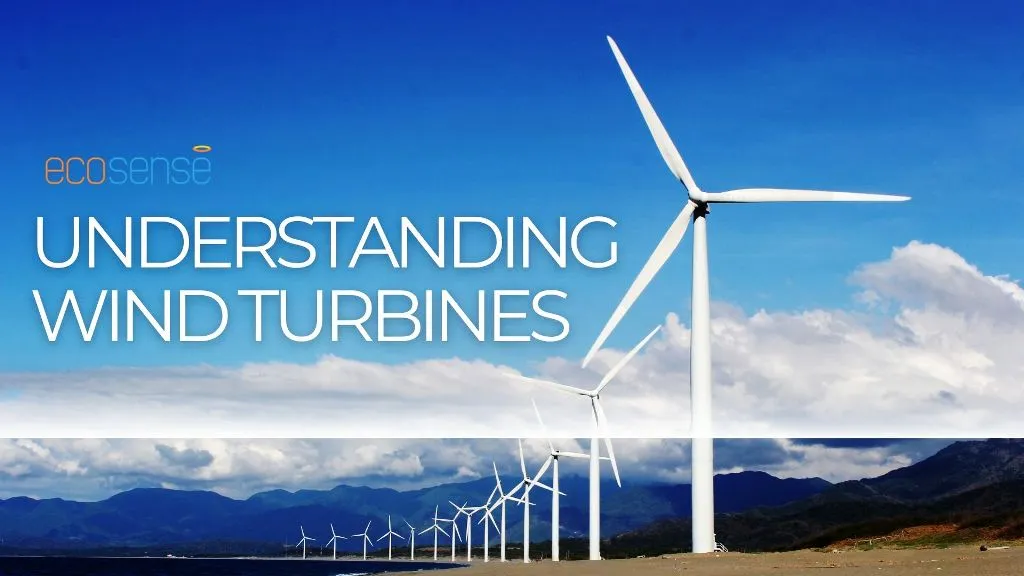
Understanding Wind Turbines: How They Generate Electricity & Types
Introduction
A wind turbine is a machine that converts kinetic energy from moving air into electrical energy through a generator. When wind pushes the blades, they rotate a shaft connected to a gearbox and generator housed in the nacelle atop the tower. The output — typically 2–15 MW for onshore turbines and up to 15–20 MW offshore — flows to the grid via a transformer.
Wind power now supplies over 7% of global electricity and is expected to cover ~30% by 2050 (Statkraft Green Transition Report). India has ~46 GW installed with a national target of 140 GW by 2030. Wind energy costs have fallen 70%+ over the past decade and continue to decline, making onshore wind among the cheapest sources of new electricity worldwide.
Types of Wind Turbines Used for Electricity Generation
Most people think of just one kind of wind turbine. The tall one with three blades.
That’s usually correct, but only partly.
There are different types of wind turbines, and the choice is not random. It depends a lot on where the system is being used and what you expect from it.
- Horizontal Axis Wind Turbines (HAWT): This is the common one. The blades face the wind and rotate like a propeller. You’ll see these almost everywhere, especially in large wind farms. There’s a reason for that. They are efficient and the design has been around long enough to be trusted. But they do need proper alignment with wind direction. If that’s off, performance drops.
- Vertical Axis Wind Turbines (VAWT): These don’t look like typical turbines. The rotation is vertical, not horizontal. One advantage is that they don’t need to face the wind. In places where wind direction keeps changing, that helps. They are not as efficient as HAWTs. Still, in some setups, ease of operation matters more than squeezing out maximum power.
- Offshore Wind Turbines: These are placed in the sea. Mostly because wind conditions are better there. Stronger wind, fewer obstacles, more consistency. So output is usually higher. But everything else becomes harder. Installation is not simple. Maintenance is not simple either. That’s the trade-off.
- Small-Scale Residential Wind Turbines: These are much smaller systems. You’ll find them in homes, campuses, or training labs. They don’t generate large amounts of power, and that’s expected. In labs especially, they are used more for understanding how wind turbines behave rather than producing significant energy.

Fig. Understanding Wind Turbines
How Wind Turbines Generate Electricity (Step-by-Step)
If you strip it down, the working is not complicated.
Wind hits the blades. The blades rotate.
That rotation turns a shaft. The shaft is connected to a generator.
Inside the generator, mechanical energy becomes electrical energy. That electricity is then used or supplied to the grid.
That’s the full process.
But here’s the catch. Efficiency at each stage matters. Small losses here and there don’t look significant, but they add up.
Not complicated. But not trivial either.
Cost of Wind Turbines: Installation, Maintenance, and Energy Output
Wind turbine cost depends a lot on what you are trying to achieve.
Large systems are expensive. Not just because of the turbine itself, but because installation is not simple. Transporting components, setting up tall towers, connecting to the grid. All of it adds up.
For institutes, smaller systems are more practical. A typical wind turbine price in India for lab setups usually starts around ₹1.5 lakh and can go up to ₹5 lakh.
Maintenance is something people don’t always think about early on. These are moving systems. Wear and tear is expected.
In some campus installations, even a small turbine ends up underperforming simply because wind conditions were overestimated.
That happens more often than people admit.
Key Components of a Wind Turbine
Every wind turbine has a few core parts, but they don’t all behave the same way in real conditions.
- Blades: You have blades that capture wind.
- Rotor: Then the rotor transfers that motion.
- Generator: After that, the generator converts it into electricity.
- Gearbox: In many systems, there’s also a gearbox. It increases rotational speed before the generator.
- Tower: And then there’s the tower. Its job is simple. Get the turbine high enough where wind is more stable.
- Control Systems: There are also control systems for safety. Braking, regulation, that sort of thing.
Each component affects efficiency. Sometimes more than expected.
HAWT vs VAWT: Detailed Comparison
Your existing types section describes HAWT and VAWT conversationally. This table gives researchers and students the structured comparison they look for — and which neither Enel nor Statkraft provides.
Advantages and Disadvantages of Wind Energy
✅ Advantages
- Renewable & inexhaustible — wind will not run out
- Zero fuel cost — only capital and O&M expenses
- Low land footprint — farming/grazing continues under turbines
- Fast deployment — projects commission in 12–18 months
- 80–90% uptime — high availability vs other generation
- No water consumption unlike thermal plants
- Declining costs — 70%+ reduction over the last decade
❌ Disadvantages
- Intermittent — output varies with wind speed
- Location-dependent — needs high-wind areas
- Visual impact — some community opposition
- Bird/bat mortality — wildlife impact concern
- Noise — limits minimum distance to homes
- Grid integration — variability requires balancing
- High upfront capex — ₹6–9 crore/MW onshore
Factors Affecting Wind Turbine Efficiency
Two turbines can look identical and still perform very differently.
Wind speed matters. But steady wind matters more. That consistency is what actually drives output over time.
Height also plays a role. Even a small increase can improve performance because airflow becomes less disturbed.
Then there’s the surroundings. Buildings, trees, uneven terrain. All of these interfere with wind flow.
In lab setups, these effects are often demonstrated in small ways. That’s when the difference becomes clear.
Role of Wind Energy Labs in Testing and Innovation
Wind Energy Labs provides students a platform to experiment and learn about wind energy systems. Since Wind Turbines are mostly in mega watt scale, wind energy labs use a miniature version of wind turbines to make students understand the inner working.
With Wind Energy Lab in action a student can understand concepts like:
- Startup speed: Wind speed at which blades start rotating.
- Cut-in speed: Wind speed at which turbines start generating electricity.
- Cut-out speed: Wind speed at which turbine may break but can be saved by adjusting pitch angle.
- Tip speed ratio: Ration of wind turbine’s blade tip speed with actual wind speed. It is the most important parameter to understand for maximizing aerodynamic efficiency.
- Coefficient of performance: Ratio of actual power converted to the total available power. Optimizing this parameter is the most important for anyone working in the field of Wind Turbine Engineering.
Future of Wind Energy Technology
Wind energy is evolving, but not in a dramatic way.
Improvements are steady. Better efficiency. Better control systems.
Offshore wind is growing because conditions are more reliable there. Hybrid systems are also becoming more common.
Another shift is in monitoring. Modern turbines can track performance and adjust operation automatically.
For students, this means more exposure to real systems, not just theoretical ones.
Conclusions
Wind turbines look simple, but they rarely behave that simply once you start working with them. Output depends on more than just wind. Placement matters. Consistency matters. Even small design choices start to show their impact over time. For institutes, the value is not only in generating power. It’s in giving students something they can actually test and question.
Understanding wind turbines and the different types of wind turbines helps make that shift from theory to something more practical.