
Hybrid Solar Connection: Working & Benefits
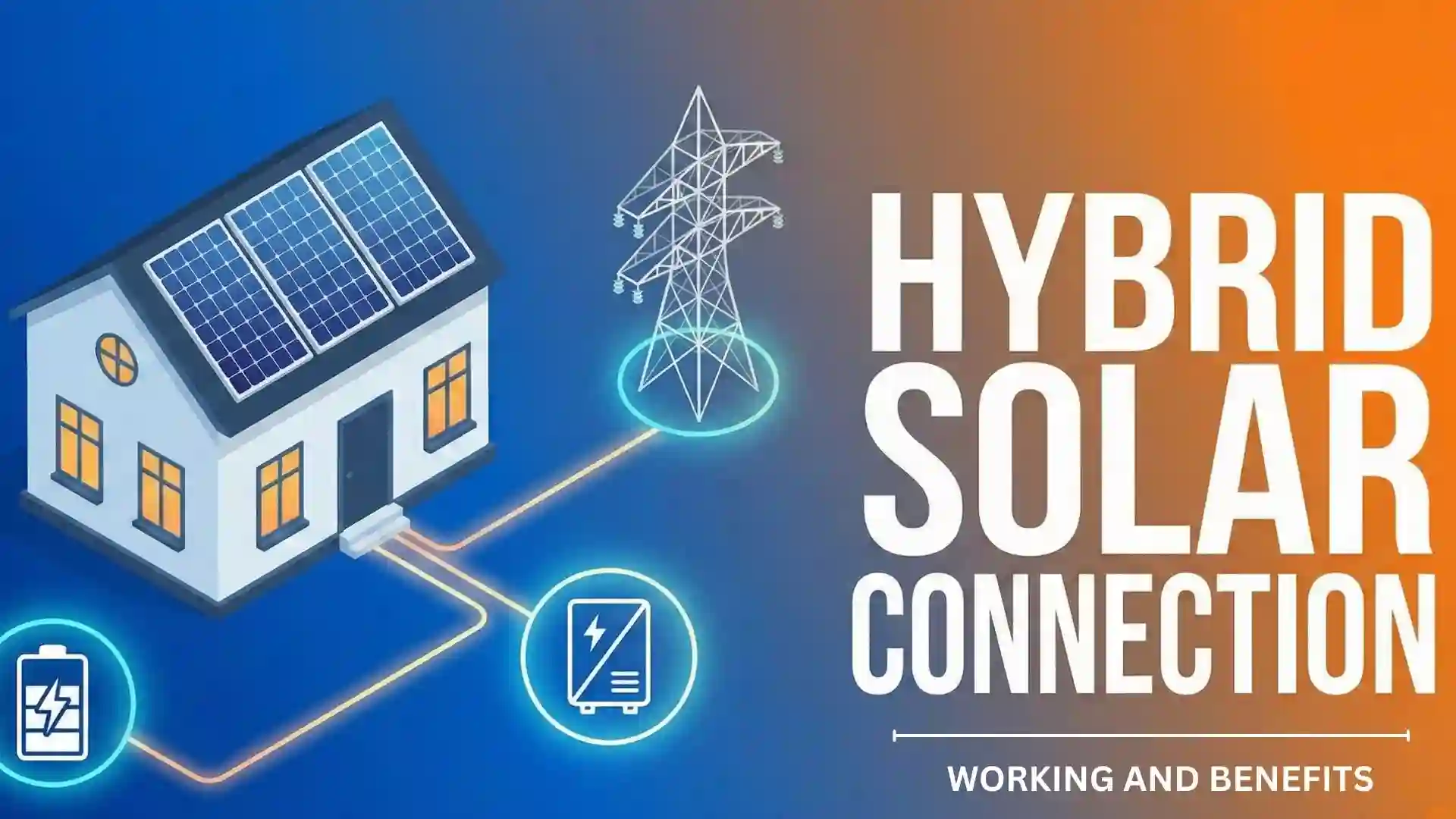
A hybrid solar connection is a solar power setup that links solar panels to both the electricity grid and a battery storage system through a hybrid inverter. During the day, solar power runs your home's loads first; excess energy charges the battery and any further surplus is exported to the grid. At night, during outages, or when solar generation drops, the system automatically draws from the battery first and then the grid — keeping your power on without manual switching.
Hybrid systems are the recommended choice for Indian homes in areas with frequent power cuts or unstable grid supply. With the PM Surya Ghar Muft Bijli Yojana subsidy of up to ₹78,000 applicable to grid-connected portion of the system, hybrid solar is now within reach for typical 3–5 BHK households.
Think of a hybrid solar connection as a two-way safety net. Most systems force you to rely on either the grid or a battery, but this setup links to both. It uses the grid for stability when you need it, but keeps a local battery ready for when you don't. Basically, it’s designed so you aren't left in the dark just because the power lines went down or the sun set for the night.
What Is a Hybrid Solar Connection?
A hybrid solar connection is a solar system that works with both the electricity grid and batteries. During the day, solar power runs your loads first. If there is extra energy, it doesn’t go to waste. It can charge a battery or move to the grid. When sunlight drops, the system quietly switches to stored energy or grid supply.
There is no single operating mode. The system adjusts itself based on availability. That is what separates hybrid systems from standard on-grid or off-grid designs.
Types of Hybrid Solar Panels
When it comes to hybrid systems, the panels themselves aren't actually "hybrid"—standard ones work just fine. What really matters is how much power they can crank out to keep your batteries charged when the sun isn't at its peak.
- Monocrystalline: These are the go-to if you have limited roof space. They’re highly efficient, meaning they can squeeze more energy out of a smaller area to top off your batteries quickly.
- Polycrystalline: A solid pick if you’re trying to keep upfront costs down and have plenty of room to spread them out. They’re tried-and-true workhorses for many home setups.
- Bifacial: These are the newcomers. They catch light on both the front and back, which is great for ground mounts. That extra bit of energy helps keep your batteries active longer into the evening.
How Does a Hybrid Solar System Work?
A hybrid system is basically self-managing. When the sun is out, your panels produce DC power, which the inverter immediately turns into AC electricity to run your lights and appliances. Using your own solar energy as it's made is always the first priority.
If you’re producing more than you’re using, the "extra" doesn't just sit there—the inverter sends it to charge your batteries. Once those are full, any remaining surplus can be fed back into the utility grid.
At night or on rainy days, the system flips the script: it starts pulling from your stored battery power. If you drain the battery past a safe point, the grid automatically takes over. The best part? If the grid goes down or any fault happens with the grid, the system instantly detaches from the grid and keeps your home running on a mix of solar and battery. You don't have to flip any switches or reset any breakers; it just works.
Core Components of a Hybrid Solar System
Every hybrid solar setup is built from four core components plus an optional smart monitoring layer:
Solar Panels
Convert sunlight into DC electricity. Modern installations use 540–600 W bifacial monocrystalline panels for highest efficiency per square foot.
Mono PERC / Bifacial / TOPConHybrid Inverter
The brain of the system. Manages DC→AC conversion, battery charging, grid export, and load priority simultaneously. Single device replaces 3 separate units.
3 kW – 15 kW residentialBattery Bank (LiFePO4)
Lithium Iron Phosphate batteries — 10+ year lifespan, zero maintenance, 95%+ depth of discharge. Replaces older lead-acid systems entirely.
5 kWh – 20 kWh capacityNet Meter
Bidirectional meter installed by your DISCOM. Tracks energy imported from grid vs energy exported back. Required for grid-tied subsidy eligibility.
DISCOM-installedSmart Monitoring App
Real-time tracking of solar generation, battery state-of-charge, grid import/export, and home consumption — all from your phone.
Wi-Fi enabled inverterBalance of System (BOS)
Mounting structure, DC/AC cabling, surge protection devices, junction boxes, earthing kit. Often overlooked but critical for long-term reliability.
Galvanized steel + MC4Hybrid Solar System vs. On-Grid vs. Off-Grid
| Parameter | On-Grid Solar PV System | Off-Grid Solar PV System | Hybrid Solar PV System |
| Grid Connection | Directly Connected to utility grid | No grid connection | Connected to the grid with battery support |
| Power during grid outage | No power | Continuous power if batteries are charged | Backup power available during outages |
| Initial Cost | Lowest | Highest due to large battery banks | Moderate |
| Battery Requirement | Not required | Mandatory and large capacity | Required but sized for practical backup |
| Energy Management | Minimal user involvement | Strict monitoring and load control needed | Moderate, largely automated |
| Grid Dependence | Fully dependent | Completely independent | Reduced dependence |
| Complexity | Simple design and operation | Complex system design and maintenance | Balanced complexity |
| Best Suited for | Areas with stable grid | Remote areas with no grid access | Areas with unstable or unreliable grid supply |
Unlike a standalone solar PV system which relies entirely on battery reserves without any grid interaction, a hybrid system draws from both, improving reliability and reducing storage requirements.
Hybrid Solar System Price in India 2026
Hybrid solar pricing varies by system capacity, battery size, and panel type. Here's an indicative price range for residential and commercial hybrid systems in India (before subsidy):
| System Capacity | Suitable For | Price Range (before subsidy) | Battery Size |
| 3kW Hybrid | 2-3 BHK home, basic loads + 1 inverter AC | Rs. 2.6 L - Rs. 2.3 L | 5kWh (LFP) |
| 5kW Hybrid | 3-4 BHK home, multiple ACs + heavy loads | Rs. 4.4 L- Rs. 5.2L | 10kWh (LFP) |
| 10kW Hybrid | Large villas, offices, EV charging homes | Rs. 8.5 L- Rs. 10L | 15-20 kWh LFP |
15 kW+ Hybrid | Commercial buildings, small businesses | Rs. 12.5L+ | Custom sized |
* Prices indicative as of 2026. Final cost depends on panel type (Mono PERC vs Bifacial vs TOPCon), inverter brand, battery chemistry, mounting structure height, and installation location. The PM Surya Ghar subsidy reduces the panel + inverter portion (not battery cost).
The biggest cost driver in a hybrid system is the battery bank — typically 30–40% of total system cost. LiFePO4 batteries cost more upfront than lead-acid but last 10+ years vs 3–5 years, making them cheaper over the system lifetime.
Who should choose a Hybrid Solar System?
A hybrid system is the right choice when grid reliability is uncertain or when energy independence matters. The 4 most common use cases:
Homes with Frequent Power Cuts
Areas with 2+ hour daily outages or unreliable grid supply. Hybrid system covers critical loads (lights, fans, fridge, Wi-Fi, 1 inverter AC) for 6–8 hours of backup with a properly-sized battery.
Small Businesses & Offices
Shops, clinics, co-working spaces where downtime equals revenue loss. Hybrid keeps POS systems, refrigeration, computers and lights running through grid outages without diesel generator dependence.
Villas with Heavy Loads
4+ BHK villas with multiple ACs, EV charging, electric kitchen appliances. 10–15 kW hybrid systems with 20 kWh+ battery banks deliver near-zero grid dependence in metros like Bangalore, Pune, Hyderabad.
Voltage Fluctuation Zones
Tier-2 / Tier-3 cities with poor grid quality. Hybrid inverters protect sensitive electronics from voltage spikes and brownouts that damage on-grid-only setups.
Hybrid is not the right choice if you live in a metro area with stable 24/7 grid supply and minimal outages — a simpler on-grid system at half the cost is more economical. Run the math on your typical monthly outage hours before deciding.
Benefits of Hybrid Solar Systems
- Continuous power supply: Lights remain on during grid outages, and critical equipment continues to operate without interruption.
- Improved solar energy utilization: Excess solar energy is stored in batteries instead of being exported to the grid at low value.
- Higher self-consumption: More of the generated solar power is used locally, increasing overall system efficiency.
- Reduced electricity bills: Stored energy offsets grid consumption, leading to long-term cost savings.
- System flexibility: Battery capacity can be expanded later as energy requirements grow.
- Adjustable load priorities: Critical and non-critical loads can be managed based on user preferences.
- Future-ready design: The system adapts to changing energy needs rather than locking users into a fixed configuration.
Disadvantages of Hybrid Solar System
- Higher upfront cost: Hybrid systems are more expensive than basic on-grid setups due to the inclusion of batteries and advanced inverters.
- Battery lifespan limitations: Batteries degrade over time and will need replacement, adding to long-term costs.
- More complex system design: Proper load analysis, battery sizing, and inverter selection are essential for optimal performance.
- Risk of reduced benefits with poor planning: Incorrect system sizing or configuration can limit backup duration and financial returns.
- Ongoing maintenance requirements: Batteries and power electronics require periodic inspection and maintenance.
- Future replacement costs: Battery replacement should be factored into the overall lifecycle cost before installation.
Conclusion
A hybrid solar connection combines grid reliability with battery-backed resilience. Standalone systems fail to capture solar energy when batteries are fully charged and no loads are running while grid tied system fails as soon as grid goes down. Hybrid systems integrate both battery and grid to offer a failsafe and efficient solar PV system. But efficiency also comes with added cost so which system is better depends on the application not on the configuration.