Solar PV Grid Tied Training System 

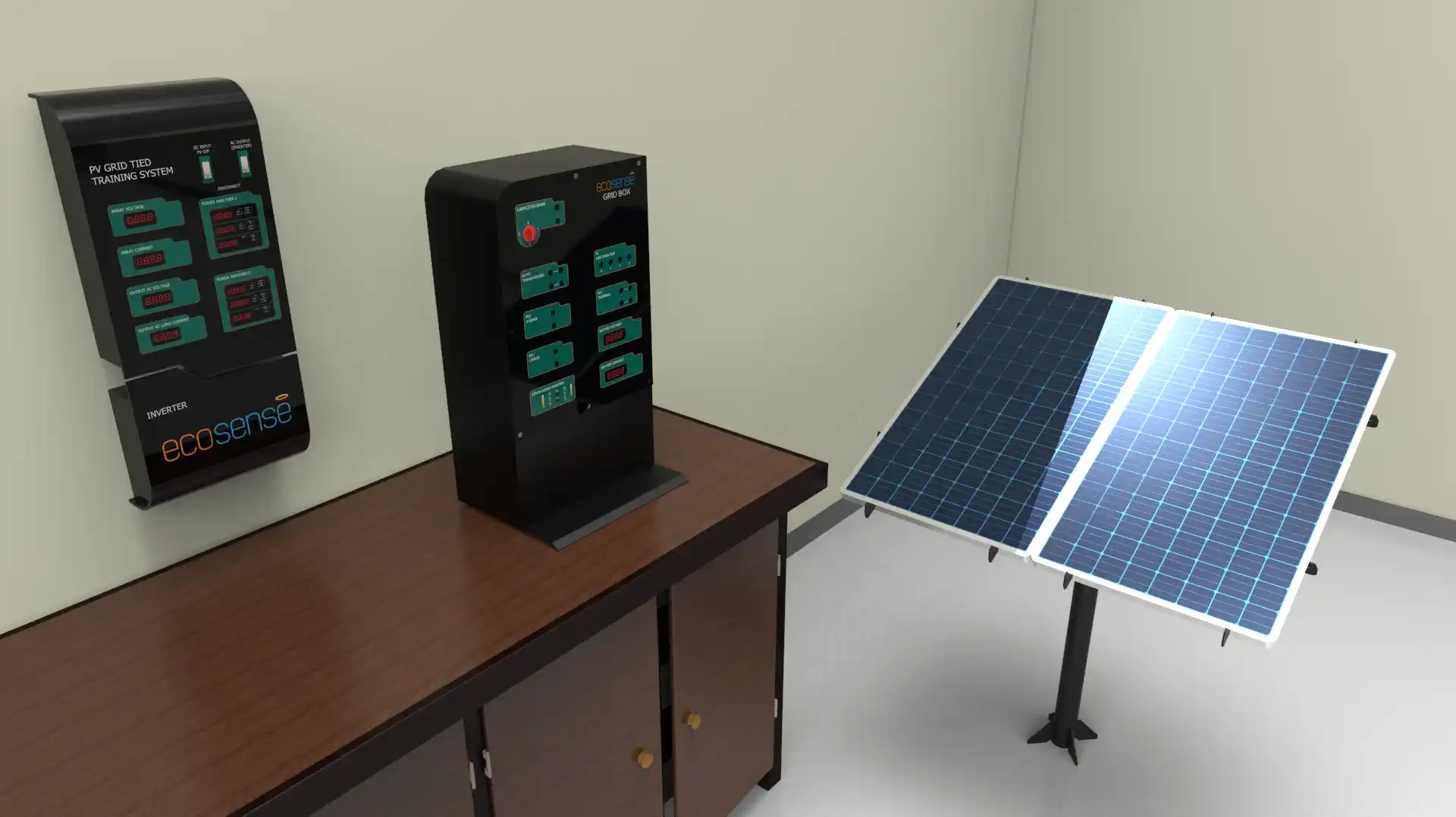
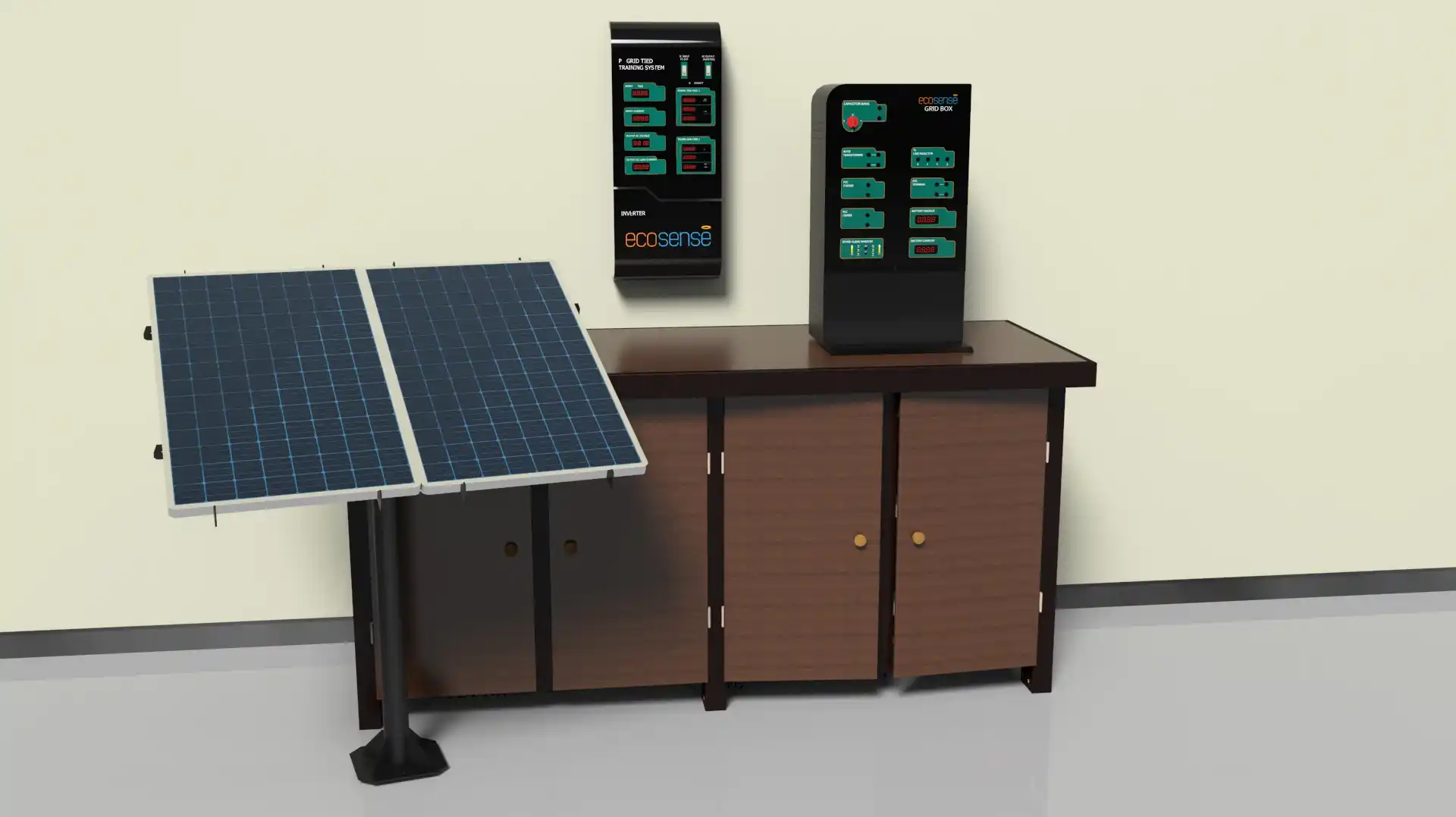
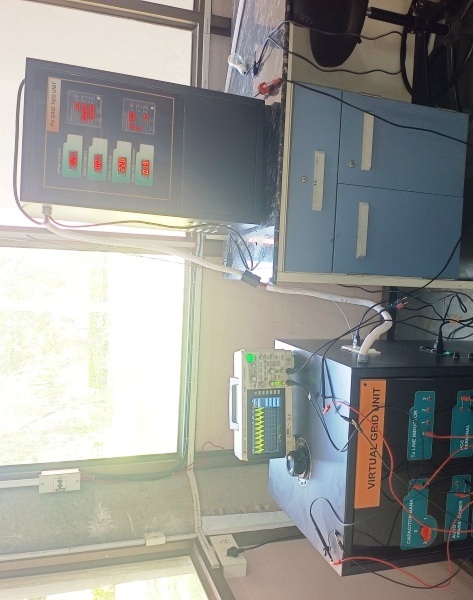
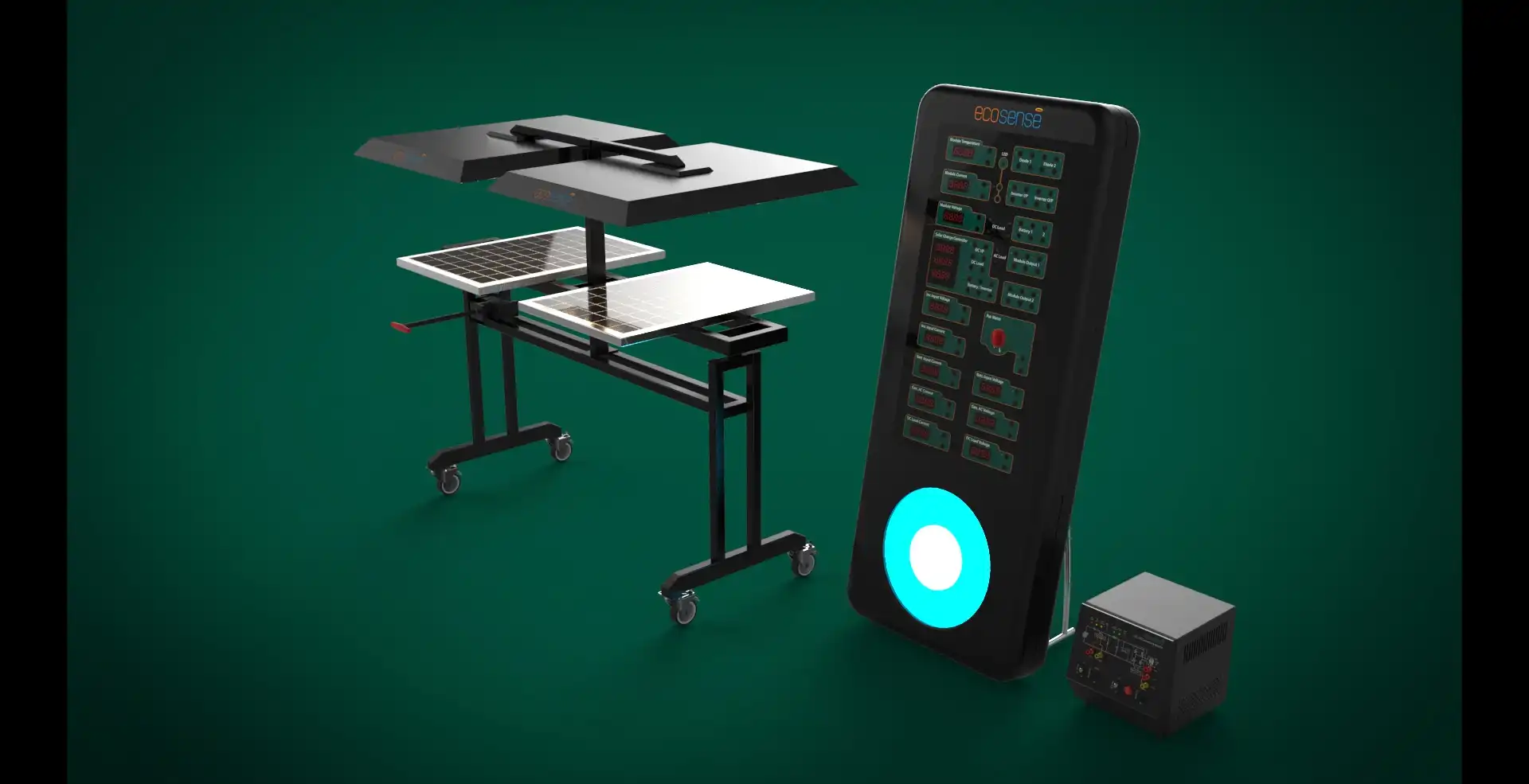
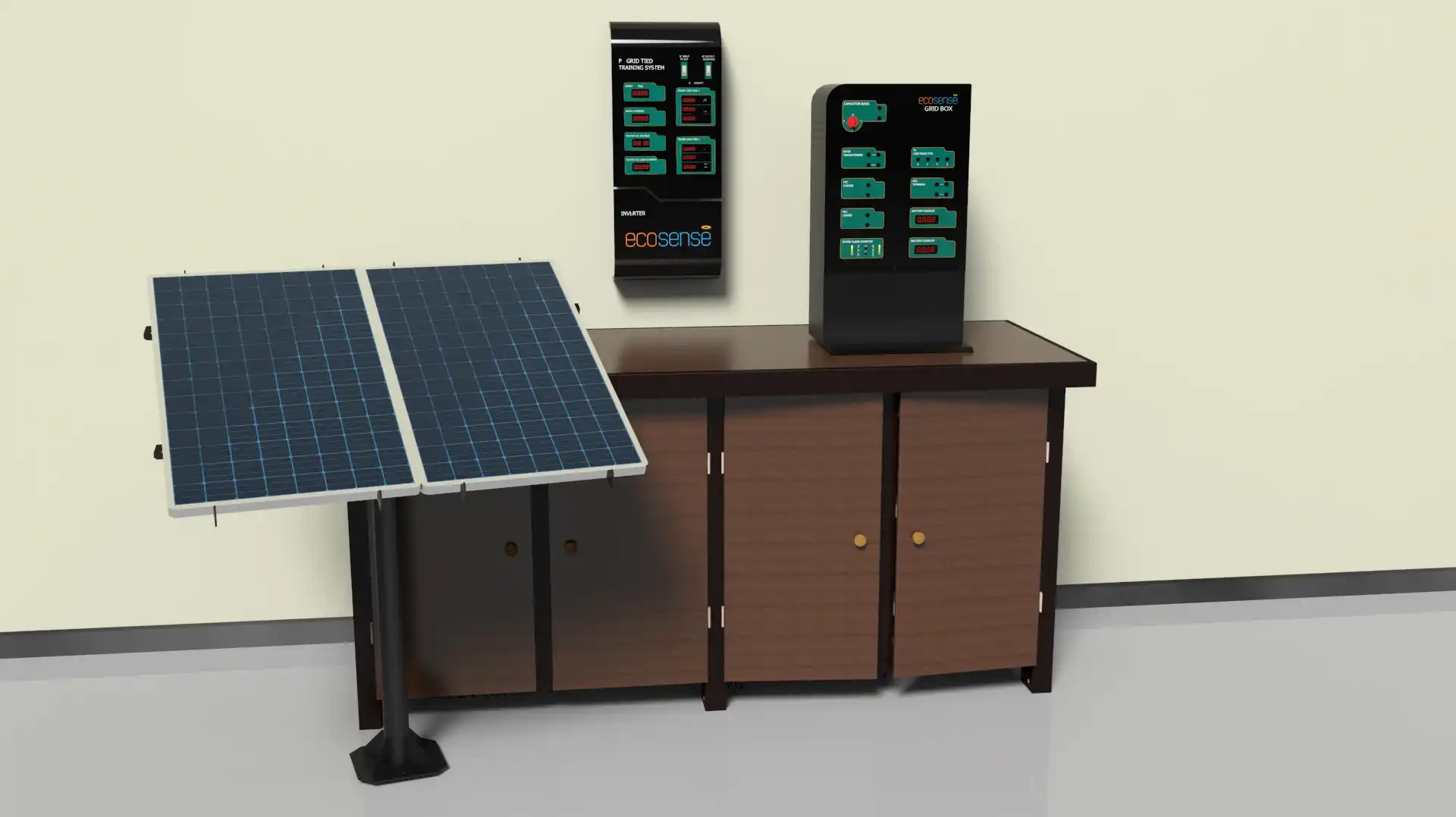
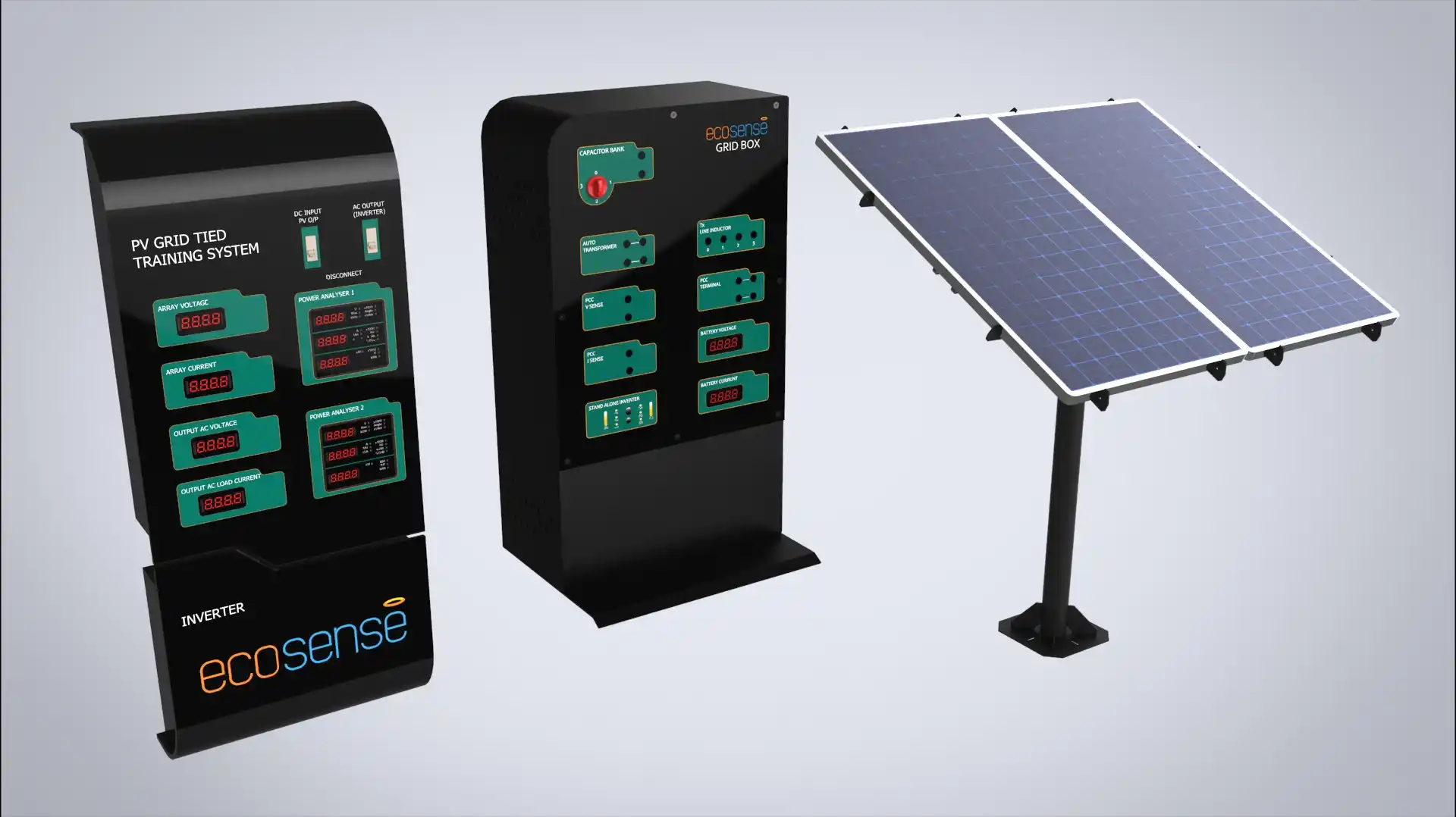
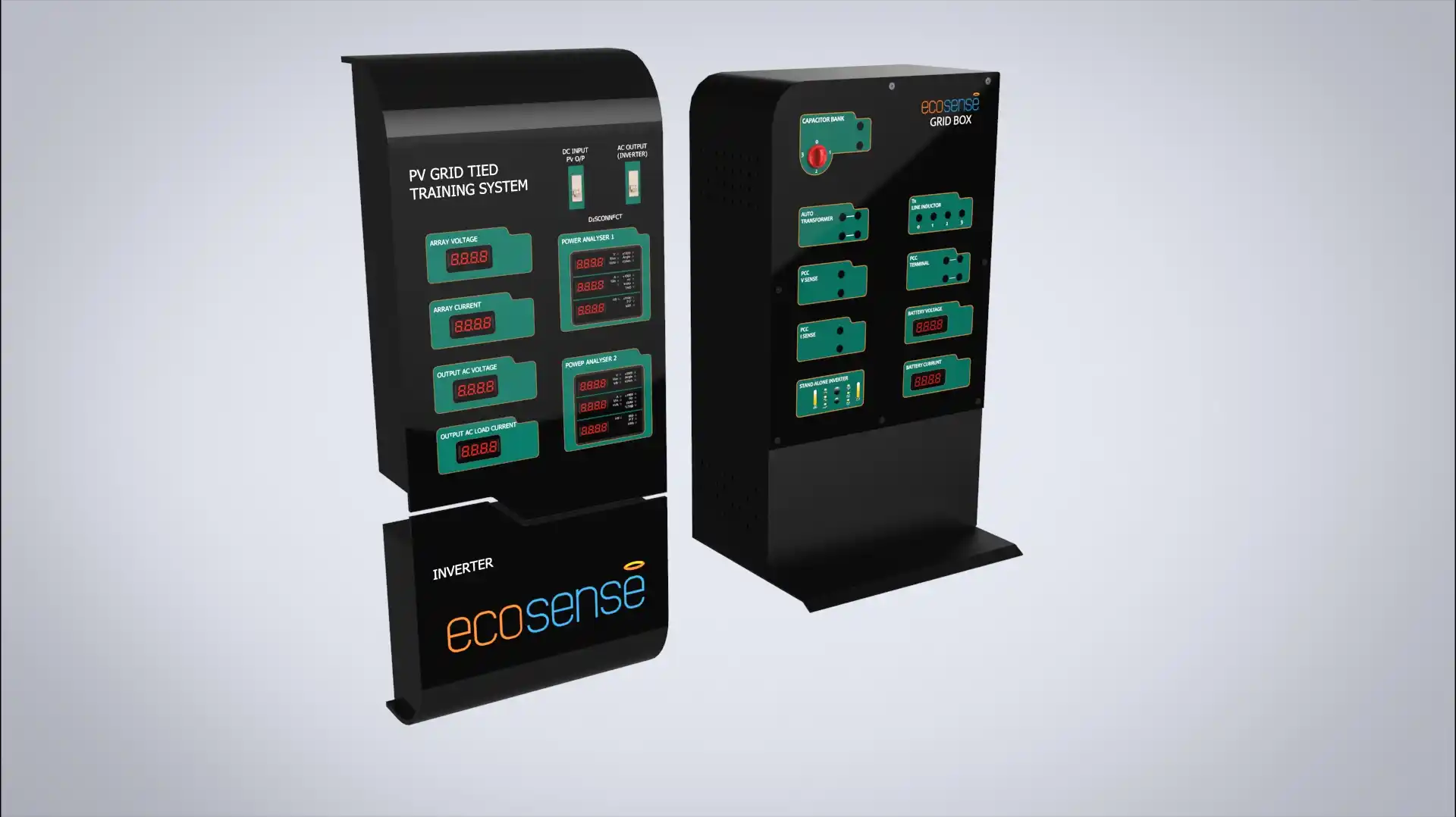
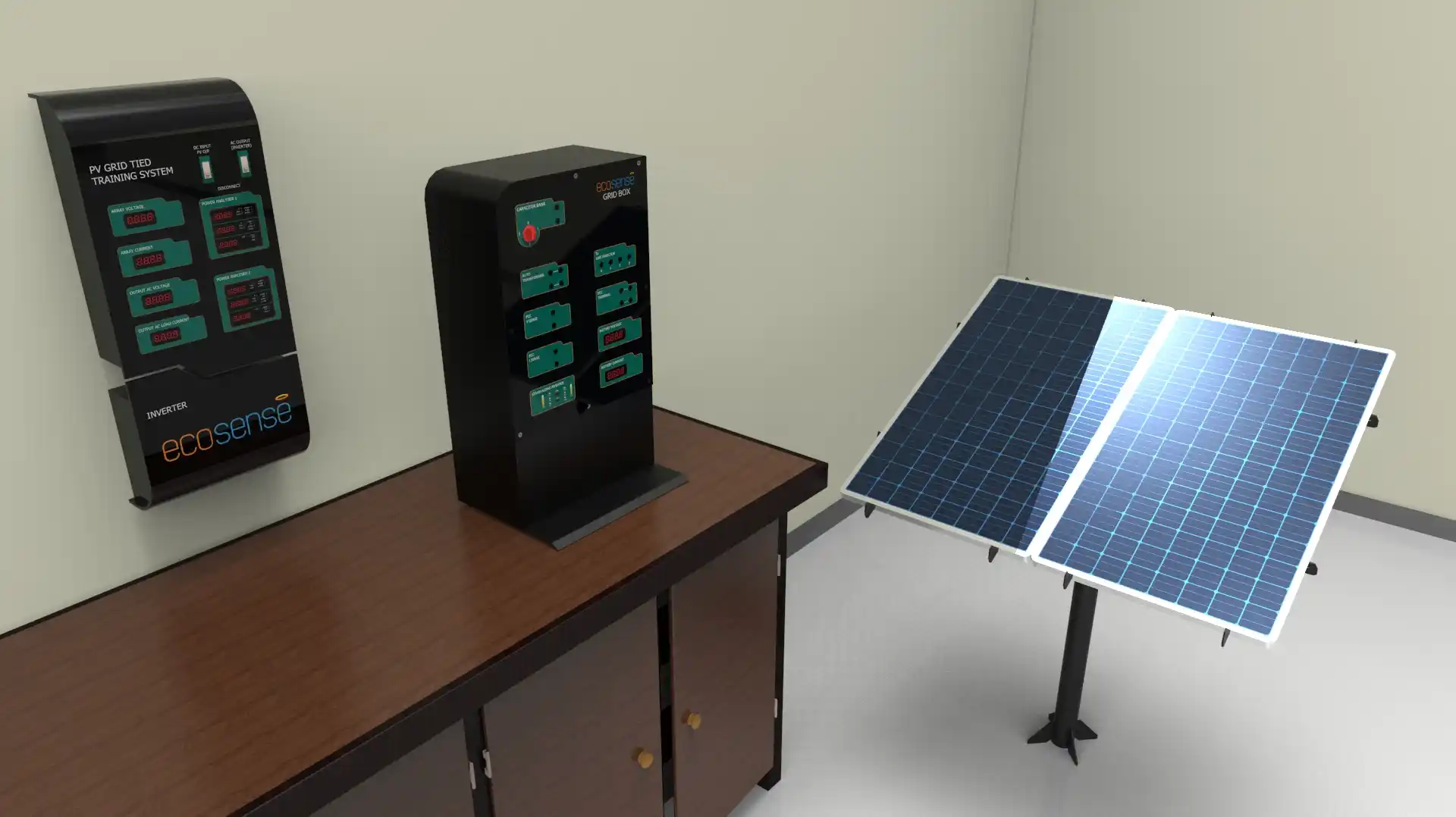
The Solar PV Grid Tied Training System is a versatile experimental setup designed to simulate a real-world grid-connected solar power plant. Perfect for hands-on learning in universities and technical institutes, it also serves as a robust platform for advanced research in solar PV integration, power quality analysis, and smart grid studies. Featuring a built-in virtual grid, it is ideal for locations where direct grid connections are not permitted, allowing seamless experimentation and research in a fully controlled environment. 

Key Features

  • Active Measurement Panel: Monitor voltage, current, and power in real-time during experiments.
  • Waveform Observation: Analyze voltage and current waveforms for both linear and non-linear loads.
  • Transmission Line Analysis: Study the impact of transmission line inductance on voltage quality at the Point of Common Coupling (PCC).
  • Power Factor Improvement: Implement capacitor banks to enhance power factor and observe its effect on power quality at the PCC.
  • Grid Synchronization: Examine the synchronization process of a Solar PV Inverter with the grid and assess its performance.
  • Power Flow Evaluation: Evaluate active, reactive, and apparent power flow between the PV grid and virtual grid.
  • Net Metering: Understand the concept and implementation of net metering in solar power systems.
  • Anti-Islanding Protection: Demonstrate the anti-islanding protection mechanism of a grid-tied inverter during sudden grid failures.
  • Built-in MPPT Inverter: Utilize a Maximum Power Point Tracking (MPPT) grid-tied inverter for optimized energy conversion.
  • Virtual Grid Functionality: Operate with both actual and virtual grids, with the ability to switch between them seamlessly.
  • Comprehensive Instrumentation: Includes a handheld solar insolation measurement instrument and an angle measurement tool.
  • Overcharge/Discharge Protection: Features overcharge and over-discharge protection for the battery bank.
  • Autotransformer Integration: Record system responses at different voltages using an autotransformer.
  • Power Analyzers: Equipped with two power analyzers to measure power import/export readings.
  • Direct DSO Connectivity: Allows direct connection of a Digital Storage Oscilloscope (DSO) without the need for differential probes.
Ecosense

Learning Module 

Ecosense

Power Quality and Waveform Analysis in Grid-Tied Solar PV Systems

Gain practical skills in monitoring and analyzing voltage and current waveforms in grid-tied solar PV setups:

  • Perform current waveform analysis under both linear and non-linear load conditions.
  • Study voltage distortion and harmonic effects due to transmission line inductance at the Point of Common Coupling (PCC).
  • Learn to use Digital Storage Oscilloscopes (DSOs) and power analyzers to capture and interpret power signals in real-time.

Power Factor Optimization and Grid Synchronization Techniques

Explore techniques for improving system efficiency and grid compatibility:

  • Implement capacitor banks to improve power factor and evaluate their impact on power quality.
  • Understand the grid synchronization process for solar PV inverters, ensuring phase, voltage, and frequency matching.
  • Study system behavior during synchronization, including start-up procedures and dynamic response to grid variations.

Power Flow Management, Net Metering, and Anti-Islanding Protection

Delve into advanced solar PV-grid integration scenarios and protective mechanisms:

  • Evaluate active, reactive, and apparent power flow between the PV system and virtual/actual grid.
  • Explore the implementation and operation of net metering, tracking energy import/export using dual power analyzers.
  • Demonstrate the anti-islanding protection mechanism in the event of sudden grid failure, using the virtual grid feature for safe and repeatable experimentation.

Technical Description

  • The system operates as a grid-connected solar photovoltaic platform, interfacing a PV source with the utility grid/virtual grid through a grid-tied inverter.
  • The inverter continuously executes Maximum Power Point Tracking (MPPT) to extract maximum available power from the PV source matching precise voltage, frequency, and phase synchronization to the utility grid.
  • Generated solar power is first utilized by the connected AC load at PCC; any excess power is exported to the grid through net-metering.
  • A variable capacitor and variable inductor load bank at PCC enables experiments related with transmission line inductance and power factor correction.
  • When solar generation is insufficient, the connected load automatically draws deficit power from the grid, demonstrating bidirectional power flow.
  • Integrated energy meters measure imported and exported energy, enabling net-metering and performance analysis.
  • The system continuously monitors grid parameters such as voltage, frequency, power factor, and harmonics.
  • Anti-islanding protection disconnects the inverter during grid outages or abnormal grid conditions to ensure safety.
  • Open and accessible terminals allow students to manually configure experiments, analyse inverter behaviour, and study grid interaction under varying operating conditions.

Ecosense

Technical Specifications 

Ecosense

Solar PV Array and Virtual Grid


ParametersSpecifications
PV Array1000 Wp roof mounted
Virtual Grid 230V, 50 Hz, 1200 VA
Battery Configuration (Virtual Grid)2 x 12V, 7.5 Ah
Grid ModeActual grid / Virtual Grid Selectable

* specifications can be customized as per user requirements

Grid Tied Inverter and Grid Interface


ParametersSpecifications
Inverter TypeSingle-phase grid tied inverter
Max. DC Input Power: 1500 W
Max. DC Input Voltage: 500 V
MPPT Voltage Range: 100-500 V
Max. DC Short Circuit Current: 15 A
MPPT Configuration1 MPPT/1 string
Rate AC Output Power1100 W
THD/Power Factor<5% / near unity
Protection FeaturesAnti-islanding, OV/UV, grid fault protection
Nominal Grid Frequency50/60 Hz

* specifications can be customized as per user requirements

Measurement, Loads and Auxiliary Equipment


ParametersSpecifications
Measurement PanelDC Voltmeter, DC Ammeter, AC Voltmeter, AC Ammeter, Power Analyzer
Variable Capacitor Bank0,1.5,3,6 microfarad @ 220 V
Variable Inductor0,1,3,6 mH @ 2A
Instrumentation AccessDirect DSO connection supported

* specifications can be customized as per user requirements

Related Products

Frequently Asked Questions

Students gain hands-on understanding of grid-connected solar PV operation, inverter-based power conversion, MPPT algorithms, grid synchronization, net-metering, power quality, harmonics, and anti-islanding protection. The system links theoretical power electronics and power systems concepts with real grid behavior.

Yes. The system includes a virtual grid that emulates the utility grid. Users can switch between the actual grid and the virtual grid, allowing all grid-tied experiments to be performed safely without exporting power to the campus utility network.

The platform supports experiments on MPPT performance, inverter synchronization, bidirectional power flow, net-metering, power factor improvement, harmonic analysis, grid fault response, and anti-islanding operation. It also enables comparative studies under different load and grid conditions.

Yes. The open architecture, detailed instrumentation, and access to voltage and current waveforms make it suitable for advanced research in grid integration, power quality analysis, microgrid development, and smart grid control strategies.

The system replicates the structure and behavior of actual rooftop and commercial grid-tied PV plants. Students learn wiring, measurement, protection mechanisms, and operational challenges exactly as encountered in real installations, making them industry-ready for solar EPC, utility, and research roles.

Get in Touch

Ready to transform your labs?

Contact Now