Solar PV Training and Research System Installed at Puducherry Technological University

Solar PV Training and Research System Installed at Puducherry Technological University

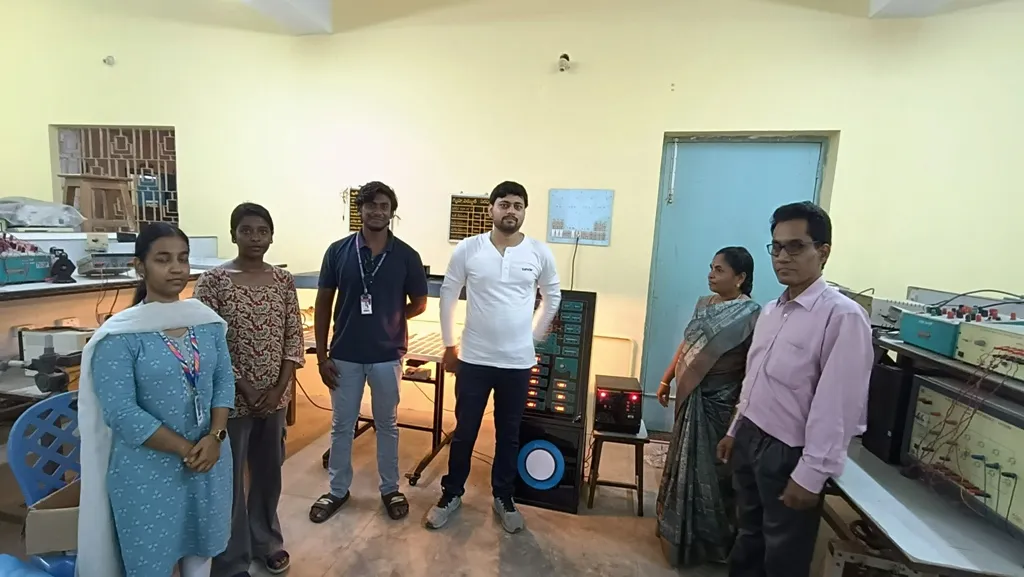
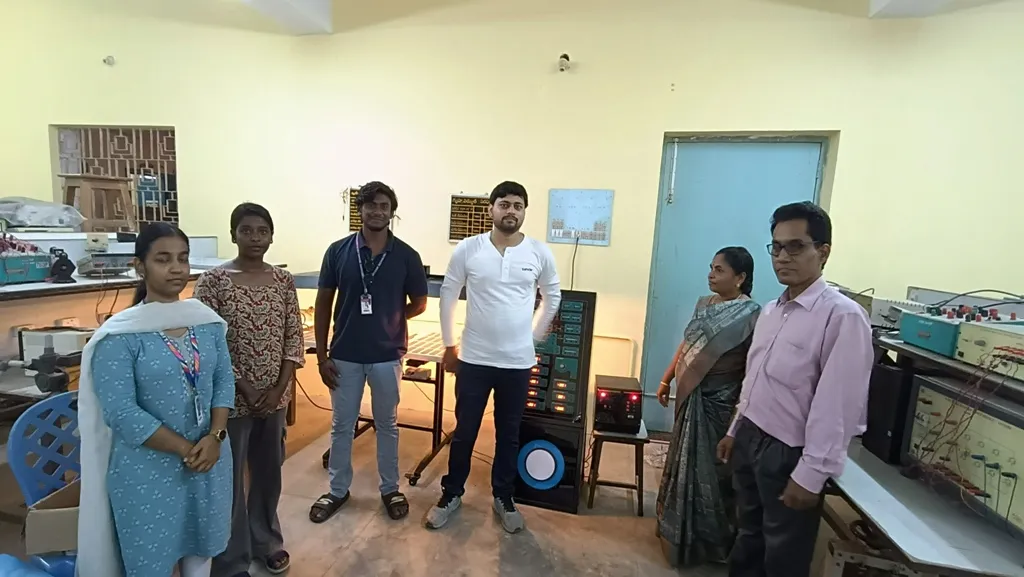
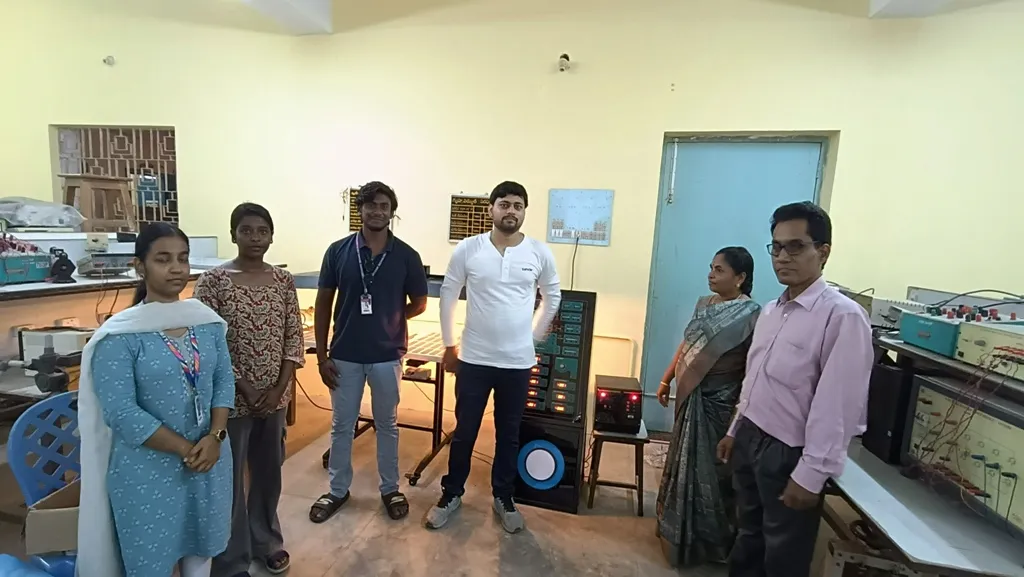
Ecosense installed a Solar PV Training and Research System at the Department of Electrical and Electronics Engineering, Puducherry Technological University. The system enables hands-on experiments in solar PV characteristics, standalone solar systems, power electronics, and MPPT algorithm development.

Solar PV Training and Research System Installed at Puducherry Technological University

Ecosense Sustainable Solutions Pvt. Ltd. has successfully installed a Solar PV Training and Research System at the Department of Electrical and Electronics Engineering, Puducherry Technological University. The installation strengthens the university's renewable energy education and research infrastructure by providing a practical platform for studying solar photovoltaic technology, electrical characteristics, and solar energy conversion.

The system enables students and researchers to explore the working principles of solar PV technology through hands-on experiments, performance evaluation, and practical investigations. It bridges theoretical concepts with real-world photovoltaic applications and supports the development of technical skills in solar energy engineering.

About the Installation

The Solar PV Training and Research System has been installed to support practical learning and research in solar photovoltaic technology. It provides an experimental environment where students can investigate the relationship between solar irradiance, temperature, electrical output, and photovoltaic module performance.

Through structured experiments, students can understand how solar panels convert sunlight into electrical energy and how different operating conditions influence their performance.

The installation also supports faculty-led demonstrations, laboratory assignments, project work, and advanced investigations related to solar energy systems.

Solar PV Training and Research System – Overview

The installed system is designed as a compact laboratory-scale standalone solar power plant. Its modular architecture allows students to progress from fundamental photovoltaic experiments to complete system integration and advanced research.

The platform consists of three interconnected modules:

1. Power Generating Unit
2. Power Conditioning Unit
3. Research and Data Acquisition Unit

The power generating unit demonstrates solar energy conversion under controlled indoor conditions. It uses solar PV modules and artificial sunlight sources to replicate different solar irradiance conditions.

Students can adjust the panel tilt angle and light intensity to investigate their effects on photovoltaic power generation. This arrangement enables repeatable experiments without depending on outdoor weather conditions.

The power conditioning unit provides a hands-on environment for studying solar PV electrical circuits and standalone system configurations.

It incorporates electrical components such as charge controllers, inverters, diodes, and AC/DC loads. Manual wiring through patch connections allows students to build different circuit configurations and understand the function of individual components.

Integrated measurement instruments help monitor voltage, current, and temperature during experiments.

The research unit supports advanced experimentation involving DC-DC conversion, MPPT algorithms, and solar PV performance analysis.

With manual and automatic operating modes, students can investigate converter behaviour, implement external control signals, and develop their own maximum power point tracking algorithms.

The integrated PC-based software provides data logging, graphical visualization, and data export capabilities for further analysis.

Key Learning and Research Features

The Solar PV Training and Research System provides several experimental capabilities:

1. Solar PV Characteristics Analysis: Study the electrical behaviour of solar cells and modules through current-voltage (I-V) and power-voltage (P-V) characteristics.

2. Irradiance and Temperature Studies: Investigate how variations in solar irradiance and module temperature influence photovoltaic output and conversion performance.

3. Series and Parallel PV Configurations: Experiment with different PV module interconnections and understand their effects on voltage, current, and output power.

4. Solar Panel Tilt Angle Analysis: Adjust the orientation of solar panels to examine the relationship between the angle of incidence and energy generation.

5. Partial Shading Analysis: Investigate the impact of partial shading on solar PV output and understand the importance of bypass diodes in photovoltaic systems.

6. Blocking and Bypass Diode Studies: Understand the working principles of blocking and bypass diodes and their role in protecting and improving photovoltaic system operation.

7. Standalone Solar PV System Integration: Configure a standalone solar power system by connecting PV modules, batteries, charge controllers, inverters, and electrical loads.

8. Battery Charging and Energy Management: Explore battery charging behaviour, charge controller operation, and energy distribution within standalone solar PV systems.

9. DC-DC Converter Experiments: Study DC-DC converter operation and understand its role in regulating photovoltaic power for different operating conditions.

10. MPPT Algorithm Development: Develop and investigate maximum power point tracking techniques, including Perturb and Observe (P&O) and Incremental Conductance methods.

11. Real-Time Monitoring and Data Acquisition: Monitor voltage, current, power, and temperature during experiments. Record experimental data for graphical analysis and comparison.

12. External Controller Integration:Use external gate signals and control platforms to implement custom MPPT strategies and investigate advanced converter control techniques.

Solar PV Training and Research System Installed at Puducherry Technological University

Academic and Research Applications

The installation expands the practical learning opportunities available to students of Electrical and Electronics Engineering at Puducherry Technological University.

The system can support undergraduate laboratory experiments, postgraduate projects, faculty demonstrations, and research activities in renewable energy engineering.

Key academic and research applications include:

  • Solar Photovoltaic Engineering: Understanding PV cell characteristics, module behaviour, and power generation.
  • Power Electronics: Investigating DC-DC converters, switching behaviour, and power conditioning.
  • Renewable Energy Systems: Studying standalone solar PV architecture and energy conversion.
  • MPPT Research: Developing and comparing different maximum power point tracking algorithms.
  • Energy Storage: Understanding battery integration and charge controller operation.
  • Performance Analysis: Evaluating photovoltaic system performance under varying environmental and electrical conditions.

The research platform also allows students to work with external control signals and develop their own experimental approaches, encouraging project-based learning and innovation.

Benefits for Puducherry Technological University

The Solar PV Training and Research System provides the Department of Electrical and Electronics Engineering with a dedicated platform for practical renewable energy education.

Its major benefits include:

  • Hands-on Learning: Students can perform experiments using actual photovoltaic modules and electrical components.
  • Research-Oriented Training: Advanced MPPT and converter control capabilities support postgraduate and research-level investigations.
  • Controlled Experimentation: Artificial sunlight enables repeatable experiments under different irradiance conditions.
  • System-Level Understanding: Modular architecture helps students understand how individual components work together in a standalone solar power plant.
  • Data-Driven Analysis: Integrated monitoring and data acquisition support experimental evaluation and technical reporting.
  • Industry-Relevant Skills: Exposure to solar PV technologies, power electronics, and renewable energy systems prepares students for emerging clean energy applications.

Why Choose Ecosense for Renewable Energy Laboratory Solutions?

Ecosense Sustainable Solutions Pvt. Ltd. develops specialized educational and research equipment for engineering institutions, universities, and technical training centres.

With experience in establishing renewable energy laboratories across academic institutions, Ecosense focuses on combining practical experimentation, modular system architecture, and research-oriented capabilities.

Our laboratory solutions are designed to help students move beyond theoretical concepts and develop a deeper understanding of real-world energy technologies.

Through equipment design, technical documentation, installation support, and product demonstrations, Ecosense works with institutions to strengthen their engineering education and research infrastructure.

Solar PV Training and Research System Installed at Puducherry Technological University

Strengthening Renewable Energy Education

The installation of the Solar PV Training and Research System at Puducherry Technological University represents another step towards strengthening practical renewable energy education.

By providing students and researchers with opportunities to investigate photovoltaic characteristics, standalone solar power systems, and advanced MPPT techniques, the system supports the development of practical engineering knowledge and research capabilities.

Ecosense is proud to contribute to the university's efforts to advance renewable energy learning and prepare future engineers for the evolving clean energy sector.

Get in Touch

Ready to transform your labs?

Contact Now