Solar Energy Training Systems Installation at Mar Athanasius College

Solar Energy Training Systems Installation at Mar Athanasius College

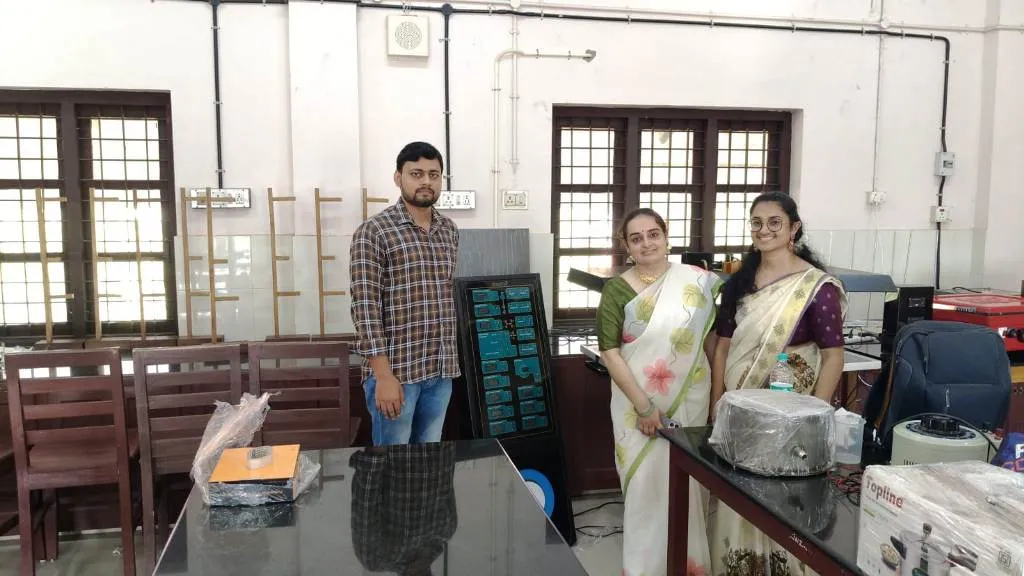
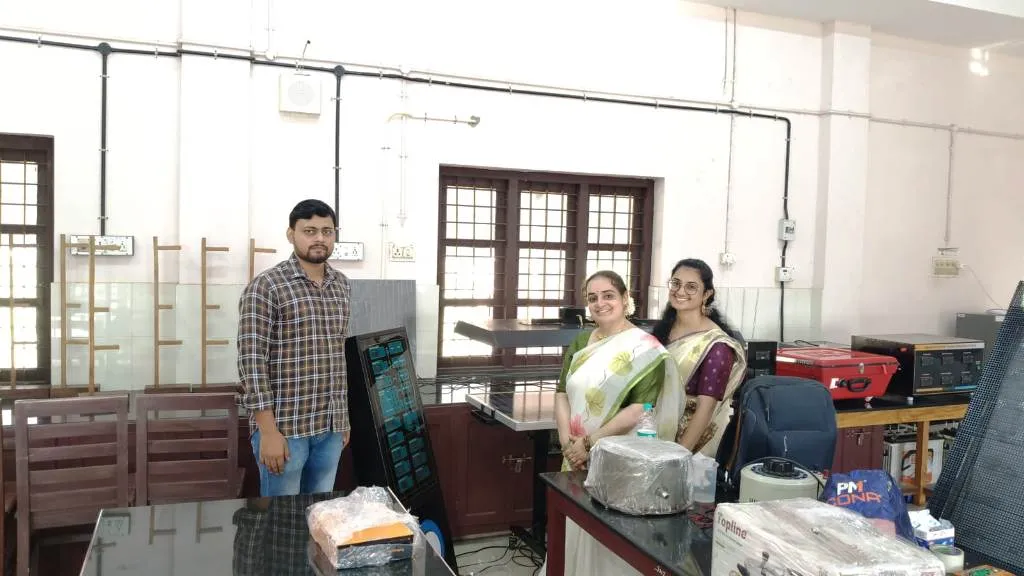
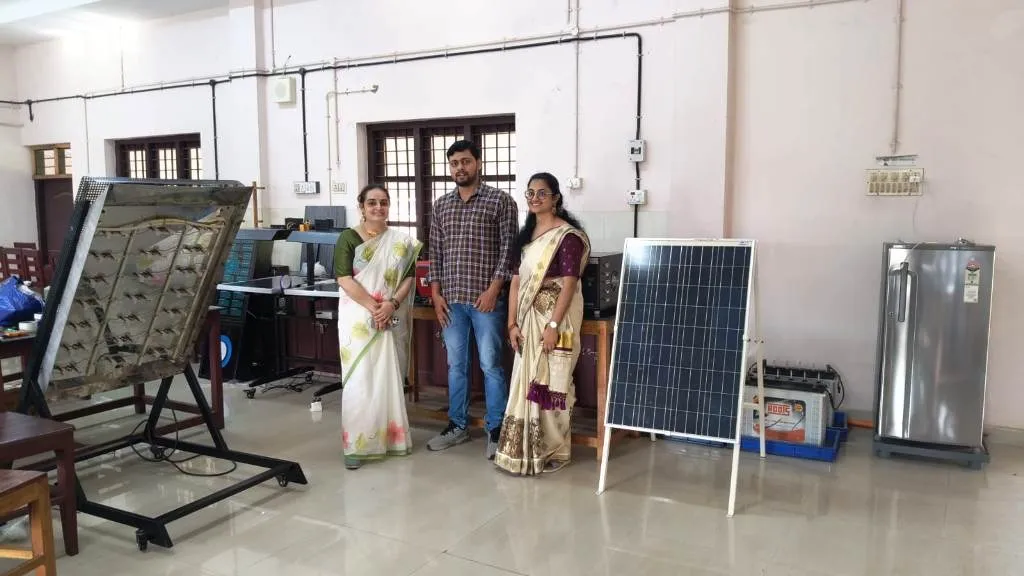
Mar Athanasius College (MAC), Kothamangalam, through its Department of Green Hydrogen Energy, has strengthened its laboratory infrastructure with the installation of a comprehensive range of advanced solar energy training and research systems from Ecosense.

Mar Athanasius College, Kothamangalam Enhances Green Hydrogen Energy Education with Advanced Solar Energy Training Systems

Mar Athanasius College (MAC), Kothamangalam, through its Department of Green Hydrogen Energy, has strengthened its laboratory infrastructure with the installation of a comprehensive range of advanced solar energy training and research systems from Ecosense.

The newly established facility brings together technologies covering solar photovoltaic energy, solar thermal energy, solar radiation measurement, concentrated solar energy, and battery energy storage. The installation provides students and researchers with a practical environment to study renewable energy technologies through experimentation, measurement, performance analysis, and research.

The installed systems include:

  • Solar Radiation Analysis & Measurement System
  • Solar Cooker Training System
  • Parabolic Solar Cooker Training System
  • Solar PV Battery Characterization System

The combination of these systems provides an integrated platform for understanding different stages of solar energy utilization—from assessing the available solar resource and converting solar radiation into electrical or thermal energy to storing electrical energy in batteries.

Advancing Practical Learning in Green Hydrogen and Renewable Energy

The transition toward green hydrogen is closely connected with the availability of renewable energy. Solar photovoltaic and other renewable energy technologies can provide the clean electricity required for various stages of the green hydrogen value chain.

Recognizing the importance of practical education in these emerging technologies, the Department of Green Hydrogen Energy at Mar Athanasius College can use the newly installed laboratory infrastructure to provide students with direct exposure to renewable energy systems and their operating principles.

The laboratory goes beyond theoretical instruction by allowing learners to operate systems, collect experimental data, analyze performance, and understand real-world operating conditions.

This hands-on approach can help students develop practical skills relevant to renewable energy engineering, green hydrogen, energy storage, solar thermal applications, and sustainable energy systems.

Solar PV Training and Research System (PVTR)

he Solar PV Training and Research System (PVTR) provides a dedicated platform for practical training, experimentation, and research in photovoltaic energy systems.

Solar photovoltaic technology is one of the most widely deployed renewable energy technologies and plays an important role in supplying electricity for modern clean-energy applications.

The PVTR allows students and researchers to investigate the electrical behavior and performance of photovoltaic systems through hands-on experimentation.

The system can support studies involving:

  • Solar PV electrical characteristics
  • I-V and P-V characteristics
  • Voltage, current, and power measurement
  • Effect of solar irradiance on PV output
  • PV performance evaluation
  • Solar energy conversion
  • Experimental data acquisition and analysis
  • Project work and research activities

By combining training and research capabilities, the PVTR provides students with an opportunity to understand photovoltaic systems from both educational and experimental perspectives.

Solar Energy Training Systems Installation at Mar Athanasius College

Solar Thermal Training System (STTS)

The Solar Thermal Training System is a compact, modular platform designed to replicate real-world flat plate solar water heating systems. Engineered for both educational and research applications, it facilitates hands-on experimentation with key thermal performance parameters such as efficiency, overall heat loss coefficient (UL), and heat removal factor (FR). The system's adaptability allows users to conduct experiments under varying conditions, including different wind speeds, fluid temperatures, flow rates, and irradiation levels, making it an invaluable tool for comprehensive thermal analysis. 

Solar Radiation Analysis & Measurement System

Understanding the solar resource is fundamental to the design and evaluation of solar energy systems.

The Solar Radiation Analysis & Measurement System provides a practical platform for measuring and analyzing solar radiation parameters.

Students can use the system to understand how solar radiation varies with environmental and operating conditions and how these variations influence the output of solar energy systems.

Solar Cooker Training System

The Solar Cooker Training System demonstrates the direct utilization of solar thermal energy for cooking applications.

The system provides students with a simple and practical way to understand how solar radiation can be collected and converted into useful heat without conventional fuel consumption.

Through hands-on experiments, students can investigate the factors affecting solar cooking performance and observe the relationship between solar availability, temperature, and useful thermal output.

The system can support practical learning related to:

  • Direct solar thermal utilization
  • Solar energy collection
  • Temperature measurement
  • Solar cooking principles
  • Thermal performance
  • Sustainable energy applications

This provides an accessible demonstration of how solar energy can be used directly for everyday thermal applications.

Parabolic Solar Cooker Training System

The Parabolic Solar Cooker Training System introduces students to the principles of concentrated solar thermal energy.

Unlike conventional solar thermal collection methods, a parabolic reflector concentrates incident solar radiation toward a focal point, producing significantly higher temperatures.

The system provides students with practical exposure to the principles behind concentrating solar technologies.

Learning activities can include:

  • Solar radiation concentration
  • Parabolic reflector operation
  • Focal-point identification
  • Concentrated solar thermal energy
  • Temperature measurement
  • Performance evaluation
  • Solar tracking considerations

The system helps learners understand how optical concentration can increase the intensity of solar energy available for useful thermal applications.

It also provides a practical introduction to concepts that are relevant to larger-scale concentrating solar thermal technologies.

Solar PV Battery Characterization System

Solar generation is dependent on the availability of sunlight, making energy storage an important component of many renewable energy systems.

The Solar PV Battery Characterization System provides a dedicated platform for studying battery behavior and its role in solar energy systems.

Students and researchers can investigate the charging and discharging characteristics of batteries and analyze their electrical performance under different operating conditions.

The system can support studies related to:

  • Battery charging and discharging
  • Battery voltage and current characteristics
  • Battery capacity
  • Charge-discharge cycles
  • Energy storage
  • Battery performance analysis
  • Solar PV and battery integration

Hands-on experimentation with battery storage helps students understand how energy storage can be used to manage the intermittent nature of renewable energy generation.

This knowledge is particularly relevant to modern applications involving solar PV systems, microgrids, electric mobility, renewable energy integration, and green hydrogen systems

Solar Energy Training Systems Installation at Mar Athanasius College

Supporting Research and Project-Based Learning

The laboratory infrastructure also provides opportunities for project-based learning and experimental research.

Students can use the installed systems for academic projects, laboratory exercises, demonstrations, characterization studies, and performance analysis. Researchers can use the platforms to conduct experiments related to solar energy conversion, thermal applications, photovoltaic systems, and battery storage.

The availability of multiple technologies within the same facility can also encourage multidisciplinary projects connecting:

  • Solar photovoltaic systems
  • Solar thermal technologies
  • Energy storage
  • Solar resource assessment
  • Renewable energy integration
  • Green hydrogen
  • Sustainable energy systems

Such an environment can contribute to the development of practical engineering skills required for the rapidly evolving renewable energy sector.

Get in Touch

Ready to transform your labs?

Contact Now