Green Hydrogen Microgrid 

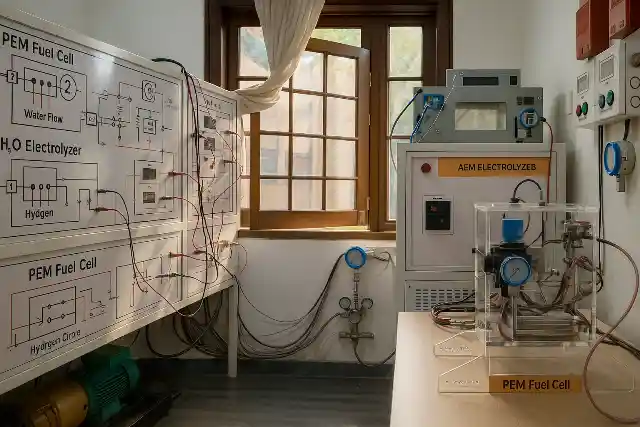
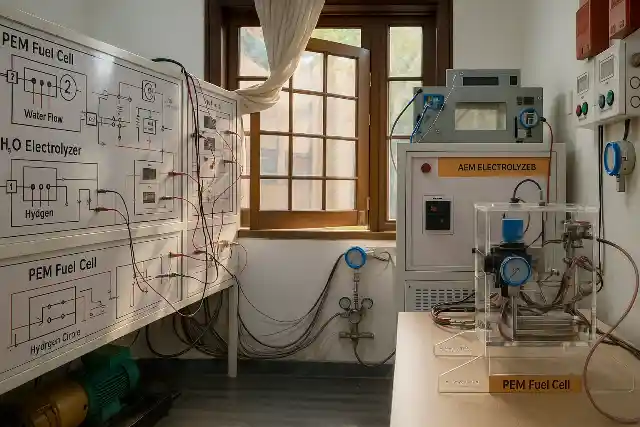
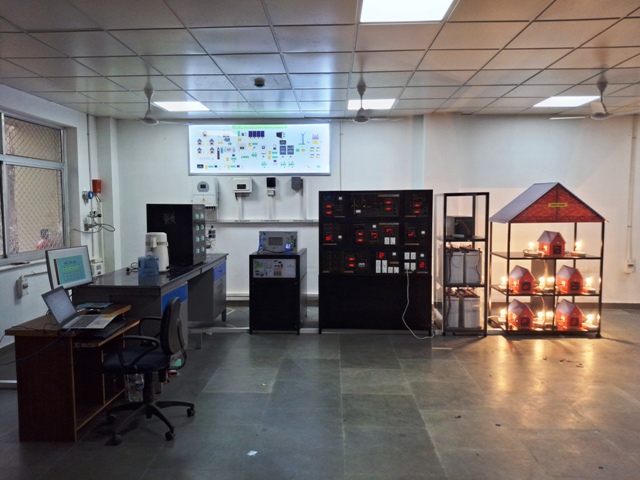
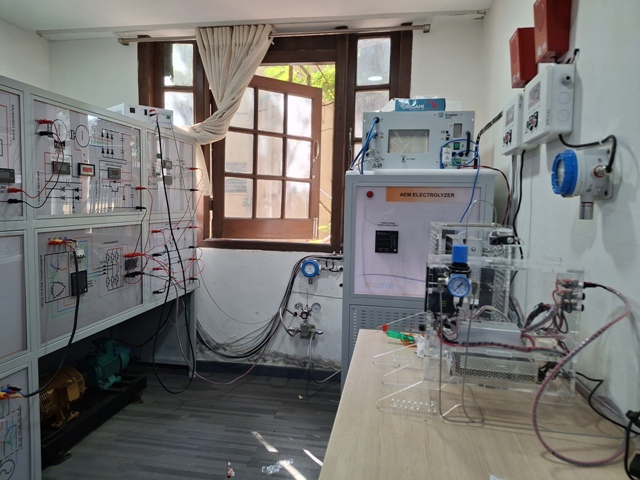
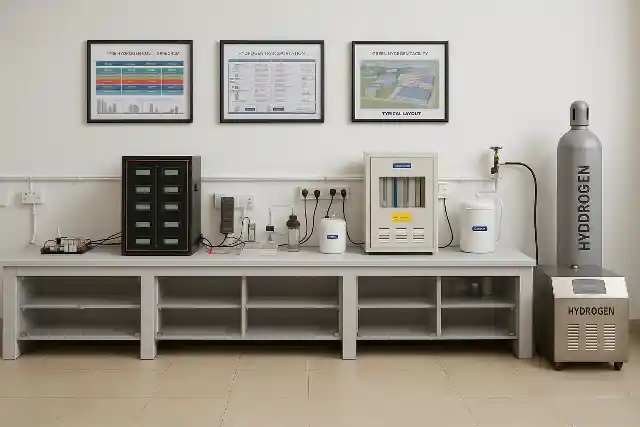
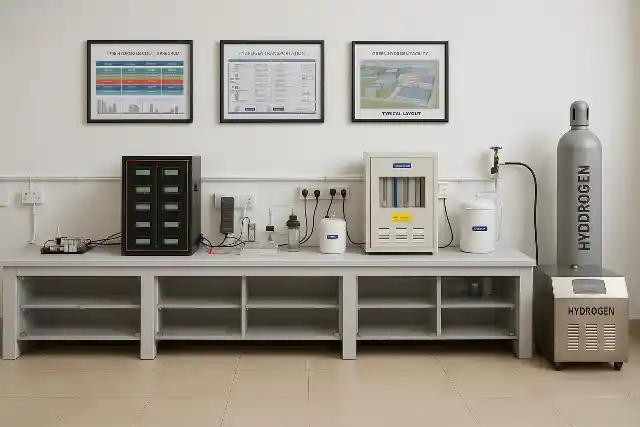
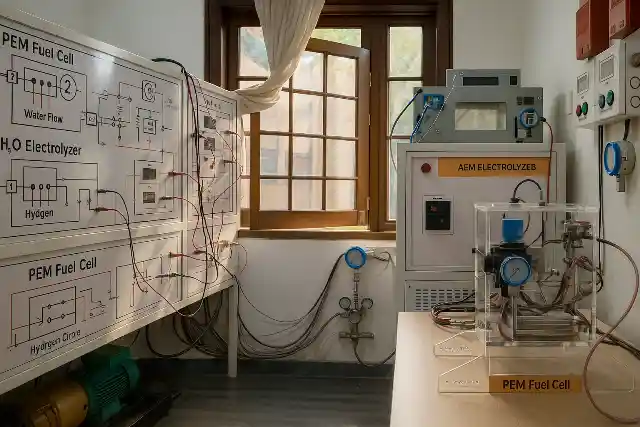
The Green Hydrogen Microgrid by Ecosense is a cutting-edge educational and experimental platform designed to demonstrate the generation, storage, and utilization of hydrogen energy integrated within a smart microgrid system. This system enables students and researchers to explore real-time renewable energy integration, green hydrogen production via electrolysis, and electricity generation using fuel cells. It provides a holistic learning experience in advanced energy systems, making it an ideal tool for institutions aiming to lead in hydrogen technology and sustainability. 
Key Features

  • Integrated Renewable Microgrid: The system combines multiple energy sources and components—PV emulator, wind turbine emulator, battery bank, AEM electrolyzer, and fuel cell—into a cohesive microgrid, enabling hands-on understanding of energy flow and hydrogen-based electricity generation.
  • PV and Wind Emulators for Controlled TestingPV Emulator: A programmable solar panel emulator replicates I-V characteristics under varied conditions such as irradiance and temperature. It allows real-time scenario simulation using LabVIEW-based software.
  • Wind Turbine Emulator: Simulates turbine behavior using mathematical models and a motor-generator setup to mimic real wind profiles and mechanical responses.
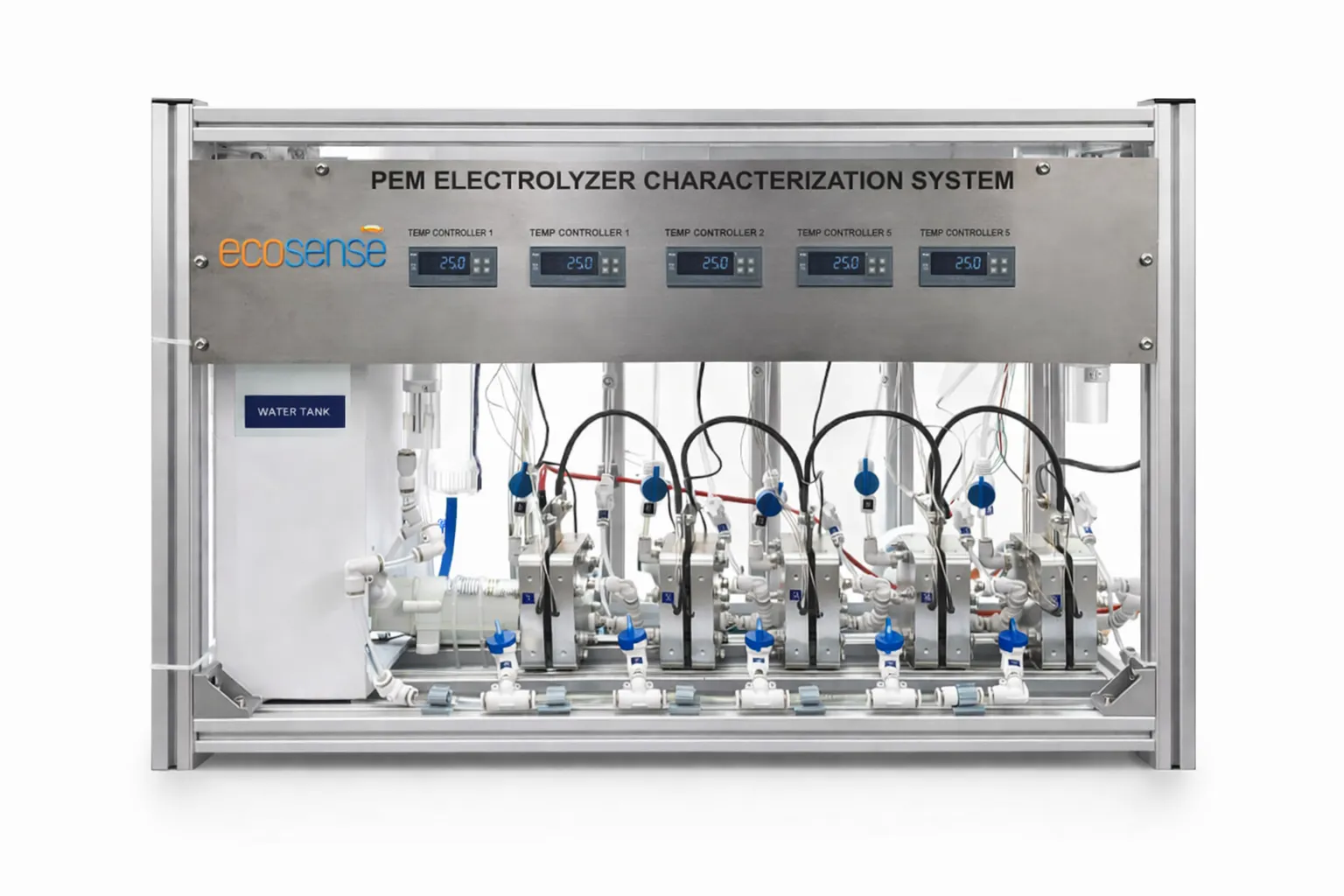
  • Hydrogen Production with AEM Electrolyzer: An Anion Exchange Membrane (AEM) electrolyzer generates green hydrogen using distilled water and renewable electricity. It is strategically integrated at the microgrid’s Point of Common Coupling (PCC) to enable real-time balancing of renewable energy with hydrogen production.
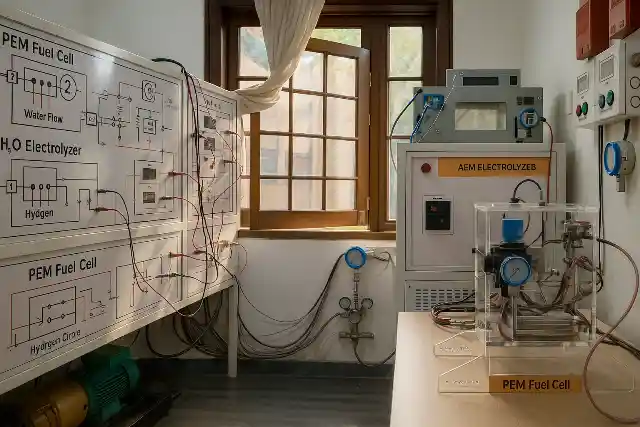
  • Fuel Cell-Based Electricity Generation: Stored hydrogen is supplied to a proton exchange membrane fuel cell (PEMFC), converting chemical energy into electrical energy. The output powers residential loads through a charge controller, battery bank, and inverter setup.
  • Battery Storage and System Balancing: The lithium-ion battery bank stores excess energy, stabilizes microgrid operation, and acts as a buffer for load management and peak shaving.
  • Real-Time Monitoring and Control: The system features LabVIEW software for monitoring parameters like voltage, current, power, hydrogen production rate, and fuel cell efficiency, enabling users to adjust inputs and observe system dynamics instantly.
  • Robust Safety and Automation Features: Includes hydrogen drying units, pressure regulators, auto shut-off valves, and leak detectors, ensuring safe operation across all subsystems.
Ecosense

Learning Module 

Ecosense

Renewable Energy Systems & Hydrogen Production

  • Simulate various solar irradiance levels and shading effects using the PV emulator.
  • Replicate wind conditions and turbine mechanical response using the wind emulator.
  • Operate the AEM electrolyzer using renewable inputs.
  • Study water flow rates, electrochemical efficiency, and gas output.
  • Monitor drying, compression, and safe hydrogen storage in cylinders

Fuel Cell Operation & Microgrid Control

  • Convert stored hydrogen to electricity using a PEM fuel cell.
  • Study voltage-current characteristics under different loads.
  • Power a home utility simulation model and log performance data.
  • Integrate all sources (PV, wind, battery, fuel cell) at the PCC.
  • Analyze load-sharing, storage behavior, and grid-tied vs. standalone modes.
  • Use software interface to simulate various control logics and real-time adjustments

System Control, Testing & Safety

  • Analyze energy flows across system components using LabVIEW plots.
  • Record and analyze motor voltage, current, torque vs. RPM, and efficiency curves.
  • Test system response to simulated faults like over-pressure and leak detection.
  • Validate fail-safe mechanisms, auto shutdown, and alarm systems.
  • Understand safety regulations in hydrogen energy handling.

Technical Description

  • The Green Hydrogen Microgrid is a laboratory-scale integrated energy system designed for hands-on education and advanced research in hydrogen-based microgrids.
  • Renewable sources such as solar PV, wind emulators, or programmable DC supplies feed power into a common DC microgrid bus.
  • An open-architecture microgrid controller manages energy flow between sources, loads, hydrogen subsystems, and storage elements.
  • Surplus renewable power is routed to an electrolyzer, where deionized water is converted into green hydrogen through electrolysis.
  • The generated hydrogen is stored in certified vessels with pressure regulation, safety valves, and hydrogen leak detection.
  • During energy deficits, stored hydrogen is supplied to a PEM fuel cell to generate electrical power.
  • The system provides open-source software access, allowing users to modify control logic, energy management algorithms, and dispatch strategies.
  • Direct access to DC–DC converters, DC–AC inverters, and protection hardware enables real-time control, algorithm testing, and hardware-in-the-loop experimentation.
  • A comprehensive data acquisition system supports performance analysis, efficiency studies, and microgrid optimization research.

Developed by Ecosense Sustainable Solutions, the platform bridges academic learning and applied hydrogen microgrid research.

Ecosense

Technical Specifications 

Ecosense

Power & Microgrid Architecture

ParametersSpecifications
Microgrid TopologyRenewable Energy microgrid with bidirectional power flow
Power InterfacesDC–DC converters and DC–AC inverter with open control access
Control PlatformOpen-source controller with real-time data acquisition

Hydrogen Generation & Storage


ParametersSpecifications
Electrolyzer TypePEM / Alkaline /AEM (lab-scale, modular)
Hydrogen StorageCertified pressurized storage with safety valves
Safety SystemsHydrogen leak detection, pressure relief, interlocks

* specifications can be customized as per user

Fuel Cell & Load Integration


ParametersSpecifications
Fuel Cell TypePEM fuel cell stack (educational / research grade)
Output InterfaceRegulated DC output synchronized to microgrid bus
Load SupportProgrammable DC and AC loads with logging support

* specifications can be customized as per user

Related Products

Frequently Asked Questions

The cost of a Green Hydrogen Microgrid varies based on system capacity, electrolyzer type, storage configuration, fuel cell rating, and control architecture. Academic and research-grade systems are typically modular and scalable. Pricing is usually project-specific and depends on customization, safety features, and integration requirements offered by Ecosense Sustainable Solutions.

Green hydrogen microgrids enable long-duration energy storage, deep renewable integration, and zero-carbon power generation. They support energy independence, reduce renewable curtailment, and allow seamless coupling of electricity and hydrogen systems. For academia, they provide hands-on exposure to real microgrid control, power electronics, and hydrogen technologies.

Key challenges include high initial capital cost, lower round-trip efficiency compared to batteries, hydrogen storage safety considerations, and limited hydrogen infrastructure. Additionally, system complexity requires advanced control strategies and trained personnel. Ongoing research and declining component costs are steadily reducing these barriers.

Hydrogen microgrids are used in university laboratories, renewable energy research centers, remote and islanded power systems, industrial microgrids, and defense or telecom backup power. They are especially valuable where long-duration storage, fuel flexibility, and decarbonization of electricity and energy storage are critical.

Get in Touch

Ready to transform your labs?

Contact Now