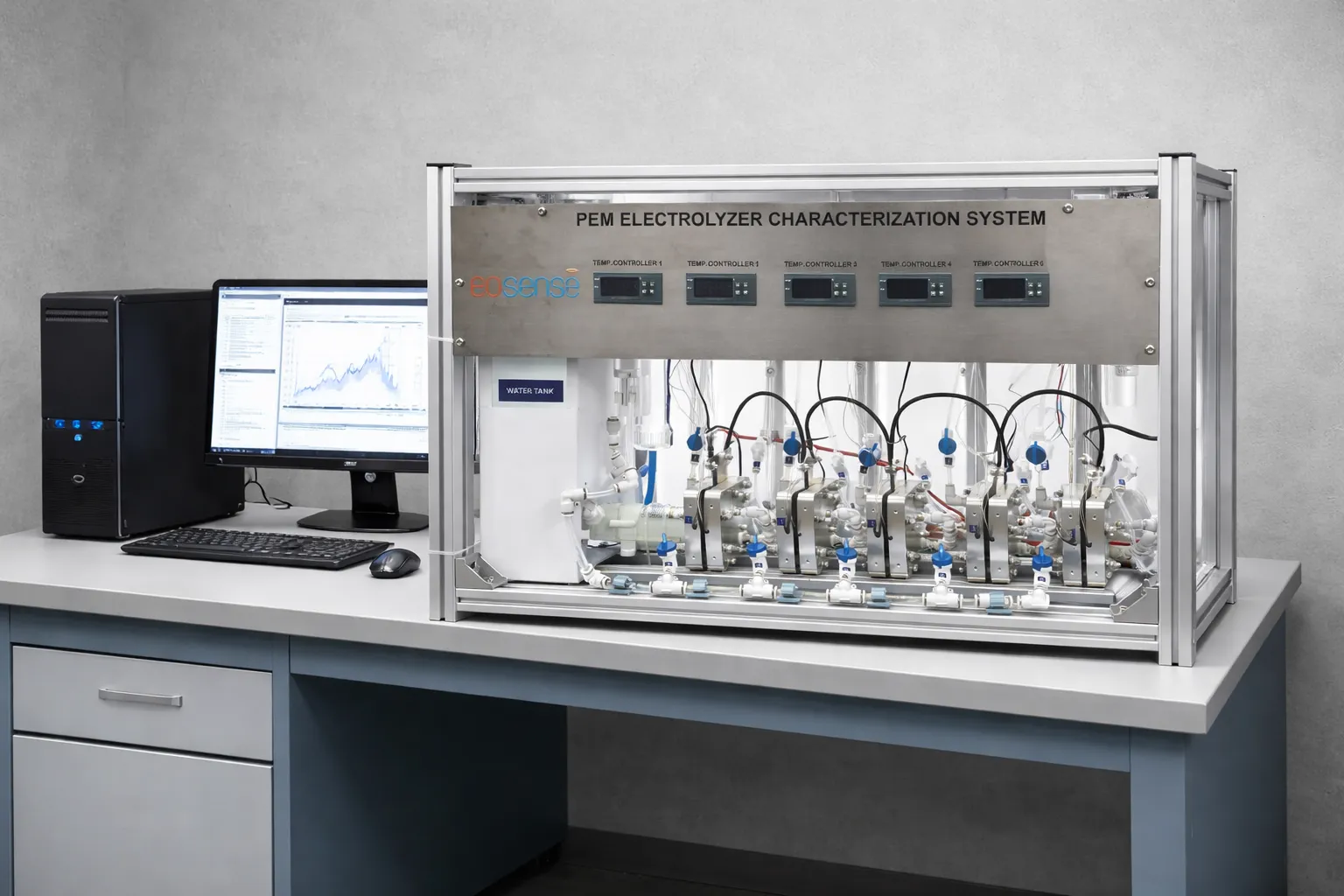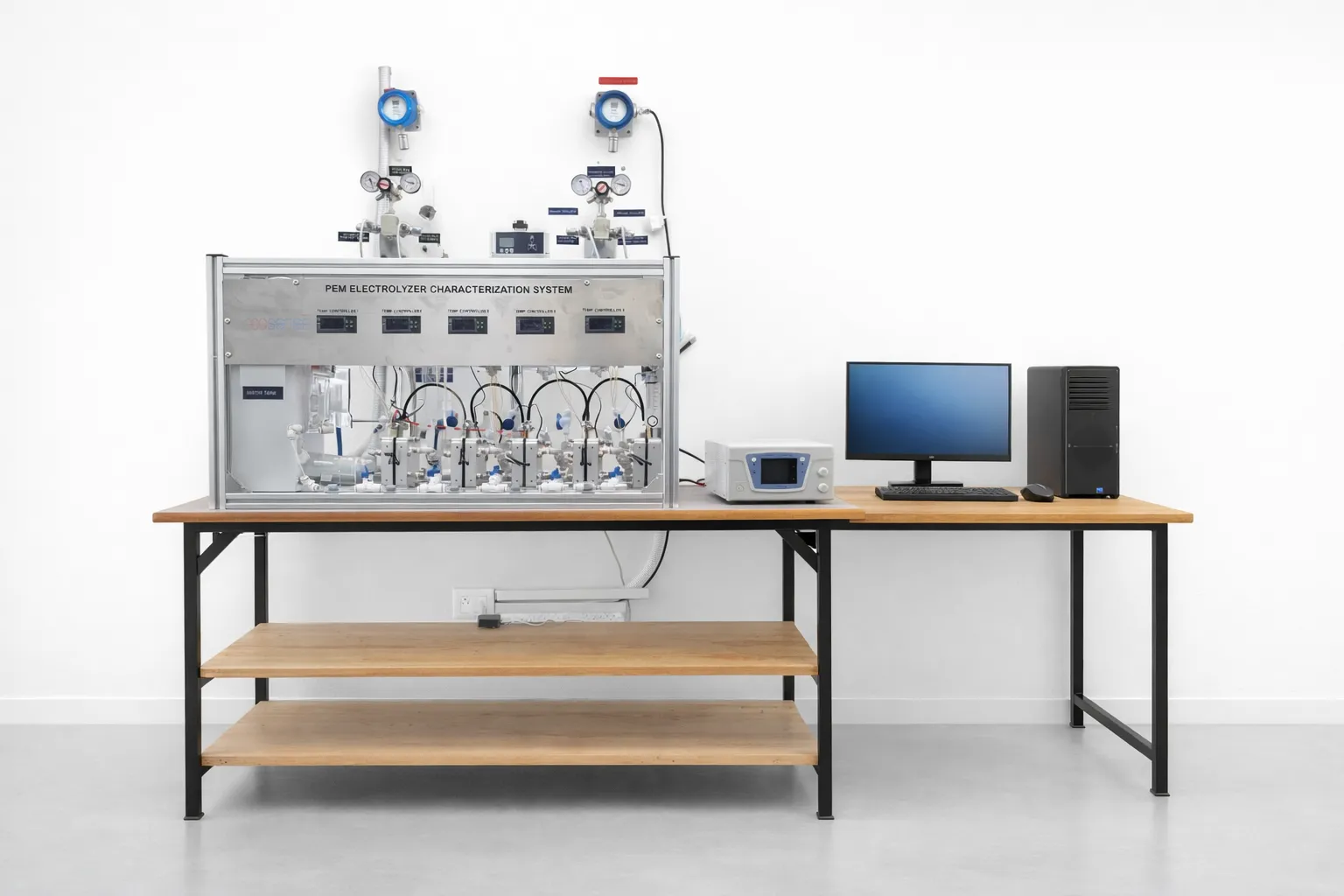
Electrolyzer Characterization System 

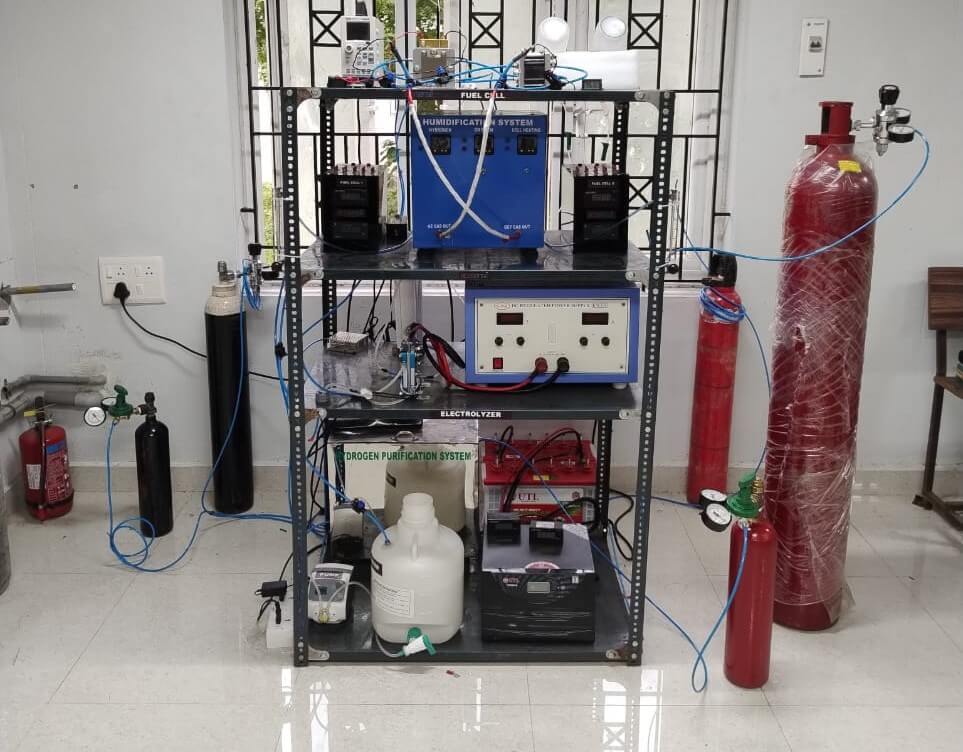
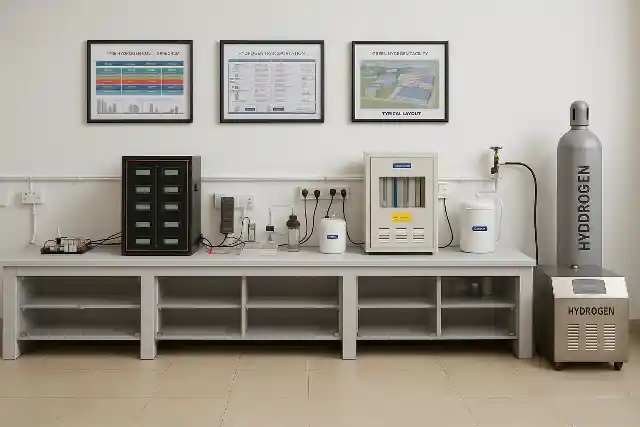
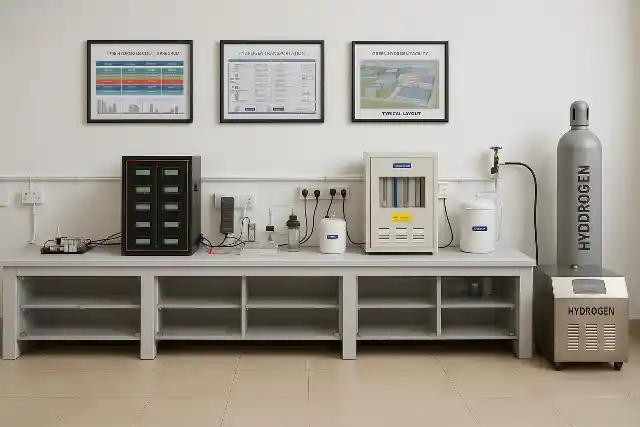
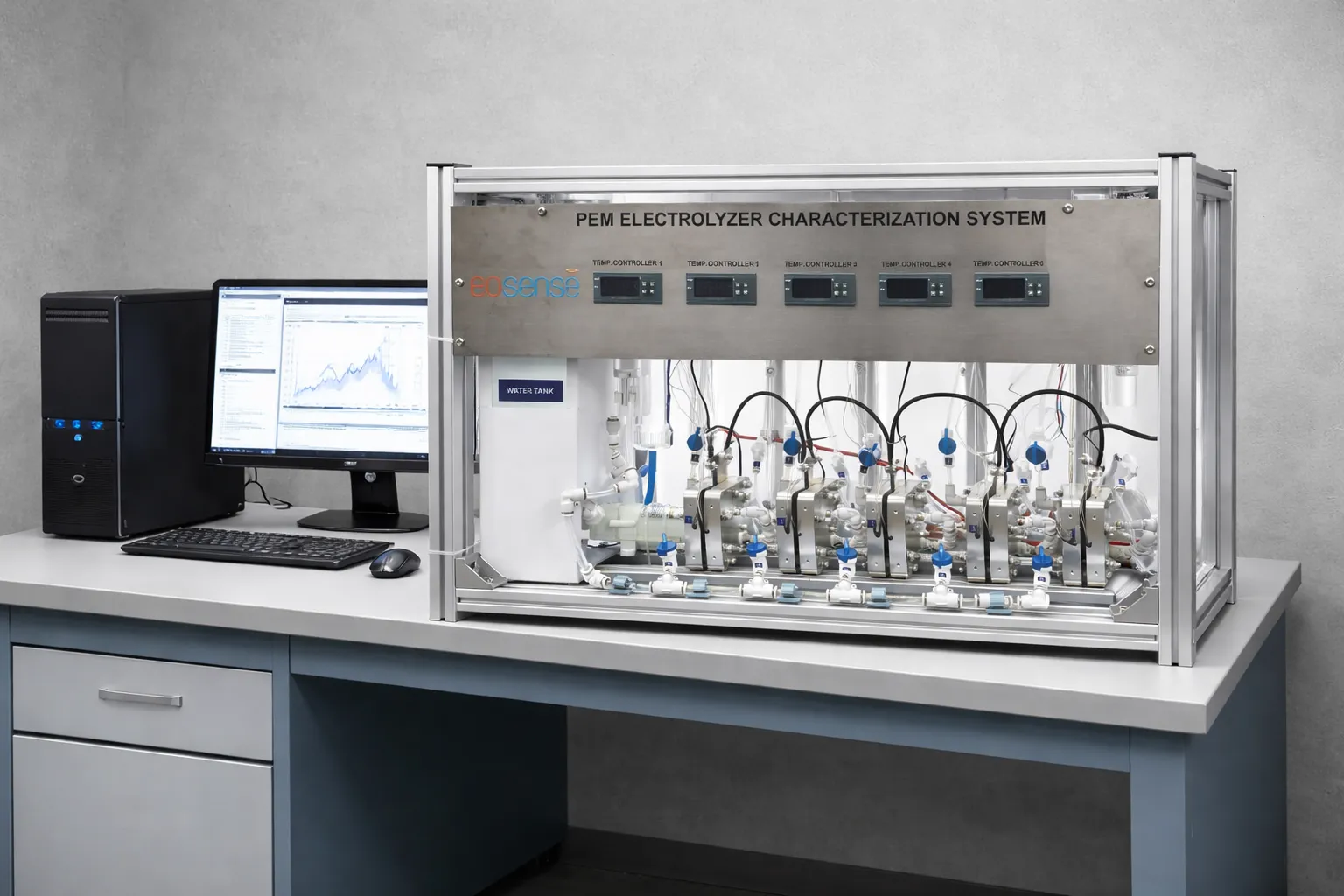
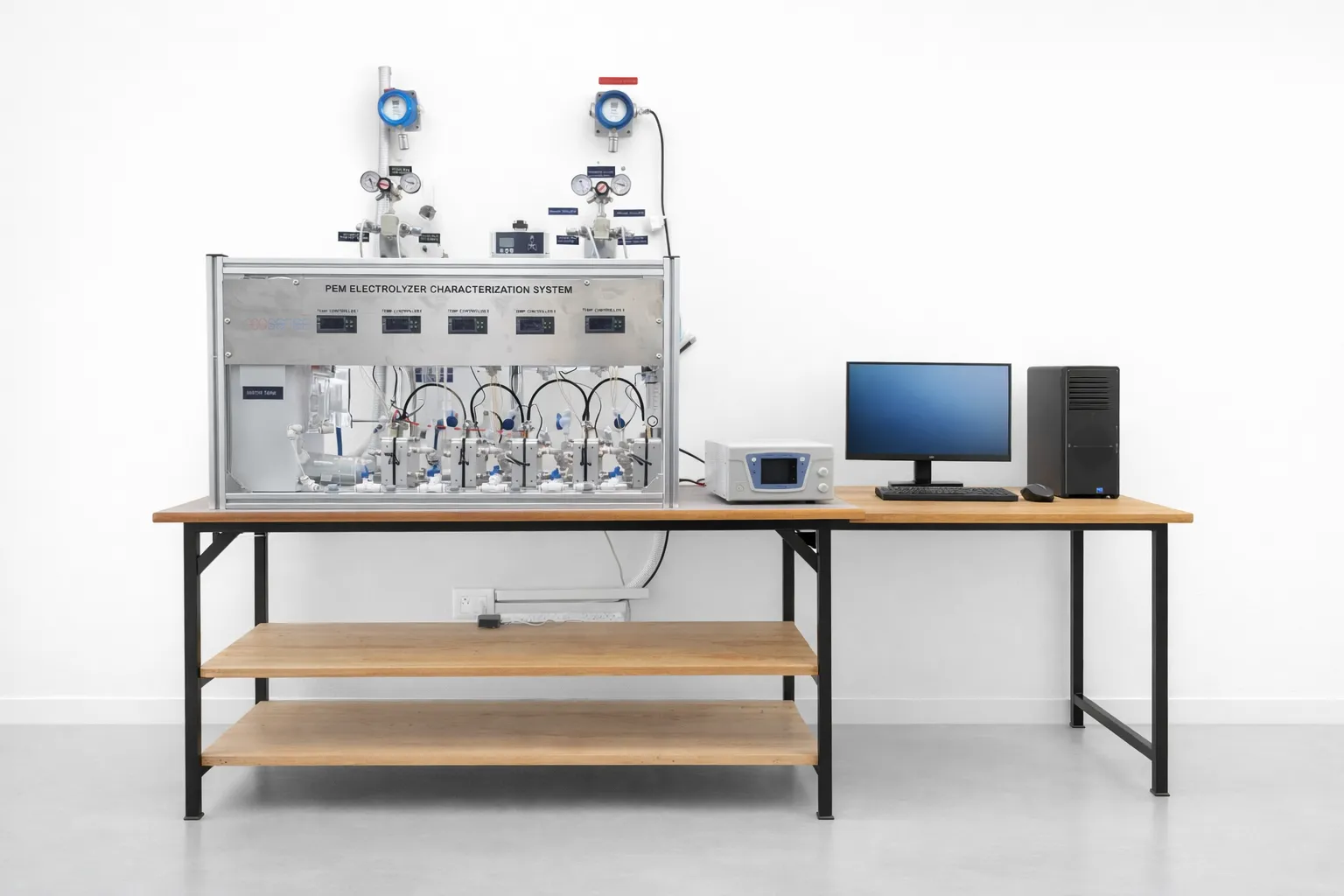
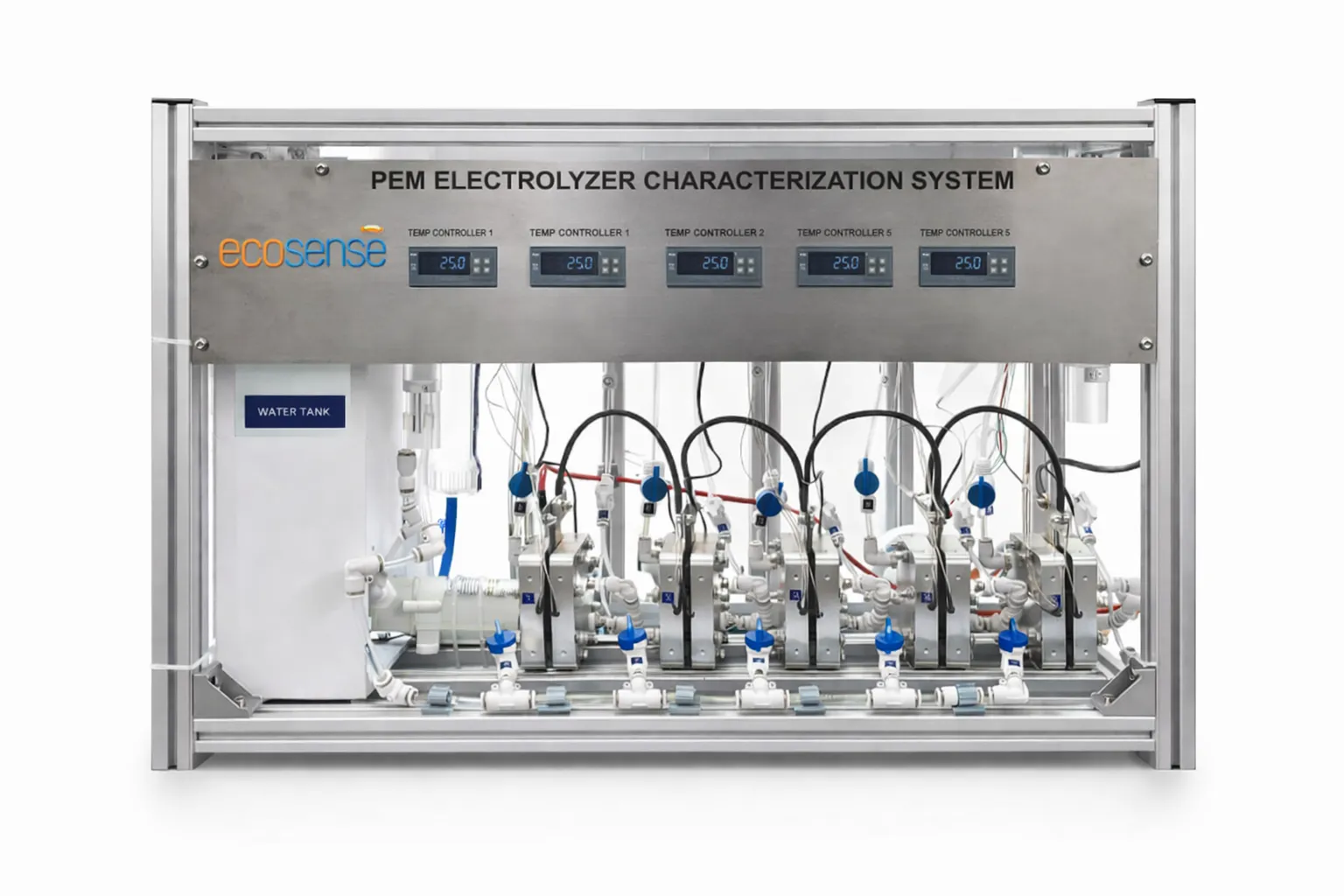
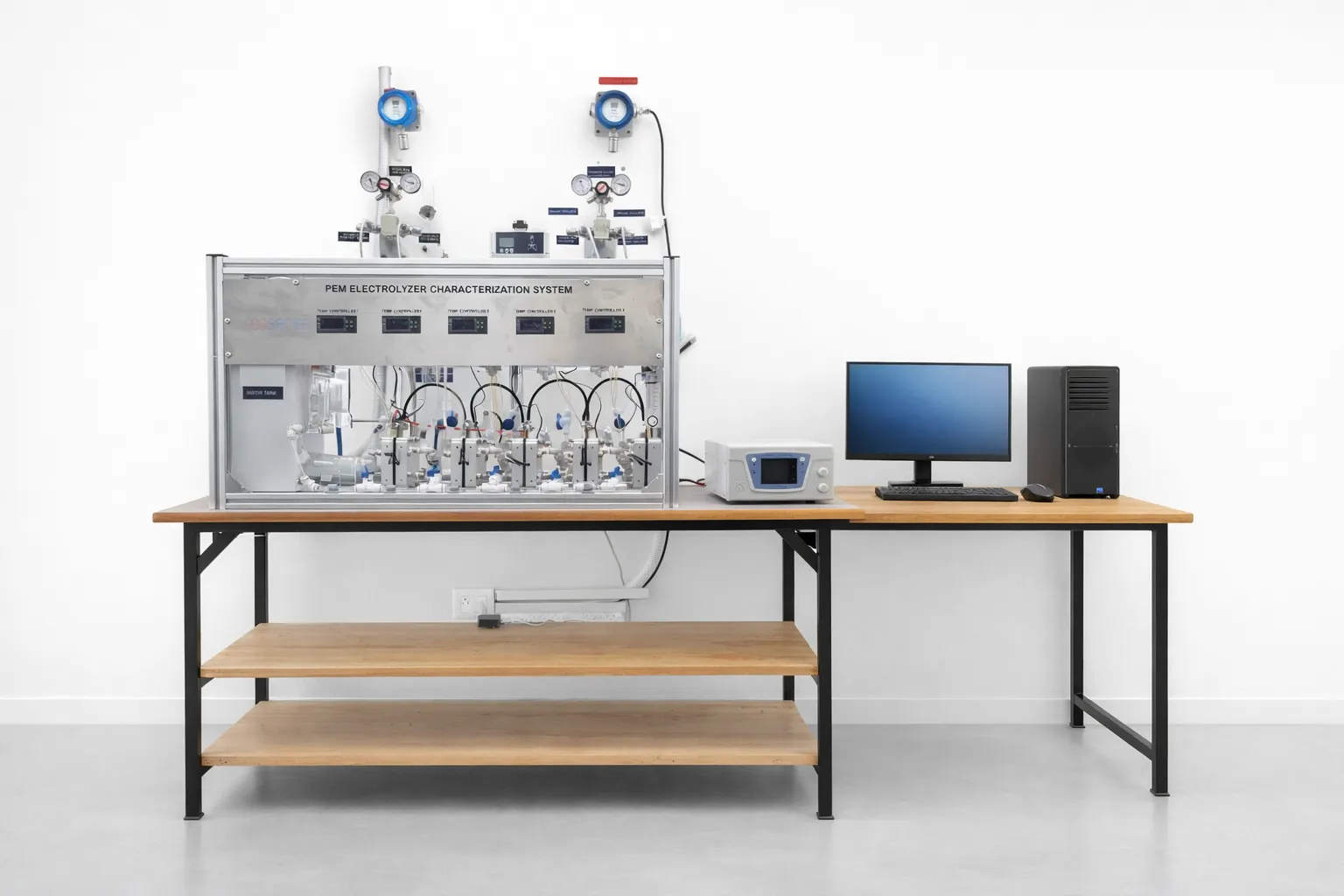
The Electrolyzer Characterization System is a laboratory-grade platform designed for detailed testing and performance evaluation of a hydrogen production electrolyzer based on PEM technology. The system supports experimental studies in green hydrogen generation by enabling controlled investigation of electrochemical behavior, efficiency, and durability under a wide range of operating conditions. It features five stackable PEM cells along with additional variable-area cells, powered by a programmable DC supply to allow precise I–V characterization. A distilled water management unit with conductivity monitoring and peristaltic pumps ensures consistent water quality and flow. Integrated gas handling units—including dryers, separators, and flow meters—enable accurate measurement of hydrogen and oxygen output. Operating parameters such as temperature, pressure, voltage, and flow rate are independently adjustable and monitored through a PC-based control and data logging interface. Comprehensive safety systems make the platform suitable for long-duration testing of electrolyzers for hydrogen production in academic and research laboratories. 
Key Features

  • Electrolyzer Cell & Stack Configuration: Includes five stackable PEM cells and three additional cells with varying active areas for comparative evaluation of hydrogen production electrolyzer performance.
  • Precise Power Control: Programmable DC power supply (0–15 V, 0–100 A) with PC interface for I–V characterization, efficiency mapping, and polarization studies.
  • Water Management System: Integrated distillation unit, conductivity sensors, and peristaltic pumps ensure high-purity water delivery required for stable electrolysis.
  • Gas Handling Units: Gas–water separators, drying units, flow meters, and pressure controllers enable safe collection and accurate measurement of hydrogen and oxygen.
  • Real-Time Monitoring: PC-based dashboard displays and logs voltage, current, temperature, pressure, and gas flow parameters in real time.
  • Safety Systems: Automatic shutdown during overpressure or hydrogen leak events, along with alarms and solenoid cut-off valves, ensure safe operation.
  • Variable Control Parameters: Adjustable temperature, voltage, current, pressure, and flow rate for condition-based optimization of the hydrogen production electrolyzer.
  • Research-Ready Design: Supports studies on efficiency degradation, water quality impact, renewable energy coupling, and advanced control strategies.
  • Data Logging & Analysis: Exportable datasets in CSV format enable long-term performance tracking and comparative analysis.
  • Renewable Integration Capability: Allows simulation of fluctuating solar or wind power inputs to evaluate dynamic response of electrolyzers for hydrogen production.
Ecosense

Learning Module 

Ecosense

Cell & Stack Characterization

  • Perform I–V characterization of single PEM cells and multi-cell stacks.
  • Compare performance across different active areas (20, 30, and 50 cm²).
  • Measure hydrogen output rate, efficiency, and energy consumption of a hydrogen production electrolyzer.

Operating Conditions & Optimization

  • Study the influence of temperature, pressure, and water flow rate on hydrogen yield and purity.
  • Optimize system efficiency by adjusting voltage, current, and flow parameters.
  • Simulate renewable energy load variations to evaluate system responsiveness.

Safety, Control & Research Applications

  • Validate overpressure protection, leak detection, and automatic shutdown mechanisms.
  • Implement PID or advanced control algorithms for automated regulation of temperature, pressure, and flow.
  • Extend experimentation to hydrogen storage integration, degradation analysis, and techno-economic assessment of hydrogen systems.

Technical Description

  • The system supplies precisely regulated DC power to PEM electrolyzer cells, enabling controlled electrochemical splitting of water into hydrogen and oxygen.
  • A dedicated water management unit delivers distilled water to the cell inlet, equipped with conductivity, temperature, and level sensors to ensure stable electrolysis conditions.
  • Individual PEM cells can be operated independently or electrically interconnected to form a multi-cell stack, allowing both single-cell testing and stack-level analysis of a hydrogen production electrolyzer.
  • Integrated heating elements regulate cell operating temperature, supporting studies on thermal effects, voltage losses, and efficiency variations.
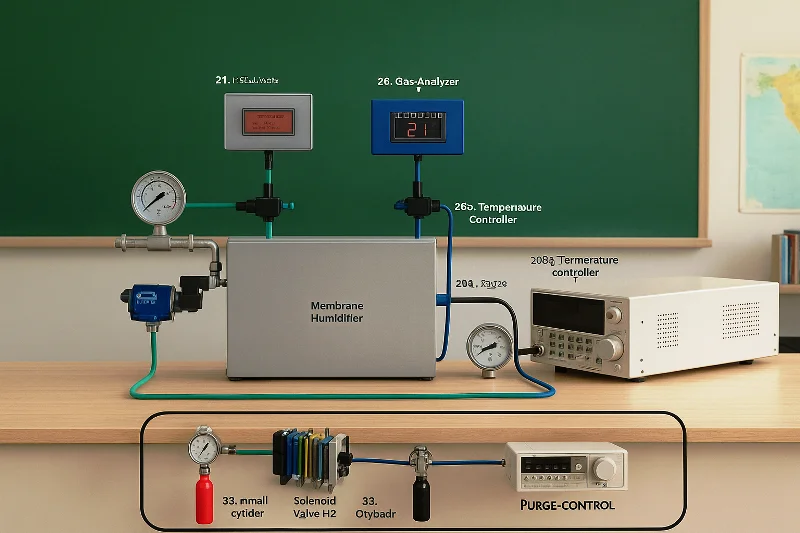
  • Generated hydrogen and oxygen pass through gas–water separators and drying units to remove moisture before measurement.
  • Mass flow meters, pressure sensors, and control valves continuously monitor gas output and operating parameters for accurate performance evaluation.
  • A PC-based control and data acquisition interface records voltage, current, temperature, pressure, and gas flow data in real time.
  • Logged data enables detailed analysis of efficiency, degradation behavior, and operating trends in electrolyzers for hydrogen production.
  • Built-in safety interlocks automatically shut down system operation during overpressure, abnormal conditions, or hydrogen leak detection, ensuring safe laboratory experimentation.
Ecosense

Technical Specifications 

Ecosense

Electrolyzer & Power Section


ParametersSpecifications
Electrolyzer TypePEM electrolyzer, single-cell & stackable
Number of Cells5 stackable cells + 3 variable-area cells
Cell Voltage Range1.9 – 2.5 V per cell
DC Power Supply0–15 V, 0–100 A, PC-controlled

* specifications can be customized as per user's requirements.

Water, Gas & Thermal Management


ParametersSpecifications
Water SupplyDistilled water system with conductivity & level sensors
Water Flow RateProgrammable via peristaltic pump
Gas HandlingH₂ & O₂ separators, dryers, NRVs
Operating PressureUp to 5 bar (controlled)

* specifications can be customized as per user's requirements.

Instrumentation, Control & Safety


ParametersSpecifications
MeasurementsVoltage, current, temperature, pressure, gas flow
SensorsPT100 temperature, pressure sensors, flow meters
Data InterfacePC-based GUI, real-time logging (CSV)
Safety FeaturesHydrogen leak detection, over-pressure shutdown, alarms

* specifications can be customized as per user's requirements.

Related Products

Frequently Asked Questions

Electrolyzers are mainly classified into alkaline electrolyzers, PEM (Proton Exchange Membrane) electrolyzers, solid oxide electrolyzers (SOEC), and anion exchange membrane (AEM) electrolyzers. Alkaline systems are mature and cost-effective, PEM electrolyzers offer fast dynamic response and high purity hydrogen, SOECs operate at high temperatures for improved efficiency, while AEM electrolyzers aim to combine low cost with compact design.

A solid oxide electrolyzer operates at high temperatures, typically between 600 °C and 900 °C. Steam is supplied to the cathode, where it is reduced into hydrogen and oxygen ions. The oxygen ions migrate through a solid ceramic electrolyte to the anode, where oxygen gas is released. High-temperature operation reduces electrical energy demand by utilizing thermal energy.

An Electrolyzer Characterization System enables precise analysis of electrolyzer performance under controlled conditions. It allows users to study voltage–current behavior, efficiency, hydrogen production rates, and the effects of temperature, pressure, and water quality. The system supports safe, repeatable experiments and is ideal for academic research, technology comparison, and control strategy development.

The system is designed for laboratory-scale experimentation, so hydrogen output is limited compared to industrial plants. Initial setup and instrumentation costs can be higher than basic training kits. Additionally, accurate experimentation requires proper handling of sensors, water quality control, and safety protocols, which may demand trained operators.

Get in Touch

Ready to transform your labs?

Contact Now