Wind Energy Training System Installation at MBM University, Jodhpur

Wind Energy Training System Installation at MBM University, Jodhpur

Installation of a Wind Energy Training System at MBM University, Jodhpur to strengthen practical education and research in wind power and renewable energy engineering.

Wind Energy Training System Installation at MBM University, Jodhpur

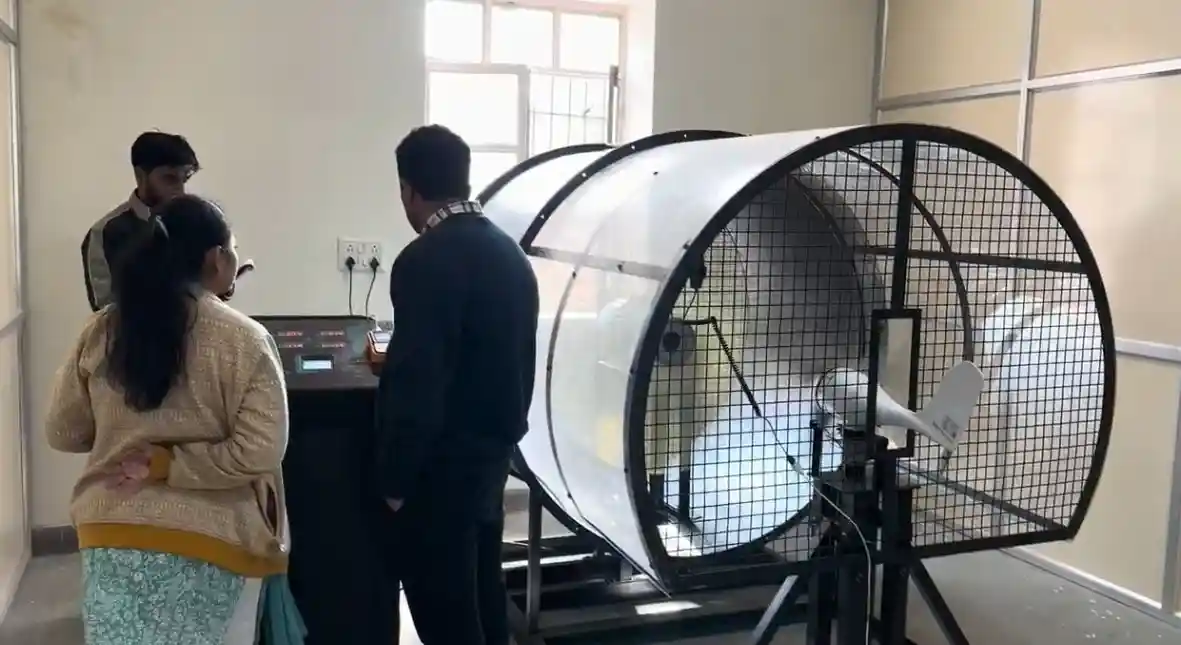
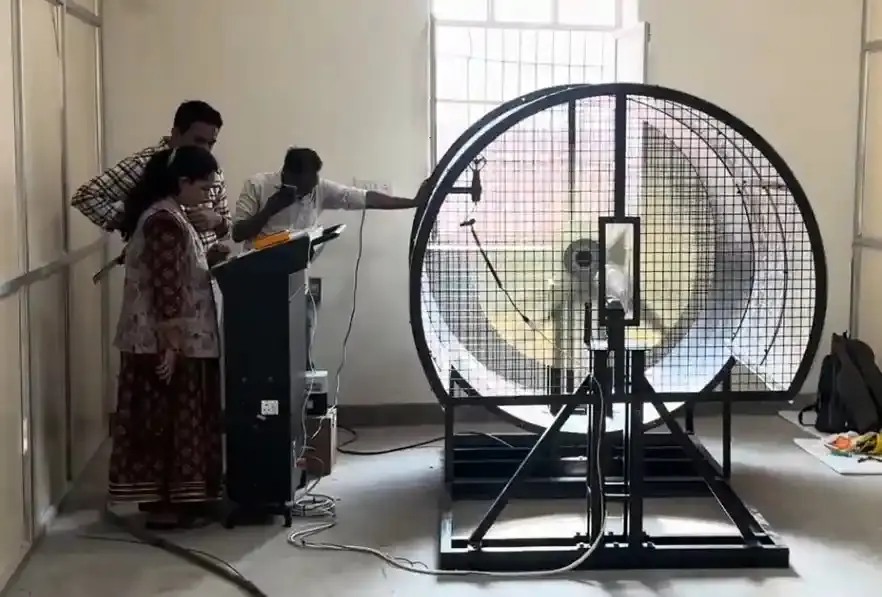
Ecosense Sustainable Solutions successfully installed a Wind Energy Training System at MBM University, Jodhpur, as part of the university’s ongoing efforts to strengthen hands-on renewable energy education. The installation enables undergraduate and postgraduate students to move beyond theoretical wind energy concepts and directly engage with real turbine operation, electrical power generation, and system performance analysis. This facility aligns with India’s growing emphasis on renewable energy skill development and industry-ready engineering education. 
About the Installation

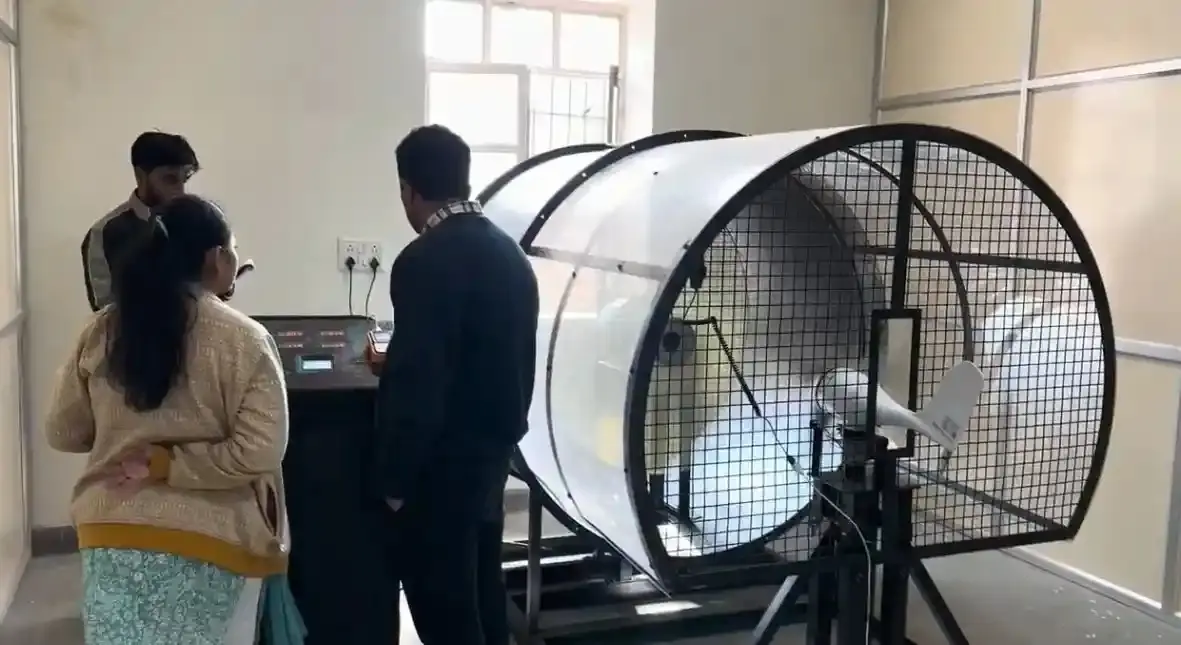
The Wind Energy Training System was installed within the university’s renewable energy laboratory infrastructure, following standard academic and safety guidelines. The system includes a artificial wind generator, a compact horizontal-axis wind turbine trainer integrated with a generator, control panel, data acquisition unit, and configurable electrical load. Designed specifically for indoor and controlled laboratory environments, the installation allows consistent experimentation without dependence on natural wind conditions. 
The setup was completed after site preparation, electrical provisioning, grounding, and safety verification, ensuring long-term reliability and ease of operation for faculty and students.

Wind Energy Training System Installation at MBM University, Jodhpur

Overview of the Wind Energy Training System

The installed Wind Energy Training System is a complete educational platform that demonstrates the full wind energy conversion process—from aerodynamic energy capture to electrical power output. Students can study turbine characteristics, rotor speed variation, generator behaviour, and output power under different operating conditions. 
The system supports experimentation on wind speed variation (simulated), tip speed ratio, turbine efficiency, and load-dependent performance. Integrated sensors and a monitoring interface allow real-time measurement of voltage, current, power, and rotational speed, enabling data-driven analysis and reporting aligned with academic curricula. 

Academic Training and Learning Outcomes

Following the installation, MBM University can conduct structured laboratory sessions, demonstrations, and project-based learning activities using the Wind Energy Training System. Typical learning outcomes include understanding wind turbine fundamentals, analysing generator performance, and evaluating efficiency limits such as the Betz criterion. 
The system also supports final-year projects and introductory research work in renewable energy systems, power electronics, and grid integration concepts. By working with actual hardware instead of simulations alone, students gain confidence in interpreting real-world system behaviour, faults, and performance variations. 

How the Wind Energy Training System Enhances Wind Energy Labs

The installation significantly enhances the university’s wind energy laboratory by transforming abstract concepts into measurable experiments. Students can correlate wind speed changes with electrical output, observe dynamic system responses, and understand the limitations of practical wind power systems. 
For faculty, the system serves as a reliable teaching and demonstration platform that supports multiple courses within electrical, electronics, and energy engineering programs. With its modular and academic-focused design, the Wind Energy Training System bridges the gap between classroom theory and industry-relevant renewable energy skills, reinforcing MBM University’s commitment to modern, application-oriented engineering education. 

Wind Energy Training System Installation at MBM University, Jodhpur

What’s Next

With the Wind Energy Training System now operational at MBM University, the next phase focuses on deeper academic integration and advanced experimentation. The university can expand the lab into a multi-source renewable energy facility by combining wind experiments with solar PV, energy storage, and grid-interfacing modules. Faculty-led research, student innovation projects, and interdisciplinary coursework can now be built around real performance data generated in the lab. Over time, the system can support advanced studies in wind–solar hybrid systems, power quality analysis, and control strategies, helping MBM University evolve from foundational training to applied research and industry-aligned renewable energy education. 

Glimpses from demonstration 


Get in Touch

Ready to transform your labs?

Contact Now