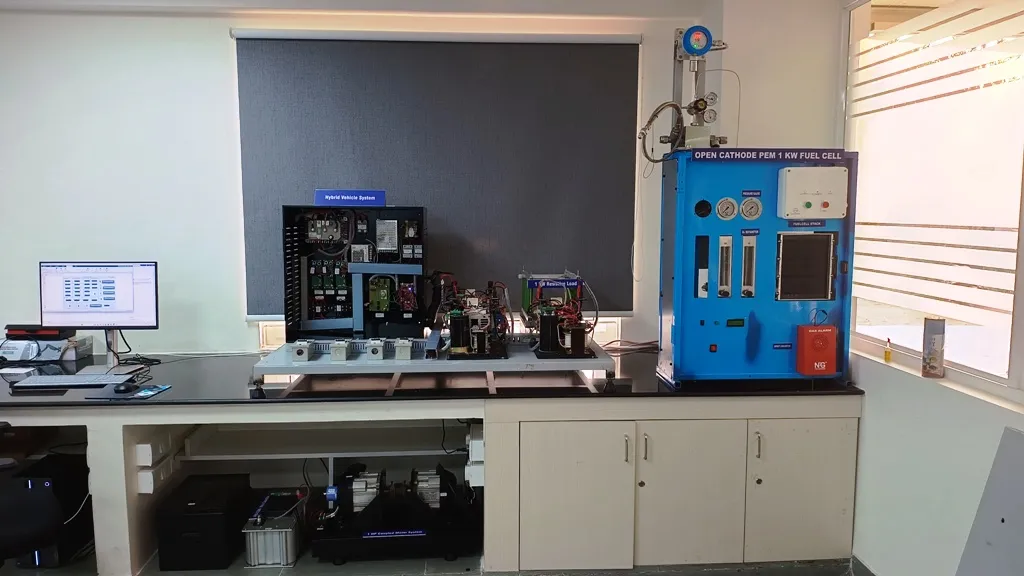
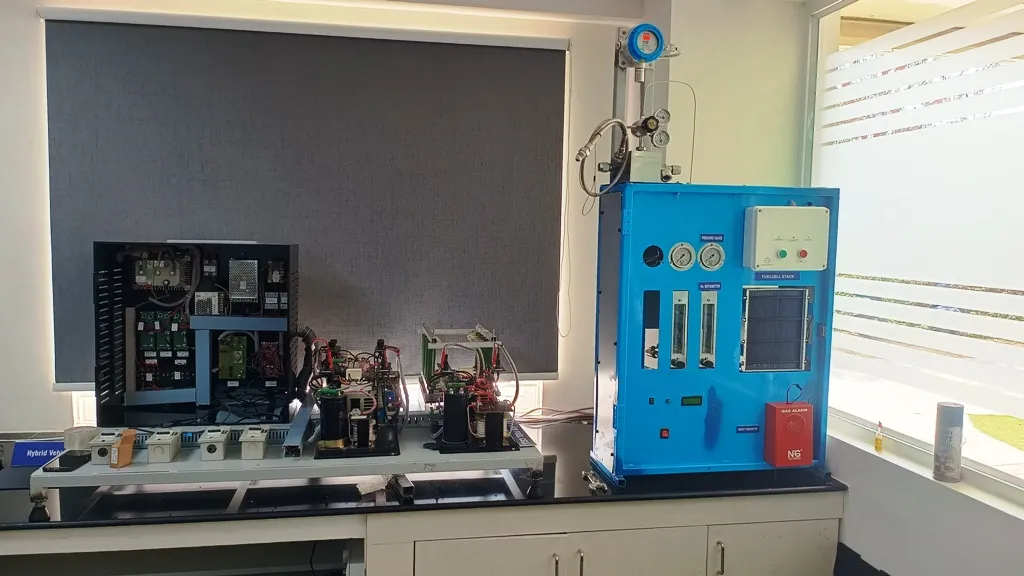
Upgraded Fuel Cell Drive Train Installation at WILP BITS Hyderabad

Fuel Cell Drive Train Installation at WILP BITS Hyderabad

Now Upgraded with Regenerative Braking and Advanced Hydrogen Safety.

Ecosense upgraded the Fuel Cell Drive Train System at WILP BITS Hyderabad with regenerative braking and advanced hydrogen safety features, enabling industry-aligned learning and research in fuel cell electric mobility.

Introduction

Ecosense has successfully upgraded the Fuel Cell Drive Train System installed at the Work Integrated Learning Programme (WILP), BITS Hyderabad. The system now integrates regenerative braking capability and a comprehensive hydrogen safety framework, transforming the lab into a more realistic, industry-aligned platform for fuel cell electric vehicle (FCEV) education and applied research.

This enhancement strengthens hands-on learning by connecting fuel cell power generation, energy recovery during braking, and safe hydrogen handling into one unified experimental setup.

About the Installation

The installation at WILP BITS Hyderabad is designed to simulate a real-world fuel cell electric drive train used in hydrogen-powered mobility systems. The upgraded setup enables learners to study power flow during traction and braking, energy recovery mechanisms, and safety-critical hydrogen monitoring, all within a controlled laboratory environment.

The system supports structured experimentation, performance evaluation, and control strategy development aligned with modern FCEV architectures.

Upgraded Fuel Cell Drive Train Installation at WILP BITS Hyderabad

Overview of the Upgraded System

Fuel Cell Drive Train Core

The heart of the system is a fuel cell–based electric drive train configured around a DC bus architecture. The fuel cell acts as the primary energy source, supplying power to a programmable motor controller driving an electric traction motor. The setup allows controlled loading and dynamic operating conditions for detailed analysis.

Key learning focus:

  • Fuel cell voltage–current characteristics.
  • Power electronics interfacing.
  • Motor torque–speed behavior under varying loads.


Regenerative Braking Integration

A major upgrade to the installation is the addition of regenerative braking functionality. During deceleration or braking conditions, the traction motor operates as a generator, converting kinetic energy back into electrical energy.

This recovered energy is routed through the power electronics and managed by the control system, enabling learners to study:

  • Energy recovery efficiency
  • Impact of regenerative braking on overall system efficiency
  • Interaction between fuel cell output and recovered power
  • Control strategies for smooth transition between motoring and regeneration
The regenerative braking feature brings the lab closer to real FCEV operating conditions found in modern electric and hydrogen vehicles.

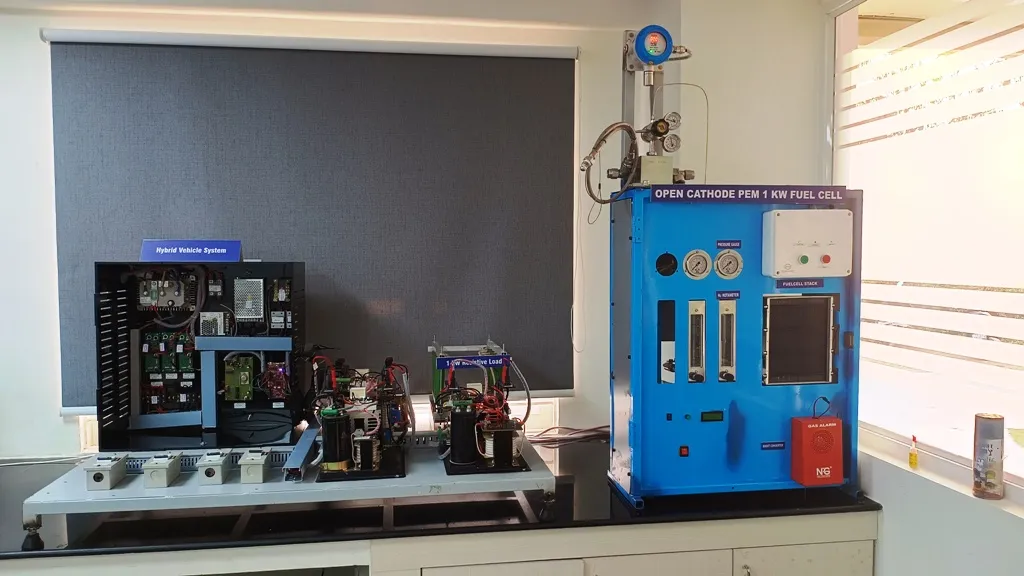
Hydrogen Safety and Monitoring Features

Hydrogen safety is a critical aspect of any fuel cell system. The upgraded installation incorporates dedicated hydrogen safety features to ensure safe operation and to train users on best practices followed in industry and research labs.

The safety framework includes:

  • Hydrogen leak detection sensors for early detection
  • Visual and audible alarms for immediate alerts
  • Proper ventilation and purge logic integrated into the control scheme

These features allow students and researchers to understand not only how hydrogen systems operate, but also how risks are mitigated through engineering controls.

Academic and Research Applications

The enhanced Fuel Cell Drive Train System supports a wide range of academic and applied research activities, including:

  • Study of fuel cell–based electric propulsion systems.
  • Analysis of regenerative braking impact on energy efficiency.
  • Development and testing of supervisory control algorithms.
  • Hydrogen safety training and risk assessment studies.
  • Comparative studies between conventional EV and FCEV architectures.

The system is well suited for postgraduate programs, executive education under WILP, and industry-oriented research projects.

Benefits for WILP, BITS Hyderabad

The upgraded installation delivers several long-term benefits:

  • Industry-relevant learning: Reflects real fuel cell vehicle architectures.
  • Hands-on experimentation: Moves beyond simulation to physical testing.
  • Safety-first approach: Embeds hydrogen safety into daily lab practice.
  • Research readiness: Enables advanced studies in control, efficiency, and safety.
  • Future scalability: Supports further integration of energy storage or hybrid configurations

Upgraded Fuel Cell Drive Train Installation at WILP BITS Hyderabad

Why Choose Ecosense for Fuel Cell Lab Installations

Ecosense specializes in modular, upgrade-ready renewable energy and hydrogen lab systems designed for academic institutions and research centers. Each installation is engineered with a strong focus on safety, learning outcomes, and long-term adaptability.

With the WILP BITS Hyderabad installation, Ecosense demonstrates its capability to not only deploy advanced systems, but also evolve them over time by adding features like regenerative braking and hydrogen safety as academic needs grow.

Get in Touch

Ready to transform your labs?

Contact Now