Renewable Lab Installation at B.S. Abdur Rahman Crescent Institute of Science and Technology

Renewable Lab Installation at B.S. Abdur Rahman Crescent Institute of Science and Technology

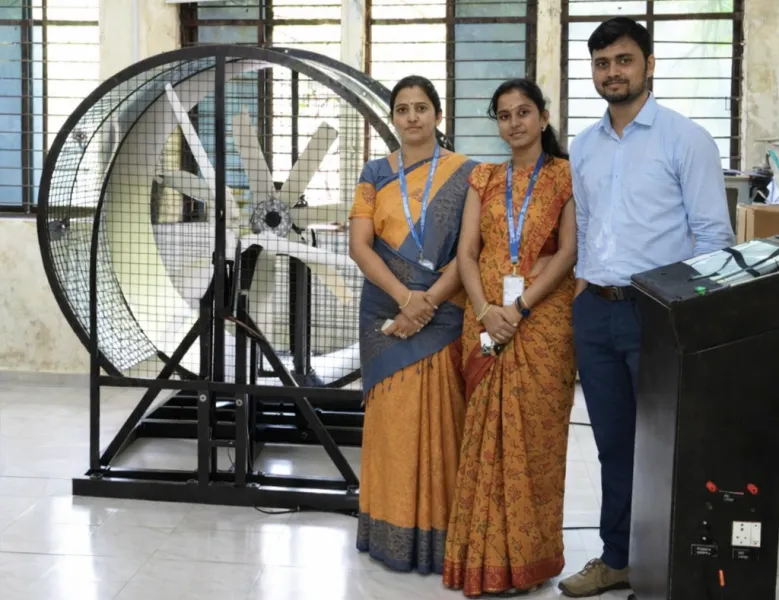
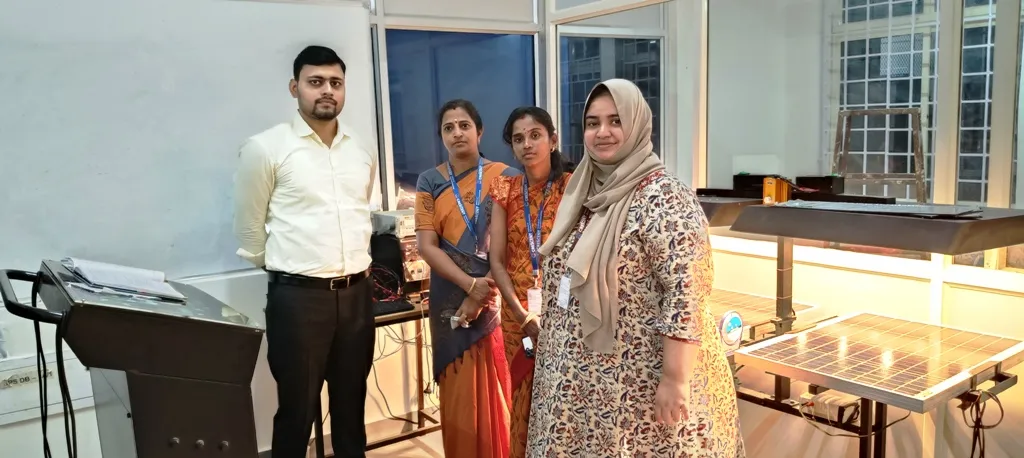
Solar PV and Wind Energy Lab installed at B.S. Abdur Rahman Crescent Institute of Science and Technology enabling researchers and students tu study Solar PV and Wind Turbine systems through hand on experiments.

Introduction

B.S. Abdur Rahman Crescent Institute of Science and Technology continues to strengthen its commitment to renewable energy education.Ecosense installed two dedicated laboratory systems focused on solar and wind energy technologies at Department of Electrical and Electronics Engineering.

The installation includes the Solar PV Training and Research System and the Wind Energy Training System. Both systems are designed to support hands-on learning, structured laboratory experiments, and applied academic research in renewable energy engineering. This initiative aligns with the growing need for engineers trained in clean energy generation and standalone power systems.

About the Installation

The Renewable Energy Lab installation was planned to provide practical exposure to real solar photovoltaic and wind energy systems. Each system operates independently and is intended for focused experimentation without cross-dependency. The lab setup allows students to work directly with actual energy generation hardware. This approach helps translate theoretical concepts into measurable electrical parameters and observable system behaviour. The installation supports undergraduate laboratories, postgraduate coursework, and research-oriented experimentation within the department.

Renewable Lab Installation at B.S. Abdur Rahman Crescent Institute of Science and Technology

Overview of the Equipment Installed

Solar PV Training and Research System

The Solar PV Training and Research System is designed to demonstrate the complete operation of a standalone solar photovoltaic power system.It enables users to understand solar energy conversion, system configuration, and performance evaluation using real PV modules.

Key Features

  • Real solar PV panels for hands-on experimentation
  • Study of current–voltage (I–V) and power–voltage (P–V) characteristics
  • Analysis of PV performance under varying irradiation and temperature conditions
  • Experiments on shadowing, tilt angle, and orientation effects
  • Integration of charge controller, inverter, battery, and electrical loads
  • Measurement of voltage, current, power, and temperature parameters
  • Support for external inputs to study MPPT-related behavior

The system allows students to assemble, test, and analyze a standalone solar PV installation in a controlled laboratory environment.


Wind Energy Training System

The Wind Energy Training System is a laboratory-scale representation of a standalone wind power generation setup. It enables students to study wind energy conversion using a real wind turbine system designed for academic use.

Key Features

  • Standalone wind turbine-based training system
  • Study of wind turbine operation and electrical power generation
  • Analysis of turbine output with respect to wind speed variation
  • Understanding of mechanical to electrical energy conversion
  • Electrical parameter measurement for performance evaluation
  • Designed for indoor and outdoor experimental use
  • Safe and structured operation for academic laboratories

This system provides practical exposure to wind energy fundamentals without reliance on large-scale field installations.

Academic and Research Applications

Academic Applications

The installed systems support a wide range of academic activities within the Electrical and Electronics Engineering curriculum.

  • Students can perform prescribed laboratory experiments related to renewable energy generation.
  • They can observe real-time system responses rather than relying solely on simulations.
  • The systems are suitable for courses covering renewable energy systems, electrical machines, power electronics, and energy conversion.
  • They also support mini-projects and final-year undergraduate projects.
  • Hands-on interaction with solar and wind systems enhances conceptual clarity and technical confidence among students.

Research Applications

The Solar PV and Wind Energy Training Systems also serve as platforms for academic research and experimentation.

  • Faculty members can guide research focused on system performance analysis and energy conversion behavior.
  • Postgraduate students can use the setups for experimental validation of theoretical studies.
  • The systems support data collection for comparative studies between different operating conditions.
  • They also enable structured experimentation for M.Tech and PhD-level research in renewable energy domains.
  • The independent nature of each system allows uninterrupted research activities alongside regular laboratory sessions.

Benefits for Crescent Institute of Science and Technology

This installation strengthens the department’s laboratory infrastructure in renewable energy engineering. It enhances the institution’s capability to deliver outcome-based education with strong practical components. The lab supports accreditation requirements by offering industry-relevant experimental facilities. Students gain exposure to real renewable energy systems used in practical applications. This improves employability and readiness for careers in the clean energy sector. The installation also reinforces the university’s focus on sustainability and future-oriented engineering education.

Renewable Lab Installation at B.S. Abdur Rahman Crescent Institute of Science and Technology

Why Choose Ecosense for Renewable Energy Labs

Ecosense designs renewable energy laboratory systems specifically for academic and research institutions. Each system focuses on clarity, safety, modularity, and repeatable experimentation. The equipment is developed to align with university curricula and laboratory requirements. Ecosense provides complete support from installation to commissioning and user training. Clear documentation and structured experiments ensure long-term usability of the systems. With installations across leading institutions, Ecosense continues to support the development of skilled engineers in renewable energy technologies.


Building Practical Expertise in Renewable Energy

The installation of the Solar PV Training and Research System and Wind Energy Training System marks an important step for the Department of Electrical and Electronics Engineering.By combining hands-on solar and wind energy training, the lab enables students to understand renewable power generation through direct experimentation.This facility prepares future engineers to engage confidently with real-world renewable energy systems and emerging clean energy challenges.

Get in Touch

Ready to transform your labs?

Contact Now