Installation of AC/DC Microgrid System at Birmingham City University

Installation of AC/DC Microgrid System at Birmingham City University

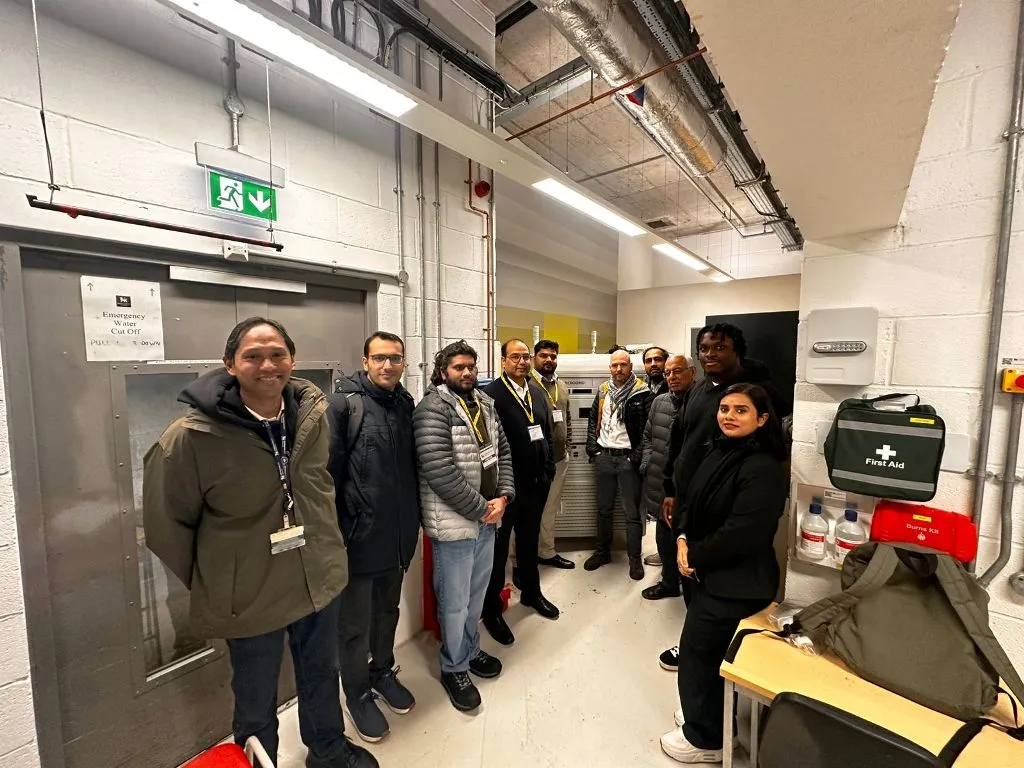
Ecosense supplied and installed an AC/DC Microgrid Training and Research System at Birmingham City University, enabling hands-on experimentation in microgrid operation, renewable energy integration, energy storage, and power electronics through a controlled laboratory-scale platform.

Introduction

Ecosense Sustainable Solutions successfully supplied and commissioned an AC/DC Microgrid Training and Research System with programmable AC and DC loads at Birmingham City University. The installation strengthens the university’s laboratory infrastructure for advanced teaching and applied research in power electronics, renewable energy integration, and microgrid control. The system is designed exclusively for educational and research use in a controlled university laboratory environment and supports both grid-connected and islanded modes of operation.

About the Installation

The AC/DC Microgrid system was installed as a complete, integrated laboratory platform comprising energy source emulators, power electronic converters, programmable loads, sensing and protection hardware, and a PC-based supervisory control environment. The system architecture is centred around a common DC link, enabling controlled power flow between simulated renewable sources, energy storage, AC and DC loads, and the utility grid.

The installation includes full hardware setup, electrical integration, safety interlocks, and software deployment for on-grid and off-grid operation. All modules are physically and electrically accessible, allowing students and researchers to perform repeatable experiments while adhering to laboratory safety regulations. 

Installation of AC/DC Microgrid System at Birmingham City University

Overview of the Equipment

AC/DC Microgrid Core Platform

The microgrid represents a hybrid energy system with a common DC bus interfacing multiple sources and loads through power electronic converters. It enables real-time observation and control of energy generation, storage, conversion, and consumption.

Solar Array Simulator (Energy Source 1)

  • Programmable DC source emulating photovoltaic I–V characteristics
  • Voltage range: 0–80 V, current up to 25 A, power up to 1.5 kW
  • Supports MPPT studies, dynamic irradiance simulation, and standardized test profiles
  • LAN/USB communication for supervisory control

Battery Simulator (Energy Source 2)

  • Bidirectional programmable DC power supply
  • Voltage range: ±80 V, current ±40 A, power ±2 kW
  • Supports charging, discharging, and regenerative operation
  • Enables energy storage modelling and charge–discharge cycle studies

Power Conversion and Control Hardware

  • DC–DC boost converter for solar array simulator
  • Bidirectional DC–DC converter for battery simulator
  • Single-phase programmable inverter supporting grid-connected and standalone modes
  • DC link sensing with voltage and current feedback

Programmable Loads

  • Programmable DC load connected at the DC link
  • Programmable AC RLC load connected at the point of common coupling
  • Supports manual, automatic, and profile-based load control
  • Enables power quality, stability, and load dynamics analysis

Measurement and Protection

  • Hall-effect voltage and current sensors
  • AC power analyser and DC metering
  • Emergency stop, MCBs, relays, and earthing supervision
  • LED tower indicators for system and fault status

Software and Control Environment

  • FPGA-based real-time controller
  • LabVIEW-based supervisory control for on-grid and off-grid operation
  • Real-time data acquisition, visualization, and logging

Key Features

  • Hybrid AC/DC microgrid architecture with common DC link
  • Grid-connected and islanded operating capability
  • Real-time FPGA-based control and protection
  • Fully programmable renewable source and battery emulation
  • Configurable AC and DC loads for dynamic studies
  • Open and accessible hardware for algorithm development
  • PC-based supervisory control with data logging
  • Open-source and editable software platform

Academic and Research Applications at Birmingham City University

The installed AC/DC Microgrid system enables a wide range of undergraduate, postgraduate, and research-level activities, including:

  • Study of microgrid control and energy management strategies
  • Analysis of power flow between renewable sources, storage, and loads
  • Investigation of grid synchronization and islanding behaviour
  • Implementation and comparison of MPPT algorithms
  • Converter characterisation and inverter control studies
  • Power quality and stability analysis under variable loading
  • Hands-on validation of control algorithms on real hardware

The system bridges theoretical coursework with practical experimentation, providing students with exposure to real-world microgrid architectures and control challenges. 

Benefits for Birmingham City University

  • Establishes a modern laboratory platform aligned with current distributed energy systems
  • Enhances experiential learning through real-time experimentation
  • Supports research in renewable integration, power electronics, and smart grid
  • Enables safe, repeatable, and scalable laboratory experiments
  • Prepares students for industry and research roles in advanced energy systems

Installation of AC/DC Microgrid System at Birmingham City University

Why Choose Ecosense for Microgrid Laboratories

Ecosense Sustainable Solutions specializes in designing and deploying education-focused renewable energy and power electronics laboratories. The AC/DC Microgrid system supplied to Birmingham City University reflects Ecosense’s emphasis on modular design, safety, and academic relevance. With integrated hardware, open control architecture, and detailed documentation, Ecosense systems are engineered to support both structured teaching and advanced research in modern energy systems. 


Get in Touch

Ready to transform your labs?

Contact Now