Green Hydrogen Generation System
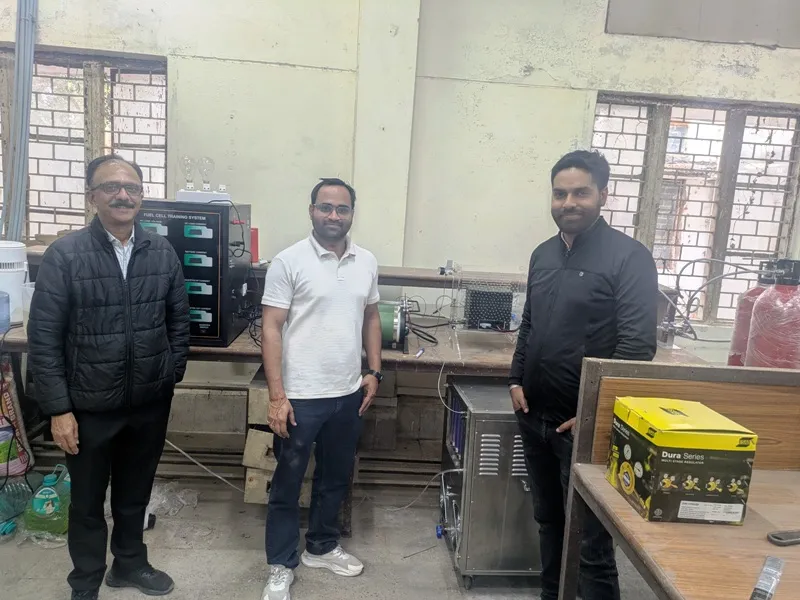
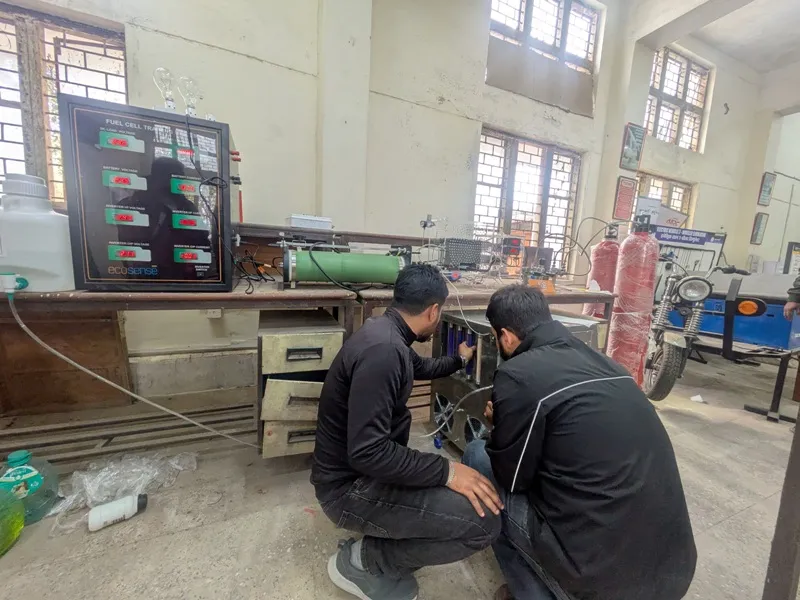
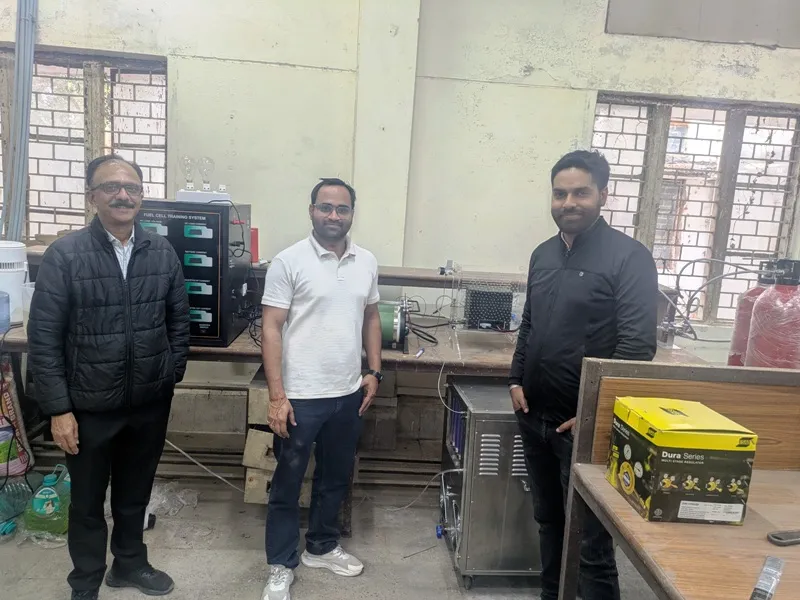
Hydrogen generation is carried out using an Alkaline Electrolyzer. This unit produces hydrogen by splitting water into hydrogen and oxygen using an alkaline electrolyte. It enables students to study the fundamentals of electrolysis, electrochemical reactions, and system-level operating parameters.
Learners can observe how variations in voltage, current, and operating conditions influence hydrogen production. The alkaline electrolyzer is particularly suitable for educational environments due to its well-established technology, robustness, and suitability for extended experimental operation.
Hydrogen Storage System
The generated hydrogen is stored using Type 1 hydrogen cylinders, configured as two cylinders connected through a manifold. This arrangement enables safe accumulation and controlled supply of hydrogen for utilization experiments.
The manifold-based storage configuration introduces students to practical aspects of hydrogen handling, pressure management, and flow regulation. It also reflects commonly adopted industrial practices, scaled appropriately for laboratory and academic use.
Hydrogen Utilization System
Hydrogen utilization is achieved using a PEM (Proton Exchange Membrane) Fuel Cell. The PEM fuel cell converts stored hydrogen into electrical energy through an electrochemical process, producing electricity with water as the primary byproduct.
This unit allows students to study fuel cell operating principles, voltage–current characteristics, power output behavior, and system response under varying load conditions. Through hands-on experiments, learners gain a clear understanding of how hydrogen functions as an energy carrier in modern power systems.
Safety and Monitoring Systems
Safety is a core consideration in the design of the hydrogen laboratory. The installation includes two point-type hydrogen leak detectors, strategically positioned near critical areas of operation.
These detectors continuously monitor hydrogen concentration levels and provide early warning in the event of leakage. Their inclusion ensures a safe learning environment while reinforcing the importance of safety protocols and monitoring systems when working with hydrogen technologies.