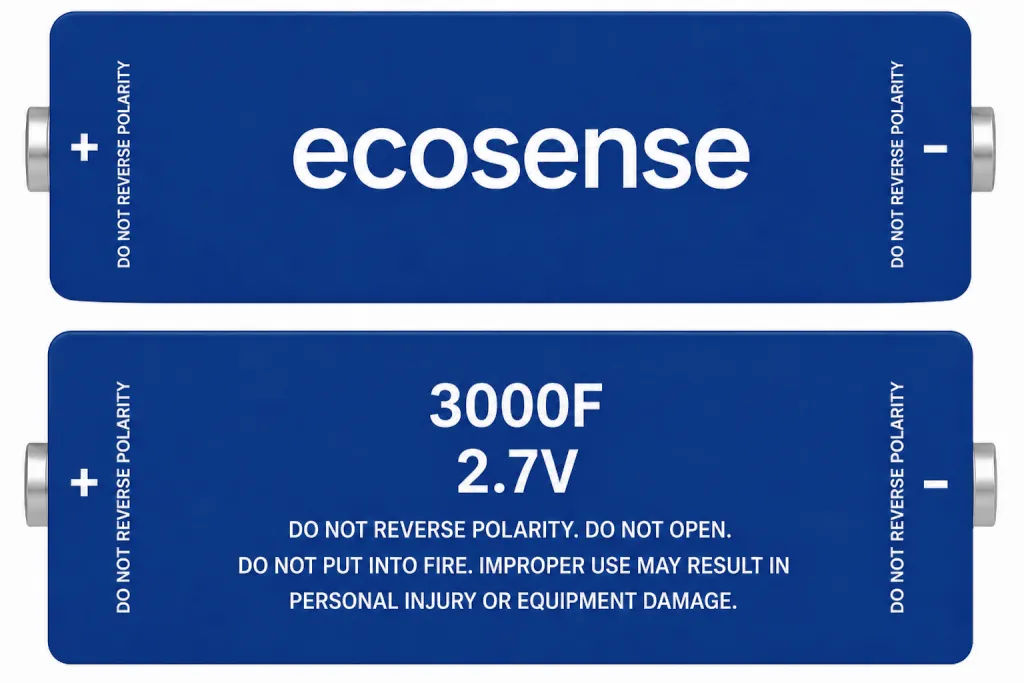
The UCR27V3000B stores electrical energy through the formation of an electric double layer at the interface between highly porous carbon electrodes and the electrolyte. When voltage is applied, positive and negative ions within the electrolyte migrate toward opposite electrodes and accumulate on their surfaces, creating two layers of charge separated by a molecular-scale distance. This mechanism enables energy storage without relying on chemical reactions, resulting in exceptionally fast charge acceptance, rapid power delivery, and virtually unlimited cycling capability.
During charging, energy is stored as electrostatic potential across the electrode surfaces. When connected to a load, the accumulated ions redistribute, releasing the stored energy almost instantaneously. The cell's extremely low internal resistance allows high current flow with minimal losses, making it ideal for applications requiring sudden bursts of power or rapid energy absorption. Unlike batteries, whose performance gradually declines due to chemical degradation, the electrostatic storage mechanism of the UCR27V3000B maintains stable performance over hundreds of thousands of operating cycles.
Its ability to absorb large amounts of regenerative energy within seconds and release that energy whenever required makes the UCR27V3000B particularly suitable for transportation systems, industrial machinery, renewable energy installations, and other high-power applications where efficiency, reliability, and long service life are critical.