Wind Turbine Emulator-PV Emulator Microgrid 

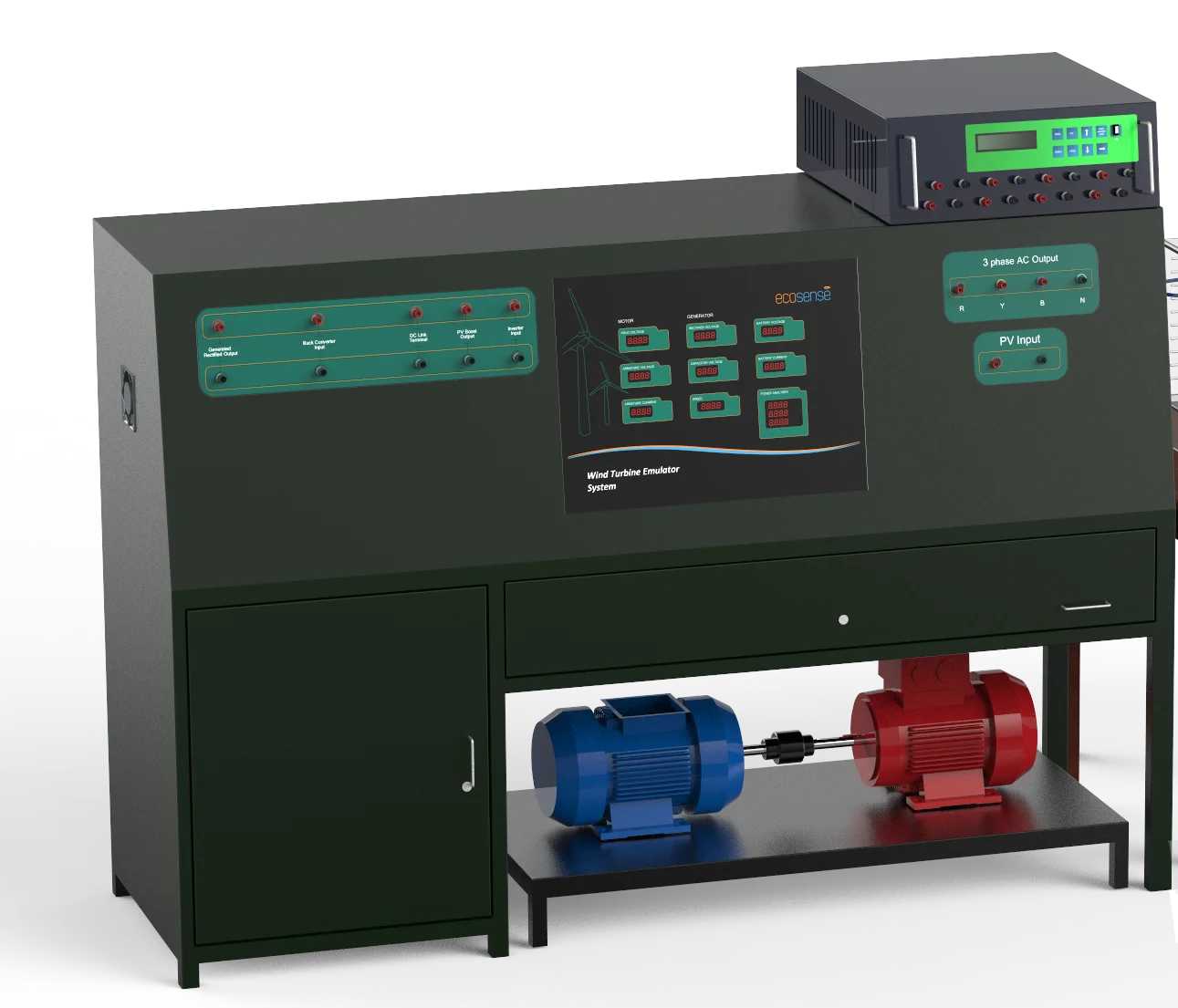
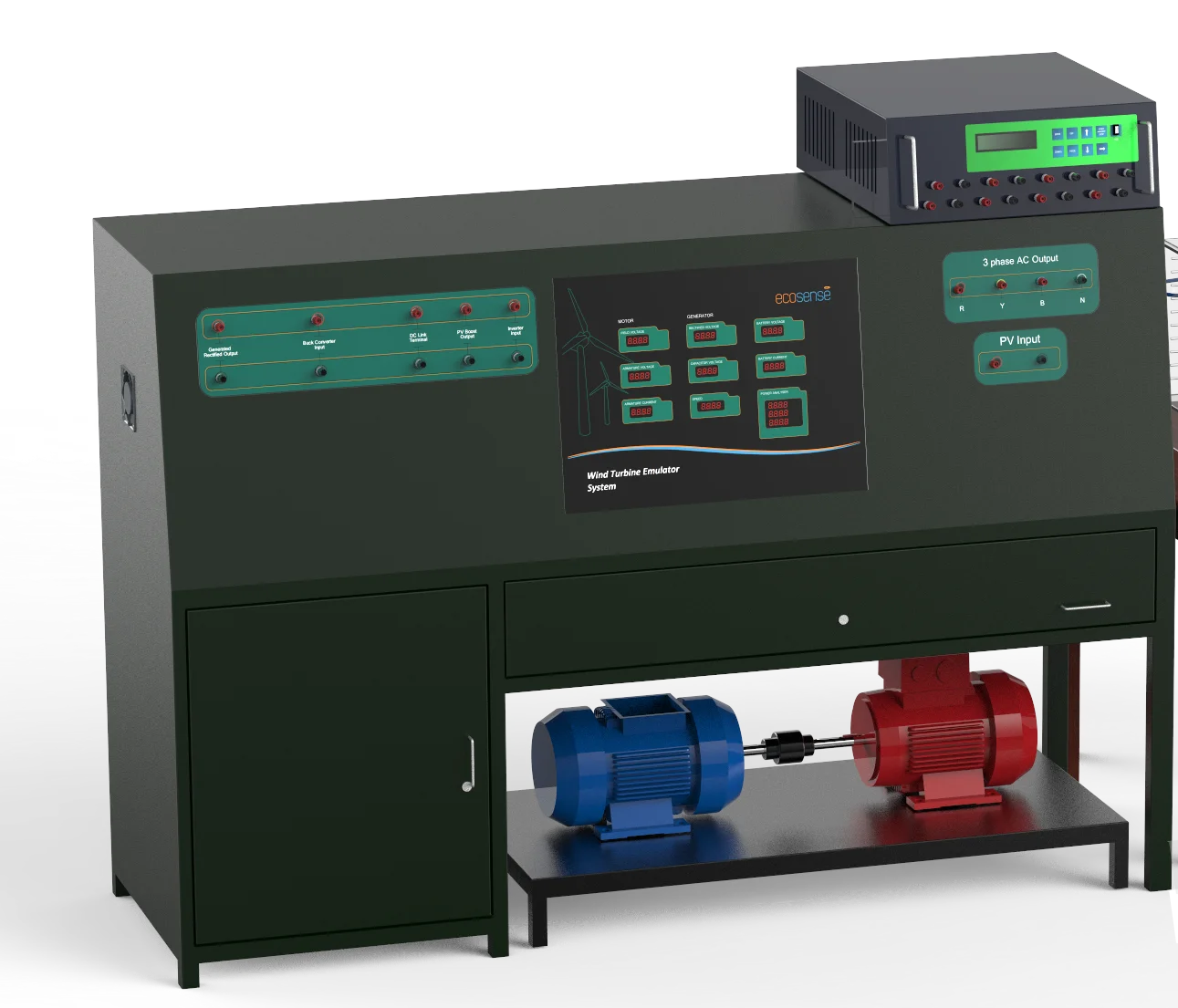
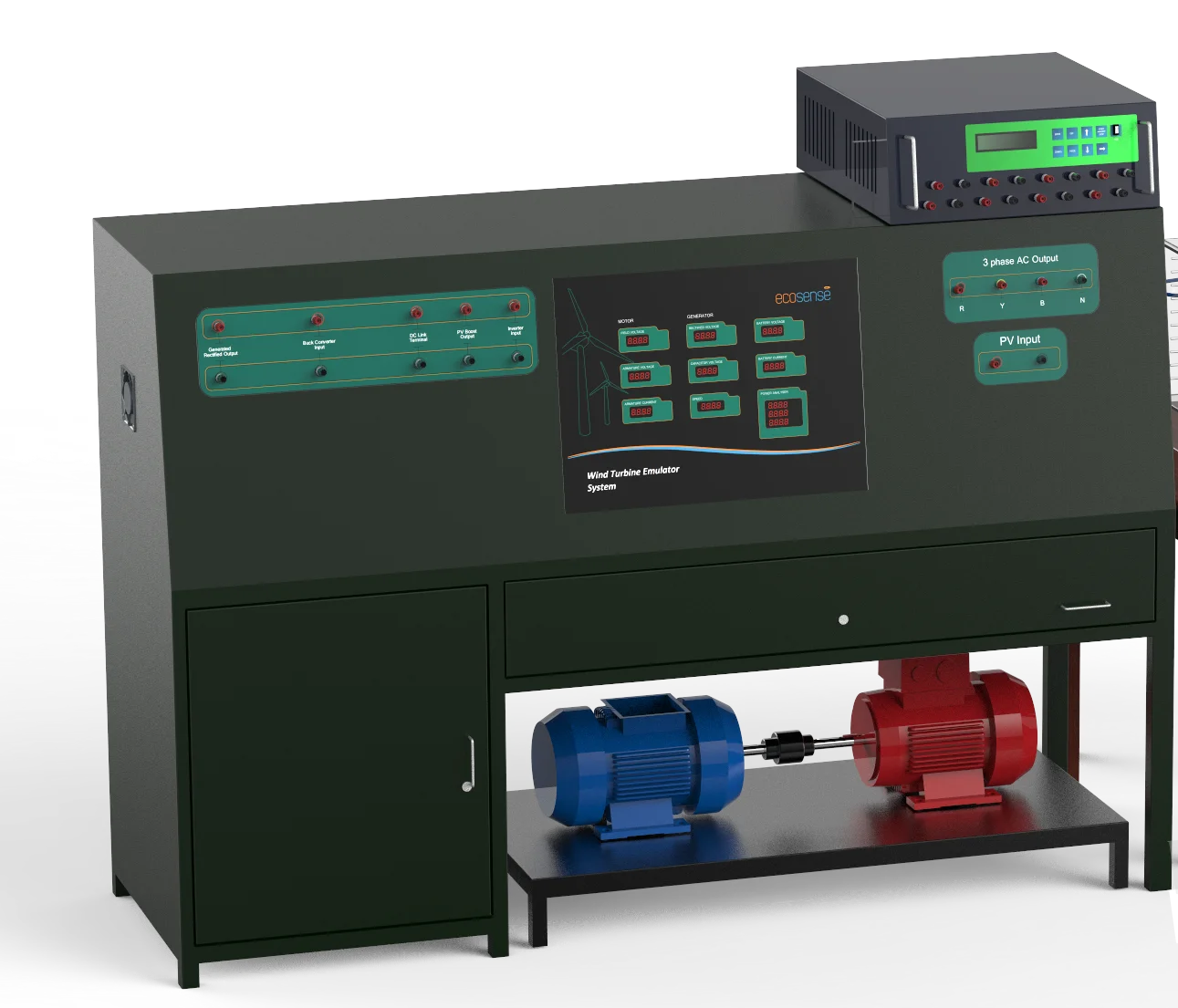
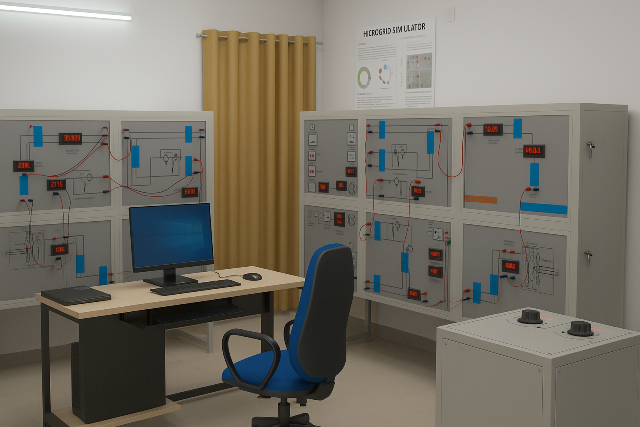
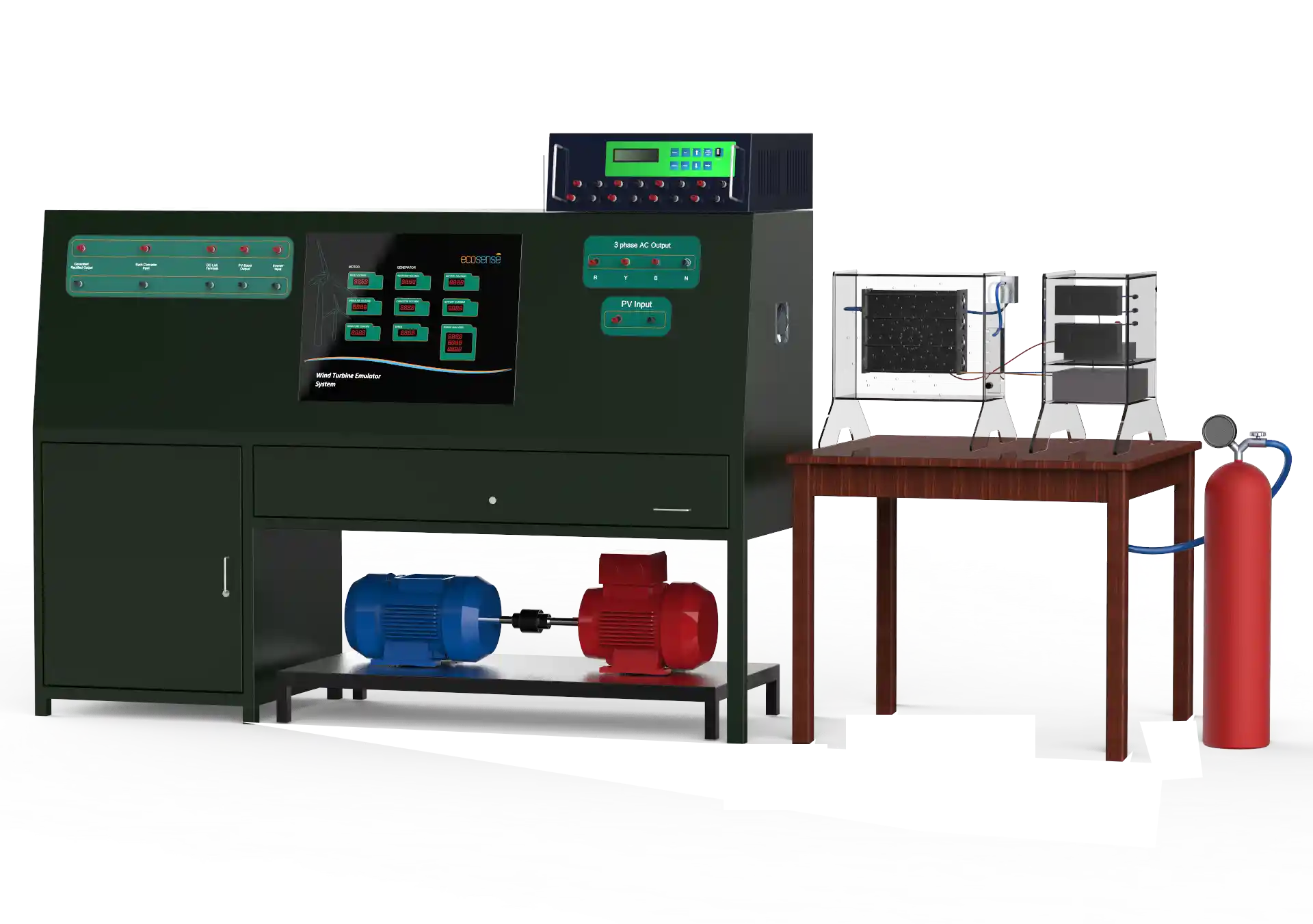
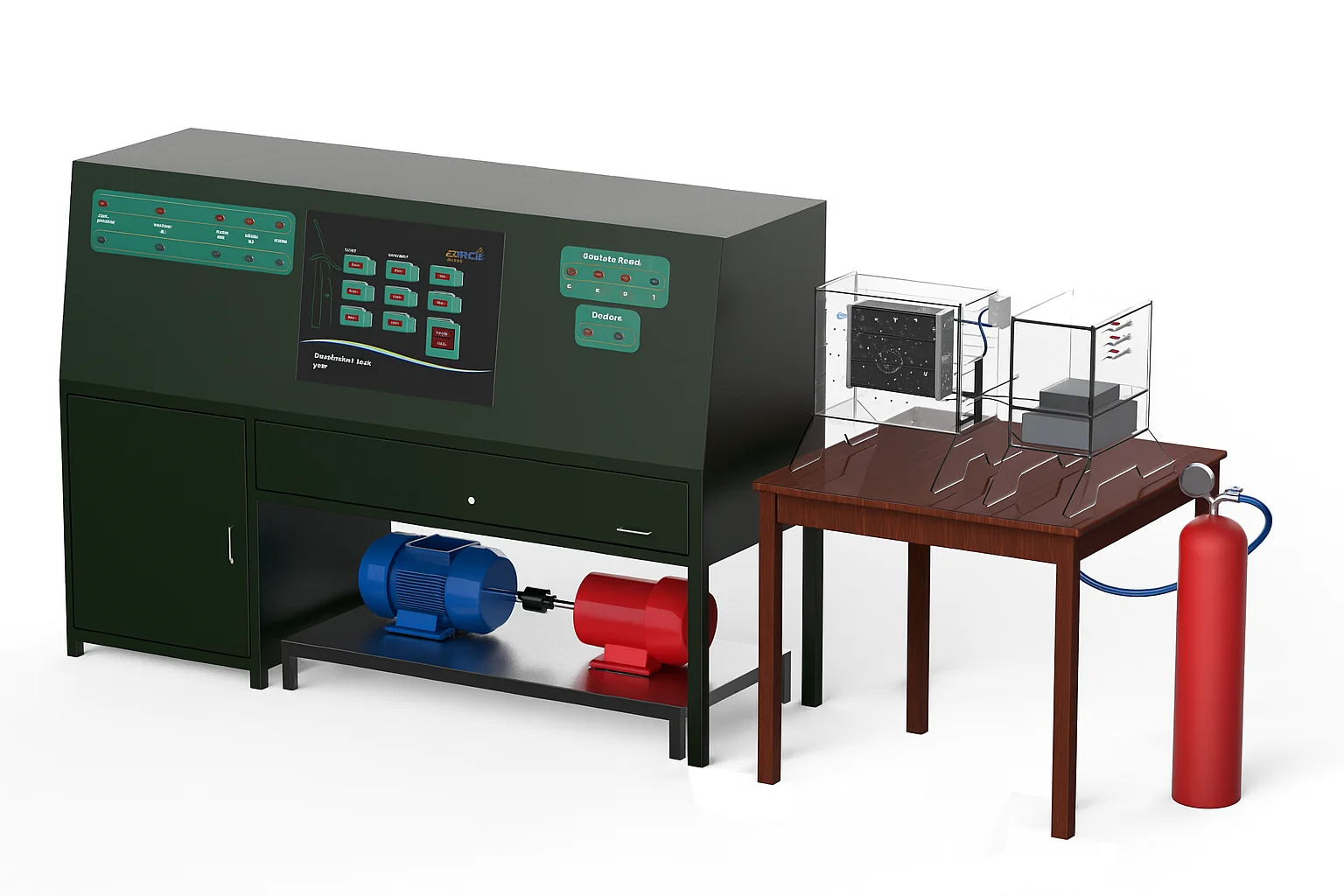
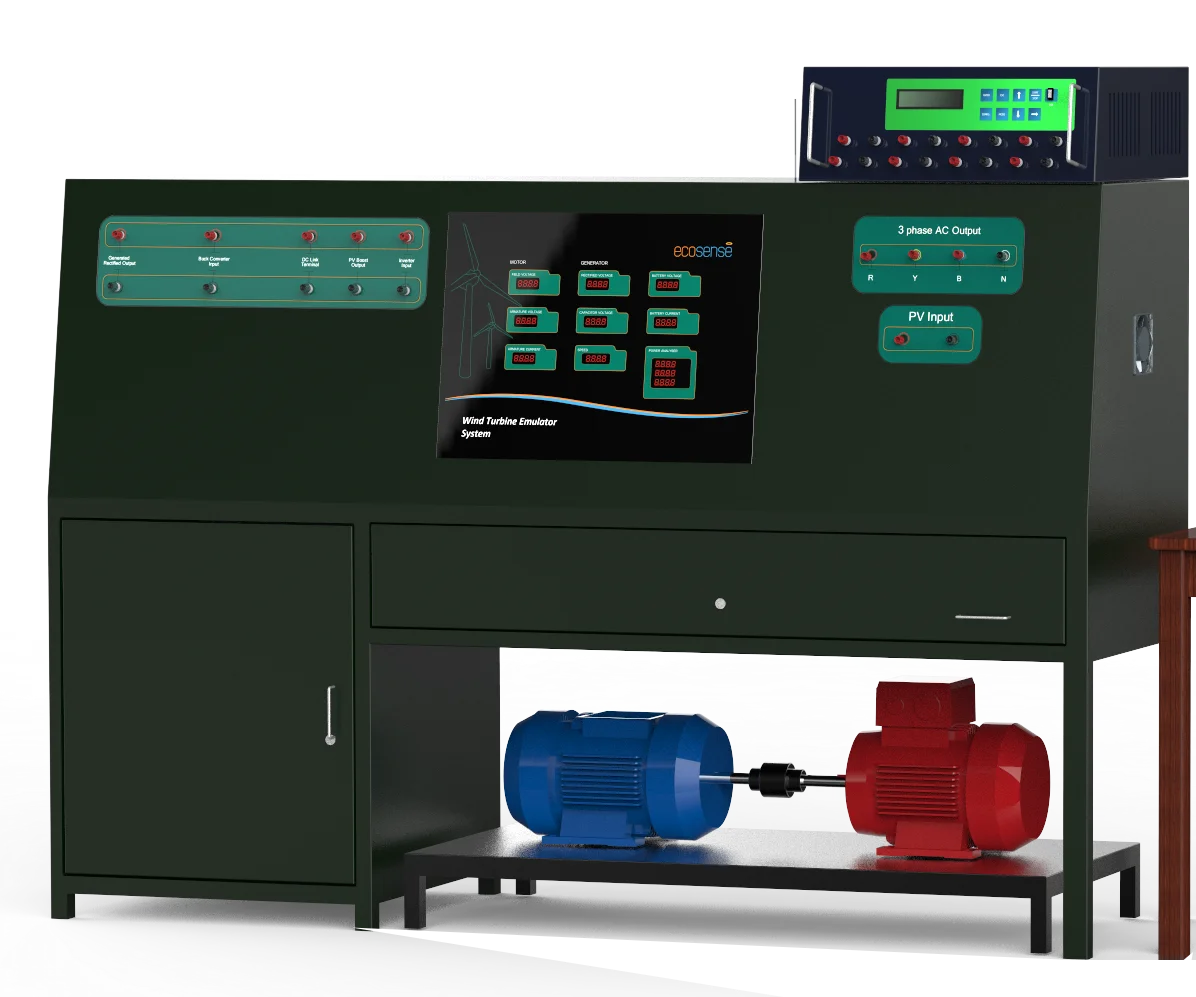
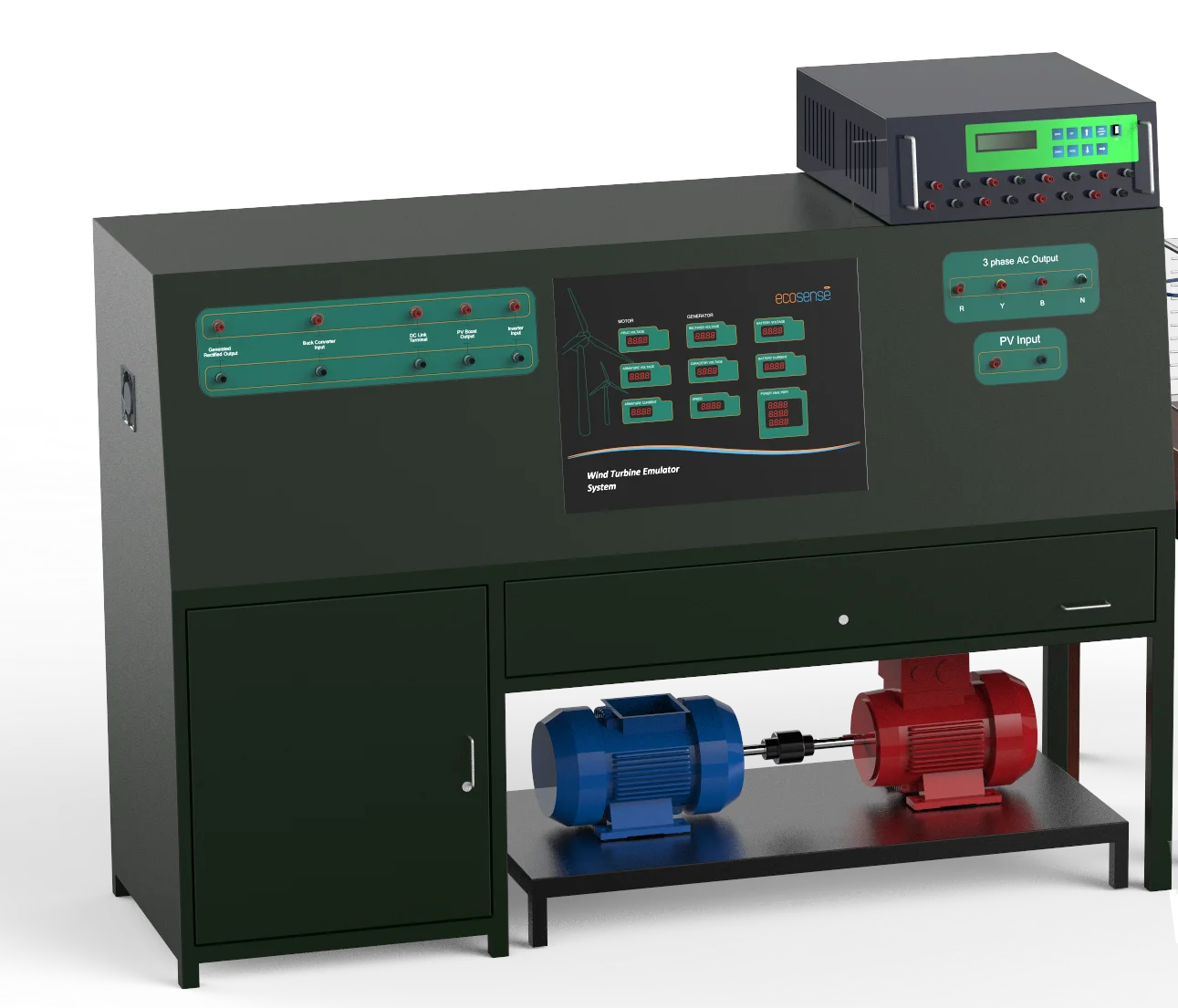
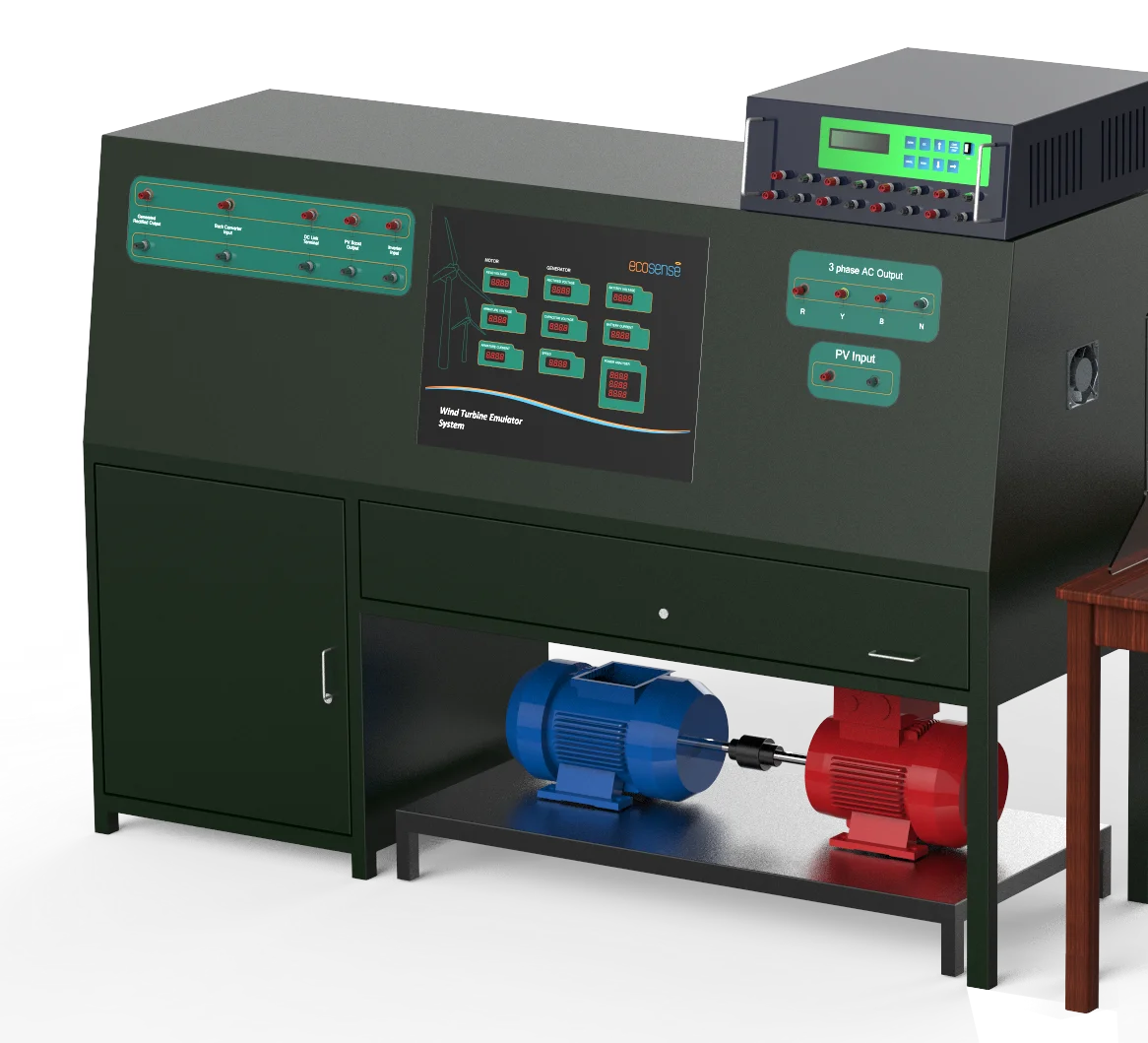
The Wind Turbine Emulator and PV Emulator (WTE-PVE) Microgrid is a comprehensive, lab-scale microgrid system developed for training, experimentation, and research in sustainable power systems. It simulates both wind and solar power generation and allows users to understand, design, and test hybrid energy systems under realistic environmental and load conditions. The system comprises two primary subsystems: the Wind Turbine Emulator (WTE) and the PV Emulator (PVE). Each operates independently but can also be integrated at a common DC link to form a combined hybrid system. The platform supports bidirectional power flow with energy storage, programmable loads, and inverter-based AC output, making it suitable for microgrid studies, control algorithm development, and grid synchronization. 
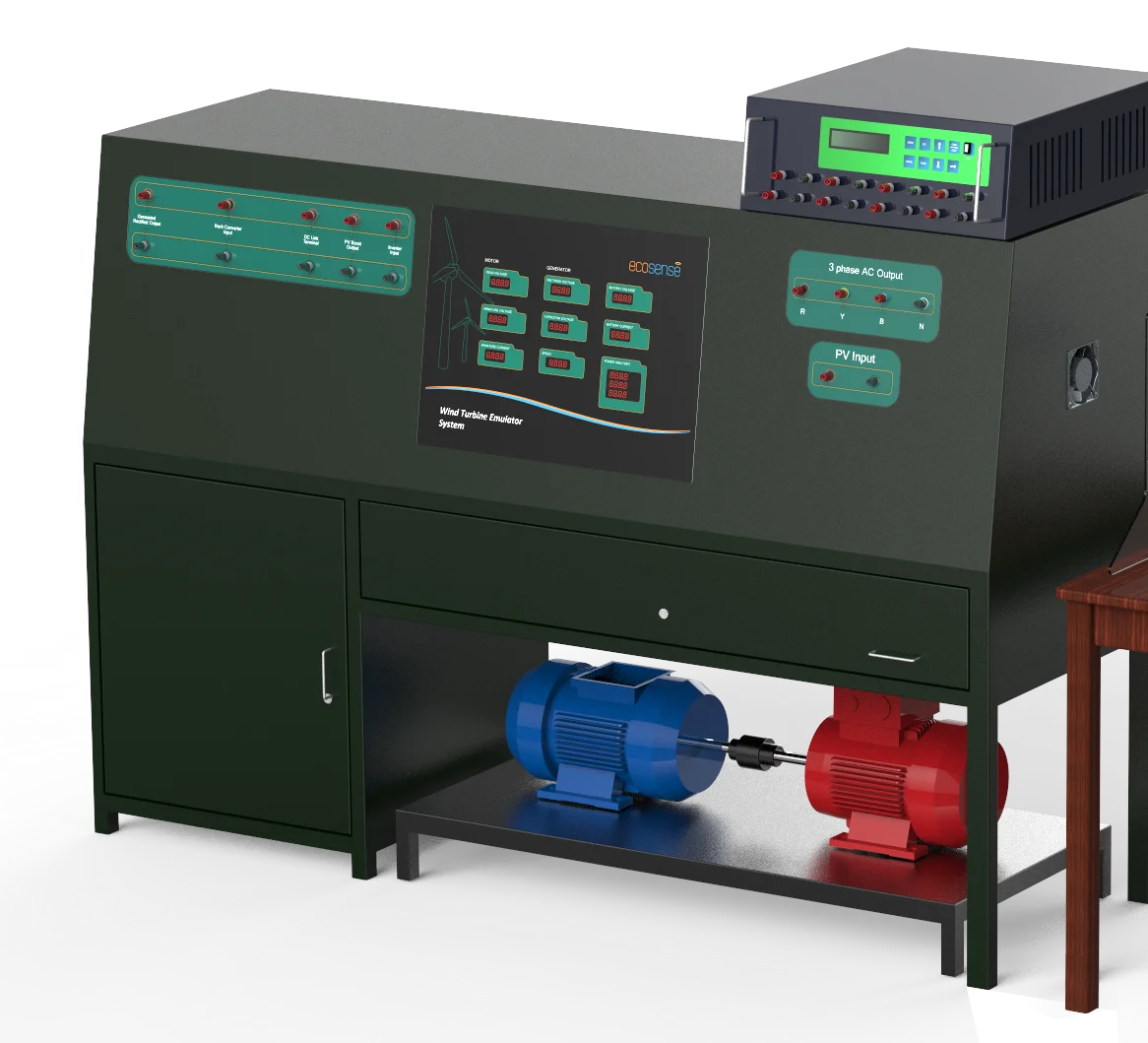
Key Features

  • Wind Turbine Emulator with Three Modes: Manual, Simulated, and Table-based modes allow users to test and model wind energy behavior under various conditions.
  • User-Defined Turbine Modeling: Input custom torque-speed and power-speed curves for emulating different wind turbine types.
  • Cp–λ Curve Plotting: Visualize power coefficient (Cp) vs. tip speed ratio (λ) for analyzing turbine efficiency.
  • Advanced MPPT Testing: Supports P&O, Incremental Conductance, and TSR-based algorithms with live feedback.
  • PV Emulator with Dual Channels: Independent channels to simulate different solar panel configurations.
  • Programmable Output with Shading Simulation: Adjust open-circuit voltage, short-circuit current, and simulate up to four levels of partial shading.
  • Data Logging and Visualization: Real-time display and export of I-V and P-V curves, voltage, current, and power.
  • Integration with DC Link and Inverter: Combined output routed to DC link and optionally fed into a programmable inverter for AC supply.
  • Battery Bank Integration: Enables energy storage and buffering for load matching and smoothing.
  • Optional Supercapacitor Module: Can be added for rapid charge/discharge applications and hybrid energy buffering.
  • Optional Programmable DC and AC Load: Allows flexible, software-controlled loading scenarios for testing system behavior.
  • Open-Source Software with Modifiable Code: Full access to underlying control logic for educational customization, algorithm development, and research.
  • LabVIEW Software Interface: Full control, simulation, logging, and experiment setup via PC.
  • Ongrid/Offgrid Operation
Ecosense

Learning Module 

Ecosense

Renewable Source Emulation & Optimization

  • Simulate wind and solar power generation using real-time environmental profiles.
  • Analyze turbine performance with Cp–λ curves and model various PV configurations.
  • Develop and compare MPPT algorithms like P&O, Incremental Conductance, and TSR.

Hybrid Microgrid Integration & Control

  • Study dynamic interactions between wind, solar, storage, and loads in a unified DC-linked system.
  • Implement source prioritization strategies based on demand, irradiance, and wind speed.
  • Evaluate inverter operation, grid synchronization, and programmable load behavior.

Storage, Fault Response & Algorithm Deployment

  • Integrate and test battery banks and optional supercapacitors for energy buffering.
  • Simulate fault conditions to assess system protection and recovery.
  • Customize control logic and deploy user-defined algorithms using open-source code.

Technical Description

  • The Microgrid Lab is a grid-connected and standalone hybrid DC microgrid integrating a Solar PV Emulator and Wind Turbine Emulator through independent DC–DC converters.
  • Both renewable sources are coupled at a common DC link, enabling coordinated power sharing, source prioritization, and load-side management.
  • A programmable three-phase inverter (VSC) converts DC microgrid power to AC and synchronizes it with the utility grid.
  • The system supports bidirectional power flow, allowing surplus energy to be exported to the grid or absorbed by the battery bank.
  • Open-source LabVIEW-based control architecture enables users to modify control logic, MPPT algorithms, and grid synchronization strategies.
  • Wind and solar subsystems can operate independently or simultaneously, supporting comparative and hybrid studies.
  • Multiple operating modes allow research on MPPT, DC-link control, islanding, grid interaction, and smart microgrid management.
  • Designed for indoor laboratory use, the platform ensures safe, repeatable, and weather-independent experimentation.
Ecosense

Technical Specifications 

Ecosense

Renewable Source Emulators


ParametersSpecifications
Wind Turbine EmulatorPMSG based, ~1.2 kW
Solar PV EmulatorProgrammable DC source, up to 2 kW
Operating ModesManual, table-based, and profile-based

* specifications can be customized as per user's requirements.

Power Conversion & Control


ParametersSpecifications
DC–DC ConvertersBuck / Boost, bidirectional
Inverter3-phase VSC, 10 kHz switching
Control PlatformFPGA + LabVIEW (open-source)

* specifications can be customized as per user's requirements.

Grid & Storage Interface


ParametersSpecifications
Grid InterfaceStep-up transformer, LC filter
Battery Bank72 V LFP, bidirectional operation
ProtectionAC & DC MCBs, sensing & monitoring

* specifications can be customized as per user's requirements.

Related Products

Frequently Asked Questions

The system integrates a Solar PV Emulator and Wind Turbine Emulator at a common DC link using independent DC–DC converters. The combined DC power is converted to AC through a programmable three-phase inverter and supplied to the grid or local loads.

Yes. The microgrid can be configured for both grid-connected and standalone operation. In standalone mode, the DC-link voltage and load demand are managed using the bidirectional converter and battery bank.

Users can study MPPT algorithms, DC-link voltage control, source prioritization, load management, grid synchronization, anti-islanding protection, and smart microgrid energy management strategies.

Yes. The system uses open-source, LabVIEW-based control files that allow users to modify algorithms, add new renewable sources, and implement custom control and energy management strategies.

Yes. The Solar PV Emulator and Wind Turbine Emulator can operate independently or together, enabling comparative analysis of individual sources as well as hybrid microgrid performance studies.

Get in Touch

Ready to transform your labs?

Contact Now